Polymer Stabilizer Compound
CN → US| HS编码 | 关税税率 | 原产国 | 目的国 | 文档 |
|---|---|---|---|---|
| 2942003500 | 41.5% | CN | US | 官方文档 |
| 3824992900 | 41.5% | CN | US | 官方文档 |
| 3824994900 | 41.5% | CN | US | 官方文档 |
| 2942005000 | 38.7% | CN | US | 官方文档 |
| 3901905501 | 41.5% | CN | US | 官方文档 |
商品图片


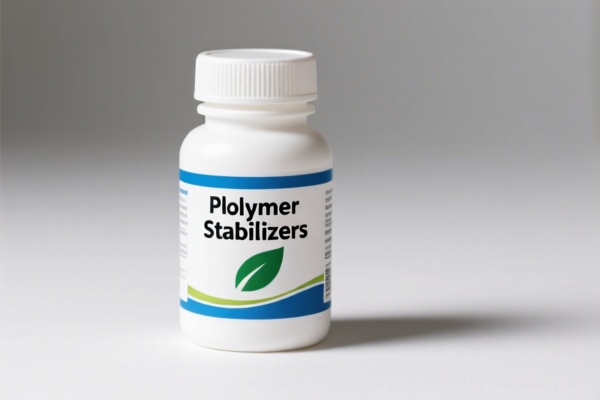
AI分析
🧪 Polymer Stabilizer Compound (Composite Additive)
🌐 HS Code Reference & Customs Clearance Guide | 2026 Latest Tariff Analysis | Professional Clearance Strategy
📌 I. Product Definition & Classification: What is a "Polymer Stabilizer Compound"?
A Polymer Stabilizer Compound (often referred to as a composite additive or stabilizing agent) is a chemical preparation designed to protect polymers (plastics) from degradation during processing and service life. It typically contains: * Primary Function: Prevents thermal, oxidative, or UV degradation of plastic materials. * Composition: Often a mixture of organic compounds, hydrocarbon derivatives, or specific chemical modifiers. * Material Nature: Chemically, these are organic compounds or chemical preparations not elsewhere specified. In customs classification, the key is determining whether it is classified as a specific "Organic Chemical" (Chapter 29) or a "Miscellaneous Chemical Product/Preparation" (Chapter 38).
⚠️ Key Classification Conflict:
- Is it a pure Organic Compound? → Look at Chapter 29 (e.g., 2942).
- Is it a Preparation/Mixture for industrial use? → Look at Chapter 38 (e.g., 3824).
- Does it have a polymeric base? → Look at Chapter 39 (e.g., 3901).
📦 II. HS Code Classification Details (2026 Latest Tariff Authoritative Comparison)
Based on the provided data, there are 5 potential HS Codes with varying tax implications. Below is the breakdown:
| HS Code | Product Description | Matching Logic & Summary | Total Tax Rate |
|---|---|---|---|
| 2942.00.35.00 | Other Organic Compounds (Aromatic Modified Components) | "Plastic" material + "Composite Agent" chemical form. Matches "Other Organic Compounds" for chemical additives. No obvious material conflict. | 41.5% |
| 3824.99.29.00 | Other Chemical Products and Preparations | "Composite Agent" shape. Material is "Plastic Stabilizer," a chemical product related to the chemical industry. Fits the "catch-all" logic for miscellaneous chemical preparations. | 41.5% |
| 3824.99.49.00 | Unnamed Chemical Products and Preparations | Usage Match: Chemical industry-related preparation. Material Match: Inferred to contain hydrocarbons or chemical auxiliaries. Fits "unnamed chemical preparations." | 41.5% |
| 2942.00.50.00 | Other Organic Compounds | Chemical Essence: Organic compound. Form: "Composite Agent" implies raw chemical nature. Fits "Other" catch-all for organic compounds. No material conflict. | 38.7% |
| 3901.90.55.01 | Ethylene Copolymers (Primary Forms) | "Plastic" inference. Material inferred as polymeric range, fitting "Ethylene Copolymer" primary form characteristics. No material conflict. | 41.5% |
🔍 Critical Insight:
- Most Likely Classifications: The product is most commonly classified under 3824.99 (Chemical Preparations) or 2942.00 (Other Organic Compounds) depending on the exact chemical composition and whether it is considered a "preparation" or a "pure compound." - Lowest Tax Option:2942.00.50.00offers the lowest total tax rate (38.7%), but requires strong evidence that the product is an "Organic Compound" rather than a "Preparation." - Highest Risk:3901.90.55.01(Plastic/Polymer) carries a 41.5% tax. Misclassifying a stabilizer as a raw polymer can lead to disputes if the product is clearly an additive, not a base resin.
💰 III. 2026 Latest Tariff Rate Details (Including Surcharges & Policy Add-ons)
✅ Applicable Country: United States (US)
✅ Origin: China (CN)
✅ Effective Time: Post-2025 November 10 (Including subsequent imports)
🎯 1. High-Tax Categories (Total Tax: 41.5%)
Applies to HS Codes: 2942.00.35.00, 3824.99.29.00, 3824.99.49.00, 3901.90.55.01
| Item | Detail |
|---|---|
| Basic Tariff | 6.5% (Ad Valorem) |
| Section 301 Surcharge | +25.0% (USITC Footnote) |
| IEEPA Surcharge | +10.0% (122 Clause Tariff for China/HK products) |
| Total Tax Rate | 41.5% |
| Tax Calculation | CIF Value × 41.5% |
| De Minimis Exemption? | ❌ No (Deny De Minimis) |
| Legal Basis Path | IEEPA:9903.01.24 → USITC:3824/2942/3901 → FOOTNOTE:301_Section |
📌 Explanation:
- The 6.5% is the standard MFN (Most Favored Nation) tariff for these chemical/plastic categories. - The 25% is the standard Section 301 tariff for many chemical and plastic-related goods from China. - The 10% is the new IEEPA (International Emergency Economic Powers Act) tariff specifically targeting Chinese origin goods. - Total: 41.5%. This is a very high tariff, significantly impacting cost competitiveness.
🎯 2. Low-Tax Category (Total Tax: 38.7%)
Applies to HS Code: 2942.00.50.00
| Item | Detail |
|---|---|
| Basic Tariff | 3.7% (Ad Valorem) |
| Section 301 Surcharge | +25.0% (USITC Footnote) |
| IEEPA Surcharge | +10.0% (122 Clause Tariff for China/HK products) |
| Total Tax Rate | 38.7% |
| Tax Calculation | CIF Value × 38.7% |
| De Minimis Exemption? | ❌ No (Deny De Minimis) |
| Legal Basis Path | IEEPA:9903.01.24 → USITC:2942.00.50.00 → FOOTNOTE:301_Section |
📌 Explanation:
- The 3.7% basic tariff is lower than the 6.5% for other categories, saving 2.8% on the base. - Total: 38.7%. Still high, but 2.8% lower than the 41.5% bracket. - Strategy: If your product can be scientifically proven to be an "Organic Compound" (not a mixture/preparation) and fits the "Other" subheading, this is the cost-saving choice.
🛠️ IV. Customs Clearance Practical Advice (Real-World Pitfall Avoidance Guide)
✅ 1. Required Documentation List (Missing Any Will Cause Delays)
| Document | Must Provide | Notes |
|---|---|---|
| ✅ Product Specification Sheet | ✔️ | Must detail chemical composition, CAS numbers (if applicable), and function (Stabilizer). |
| ✅ Structure/Formula Diagram | ✔️ | Crucial for distinguishing between "Organic Compound" (Ch29) and "Preparation" (Ch38). |
| ✅ Product Photos (with Label) | ✔️ | Clear view of model number, brand, and hazard symbols (if any). |
| ✅ Third-Party Test Report | ✔️ | COA (Certificate of Analysis) confirming purity or mixture ratio. |
| ✅ Commercial Invoice | ✔️ | Must clearly state "Polymer Stabilizer" or "Chemical Additive," NOT just "Plastic." |
| ✅ Certificate of Origin (CO) | ✔️ | Required for origin verification and tariff application. |
| ✅ Packing List | ✔️ | Details net/gross weight, volume, and package type. |
✅ 2. Declaration Tips (Key Mantra)
🔥 "Chemical Nature Determines Code, Stability Function Defines Use, Accuracy Saves Tax!"
| Scenario | Correct Declaration | Wrong Practice |
|---|---|---|
| Pure Chemical Compound | Use 2942.00.50.00 (38.7%) | Declare as "Preparation" → 41.5% |
| Mixture/Additive Blend | Use 3824.99.29.00 or 3824.99.49.00 (41.5%) | Declare as "Pure Organic Compound" → Risk of misclassification penalty |
| Plastic Resin Base | Use 3901.90.55.01 (41.5%) | Only if it IS a resin, not an additive |
| Generic "Plastic Chemical" | Avoid vague terms | Use specific chemical names or "Stabilizer" |
✅ 3. Special Situations Handling
| Situation | Handling Advice |
|---|---|
| OEM Custom Stabilizer | Provide customer order + formula details to prove it’s not a standard commodity. |
| Liquid vs. Solid Form | Liquid stabilizers often fall under 3824.99. Solid granules may fall under 2942 if pure. |
| Multi-Component Mixture | If >1 chemical component, likely 3824 (Preparation). If 1 main organic component, 2942 is possible. |
| Hazardous Chemical | Must provide MSDS (Material Safety Data Sheet) and UN Number. Additional regulations apply. |
🌍 V. Global Main Market Customs Comparison (2026 Latest)
| Country/Region | Recommended HS Code | Tariff (China Origin) | Certification Requirements | Notes |
|---|---|---|---|---|
| 🇺🇸 USA | 2942.00.50.00 or 3824.99 |
38.7% - 41.5% | EPA, TSCA Compliance | High tariffs due to Section 301 + IEEPA. |
| 🇨🇳 China | 3824.99.99 or 2942 |
Low (5-10%) | No extra surcharges | Import duty is low, but VAT 13% applies. |
| 🇪🇺 EU | 3824.72 or 2942 |
~6.5% | REACH Registration | No Section 301/IEEPA tariffs. |
| 🇦🇺 Australia | 3824.99 |
5% | AICIS Registration | Lower tariffs than US. |
| 🇯🇵 Japan | 3824.99 |
0-6% | Fertilization Control Act (if applicable) | Preferential rates under CPTPP. |
📌 Conclusion:
- USA is the most expensive market due to layered tariffs (Base + 301 + IEEPA).
- China, EU, and Australia offer significantly lower tariff burdens for chemical additives.
- Strategy: If exporting to the US, consider supply chain diversification (e.g., assembling/packaging in a third country) or pre-ruling applications to secure the lower 38.7% rate if possible.
📌 VI. Common Errors & Pitfall Avoidance (Blood & Tears Lessons)
❌ Error 1: Declaring as "Plastic" or "Polymer" without specifying "Stabilizer"
👉 Consequence: Misclassification under Chapter 39 → 41.5% + potential seizure if not a resin.
❌ Error 2: Declaring as "Preparation" when it’s a Pure Organic Compound
👉 Consequence: Missed opportunity for 38.7% rate → Lose 2.8% unnecessarily.
❌ Error 3: Vague Description: "Chemical Additive"
👉 Consequence: Customs holds cargo for inspection → Delay costs + Demurrage.
❌ Error 4: Ignoring IEEPA 10% Surcharge
👉 Consequence: Under-declaring tax → Penalties + Back Payment + Fines.
✅ Correct Practice:
"Polymer Stabilizer Compound, Organic Chemical Additive, CAS No. XXXXX-XX-X, For Plastic Processing, Model XYZ, TSCA Compliant."
🎯 VII. Conclusion: Professional Declaration, Time-Saving, Cost-Reducing!
🎯 Remember the Mantra:
🔹 "Pure Compound = 2942 (38.7%), Mixture = 3824 (41.5%), Plastic Resin = 3901 (41.5%)."
🔹 "HS Code Determines Tax, 2.8% Difference Adds Up, Accurate Declaration Saves Thousands!"
📌 Pro Tip:
If your stabilizer is originally from Vietnam, Mexico, Thailand, or Malaysia, you may apply for IEEPA Exemption, reducing the total tax to 0%~6.5%.
Recommendation: Apply for an Advance Ruling from US Customs (CBP) to lock in the 38.7% rate if your product qualifies as an "Other Organic Compound."
📣 Immediate Action:
📞 Contact a professional customs broker + Provide Product Spec Sheet + Apply for HS Code Pre-Ruling
🚀 Let your Polymer Stabilizer Compound clear customs smoothly, exit efficiently, and boost profits!
✨ Professional Clearance Starts with Accurate Classification!
💼 Every cent of your cost deserves precise calculation!
用户评价
关于 HS 编码归类
协调制度(HS)是由世界海关组织(WCO)制定的国际贸易商品分类标准。全球 200 多个国家采用 HS 系统作为海关关税、贸易统计和进出口监管的基础。
每个 HS 编码遵循以下层级结构:
- 章(2 位)——商品大类(例如:第 84 章:机器和机械设备)
- 品目(4 位)——章内的更具体分类
- 子目(6 位)——国际通用细分,所有 WCO 成员国统一使用
- 本国细分(8-10 位)——各国自行扩展的细分编码,如美国 HTSUS 10 位编码
正确的 HS 编码归类对于顺利通关、准确缴纳关税和遵守贸易法规至关重要。错误归类可能导致海关延误、多缴关税或罚款。
从CN进口到US时,适用的关税税率可能包括:
- 最惠国(MFN)税率——适用于 WTO 成员国的标准关税税率
- 普通税率——适用于无贸易协定国家
- 贸易救济关税——附加关税,如 301 条款(反倾销)、232 条款(国家安全)或反补贴税
本页内容仅供参考。如需正式归类,请咨询当地海关或持牌报关代理。