Polyphenylmethylphosphonate Resin Nanomaterial
CN → US| HS编码 | 关税税率 | 原产国 | 目的国 | 文档 |
|---|---|---|---|---|
| 3914006000 | 38.9% | CN | US | 官方文档 |
| 3914002000 | 35.0% | CN | US | 官方文档 |
| 2931490080 | 13.7% | CN | US | 官方文档 |
| 2931490055 | 13.7% | CN | US | 官方文档 |
| 3824999361 | 40.0% | CN | US | 官方文档 |
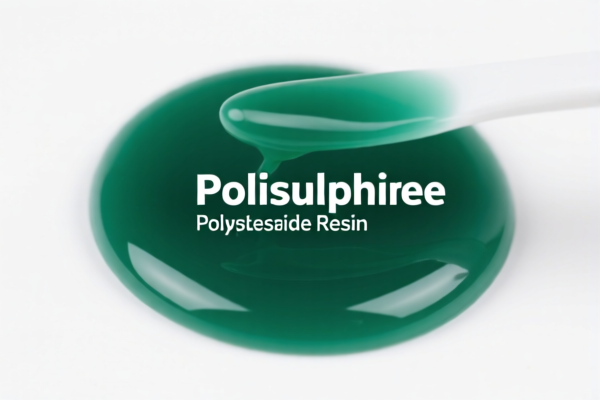
商品图片


AI分析
🧪 Polyphenylmethylphosphonate Resin Nanomaterials (Precursor Gels)
🌐 HS Code Reference & Customs Clearance Guide | 2026 Latest Tariff Analysis | Specialized Strategy for Chemical Products
📌 I. Product Definition & Classification: What Exactly Is This Material?
Polyphenylmethylphosphonate Resin Gel Raw Materials are advanced chemical precursors, often used in the production of high-performance nanomaterials, flame-retardant coatings, or specialized polymer matrices. In international trade, these substances are classified based on their chemical structure and physical state (primary form vs. prepared制剂).
The core distinction lies in whether the item is considered: 1. A Primary Polymer: A raw polymer substance before being mixed into a final preparation (Chapter 39). 2. An Organic Phosphorus Derivative: A specific chemical compound where phosphorus atoms are bonded to organic groups (Chapter 29). 3. A Prepared Chemical Product: A mixture or formulation containing other agents (Chapter 38).
⚠️ Key Classification Dilemma: - If the material is a raw polymer in primary forms (powders, liquids, pastes) without further chemical processing into a "preparation" → Chapter 39. - If the material is identified as a specific organic phosphorus compound (non-halogenated) → Chapter 29. - If the material is a mixture/formulation with other chemical agents → Chapter 38.
📦 II. HS Code Classification Matrix (2026 Latest Tariff Authority Mapping)
Based on the provided data, here are the 5 possible HS Codes for "Polyphenylmethylphosphonate Resin Gel Raw Materials," each with a different tax implication.
| HS Code | Product Description & Classification Logic | Tax Category | Key Differentiator |
|---|---|---|---|
3914.00.60.00 |
Other Primary Form Polymers. Classified under Chapter 39 as a polymer in its primary physical state. | High Tax | Treated as a generic polymer; highest total tax due to additional duties. |
3914.00.20.00 |
Other Primary Form Polymers. Also Chapter 39, but under a different subheading for "other" polymers. | High Tax | Same as above; base duty is 0%, but additional duties apply fully. |
2931.49.00.80 |
Other Non-Halogenated Organic Phosphorus Derivatives. Classified under Chapter 29. | Low Tax | Recognized as a specific chemical derivative; avoids high additional duties on polymers. |
2931.49.00.55 |
Primary Forms with P-Atom Bonded to Specific Alkyl Groups. A more specific subset of Chapter 29. | Low Tax | Specific structural definition (P bonded to alkyl); same low tax as above. |
3824.99.93.61 |
Other Chemical Products and Preparations. Classified under Chapter 38 as a prepared chemical. | Highest Tax | Treated as a "preparation" or mixture; incurs highest base duty + additional taxes. |
🔍 Critical Insight: - Chapter 29 (
2931...) offers the lowest tax burden (13.7%). This is ideal if you can prove the substance is a pure organic phosphorus derivative. - Chapter 39 (3914...) and Chapter 38 (3824...) are significantly more expensive (35%-40%). This happens if customs views the product as a "polymer" or a "chemical preparation" rather than a specific compound.
💰 III. 2026 Latest Tariff Rate Breakdown (Including Additional Duties & Policy Surcharges)
✅ Applicable Country: United States (US)
✅ Country of Origin: China (CN)
✅ Effective Date: November 10, 2025 (and subsequent imports)
🎯 1. 3914.00.60.00 & 3914.00.20.00 —— Primary Form Polymers (Chapter 39)
| Item | Content |
|---|---|
| Base Duty Rate | 3.9% (for .60) / 0.0% (for .20) |
| Section 301 Additional Duty | +25.0% (USITC Footnote for Chapter 39 polymers from China) |
| Section 122 Duty | +10.0% (Specific surcharge for certain chemical/polymer inputs) |
| Total Effective Rate | 38.9% (for .60) / 35.0% (for .20) |
| Calculation Basis | CIF Value × 38.9% or 35.0% |
| De Minimis Exemption? | ❌ NO (Not eligible for de minimis) |
| Legal Basis Path | USITC:3914.00.60.00 → SECTION_301:25% → SECTION_122:10% |
📌 Explanation: - Even with 0% base duty for
.20, the 35% total is still high due to the 25% + 10% surcharges. - These codes treat the material as a bulk polymer, attracting heavy trade penalties.
🎯 2. 2931.49.00.80 & 2931.49.00.55 —— Organic Phosphorus Derivatives (Chapter 29)
| Item | Content |
|---|---|
| Base Duty Rate | 3.7% |
| Section 301 Additional Duty | 0.0% (No Section 301 duty for most Chapter 29 phosphorus compounds) |
| Section 122 Duty | +10.0% |
| Total Effective Rate | 13.7% |
| Calculation Basis | CIF Value × 13.7% |
| De Minimis Exemption? | ❌ NO (Generally not eligible) |
| Legal Basis Path | USITC:2931.49.00.80 → SECTION_122:10% |
📌 Explanation: - This is the most cost-effective classification. - By proving the item is a specific organic phosphorus derivative (not just a generic polymer), you avoid the 25% Section 301 tariff. - Only the 10% Section 122 duty applies, keeping the total tax at 13.7%.
🎯 3. 3824.99.93.61 —— Prepared Chemical Products (Chapter 38)
| Item | Content |
|---|---|
| Base Duty Rate | 5.0% |
| Section 301 Additional Duty | +25.0% |
| Section 122 Duty | +10.0% |
| Total Effective Rate | 40.0% |
| Calculation Basis | CIF Value × 40.0% |
| De Minimis Exemption? | ❌ NO |
| Legal Basis Path | USITC:3824.99.93.61 → SECTION_301:25% → SECTION_122:10% |
📌 Explanation: - Highest tax burden (40%). - Customs may classify it this way if the product is a mixture or formulation (e.g., gel with solvents/additives) rather than a pure compound. Avoid this if possible.
🛠️ IV. Customs Clearance Practical Advice (Battle-Tested Pitfall Avoidance)
✅ 1. Documentation Checklist (Mandatory)
| Document | Required? | Purpose |
|---|---|---|
| ✅ Technical Data Sheet (TDS) | ✔️ | Must show chemical structure, CAS number, and purity. Proves it’s a derivative, not a mix. |
| ✅ Certificate of Analysis (COA) | ✔️ | Confirms the product is not a "preparation" but a specific chemical compound. |
| ✅ Chemical Structure Diagram | ✔️ | Visual proof of P-C bonds to justify Chapter 29 classification. |
| ✅ Material Safety Data Sheet (MSDS) | ✔️ | Standard for hazardous chemicals; helps customs identify the substance. |
| ✅ Commercial Invoice | ✔️ | Clearly state: "Polyphenylmethylphosphonate, Organic Phosphorus Derivative, CAS [Number], Not a Polymer Preparation." |
| ✅ Bill of Lading | ✔️ | Ensure HS Code matches invoice. |
✅ 2. Declaration Strategy (Key Mantra)
🔥 "Pure Compound, Chapter 29; Mixture, Chapter 38. Prove Structure, Save Tax!"
| Scenario | Correct HS Code | Why? |
|---|---|---|
| Pure Resin/Gel (Single chemical entity) | 2931.49.00.55 or 80 |
It’s an organic phosphorus derivative. Lowest tax (13.7%). |
| Polymer in Primary Form (No other chemicals) | 3914.00.60.00 |
If structure is unclear, customs may fall back to polymer classification. High tax (38.9%). |
| Mixture/Formulation (With solvents/additives) | 3824.99.93.61 |
Treated as a "preparation." Highest tax (40%). |
| Other Polymer | 3914.00.20.00 |
Alternative polymer classification. High tax (35%). |
📌 Critical Tip: - Do NOT declare as "Plastic Raw Material" or "Polymer Gel" if it is a specific phosphonate compound. Use the term "Organic Phosphorus Derivative" to trigger Chapter 29. - Provide a CAS Registry Number for polyphenylmethylphosphonate. This allows customs to verify the exact chemical nature.
✅ 3. Special Case Handling
| Situation | Recommendation |
|---|---|
| Product is a Gel | Gels can still be classified as primary forms if they are not "preparations." Emphasize purity and chemical structure over physical state. |
| Customs Questions Structure | Provide a letter of explanation from the manufacturer detailing the synthesis process, proving it’s a specific derivative, not a mixed preparation. |
| Discrepancy in Name | Ensure the commercial invoice name matches the HS Code description. Use "Polyphenylmethylphosphonate Resin" rather than "Polymer Gel." |
🌍 V. Global Market Comparison (2026 Latest)
| Country/Region | Recommended HS Code | Est. Total Tax (China Origin) | Key Requirement |
|---|---|---|---|
| 🇺🇸 USA | 2931.49.00.55 / 80 |
13.7% | Proof of chemical structure (Chapter 29). Avoid Chapter 39/38. |
| 🇨🇳 China | 2931.49.00.55 |
Varies (Import Duty) | Check current Chinese tariff schedule for phosphorus compounds. |
| 🇪🇺 EU | 2931.49.00 |
0-6.5% (Typically low) | REACH registration required for chemical substances. |
| 🇬🇧 UK | 2931.49.00 |
0-6.5% | Post-Brexit tariffs may vary; check UK Global Tariff. |
📌 Conclusion: - USA is the most aggressive market with Section 301 and Section 122 duties. - Classification as Chapter 29 (
2931) is the ONLY way to mitigate the 25% Section 301 tariff. - EU and UK are more favorable if you can prove chemical purity.
📌 VI. Common Mistakes & Pitfall Guide (Blood Lessons)
❌ Mistake 1: Declaring as "Polymer" (3914) when it is a "Derivative" (2931)
👉 Consequence: Pay 38.9% instead of 13.7%. Overpayment of 25.2% on value!
❌ Mistake 2: Declaring as "Chemical Preparation" (3824)
👉 Consequence: Pay 40.0%. Highest possible rate. Plus, additional scrutiny on chemical content.
❌ Mistake 3: Not providing CAS Number or Structure Diagram
👉 Consequence: Customs may misclassify as "Other Chemical Products" (3824) or "Polymer" (3914) by default, leading to higher tax or delays.
❌ Mistake 4: Using vague terms like "Gel" or "Resin" without chemical specifics
👉 Consequence: Ambiguity leads to customs officer choosing the higher-taxed category.
✅ Correct Approach:
"Polyphenylmethylphosphonate, Organic Phosphorus Derivative, CAS [Number], Purity >98%, Primary Form, For Nanomaterial Synthesis."
🎯 VII. Conclusion: Professional Declaration, Cost Savings, Efficiency!
🎯 Remember the Mantra:
🔹 "Chapter 29 saves 25%! Prove the P-C bond!"
🔹 "Polymer = 39% Derivative = 14%! The difference is 25% of your CIF value!"
🔹 "Structure Diagram is your best friend. No diagram, no discount."
📌 Pro Tip:
If your product is sourced from Vietnam, Mexico, or Thailand, you may qualify for IEEPA Exemptions or lower tariffs under USMCA/ASEAN agreements.
Recommendation: Request an Advance Ruling from US Customs and Border Protection (CBP) to lock in the 13.7% classification before shipment.
📣 Immediate Action:
📞 Contact a Certified Customs Broker + Provide CAS Number + Submit Structure Diagram
🚀 Clear Customs Smoothly, Save Millions, Maximize Profits!
✨ Professional Classification Starts with Precision!
💼 Every Percent of Tax Saved is Pure Profit!
用户评价
关于 HS 编码归类
协调制度(HS)是由世界海关组织(WCO)制定的国际贸易商品分类标准。全球 200 多个国家采用 HS 系统作为海关关税、贸易统计和进出口监管的基础。
每个 HS 编码遵循以下层级结构:
- 章(2 位)——商品大类(例如:第 84 章:机器和机械设备)
- 品目(4 位)——章内的更具体分类
- 子目(6 位)——国际通用细分,所有 WCO 成员国统一使用
- 本国细分(8-10 位)——各国自行扩展的细分编码,如美国 HTSUS 10 位编码
正确的 HS 编码归类对于顺利通关、准确缴纳关税和遵守贸易法规至关重要。错误归类可能导致海关延误、多缴关税或罚款。
从CN进口到US时,适用的关税税率可能包括:
- 最惠国(MFN)税率——适用于 WTO 成员国的标准关税税率
- 普通税率——适用于无贸易协定国家
- 贸易救济关税——附加关税,如 301 条款(反倾销)、232 条款(国家安全)或反补贴税
本页内容仅供参考。如需正式归类,请咨询当地海关或持牌报关代理。