Polypropylene Agricultural Rope
CN → US| HS编码 | 关税税率 | 原产国 | 目的国 | 文档 |
|---|---|---|---|---|
| 5607491000 | 37.7% | CN | US | 官方文档 |
| 5607411000 | 37.7% | CN | US | 官方文档 |
| 3920200015 | 39.2% | CN | US | 官方文档 |
| 3920200055 | 39.2% | CN | US | 官方文档 |
| 3916903000 | 41.5% | CN | US | 官方文档 |
商品图片
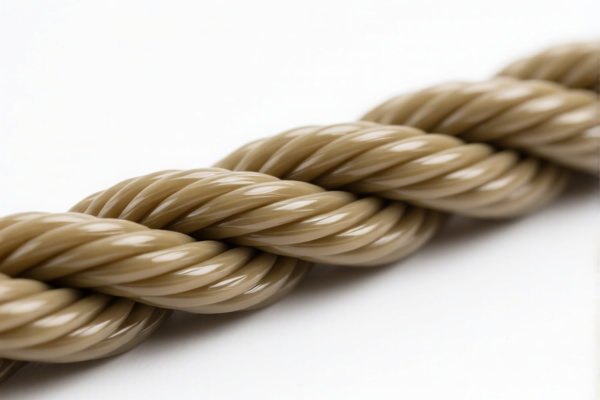
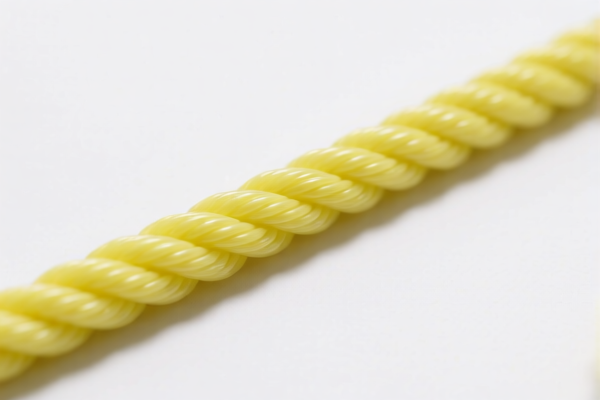

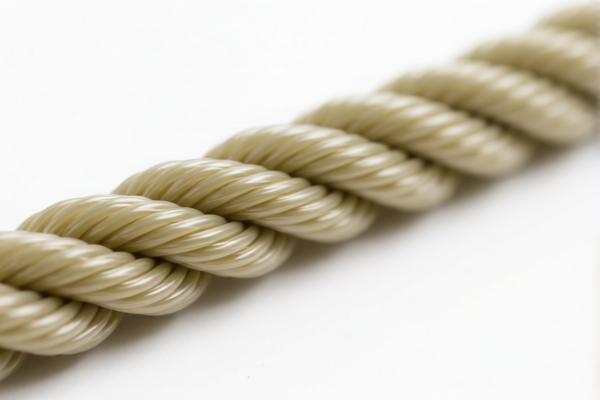
AI分析
🌾 Polypropylene Agricultural Rope: HS Code Classification & Taxation Guide (2026)
🌐 HS Code Reference & Customs Clearance Guide | Latest Tariff Analysis | Professional Clearance Strategy
📌 I. Product Definition & Classification: Do You Truly Understand "Polypropylene Agricultural Rope"?
Polypropylene (PP) agricultural rope is a critical input in modern farming, used for trellising, bundling, harvesting, and general securing of crops. In international trade, the classification depends heavily on its physical form (rope vs. band/plastic strip) and specific use.
Key Distinction: - Rope/Cord Format: Twisted or braided strands → Falls under Chapter 56 (Articles of Yarn) - Band/Strip Format: Flat, plastic sheeting or narrow strips → Falls under Chapter 39 (Plastics and Articles Thereof)
⚠️ Critical Identification Point:
- If it is twisted, braided, or knotted into a cylindrical shape → HS 5607 (Ropes)
- If it is a flat, continuous plastic strip (even if narrow) → HS 3920 (Plastic Bands)
- If it is a solid monofilament (single thick strand) → HS 3916 (Plastic Profiles)
📦 II. HS Code Classification Details (2026 Latest Tariff Alignment)
Based on the provided data, here are the four possible HS Code classifications for Polypropylene Agricultural Rope, ranging from the most accurate to fallback categories.
| HS Code | Product Description | Application Scenario | Form Factor | Total Tax Rate |
|---|---|---|---|---|
5607.49.10.00 |
Polypropylene Rope (General) | Standard agricultural ropes, twisted/braided, general purpose | Cylindrical Rope | 37.7% |
5607.41.10.00 |
Packaging/Baling Rope | Specific PP ropes used for baling hay, binding crops, or packaging | Binding/Baling Rope | 37.7% |
3920.20.00.15 |
Plastic Strip/Band | Flat PP strips used for bundling, acting as a "band" rather than a rope | Flat Band/Strip | 39.2% |
3920.20.00.55 |
Other Plastic Bands | Fallback category for PP ropes that might be misinterpreted as plastic strips | Plastic Band/Strip | 39.2% |
3916.90.30.00 |
Plastic Profiles/Monofilament | Thick, solid PP single strands or rods used in agriculture | Solid Monofilament/Profile | 41.5% |
🔍 Key Insight:
- The lowest tax rate (37.7%) applies if the product is clearly classified as a rope (Chapter 56).
- The highest tax rate (41.5%) applies if it is classified as a plastic profile (Chapter 39, Section 16).
- Avoid Chapter 39 if possible, as rates are higher. Ensure your product is described and physically presented as "rope" or "twisted cord," not "plastic strip."
💰 III. 2026 Tariff Rate Breakdown (Including Surtaxes & Policy Adjustments)
✅ Target Market: United States (US)
✅ Origin: China (CN)
✅ Effective Date: Current tariffs apply (Section 301 + 122)
🎯 1. 5607.49.10.00 & 5607.41.10.00 – PP Ropes (Packaging/Baling)
| Item | Detail |
|---|---|
| Base Tariff | 2.7% (Standard MFN rate) |
| Section 301 Surtax | +25.0% (Trade war tariff on Chinese textiles/cords) |
| Section 122 Tariff | +10.0% (Specific surtax on certain Chinese goods) |
| Total Effective Rate | 37.7% |
| Calculation Basis | CIF Value × 37.7% |
| De Minimis Exemption | ❌ NOT APPLICABLE (High tariff goods excluded from $800 threshold) |
| Legal Reference Path | HTS:5607.49.10.00 → Section 301: Footnote 9903.88.03 → Section 122: Specific List |
📌 Explanation:
- These codes fall under Chapter 56 (Articles of Yarn).
- The 25% Section 301 tariff is standard for many Chinese textile-related plastics.
- The 10% Section 122 tariff adds an additional layer, bringing the total to 37.7%.
- No de minimis exemption: Small shipments are not tax-exempt; all duties apply.
🎯 2. 3920.20.00.15 & 3920.20.00.55 – Plastic Bands/Strips
| Item | Detail |
|---|---|
| Base Tariff | 4.2% (Standard MFN rate for plastics) |
| Section 301 Surtax | +25.0% |
| Section 122 Tariff | +10.0% |
| Total Effective Rate | 39.2% |
| Calculation Basis | CIF Value × 39.2% |
| De Minimis Exemption | ❌ NOT APPLICABLE |
| Legal Reference Path | HTS:3920.20.00.15 → Section 301: Footnote 9903.88.03 → Section 122 |
📌 Explanation:
- Higher base tariff (4.2% vs 2.7%) pushes the total to 39.2%.
- Classification as "plastic band" rather than "rope" is costlier.
- Ensure the product is not flat or extruded like a tape.
🎯 3. 3916.90.30.00 – Plastic Profiles (Monofilament)
| Item | Detail |
|---|---|
| Base Tariff | 6.5% (Highest base rate) |
| Section 301 Surtax | +25.0% |
| Section 122 Tariff | +10.0% |
| Total Effective Rate | 41.5% |
| Calculation Basis | CIF Value × 41.5% |
| De Minimis Exemption | ❌ NOT APPLICABLE |
| Legal Reference Path | HTS:3916.90.30.00 → Section 301 → Section 122 |
📌 Explanation:
- This is the most expensive classification.
- Only use if the product is a solid, single strand (monofilament) not twisted into a rope.
- Common in industrial netting or heavy-duty single-strand ties.
🛠️ IV. Customs Clearance Practical Advice (Real-World Pitfall Avoidance)
✅ 1. Required Documentation Checklist (Non-Negotiable)
| Document | Mandatory | Notes |
|---|---|---|
| ✅ Product Specifications | ✔️ | Must specify: Material (100% PP), Form (Twisted Rope vs. Flat Strip), Diameter, Strength |
| ✅ Commercial Invoice | ✔️ | Clearly state: "Polypropylene Agricultural Rope, Twisted, 5mm Diameter" |
| ✅ Packing List | ✔️ | Detail net/gross weight, number of rolls |
| ✅ Proof of Origin | ✔️ | Certificate of Origin (CO) required for 301/122 assessment |
| ✅ Product Photos | ✔️ | Close-up of twist/braid structure to prove it is "rope," not "band" |
| ✅ Section 301/122 Exclusion Check | ✔️ | Verify if any exclusions apply (rare for PP ropes) |
✅ 2. Declaration Tips (Key Mnemonics)
🔥 "Twisted is Rope, Flat is Band, Pay Less Tax, Choose 5607!"
| Scenario | Correct HS Code | Why? |
|---|---|---|
| Twisted/Braided Rope | 5607.49.10.00 / 5607.41.10.00 |
Classified as "Yarn/Rope" → Lower base tax (2.7%) |
| Flat Plastic Strip | 3920.20.00.15 |
Classified as "Plastic Band" → Higher base tax (4.2%) |
| Single Solid Strand | 3916.90.30.00 |
Classified as "Plastic Profile" → Highest base tax (6.5%) |
| Mixed Packaging (Rope + Bands) | Split Declaration | Do not lump together. Different HS codes = different taxes. |
✅ 3. Special Situations & Risk Management
| Situation | Recommendation |
|---|---|
| OEM Custom Ropes | Provide customer order + design specs. If rope has different colors, still 5607.49.10.00. |
| Importing via Third Country | If transshipped, origin may still be China. 301/122 tariffs likely still apply unless substantial transformation occurs. |
| Small Sample Shipments | ❌ No De Minimis Exemption. Even $100 shipment pays 37.7% duty. Factor this into budget. |
| Dispute on Form | If customs questions "Rope vs. Band," provide physical sample and cross-section photo. Twist = Rope. Flat = Band. |
🌍 V. Global Market Comparison (2026)
| Country/Region | Recommended HS Code | Estimated Total Duty (China Origin) | Remarks |
|---|---|---|---|
| 🇺🇸 USA | 5607.49.10.00 |
37.7% | Highest cost due to 301+122 tariffs |
| 🇨🇳 China | 5607.49.10.00 |
~4-6% | Low import duty for domestic use |
| 🇪🇺 EU | 5607.49.00 |
~2-3% | No Section 301/122 equivalent |
| 🇦🇺 Australia | 5607.49.00 |
~5% | FTA benefits may apply if from eligible countries |
| 🇯🇵 Japan | 5607.49.00 |
~3-5% | CEPA/JTEPA may reduce duties for some origins |
📌 Conclusion:
- USA is the most expensive market for PP Agricultural Rope due to叠加 tariffs.
- EU/Asia-Pacific markets are significantly more cost-effective.
- Strategy: If exporting to the US, optimize supply chain or consider duty drawback programs if re-exporting.
📌 VI. Common Errors & Pitfalls (Blood Lessons)
❌ Error 1: Declaring "Plastic Rope" under 3920 (Plastics)
👉 Consequence: Higher base tax (4.2% vs 2.7%) → Total 39.2% vs 37.7% → Unnecessary cost increase.
👉 Fix: Emphasize "Twisted/Braided" structure in documentation.
❌ Error 2: Assuming De Minimis ($800) applies
👉 Consequence: Small shipments seized or taxed heavily.
👉 Fix: All PP ropes from China are subject to full duties regardless of value.
❌ Error 3: Misidentifying "Monofilament" as "Rope"
👉 Consequence: If single strand is declared as rope, but customs inspects and finds it's a solid profile → Misclassification Penalty + 41.5% Rate.
👉 Fix: Be precise. Single thick strand = 3916.90.30.00.
✅ Correct Declaration Example:
"AGRICULTURAL ROPE, POLYPROPYLENE, TWISTED, 5MM DIA, WHITE, FOR VINE TRELLISING, H.S. 5607.49.10.00, MADE IN CHINA"
🎯 VII. Conclusion: Precision Classification Saves Money!
🎯 Remember the Golden Rule:
🔹 "Twisted is Rope (5607), Flat is Band (3920), Solid is Profile (3916)."
🔹 "37.7% is the sweet spot for PP Ropes in the US. Avoid 39.2% and 41.5%!"
🔹 "No De Minimis for China-origin PP Ropes. Budget for full tax!"
📌 Pro Tip:
If your volume is large, consider applying for a Binding Ruling from US Customs & Border Protection (CBP) to confirm the HS code and tax liability upfront. This avoids post-clearance audits and penalties.
📣 Immediate Action:
📞 Consult a licensed customs broker.
📄 Prepare technical specs highlighting "twisted/braided" structure.
📉 Calculate landed cost at 37.7% for accurate pricing.
✨ Professional Clearance Starts with Accurate Classification!
💼 Your Profit Margin Depends on This 0.1% Detail!
用户评价
关于 HS 编码归类
协调制度(HS)是由世界海关组织(WCO)制定的国际贸易商品分类标准。全球 200 多个国家采用 HS 系统作为海关关税、贸易统计和进出口监管的基础。
每个 HS 编码遵循以下层级结构:
- 章(2 位)——商品大类(例如:第 84 章:机器和机械设备)
- 品目(4 位)——章内的更具体分类
- 子目(6 位)——国际通用细分,所有 WCO 成员国统一使用
- 本国细分(8-10 位)——各国自行扩展的细分编码,如美国 HTSUS 10 位编码
正确的 HS 编码归类对于顺利通关、准确缴纳关税和遵守贸易法规至关重要。错误归类可能导致海关延误、多缴关税或罚款。
从CN进口到US时,适用的关税税率可能包括:
- 最惠国(MFN)税率——适用于 WTO 成员国的标准关税税率
- 普通税率——适用于无贸易协定国家
- 贸易救济关税——附加关税,如 301 条款(反倾销)、232 条款(国家安全)或反补贴税
本页内容仅供参考。如需正式归类,请咨询当地海关或持牌报关代理。