Polypropylene Compound Fertilizer Bag
CN → US| HS编码 | 关税税率 | 原产国 | 目的国 | 文档 |
|---|---|---|---|---|
| 6305330080 | 25.9% | CN | US | 官方文档 |
| 3923290000 | 38.0% | CN | US | 官方文档 |
| 6305330010 | 25.9% | CN | US | 官方文档 |
商品图片
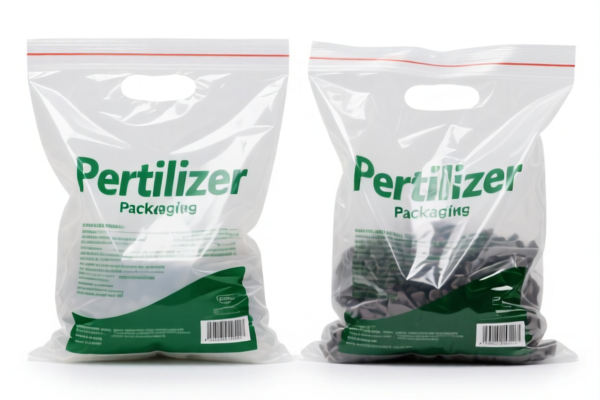
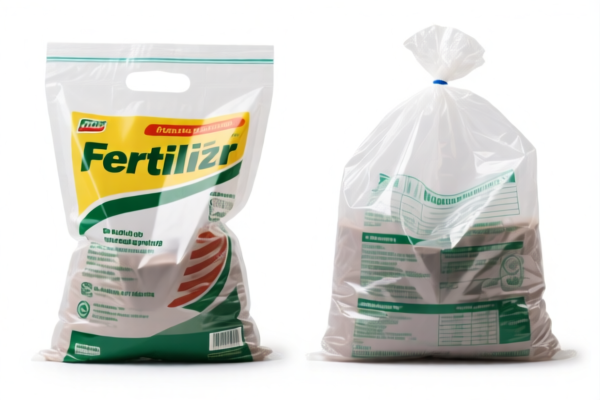
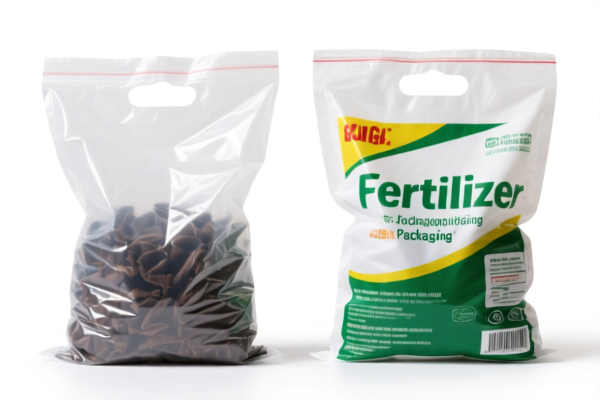
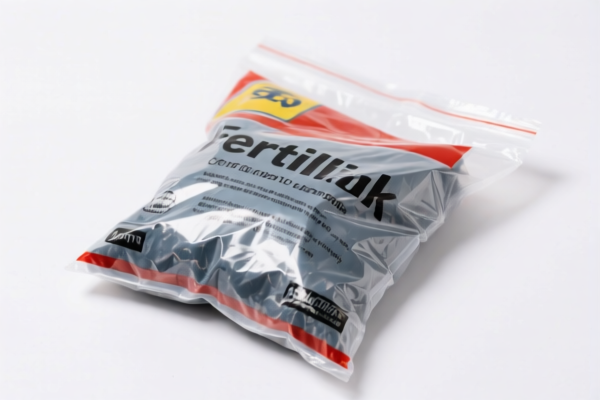
AI分析
🌾 Polypropylene Compound Fertilizer Bags
🌐 HS Code Reference & Customs Clearance Guide | 2026 Latest Tariff Analysis | Professional Clearance Strategy
📌 I. Product Definition & Classification: What Exactly is a "PP Fertilizer Bag"?
Polypropylene (PP) woven bags are the industry standard for bulk agricultural packaging, specifically designed for chemical fertilizers. Due to the specific material composition and end-use, these bags fall into two distinct HS Code categories depending on their structural designation and regulatory interpretation.
⚠️ Key Distinction Point:
- Category A (Packaging Articles): Classified under Chapter 63 as "Sacks and Bags" specifically for fertilizer packaging.
📉 Tax Advantage: Lower base tariff (8.4%).
- Category B (Plastic Packaging): Classified under Chapter 39 as "Plastic Packings, Bags and Sacks."
📈 Tax Burden: Higher base tariff (3.0%) but significantly higher punitive tariffs, leading to a heavier total tax burden.
📦 II. HS Code Classification Details (2026 Latest Tariff Authority Comparison)
Based on the provided data, there are three specific HS Codes applicable to Polypropylene Compound Fertilizer Bags. The primary difference lies in the specific sub-heading within the 6305 series versus the 3923 series.
| HS Code | Product Description | Application Scenario | Tax Structure Overview |
|---|---|---|---|
6305.33.00.80 |
Polypropylene Woven Bags (Fertilizer Bags) | Standard chemical fertilizer packaging; PP material, woven structure. | Total: 25.9% |
6305.33.00.10 |
Polypropylene Woven Bags (Fertilizer Bags) | Fertilizer bag packaging; PP material, woven structure. | Total: 25.9% |
3923.29.00.00 |
Polypropylene Woven Bags (Plastic Packaging) | General plastic packaging bags; PP material, woven structure. | Total: 38.0% |
🔍 Critical Analysis:
- Codes6305.33.00.80and6305.33.00.10are functionally identical in tax rate (25.9%). They belong to Chapter 63 ("Other made up textile articles"), specifically heading 6305 ("Sacks and bags... for packaging"). This is the preferred classification for fertilizer bags as it recognizes the specific industrial use. - Code3923.29.00.00belongs to Chapter 39 ("Plastics and articles thereof"). While technically made of plastic, classifying it here triggers a higher base tariff (3.0% vs 8.4% base, but see tax details below) and results in the highest total duty due to the combination of tariffs.
💰 III. 2026 Latest Tariff Rate Breakdown (Detailed Tax Clauses)
✅ Applicable Country: United States (US)
✅ Origin: China (CN)
✅ Note: All tariffs below include Base, Section 301 (Additional), and Section 122 Tariffs.
🎯 1. 6305.33.00.80 & 6305.33.00.10
Polypropylene Woven Bags (Fertilizer Bags)
These two codes share the exact same tax structure.
| Item | Content |
|---|---|
| Base Tariff | 8.4% (Ad Valorem) |
| Section 301 Additional Tariff | +7.5% |
| Section 122 Tariff | +10% |
| Total Effective Tax Rate | 25.9% |
| Tax Calculation | CIF Value × 25.9% |
| Legal Basis Path | USITC:6305.33.00.80/10 → Section 301: 7.5% → Section 122: 10% |
📌 Explanation:
- The Base Tariff (8.4%) is standard for woven fabric sacks.
- The Section 301 Additional Tariff (7.5%) is applied to goods from China.
- The Section 122 Tariff (10%) is a specific additional duty applied to certain textile/apparel items, including woven bags.
- Result: A combined burden of 25.9%. This is the most competitive rate among the options provided.
🎯 2. 3923.29.00.00
Polypropylene Woven Bags (Plastic Packaging)
Classification as a general plastic packaging article.
| Item | Content |
|---|---|
| Base Tariff | 3.0% (Ad Valorem) |
| Section 301 Additional Tariff | +25.0% |
| Section 122 Tariff | +10% |
| Total Effective Tax Rate | 38.0% |
| Tax Calculation | CIF Value × 38.0% |
| Legal Basis Path | USITC:3923.29.00.00 → Section 301: 25.0% → Section 122: 10% |
📌 Critical Warning:
- Although the Base Tariff (3.0%) is lower than the 6305 series (8.4%), the Section 301 Additional Tariff jumps to 25.0% (compared to 7.5% for the 6305 series).
- Result: The total tax rate skyrockets to 38.0%.
- Why this happens: US trade policy often imposes harsher penalties on generic plastic products from China compared to specific textile-based packaging goods. Misclassifying a "Fertilizer Bag" as a generic "Plastic Bag" can cost an additional 12.1% in duties.
🛠️ IV. Customs Clearance Practical Advice (Actionable Pitfall Avoidance Guide)
✅ 1. Documentation Checklist (Essential for Clearance)
| Document | Required | Description |
|---|---|---|
| ✅ Product Specification Sheet | ✔️ | Must explicitly state: "Polypropylene Woven Fabric," "For Fertilizer Packaging," "Waterproof Liner" (if any). |
| ✅ Commercial Invoice | ✔️ | Must use the precise description: "Polypropylene Woven Bags for Fertilizer Packaging" (Avoid vague terms like "Plastic Sacks"). |
| ✅ Packing List | ✔️ | Detail net/gross weight, piece count, and palletization. |
| ✅ Material Composition Proof | ✔️ | Certificate of Origin or Mill Test Report proving 100% Polypropylene (PP) content. |
| ✅ Pre-Ruling (Optional but Recommended) | ✔️ | If importing large volumes, apply for a CBP Ruling to confirm HS 6305.33.00.80/10. |
✅ 2. Declaration Strategy (Key Mantra)
🔥 "Define Use, Specify Material, Avoid Generic 'Plastic' Labels!"
| Scenario | Correct Declaration | Incorrect Declaration | Consequence |
|---|---|---|---|
| Standard Fertilizer Bag | 6305.33.00.80 (25.9%) |
3923.29.00.00 (38.0%) |
Overpayment of 12.1% + Potential Audit |
| Bag with Printed Logo | 6305.33.00.80 |
3923.29.00.00 |
Misclassification Risk. Printed bags are still "sacks." |
| Reused/Recycled Bags | Subject to stricter scrutiny | Standard Classification | May require additional EPA/Environment compliance docs. |
| Inner Liner Bags | Classified with Main Bag | Separate HS Code | Do not split; declare as one lot to avoid complex multi-code filing. |
📌 Clarification on
6305.33.00.80vs.10:
- In the provided data, both.80and.10have the same tax rate (25.9%).
- Typically,.10might refer to specific "sacks and bags" sub-categories, while.80is "other."
- Recommendation: Use6305.33.00.80as the primary code unless you have specific CBP documentation requiring.10. They are fiscally equivalent in this dataset.
✅ 3. Special Circum Handling
| Situation | Handling Advice |
|---|---|
| Bag + Inner Plastic Liner | Declare as a composite good. The outer woven PP structure usually dictates the classification under Chapter 63. Do not separate the liner unless it is sold independently. |
| Custom Branding/Logo | Ensure the invoice mentions "Custom Printed Polypropylene Woven Bags." This reinforces the "Fertilizer/Packaging" intent, supporting the 6305 classification. |
| Anti-Dumping/Countervailing Duty (CVD) | While PP bags generally do not face CVD, always check if the specific manufacturer is on any restricted list. |
| Section 122 Applicability | Confirm that Section 122 applies to this specific sub-heading. The data confirms it does (10%), so factor this into your landed cost calculation. |
🌍 V. Global Market Comparison (2026 Snapshot)
| Country/Region | Recommended HS Code | Estimated Total Duty | Notes |
|---|---|---|---|
| 🇺🇸 USA | 6305.33.00.80 |
25.9% | Includes Sec 301 (7.5%) + Sec 122 (10%). |
| 🇺🇸 USA (Misclassified) | 3923.29.00.00 |
38.0% | AVOID. Higher Sec 301 (25%) makes this expensive. |
| 🇨🇳 China (Import) | 6305.33.00 |
~6-9% | Standard MFN rate; no Section 122/301 from US perspective. |
| 🇪🇺 EU | 6305.33.00 |
~6-7% | Generally lower duties than US; no Section 122 equivalent. |
| 🇨🇦 Canada | 6305.33.00 |
~5-12% | Depends on Preferential Trade Agreement (CUSMA). |
📌 Conclusion:
The US market is the most expensive for PP Fertilizer Bags due to the combination of Section 301 and Section 122 tariffs. Precision in classification is critical to avoid the 38.0% trap.
📌 VI. Common Errors & Pitfall Guide (Lessons Learned)
❌ Error 1: Using "Plastic Bag" as the Product Name on the Invoice.
👉 Consequence: Customs officers may default to 3923.29.00.00 (38.0%) because "Plastic Bag" is ambiguous and often routed to Chapter 39.
✅ Fix: Always use "Polypropylene Woven Fertilizer Bag."
❌ Error 2: Assuming Base Tariff is the only cost.
👉 Consequence: Ignoring the 10% Section 122 and 7.5%/25% Section 301 leads to massive profit margin erosion.
✅ Fix: Calculate Landed Cost using the Total Tax Rate (25.9% or 38.0%).
❌ Error 3: Confusing 6305.33.00.80 and .10 as having different rates.
👉 Consequence: Unnecessary administrative effort to search for the "cheaper" one when both are 25.9%.
✅ Fix: Treat them as equivalent; use .80 for broader "other" category clarity unless specific trade data requires .10.
🎯 VII. Conclusion: Precision Classification Saves Money!
🎯 Remember the Mantra:
🔹 "Woven Fertilizer Bag = 6305 (25.9%)!"
🔹 "Generic Plastic Bag = 3923 (38.0%)! Avoid the 12.1% Penalty!"
🔹 "Declare 'Fertilizer Use' to Stay in Chapter 63!"
📌 Pro Tip:
For high-volume imports, consider applying for a CBP Binding Ruling. This legally binds US Customs to accept your classification of 6305.33.00.80 at 25.9%, protecting you from future audits and back-taxes.
📣 Immediate Action:
📞 Update your Invoice Descriptions to "Polypropylene Woven Fertilizer Bags."
📊 Recalculate your Landed Cost using 25.9% (not 38.0%).
🚀 Maximize Profit Margin by avoiding misclassification penalties!
✨ Professional Customs Clearance Starts with Accurate Classification!
💼 Every Percent Saved is Pure Profit!
用户评价
关于 HS 编码归类
协调制度(HS)是由世界海关组织(WCO)制定的国际贸易商品分类标准。全球 200 多个国家采用 HS 系统作为海关关税、贸易统计和进出口监管的基础。
每个 HS 编码遵循以下层级结构:
- 章(2 位)——商品大类(例如:第 84 章:机器和机械设备)
- 品目(4 位)——章内的更具体分类
- 子目(6 位)——国际通用细分,所有 WCO 成员国统一使用
- 本国细分(8-10 位)——各国自行扩展的细分编码,如美国 HTSUS 10 位编码
正确的 HS 编码归类对于顺利通关、准确缴纳关税和遵守贸易法规至关重要。错误归类可能导致海关延误、多缴关税或罚款。
从CN进口到US时,适用的关税税率可能包括:
- 最惠国(MFN)税率——适用于 WTO 成员国的标准关税税率
- 普通税率——适用于无贸易协定国家
- 贸易救济关税——附加关税,如 301 条款(反倾销)、232 条款(国家安全)或反补贴税
本页内容仅供参考。如需正式归类,请咨询当地海关或持牌报关代理。