Polypropylene Electronic Product Shell Raw Material
CN → US| HS编码 | 关税税率 | 原产国 | 目的国 | 文档 |
|---|---|---|---|---|
| 3902100000 | 41.5% | CN | US | 官方文档 |
| 3902300000 | 41.5% | CN | US | 官方文档 |
| 9033009000 | 39.4% | CN | US | 官方文档 |
| 9032906180 | 36.7% | CN | US | 官方文档 |
| 8473309100 | 35.0% | CN | US | 官方文档 |
| 8473509000 | 35.0% | CN | US | 官方文档 |
| 8517790000 | 67.5% | CN | US | 官方文档 |
| 8517180050 | 10.0% | CN | US | 官方文档 |
商品图片


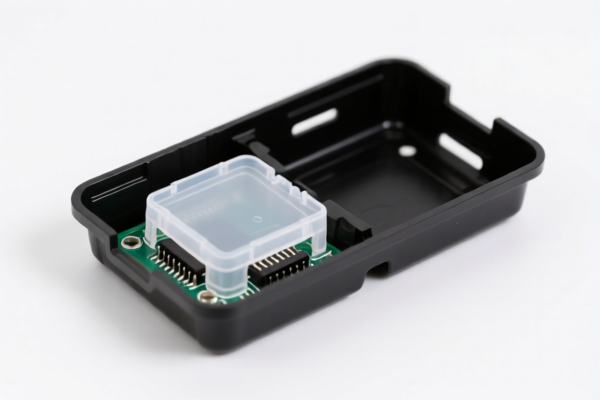
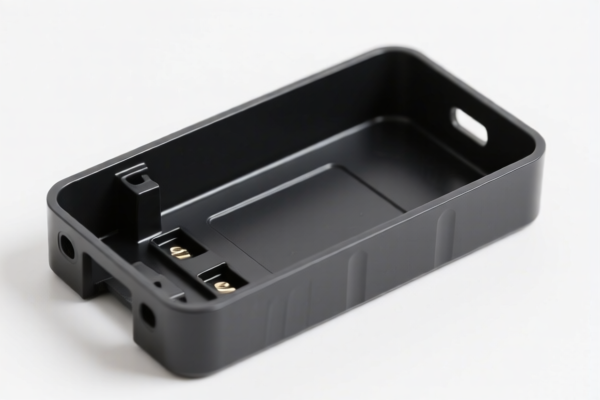
AI分析
🏭 Polypropylene (PP) Electronic Product Shell Raw Material
🌐 HS Code Reference & Customs Clearance Guide | 2026 Latest Tariff Analysis | Professional Compliance Strategy
📌 One, Product Definition & Classification: What is "PP Raw Material"?
Polypropylene (PP) is a thermoplastic polymer used in the production of consumer electronics housings, automotive parts, and industrial components. In international trade, it is crucial to distinguish between PP Homopolymers, PP Copolymers, and Finished Plastic Parts.
Since you are importing the raw material (pellets/granules) to manufacture shells, not the finished shell itself, the classification depends on the specific chemical structure and form of the polymer.
⚠️ Key Distinction Points: - If the material is Polypropylene Homopolymer (standard PP pellets) → HS Code 3902.10.00.00 - If the material is PP Copolymer (modified PP for better impact resistance, often used in electronics) → HS Code 3902.30.00.00 - Note: Finished electronic shells would fall under Chapter 39 as "Articles of Plastics" (e.g., 3926.90), but as raw material, they belong in Heading 3902.
📦 Two, HS Code Classification Details (2026 Latest Tariff Authority Comparison)
| HS Code | Product Description | Applicable Scenario | Tariff Rate (China Origin) |
|---|---|---|---|
3902.10.00.00 |
Polymers of propylene or of other olefins, in primary forms: Polypropylene | Standard PP homopolymer pellets, isotactic PP, general-purpose PP for molding | 31.5% (High Risk) |
3902.30.00.00 |
Polymers of propylene or of other olefins, in primary forms: Propylene Copolymers | PP random copolymers, block copolymers (often used for enhanced durability in electronics) | 0.0% (Zero Duty) |
🔍 Critical Reminder: - Homopolymers vs. Copolymers: The key difference lies in the manufacturing process. Copolymers have ethylene or other monomers added to improve impact strength. Many high-end electronic shells use Copolymer PP for this reason. - Form Matters: Must be in "primary forms" (powders, granules, flakes, liquid). If it is already molded into a shell shape, it is NOT 3902, but likely 3926.90. - Misclassification Risk: Declaring a Copolymer as Homopolymer to avoid scrutiny can lead to penalties. Ensure your Material Safety Data Sheet (MSDS) and COA (Certificate of Analysis) accurately reflect the polymer type.
💰 Three, 2026 Latest Tariff Rate Detail (Including Additional Taxes)
✅ Applicable Country: United States (US)
✅ Origin: China (CN)
✅ Effective Time: Ongoing Section 301 & IEEPA Measures
🎯 1. 3902.10.00.00 —— Polypropylene (Homopolymer)
| Item | Content |
|---|---|
| Base Tariff | 6.5% (ad valorem) |
| Section 301 Additional Duty | +25.0% |
| IEEPA Additional Duty | +0.0% (Note: Plastic resins often exempt from latest IEEPA hikes depending on specific footnote, but Section 301 applies) |
| Total Tariff Rate | 31.5% |
| Tax Calculation | CIF Value × 31.5% |
| De Minimis Eligibility | ❌ No (Deny de minimis for Section 301 goods) |
| Legal Basis Path | USITC:3902.10.00.00 → USITC:Footnote 9903.88.01 (Section 301) |
📌 Explanation: - The 6.5% is the standard Most Favored Nation (MFN) rate. - The 25% is the Section 301 tariff added by the USTR for Chinese-origin plastics. - Total 31.5% is significant. This raw material cost will impact the final landed cost of your electronic devices.
🎯 2. 3902.30.00.00 —— Propylene Copolymers
| Item | Content |
|---|---|
| Base Tariff | 0.0% |
| Section 301 Additional Duty | 0.0% |
| IEEPA Additional Duty | 0.0% |
| Total Tariff Rate | 0.0% |
| Tax Calculation | $0 |
| De Minimis Eligibility | ✅ Yes (Subject to current de minimis limits, but tariff is 0) |
| Legal Basis Path | USITC:3902.30.00.00 → No Footnote 301 application |
📌 Strategic Advantage: - If your electronic shell formulation allows for Copolymer PP, you can legally reduce your tariff burden from 31.5% to 0%. - Many high-impact PP grades for electronics are copolymers. Consult your R&D team to see if the specific grade used can be classified as
3902.30.
🛠️ Four, Customs Clearance Practical Advice (Pitfall Avoidance Guide)
✅ 1. Preparation Checklist (缺一不可)
| Document | Must Provide | Explanation |
|---|---|---|
| ✅ MSDS / SDS | ✔️ | Must clearly state "Polypropylene" or "Propylene Copolymer". Do not just say "Plastic Pellets". |
| ✅ COA (Certificate of Analysis) | ✔️ | Must specify "Homopolymer" vs "Copolymer". The MFR (Melt Flow Rate) and density may help distinguish. |
| ✅ Product Labeling | ✔️ | Bags must show chemical name, manufacturer, and batch number. |
| ✅ Commercial Invoice | ✔️ | Description: "PP Homopolymer Resin, Primary Form, Model XYZ" OR "PP Copolymer Resin..." |
| ✅ Supply Chain Documentation | ✔️ | Proof of origin is critical. If blended with US-origin PP, different rules may apply (but risky). |
✅ 2. Declaration Tips (Key Mnemonic)
🔥 “Copolymer Zero, Homo Thirty-One, Description Must Be Precise!”
| Scenario | Correct Declaration | Wrong Practice |
|---|---|---|
| Standard PP Pellets | 3902.10.00.00 + "Homopolymer" |
Declaring as "Plastic Waste" → Rejection/Fines |
| High-Impact PP Pellets | 3902.30.00.00 + "Copolymer" |
Declaring as Homopolymer to match invoice → Audit Risk |
| Finished Plastic Shells | 3926.90.99.90 |
Declaring as Raw Material 3902 → Smuggling Class |
| PP Masterbatch (Colorant) | 3204.19 or 3902 (if PP-based) |
Misclassifying as pure PP → Tax Discrepancy |
✅ 3. Special Cases Handling
| Situation | Handling Advice |
|---|---|
| OEM Custom Pellets | Provide the formula sheet. If the core polymer is PP, it goes to 3902. Colorants/masterbatches are incidental. |
| Recycled PP | NOT 3902. Recycled plastics fall under 3915. Tariffs differ! Ensure you are importing virgin resin. |
| Mixed Polymer Granules | If the PP content is not dominant, it might fall under 3906 (Acrylics) or 3907 (Other). Consult a customs broker for mixtures. |
| Electronics-Specific Additives | If PP is mixed with glass fibers (long fiber PP), it is still 3902 if PP is the base, but add "Glass Fiber Reinforced" to description for clarity. |
🌍 Five, Global Market Comparison (2026 Latest)
| Country/Region | Recommended HS Code | Tariff (China Origin) | Certification | Notes |
|---|---|---|---|---|
| 🇺🇸 USA | 3902.10.00.00 |
31.5% | No specific, but FDA compliance for indirect food contact if applicable | 3902.30 is 0% - Highly Recommended if specs allow |
| 🇨🇳 China | 3902.10.00.00 |
6.5% | RoHS (if exported back) | Low base tax, no Section 301 |
| 🇪🇺 EU | 3902.10.00 |
0% - 6.5% | REACH, RoHS | Generally lower duties than US, but REACH registration is costly |
| 🇬🇧 UK | 3902.10.00 |
0% - 6.5% | UKCA | Post-Brexit rules apply, check UK Global Tariff |
| 🇻🇳 Vietnam | 3902.10.00 |
0% - 5% | None specific | Popular alternative manufacturing hub |
📌 Conclusion: - The US market is the highest risk for PP raw material imports from China due to the 31.5% effective tariff on Homopolymers. - Strategy: If your electronic shell does not strictly require Homopolymer, switch to Copolymer PP (
3902.30.00.00) to achieve 0% duty. - Alternative: Consider sourcing PP from Vietnam or Thailand (if non-originating rules are met) to avoid Section 301, but be wary of "circumvention" investigations.
📌 Six, Common Mistakes & Pitfall Guide (Blood & Tears Lessons)
❌ Mistake 1: Calling "PP Copolymer" as "Polypropylene" (Generic)
👉 Consequence: Customs may classify as Homopolymer by default → 31.5% duty instead of 0%. You pay the extra 31.5%!
❌ Mistake 2: Importing Finished Shells as "Raw Material"
👉 Consequence: This is smuggling. Finished shells are 3926.90. Raw material is 3902.10. Huge tariff difference and criminal liability.
❌ Mistake 3: Not declaring "Primary Form"
👉 Consequence: If the product is pellets, it is primary. If it is scrap, it is 3915. Scrap has different tariffs and environmental restrictions.
❌ Mistake 4: Ignoring REACH/RoHS Compliance
👉 Consequence: Even if tariff is paid, customs may hold the cargo for EPA/FDA testing if not compliant with chemical safety standards.
✅ Correct Approach:
"Polypropylene Copolymer Resin, Primary Form, Pellets, Model ABC, MSDS Available, For Electronic Housing Manufacturing"
🎯 Seven, Conclusion: Professional Declaration, Save Money, Ensure Compliance!
🎯 Remember the Mnemonic:
🔹 "Copolymer is Free, Homopolymer Costs Thirty-One, Choose Wisely, Save Big!" 🔹 "Raw Material vs. Finished Good, One Word Makes the Difference!"
📌 Pro Tip: If your electronic products are sold in the US, the 31.5% tariff on PP Homopolymer significantly eats into margins. 1. Check your BOM (Bill of Materials): Can your engineering team switch to PP Copolymer without affecting product quality? 2. Apply for an Exclusion: If a specific PP grade is not available from non-Chinese sources, check the USTR Exclusion List (though most plastics exclusions have expired). 3. Supply Chain Diversification: Source PP from Non-Section 301 countries (e.g., Korea, Japan, Middle East) if the cost difference is less than 31.5%.
📣 Immediate Action:
📞 Contact your customs broker with the MSDS and COA of your specific PP grade. 🚀 Confirm if it is Homo- or Copolymer. 💼 Optimize your HS Code to
3902.30.00.00if possible to save 31.5%!
✨ Professional Customs Clearance Starts with Precise Classification! 💼 Every Percent of Tax Saved is Pure Profit!
用户评价
关于 HS 编码归类
协调制度(HS)是由世界海关组织(WCO)制定的国际贸易商品分类标准。全球 200 多个国家采用 HS 系统作为海关关税、贸易统计和进出口监管的基础。
每个 HS 编码遵循以下层级结构:
- 章(2 位)——商品大类(例如:第 84 章:机器和机械设备)
- 品目(4 位)——章内的更具体分类
- 子目(6 位)——国际通用细分,所有 WCO 成员国统一使用
- 本国细分(8-10 位)——各国自行扩展的细分编码,如美国 HTSUS 10 位编码
正确的 HS 编码归类对于顺利通关、准确缴纳关税和遵守贸易法规至关重要。错误归类可能导致海关延误、多缴关税或罚款。
从CN进口到US时,适用的关税税率可能包括:
- 最惠国(MFN)税率——适用于 WTO 成员国的标准关税税率
- 普通税率——适用于无贸易协定国家
- 贸易救济关税——附加关税,如 301 条款(反倾销)、232 条款(国家安全)或反补贴税
本页内容仅供参考。如需正式归类,请咨询当地海关或持牌报关代理。