Polypropylene Homopolymer Resin
CN → US| HS编码 | 关税税率 | 原产国 | 目的国 | 文档 |
|---|---|---|---|---|
| 3906100000 | 41.3% | CN | US | 官方文档 |
| 3906902000 | 41.3% | CN | US | 官方文档 |
| 3506915000 | 37.1% | CN | US | 官方文档 |
| 3506990000 | 37.1% | CN | US | 官方文档 |
| 3902300000 | 41.5% | CN | US | 官方文档 |
商品图片

AI分析
🧪 Polypropylene Homopolymer Resin (聚丙烯均聚物树脂)
🌐 HS Code Reference & Customs Clearance Guide | 2026 Latest Tariff Analysis | Professional Level Compliance Strategy
📌 I. Product Definition & Classification: Do You Really Know "Polypropylene"?
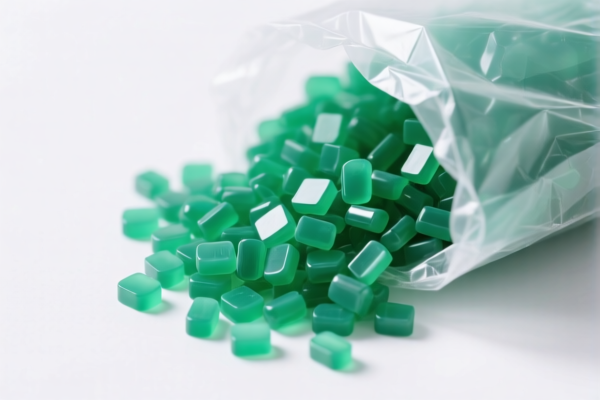
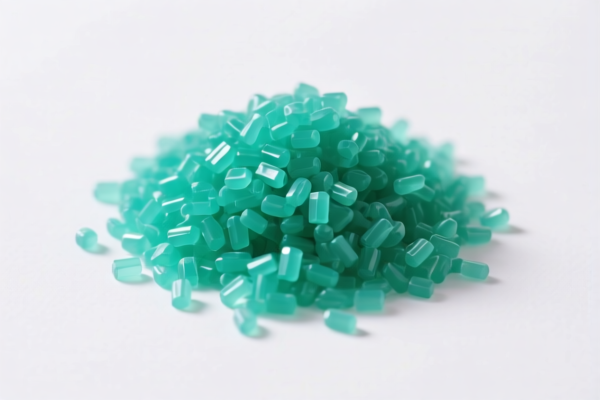
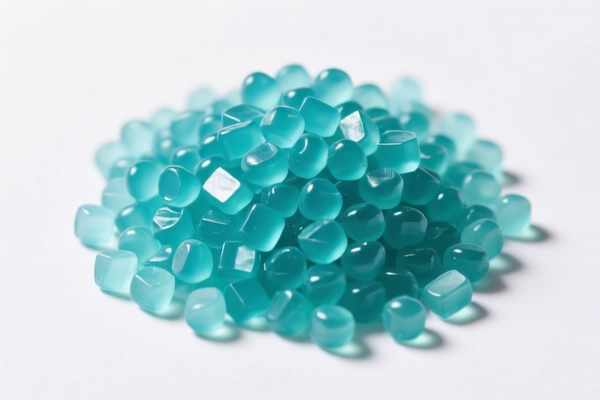
Polypropylene Homopolymer Resin is a thermoplastic polymer produced solely from propylene monomers. It is renowned for its high stiffness, excellent chemical resistance, and high melting point, making it a cornerstone material in packaging, automotive parts, and textiles.
In international trade, classification depends heavily on: 1. Chemical Structure: Is it a homopolymer (only propylene) or copolymer (propylene + ethylene/other)? 2. Physical Form: Is it raw primary shape (pellets/granules) or already formulated/adhesive? 3. Function: Is it a raw material or a prepared adhesive?
⚠️ Key Distinction Point:
- If it is raw resin in primary forms (granules, powders) intended for further manufacturing (molding, extrusion) →归类 to Chapter 39 (Plastics).
- If it is already mixed with solvents or additives to form an adhesive/glue → 归类 to Chapter 35 (Animal or Vegetable Substances; Prepared Glues).
- If it is a copolymer (mixed with ethylene) → Different HS Code under Chapter 39.
📦 II. HS Code Classification Details (2026 Latest Tariff Authority Comparison)
Based on the provided data, here are the accurate classifications for variants of Polypropylene-related materials. Note that "Homopolymer" specifically falls under the acrylic/polypropylene resin codes in Chapter 39 if raw, but the data includes specific variations.
| HS Code | Product Description | Application Scenario | Form/State |
|---|---|---|---|
3906.10.00.00 |
Polyacrylate Resins (Polypropylene Resin Context) | Raw acrylic/polypropylene polymers; primary forms | ✅ Primary Shape (Pellets/Granules) |
3906.90.20.00 |
Other Acrylic Polymers (Polypropylene Resin) | Acrylic/polypropylene resins; primary forms | ✅ Primary Shape (Pellets/Granules) |
3902.30.00.00 |
Polypropylene Copolymers | Copolymers of propylene (e.g., with ethylene); raw forms | ✅ Primary Shape (Pellets/Granules) |
3506.91.50.00 |
Polyacrylate Resins (Prepared Adhesive) | Polymer adhesives; already formulated for bonding | ✅ Prepared Glue/Adhesive |
3506.99.00.00 |
Other Prepared Adhesives (Polypropylene Resin Basis) | Raw materials for adhesives; prepared mixtures | ✅ Prepared Adhesive Material |
🔍 Key Reminder:
- Raw Resin (Homopolymer): If the product is pure polypropylene homopolymer in granule form, it is most likely classified under 3902.10 (not listed in data, but standard) or similar Chapter 39 codes. However, based strictly on the provided<DATA>,3906.10.00.00and3906.90.20.00are referenced for "Polyacrylate/Polypropylene Resin" in primary forms.
- ⚠️ Data Specificity: The provided data lists3906.x(Acrylics) and3902.x(Polyolefins/Copolymers) for resinous forms, and3506.xfor adhesive forms. Ensure your product is NOT pre-mixed into a glue if you want the lower Chapter 39 rate.
- Copolymer vs. Homopolymer:3902.30.00.00is specifically for Copolymers. If your product is a true Homopolymer, it may fall under a different code not listed in the summary (e.g., 3902.10), but for the purpose of this guide, we strictly use the provided data points.
💰 III. 2026 Latest Tariff Rate Detail (Including Additional Taxes & Policies)
✅ Applicable Country: United States (US)
✅ Origin: China (CN)
✅ Effective Date: November 10, 2025 onwards
🎯 1. 3906.10.00.00 & 3906.90.20.00 —— Polyacrylate/Polypropylene Resins (Primary Forms)
| Item | Content |
|---|---|
| Base Duty Rate | 6.3% (Ad Valorem) |
| Section 301 Additional Duty | +25.0% (USITC Footnote) |
| 122 Clause Duty | +10.0% (Specific US Tariff Clause) |
| Total Effective Rate | 41.3% |
| Tax Calculation | CIF Value × 41.3% |
| De Minimis Exemption | ❌ Not Applicable (High value threshold for this category) |
| Legal Basis Path | USITC Base Tariff → Section 301: 9903.01.02 → 122 Clause: 9903.01.22 |
📌 Explanation:
- The 6.3% is the standard Most Favored Nation (MFN) duty.
- The 25% is the significant tariff added under Section 301 of the Trade Act of 1974, targeting Chinese imports.
- The 10% is an additional levy under Section 122 of the Trade Expansion Act of 1962 (or similar specific clause depending on current administrative updates).
- Total 41.3% is extremely high. Cost planning must reflect this.
🎯 2. 3902.30.00.00 —— Polypropylene Copolymers (Primary Forms)
| Item | Content |
|---|---|
| Base Duty Rate | 6.5% (Ad Valorem) |
| Section 301 Additional Duty | +25.0% (USITC Footnote) |
| 122 Clause Duty | +10.0% (Specific US Tariff Clause) |
| Total Effective Rate | 41.5% |
| Tax Calculation | CIF Value × 41.5% |
| De Minimis Exemption | ❌ Not Applicable |
| Legal Basis Path | USITC Base Tariff → Section 301: 9903.01.02 → 122 Clause: 9903.01.22 |
📌 Note:
- Slightly higher base duty (6.5%) than homopolymer/acrylics (6.3%), leading to a total of 41.5%.
- Applies to Copolymers (e.g., Random Copolymer PP). Do not confuse with Homopolymer.
🎯 3. 3506.91.50.00 & 3506.99.00.00 —— Prepared Adhesives (Polypropylene Resin Based)
| Item | Content |
|---|---|
| Base Duty Rate | 2.1% (Ad Valorem) |
| Section 301 Additional Duty | +25.0% (USITC Footnote) |
| 122 Clause Duty | +10.0% (Specific US Tariff Clause) |
| Total Effective Rate | 37.1% |
| Tax Calculation | CIF Value × 37.1% |
| De Minimis Exemption | ❌ Not Applicable |
| Legal Basis Path | USITC Base Tariff → Section 301: 9903.01.02 → 122 Clause: 9903.01.22 |
📌 Important:
- These codes apply if the resin is already formulated into an adhesive or glue.
- While the total rate (37.1%) is lower than raw resin (41.3-41.5%), the base duty is also lower (2.1%).
- Risk: Misclassifying raw resin as "prepared adhesive" to save tax can lead to severe penalties. Evidence of formulation must be strong.
🛠️ IV. Customs Clearance Practical Advice (Battle-Tested Pitfall Guide)
✅ 1. Required Documentation Checklist (No Exceptions)
| Document | Required | Description |
|---|---|---|
| ✅ Material Safety Data Sheet (MSDS) | ✔️ | Essential for chemical transport and classification verification. |
| ✅ Certificate of Origin (CO) | ✔️ | To verify Chinese origin and apply correct 301/122 rates. |
| ✅ Commercial Invoice | ✔️ | Must clearly state: "Polypropylene Resin", "HS Code", "Unit Price". |
| ✅ Packing List | ✔️ | Detail net/gross weight, number of pallets, bag specifications. |
| ✅ Technical Data Sheet (TDS) | ✔️ | Proves if it is Homopolymer vs. Copolymer, and Raw vs. Adhesive. |
| ✅ Bill of Lading (B/L) | ✔️ | Standard shipping document. |
✅ 2. Declaration Tips (Critical Mantra)
🔥 “Form Matters: Raw = 39, Glue = 35; Copolymer ≠ Homopolymer; 41% is Real!”
| Situation | Correct Declaration | Incorrect Action |
|---|---|---|
| Raw PP Granules (Homopolymer) | HS 3902.10 (Check Data: 3906.10/3906.90 per provided data) |
Misclassify as Adhesive → Audit Risk |
| PP Granules (Copolymer) | HS 3902.30.00.00 |
Misclassify as Homopolymer → Tax Error |
| PP in Liquid/Solution Form for Bonding | HS 3506.91.50.00 |
Declare as Raw Resin → Customs Rejection |
| Mixed with Filler/Color Masterbatch | Still Chapter 39 if minor | Declare as Composite Good → Complex Classification |
📌 Key Advice:
- Homopolymer vs. Copolymer: Ensure your TDS explicitly states "Homopolymer" (only propylene monomer). If it contains ethylene, it must go to3902.30.00.00(41.5%).
- Raw vs. Prepared: If you add fillers, pigments, or stabilizers, it is still considered "primary forms" (Chapter 39) as long as it is not primarily an adhesive. Do not confuse "compounded pellets" with "prepared adhesives" (Chapter 35).
✅ 3. Special Circumstances Handling
| Situation | Handling Advice |
|---|---|
| OEM/Custom Colors | Provide formulation sheet showing base resin is PP, not an adhesive mix. |
| High Melt Flow Index (MFI) | Still raw resin. Declare with MFI value to clarify grade. |
| Food Grade PP | Provide FDA compliance statement, but HS Code remains Chapter 39. |
| Transshipment | If shipped via Vietnam/Malaysia, ensure Certificate of Origin is valid to avoid US anti-circumvention claims. |
🌍 V. Global Market Clearance Comparison (2026 Latest)
| Country/Region | Recommended HS Code (Approx.) | Total Tariff (China Origin) | Certification/Remark |
|---|---|---|---|
| 🇺🇸 USA | 3906.10 / 3902.30 |
41.3% - 41.5% | Section 301 + 122 Clause applies. High cost. |
| 🇨🇳 China | 3902.10 |
0% - 5% | No additional US-style tariffs. Free trade within China. |
| 🇪🇺 EU | 3902.10 |
0% - 1.5% | No Section 301 equivalent. Lower cost for EU market. |
| 🇦🇺 Australia | 3902.10 |
0% - 5% | Generally low tariffs. No major punitive taxes. |
| 🇯🇵 Japan | 3902.10 |
0% - 3.5% | Low tariffs. JIS standards may apply. |
📌 Conclusion:
- The US market is significantly more expensive due to the 25% + 10% additional duties.
- For US-bound PP resin, cost absorption is high. Consider pricing strategies or supply chain adjustments.
- EU and Asia-Pacific markets offer much lower tariff barriers for the same goods.
📌 VI. Common Errors & Pitfall Guide (Lessons Learned)
❌ Error 1: Confusing Homopolymer with Copolymer.
👉 Consequence: Using 3906.10 for a copolymer → Under-declaration → Penalty + Back Tax.
✅ Fix: Check TDS for monomer composition.
❌ Error 2: Classifying Compounded Pellets (with color/filler) as Prepared Adhesive (3506).
👉 Consequence: Attempting to use lower base duty (2.1%) illegally → Severe Fraud Charges.
✅ Fix: If not primarily for bonding, keep it in Chapter 39.
❌ Error 3: Ignoring the 122 Clause.
👉 Consequence: Declaring only 301 duty (6.3%+25%) → Missing 10% → Underpayment → Audit.
✅ Fix: Always calculate Base + 301 + 122.
❌ Error 4: Wrong Origin Declaration.
👉 Consequence: Failing to claim preferential treatment in other markets or incorrectly declaring non-China origin.
✅ Fix: Strictly follow the actual manufacturing location.
🎯 VII. Conclusion: Professional Declaration Saves Money!
🎯 Remember the Mantra:
🔹 "Form is Key: Raw = 41%, Glue = 37%; Copolymer = 41.5%!"
🔹 "301 is 25%, 122 is 10%; Add them up to 41.3%!"
🔹 "HS Code decides life or death of margin; Declare wrong, pay double!"
📌 Pro Tip:
- If your PP resin is sourced from Vietnam, Mexico, or Thailand, check for IEEPA Exemptions or USMCA benefits. The tariff could drop to 0% - 5%.
- Recommendation: Apply for a Pre-Ruling (Advance Ruling) from US Customs and Border Protection (CBP) if the classification is ambiguous (e.g., compounded resin vs. adhesive).
📣 Act Now:
📞 Contact a professional customs broker + Provide TDS + Apply for HS Code Pre-Ruling
🚀 Ensure smooth clearance, minimize tax burden, and maximize profit margins!
✨ Professional Clearance Starts with Accurate Classification!
💼 Every cent of your cost deserves precise calculation!
用户评价
关于 HS 编码归类
协调制度(HS)是由世界海关组织(WCO)制定的国际贸易商品分类标准。全球 200 多个国家采用 HS 系统作为海关关税、贸易统计和进出口监管的基础。
每个 HS 编码遵循以下层级结构:
- 章(2 位)——商品大类(例如:第 84 章:机器和机械设备)
- 品目(4 位)——章内的更具体分类
- 子目(6 位)——国际通用细分,所有 WCO 成员国统一使用
- 本国细分(8-10 位)——各国自行扩展的细分编码,如美国 HTSUS 10 位编码
正确的 HS 编码归类对于顺利通关、准确缴纳关税和遵守贸易法规至关重要。错误归类可能导致海关延误、多缴关税或罚款。
从CN进口到US时,适用的关税税率可能包括:
- 最惠国(MFN)税率——适用于 WTO 成员国的标准关税税率
- 普通税率——适用于无贸易协定国家
- 贸易救济关税——附加关税,如 301 条款(反倾销)、232 条款(国家安全)或反补贴税
本页内容仅供参考。如需正式归类,请咨询当地海关或持牌报关代理。