Polypropylene Stretch Film Raw Material
CN → US| HS编码 | 关税税率 | 原产国 | 目的国 | 文档 |
|---|---|---|---|---|
| 3902300000 | 41.5% | CN | US | 官方文档 |
| 3920200055 | 39.2% | CN | US | 官方文档 |
| 3902100000 | 41.5% | CN | US | 官方文档 |
商品图片
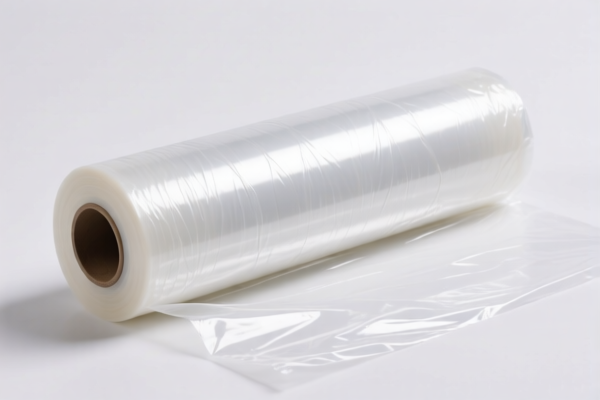
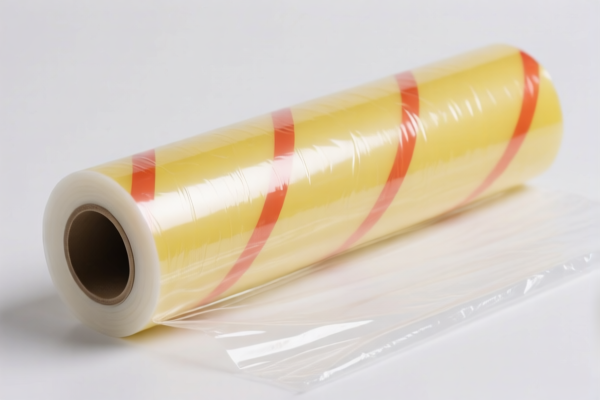
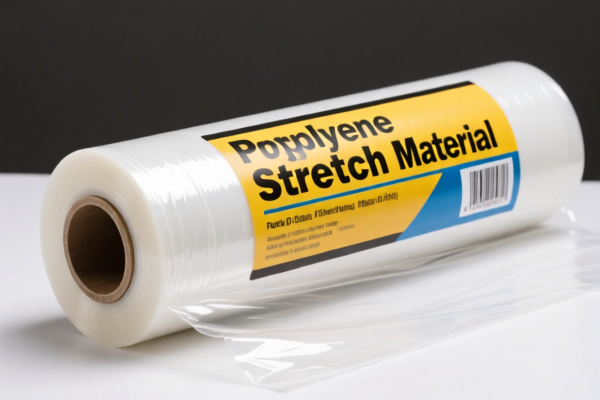
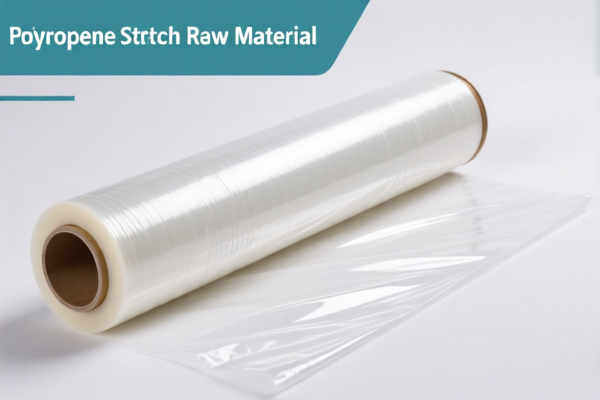
AI分析
🧪 Polypropylene (PP) Stretch Film Raw Material
🌐 HS Code Reference & Customs Clearance Guide | 2026 Latest Tariff Analysis | Strategic Compliance for PP Imports
📌 Part 1: Product Definition – What Exactly is "PP Stretch Film Raw Material"?
Polypropylene (PP) is a versatile thermoplastic polymer widely used in packaging, automotive, and textiles. In the context of international trade, the classification of PP hinges entirely on its physical form and processing stage. The term "Raw Material" is ambiguous and must be precisely defined by the customs authorities:
- Polymer Sheets/Films (Sheets/Rolls): Semi-finished products that have been extruded but not yet converted into final stretch rolls or bags. These are considered "shapes" rather than "primary forms."
- Primary Forms (Resins/Granules/Powders): The unprocessed output from polymerization reactors. These are the basic building blocks for manufacturing all PP products.
⚠️ Critical Distinction Point:
- If the product is a solid film, sheet, or roll intended for further conversion (e.g., slitting into thin stretch film) → It falls under Chapter 39, Heading 3920.
- If the product is pellets, granules, or powder (the initial resin state) → It falls under Chapter 39, Heading 3902.
📦 Part 2: HS Code Classification Matrix (2026 Official Tariff对照)
Based on the provided data, there are two distinct classifications depending on the physical state of the PP. Misclassification here leads to significant duty discrepancies.
| HS Code | Product Description | Physical Form | Key Characteristics |
|---|---|---|---|
3920.20.00.55 |
Polypropylene Plates, Sheets, Film, Foil, and Strip | Film/Sheet Form | Extruded PP film; semi-finished; ready for converting into stretch film rolls. |
3902.10.00.00 |
Polypropylene, Primary Forms | Granules/Pellets | Solid polymer in primary shape (beads, granules, powder). The base raw material. |
3902.30.00.00 |
Other Polypropylene, Primary Forms | Granules/Pellets (Copolymer) | Specifically for PP copolymers (e.g., propylene/ethylene blends) in primary forms. |
🔍 Focus on the Provided Data:
The dataset explicitly links:
1.3920.20.00.55: PP in film form. Summary: "Material is Polypropylene (PP), Form is Film..."
2.3902.10.00.00: PP in raw/primary form. Summary: "Material is Polypropylene, Form is Raw Material..."
3.3902.30.00.00: PP Copolymer in primary form. Summary: "Material is Propylene/Olefin Polymer, Form is Raw Material..."
💰 Part 3: 2026 Tariff Rate Breakdown (Heavy Tariff Alert)
✅ Applicable Country: United States (US)
✅ Origin: China (CN) (Note: Tax details in DATA specify "Additional 25%" and "Section 122 10%", typical of US-China trade context)
✅ Effective Date: Current (Post-2025 Trade Policy)
🎯 1. 3920.20.00.55 – Polypropylene Film (Semi-Finished)
| Item | Detail |
|---|---|
| Base Duty Rate | 4.2% |
| Section 301 Surcharge | +25.0% |
| Section 122 Surcharge | +10.0% |
| Total Effective Tax Rate | 39.2% |
| Tax Calculation | CIF Value × 39.2% |
| De Minimis Exemption | ❌ NOT Eligible (High duty rate disqualifies it from $800 de minimis) |
| Legal Basis Path | HTSUS:3920.20.00.55 → Section 301 Footnote → Section 122 Authority |
📌 Explanation:
- The 4.2% is the standard Most Favored Nation (MFN) duty for PP films.
- The 25% is the punitive tariff under Section 301 of the Trade Act.
- The 10% is an additional layer of tariff (Section 122 or similar emergency powers).
- Result: A 39.2% total tax burden is extremely high for a commodity material.
🎯 2. 3902.10.00.00 – Polypropylene Resin (Primary Form)
| Item | Detail |
|---|---|
| Base Duty Rate | 6.5% |
| Section 301 Surcharge | +25.0% |
| Section 122 Surcharge | +10.0% |
| Total Effective Tax Rate | 41.5% |
| Tax Calculation | CIF Value × 41.5% |
| De Minimis Exemption | ❌ NOT Eligible |
| Legal Basis Path | HTSUS:3902.10.00.00 → Section 301 Footnote → Section 122 Authority |
📌 Explanation:
- Primary forms (granules) carry a higher base duty (6.5%) than films (4.2%).
- Once Section 301 (25%) and Section 122 (10%) are added, the total hits 41.5%.
- This is one of the highest duty rates for polymer imports from China.
🎯 3. 3902.30.00.00 – PP Copolymer Resin (Primary Form)
| Item | Detail |
|---|---|
| Base Duty Rate | 6.5% |
| Section 301 Surcharge | +25.0% |
| Section 122 Surcharge | +10.0% |
| Total Effective Tax Rate | 41.5% |
| Tax Calculation | CIF Value × 41.5% |
| De Minimis Exemption | ❌ NOT Eligible |
| Legal Basis Path | HTSUS:3902.30.00.00 → Section 301 Footnote → Section 122 Authority |
📌 Explanation:
- Copolymers (e.g., impact copolymers) are treated similarly to homopolymers for tariff purposes in this context.
- The tax burden is identical to homopolymer resin (41.5%).
🛠️ Part 4: Customs Clearance Strategic Advice
✅ 1. Documentation Checklist (Non-Negotiable)
| Document | Required? | Purpose |
|---|---|---|
| ✅ Product Specification Sheet | ✔️ | Must clearly state: "Polypropylene (Homopolymer/Copolymer)", "Form: Film/Granules", "Density", "Melt Flow Index (MFI)". |
| ✅ Commercial Invoice | ✔️ | Must use precise English terms: "Polypropylene Film" or "Polypropylene Resin Granules". Avoid vague terms like "Plastic Raw Material". |
| ✅ Certificate of Origin (CO) | ✔️ | Mandatory for verifying origin (China) to apply the correct Section 301/122 surcharges. |
| ✅ Technical Data Sheet (TDS) | ✔️ | Proves whether it is a homopolymer (3902.10) or copolymer (3902.30). |
| ✅ Bill of Lading/Air Waybill | ✔️ | Consignee and Shipper details must match invoices exactly. |
✅ 2. Classification Pitfalls & Avoidance Tips
🔥 "Form Determines Fate: Film vs. Granule"
| Scenario | Correct HS Code | Wrong HS Code | Consequence |
|---|---|---|---|
| PP Resin Pellets | 3902.10.00.00 |
3920.20.00.55 |
Risk: Under-declaration of base duty? No, actually 3902 has higher base (6.5% vs 4.2%). But if declared as 3920 while it's pellets, Customs may reject due to physical mismatch (visual inspection). |
| PP Film Rolls | 3920.20.00.55 |
3902.10.00.00 |
Risk: Over-declaration of base duty? No, 3920 is lower base. But if declared as resin while it's film, Customs will inspect and find film. Delay + Penalties. |
| PP Copolymer Pellets | 3902.30.00.00 |
3902.10.00.00 |
Risk: Incorrect sub-heading. Tax rate is same (41.5%), but legal compliance requires accurate sub-heading. |
📌 Key Advice:
- Never use "Raw Material" as the only description. Specify "Polypropylene Resin (Granules)" or "Polypropylene Film (Sheets/Rolls)".
- If importing Copolymer, you must specify "Copolymer" in the description to trigger3902.30.00.00vs3902.10.00.00, even if the duty rate is the same.
✅ 3. Cost Optimization Strategy
| Strategy | Action | Impact |
|---|---|---|
| Pre-Ruling | Apply for a Binding Ruling from CBP before shipment. | Locks in the HS Code and duty rate. Avoids surprises at the port. |
| Supply Chain Diversification | Source PP from Vietnam, Mexico, or Malaysia. | If origin is not China, Section 301 (25%) and Section 122 (10%) may not apply. Duty could drop to ~4.2% (film) or ~6.5% (resin). |
| De Minimis Check | ❌ Do NOT rely on $800 De Minimis. | Since total tax > 41%, small shipments are still taxable. Use this only for samples if value is very low, but expect audit. |
🌍 Part 5: Global Market Comparison (2026)
| Region | Recommended HS Code | Est. Duty Rate (China Origin) | Key Notes |
|---|---|---|---|
| 🇺🇸 United States | 3920.20.00.55 (Film) |
39.2% | High Section 301 + 122 tariffs. |
| 🇺🇸 United States | 3902.10.00.00 (Resin) |
41.5% | Higher base duty for resins. |
| 🇪🇺 EU | 3920.10.00 |
~6.5% | No Section 301. Standard MFN rate. |
| 🇨🇳 China (Export) | Varies | 0% (Export Duty) | China does not tax exports of PP. |
| 🇻🇳 Vietnam (Re-export) | 3920.20.00.00 |
~0-5% | Potential duty advantage if assembled/processed. |
📌 Conclusion:
The US market imposes a heavy tax burden (39.2%-41.5%) on PP imports from China.
For large-scale importers, relocating sourcing to non-China countries is the most effective cost-saving measure.
📌 Part 6: Common Errors & Blood-Lesson Guide
❌ Error 1: Using generic term "Plastic Raw Material"
👉 Consequence: Customs request for more info → Shipment Delayed at port.
❌ Error 2: Confusing "Stretch Film" (Final Product) with "PP Film" (Raw Semi-Finished)
👉 Consequence: If you are importing thin, pre-stretched film for consumer use, it might still be 3920.20, but if it's industrial rolls, ensure description matches 3920.20.00.55. Mislabeling as "Finished Product" doesn't change duty, but mislabeling Form (Film vs Granule) causes physical inspection failure.
❌ Error 3: Ignoring Section 122 Tariff
👉 Consequence: Budgeting only for Section 301 (25%) leads to unexpected 10% additional cost.
❌ Error 4: Assuming De Minimis ($800) applies
👉 Consequence: Small LCL shipments are still taxed at ~40%. Do not use DHL/FedEx for bulk PP; it’s not cost-effective.
✅ Correct Practice:
"Polypropylene Film, Unprinted, Rolls, Width 120cm, Thickness 0.05mm, Made in China"
OR
"Polypropylene Homopolymer Resin, Granules, White, MFI 20, Made in China"
🎯 Part 7: Conclusion – Precise Classification Saves Millions
🎯 Remember the Mantra:
🔹 "Film is 3920, Resin is 3902. Base + 25% + 10% = High Cost."
🔹 "Specify Form, Specify Type. Avoid Ambiguity to Avoid Delays."
📌 Pro Tip:
If your PP is sourced from China, calculate the Landed Cost including 39.2%-41.5% duty.
If possible, explore Supplier Diversification to countries with USMCA (Mexico) or ASEAN (Vietnam/Thailand) status to bypass Section 301/122 tariffs.
📣 Immediate Action:
📞 Contact your freight forwarder to confirm the exact physical form (Film vs Granule).
📄 Request a Binding Ruling from CBP if you are importing large volumes.
📊 Run the numbers: Is it cheaper to pay 41.5% duty or shift sourcing?
✨ Smart Logistics, Smart Savings!
💼 Every percentage point in duty impacts your profit margin directly!
用户评价
关于 HS 编码归类
协调制度(HS)是由世界海关组织(WCO)制定的国际贸易商品分类标准。全球 200 多个国家采用 HS 系统作为海关关税、贸易统计和进出口监管的基础。
每个 HS 编码遵循以下层级结构:
- 章(2 位)——商品大类(例如:第 84 章:机器和机械设备)
- 品目(4 位)——章内的更具体分类
- 子目(6 位)——国际通用细分,所有 WCO 成员国统一使用
- 本国细分(8-10 位)——各国自行扩展的细分编码,如美国 HTSUS 10 位编码
正确的 HS 编码归类对于顺利通关、准确缴纳关税和遵守贸易法规至关重要。错误归类可能导致海关延误、多缴关税或罚款。
从CN进口到US时,适用的关税税率可能包括:
- 最惠国(MFN)税率——适用于 WTO 成员国的标准关税税率
- 普通税率——适用于无贸易协定国家
- 贸易救济关税——附加关税,如 301 条款(反倾销)、232 条款(国家安全)或反补贴税
本页内容仅供参考。如需正式归类,请咨询当地海关或持牌报关代理。