Polypropylene Woven Fabric Raw Material
CN → US| HS编码 | 关税税率 | 原产国 | 目的国 | 文档 |
|---|---|---|---|---|
| 3926909989 | 22.8% | CN | US | 官方文档 |
| 3902100000 | 41.5% | CN | US | 官方文档 |
| 3902900050 | 41.5% | CN | US | 官方文档 |
| 3915900090 | 35.0% | CN | US | 官方文档 |
| 3902100000 | 41.5% | CN | US | 官方文档 |
商品图片
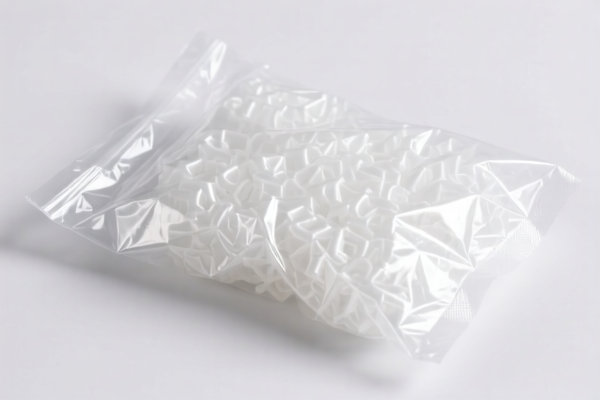
AI分析
🧵 Polypropylene Woven Fabric Raw Material (PP Raw Material)
🌐 HS Code Reference & Customs Clearance Guide | 2026 Latest Tariff Analysis | Professional Classification Strategy
📌 I. Product Definition & Classification: What Exactly Is "PP Raw Material"?
"Polypropylene Woven Fabric Raw Material" is a broad term that often leads to significant classification discrepancies in international trade. The core issue lies in the form and state of the polymer.
In customs classification, "Polypropylene" (PP) is a generic plastic. However, its classification depends strictly on whether it is in its primary form (pellets, powder, liquids) or processed into a specific article (like woven fabric or sheets).
⚠️ Critical Distinction:
- If the material is in the form of pellets, flakes, or primary powder intended for extrusion/weaving → It falls under Chapter 39 (Plastics and Articles Thereof), specifically under Polypropylene Primary Forms (HS 3902).
- If the material is already a woven fabric or finished sheet → It falls under different subheadings (e.g., HS 3926 or 3915), depending on whether it is a product or waste/scrap.
- Misclassification Risk: Declaring "Woven Fabric Raw Material" as "Woven Fabric" (HS 3926) when it is actually "PP Pellets" (HS 3902) can lead to severe penalties due to tariff evasion or incorrect duty assessment.
📦 II. HS Code Classification Details (Based on Provided Data 2026)
According to the provided data, there are 5 distinct classification scenarios for Polypropylene products, ranging from low-tax primary forms to high-tax finished goods. Here is the detailed breakdown:
| HS Code | Product Description | Tax Rate | Key Classification Logic |
|---|---|---|---|
| 3926.90.99.89 | PP Woven Fabric Raw Material (Primary Form) | 22.8% | Material: Polypropylene. State: Raw Material. Classified as "Other Articles of Plastics". Note: This code is used when the item is technically a "raw material" for weaving but classified under general plastic articles. |
| 3902.10.00.00 | PP Woven Fabric Raw Material (Primary Form) | 41.5% | Material: Polypropylene. State: Primary Form. Fits the definition of "Primary Forms of Polypropylene." |
| 3902.90.00.50 | PP Sheet Material Raw Material | 41.5% | Material: Acrylic Polymer (PP). State: Primary Form. Meets classification requirements for non-standard PP primary forms. |
| 3915.90.00.90 | PP Sheet Material Raw Material | 35.0% | Material: Other Plastics. State: Primary Form Scrap/Waste. Fits the logic of "Non-PET Plastic Waste/Scrap." |
| 3902.10.00.00 | PP Sheet Material Raw Material | 41.5% | Material: Polypropylene. State: Sheet Material Raw Material. Fits the definition of "Primary Form of Polypropylene Polymer." |
🔍 Key Insight:
- Codes 3902.10.00.00 and 3902.90.00.50 represent the highest tax burden (41.5%) but are correct for primary form PP (pellets/granules).
- Code 3915.90.00.90 represents a 35.0% tax rate and is applied to scrap/waste forms of PP.
- Code 3926.90.99.89 offers the lowest tax rate (22.8%) but requires the product to be classified as "Other Plastic Articles" rather than raw polymer. This is often a point of dispute—customs may reclassify "raw materials for woven bags" as "primary form PP" (41.5%) if they are not yet woven.
💰 III. 2026 Latest Tariff Rate Breakdown (Detailed Tax Components)
✅ Applicable Country: United States (US)
✅ Origin: China (CN)
✅ Effective Date: Post-November 2025 (Current Trade War Context)
🎯 1. Code 3902.10.00.00 – Primary Forms of Polypropylene (Highest Tax Bracket)
Applies to: PP Pellets, Granules, Raw Polymer for Woven Bags/Sheets
| Item | Detail |
|---|---|
| Base Tariff | 6.5% |
| Section 301 Surcharge | +25.0% |
| Section 122 Tariff | +10.0% |
| Total Tariff Rate | 41.5% |
| Calculation Method | CIF Value × 41.5% |
| De Minimis Eligibility | ❌ No (High-risk category for de minimis exemption) |
| Legal Basis | USHTS 3902.10 → IEEPA 9903.01.24 → USITC Footnote 301 |
📌 Explanation:
- This code captures pure PP raw materials. Because PP is a critical industrial polymer for packaging and textiles, it faces the full brunt of trade barriers.
- The 25% Section 301 tariff is the dominant cost driver.
- Risk: If you declare PP pellets as "woven fabric" (HS 3926) to get the 22.8% rate, customs may inspect and reclassify it as 3902, charging the difference plus penalties.
🎯 2. Code 3902.90.00.50 – Other Polypropylene Primary Forms
Applies to: Specific PP polymer forms not covered under 3902.10
| Item | Detail |
|---|---|
| Base Tariff | 6.5% |
| Section 301 Surcharge | +25.0% |
| Section 122 Tariff | +10.0% |
| Total Tariff Rate | 41.5% |
| Legal Basis | USHTS 3902.90 → IEEPA 9903.01.24 |
📌 Note: Tax identical to 3902.10. The distinction lies in the specific chemical composition or form (e.g., copolymer vs. homopolymer).
🎯 3. Code 3915.90.00.90 – Plastic Waste/Scrap (Non-PET)
Applies to: PP Scrap, Recyclable PP Waste
| Item | Detail |
|---|---|
| Base Tariff | 0.0% |
| Section 301 Surcharge | +25.0% |
| Section 122 Tariff | +10.0% |
| Total Tariff Rate | 35.0% |
| Legal Basis | USHTS 3915.90 → USITC Footnote for Plastic Waste |
📌 Explanation:
- This code is for waste or scrap. If your "raw material" is actually off-cuts, regrind, or recyclable PP, this code applies.
- Lower Rate (35%) compared to virgin PP (41.5%), but strict documentation is required to prove it is "scrap" and not virgin material.
🎯 4. Code 3926.90.99.89 – Other Plastic Articles (Lowest Tax in Dataset)
Applies to: PP Raw Material classified as "Other Plastic Articles" (Controversial)
| Item | Detail |
|---|---|
| Base Tariff | 5.3% |
| Section 301 Surcharge | +7.5% |
| Section 122 Tariff | +10.0% |
| Total Tariff Rate | 22.8% |
| Legal Basis | USHTS 3926.90 → USITC Footnote 301 (Reduced Rate) |
📌 Warning:
- This is the lowest tax rate in the provided data.
- However, it is only valid if the item is not considered "Primary Form" (3902).
- Customs Risk: High. CBP (U.S. Customs and Border Protection) frequently challenges this classification for PP pellets. If deemed "primary form," the rate jumps to 41.5%.
- Use Case: May apply if the material is pre-processed into specific shapes (e.g., masterbatch, additives) rather than pure polymer.
🛠️ IV. Customs Clearance Practical Advice (Actionable Pitfall Guide)
✅ 1. Documentation Checklist (Non-Negotiable)
| Document | Required? | Purpose |
|---|---|---|
| Technical Data Sheet (TDS) | ✅ Yes | Proves the chemical composition (PP Homopolymer vs. Copolymer). Critical for distinguishing between 3902.10 and 3902.90. |
| Material Safety Data Sheet (MSDS) | ✅ Yes | Confirms physical state (pellets, powder, liquid). |
| Certificate of Origin | ✅ Yes | Required for Section 301/122 tariff assessment. |
| Commercial Invoice Description | ✅ Yes | Must specify: "Polypropylene Primary Form, Pellets, Not Yet Woven" or "PP Woven Fabric, Finished Article". Ambiguity leads to audits. |
| Photos of Product | ✅ Yes | Clear images showing pellets/granules vs. woven rolls. |
| Supplier Declaration | ✅ Yes | Statement confirming the material is not waste/scrap (if claiming 3902). |
✅ 2. Classification Strategy & Declaration Tips
🔥 "Form Determines Code, Code Determines Cost!"
| Scenario | Correct HS Code | Tax Rate | Declaration Description |
|---|---|---|---|
| Virgin PP Pellets/Granules | 3902.10.00.00 |
41.5% | "Polypropylene, Primary Form, Homopolymer, Pellets" |
| PP Copolymer Granules | 3902.90.00.50 |
41.5% | "Polypropylene Copolymer, Primary Form" |
| Recycled PP Scrap/Regrind | 3915.90.00.90 |
35.0% | "Polypropylene Waste and Scrap, Non-PET" |
| Finished PP Woven Bags/Fabric | Not in Data | Varies | If already woven, it is an article, not raw material. May fall under 3926 or 6305. |
| PP Raw Material (Controversial Low Tax) | 3926.90.99.89 |
22.8% | "Other Plastic Articles, Polypropylene Based, For Weaving" (High Audit Risk) |
📌 Crucial Advice:
- Do NOT declare virgin PP pellets as "Other Plastic Articles" (3926) unless you have a Pre-Ruling from CBP. The risk of retroactive duties (18.7% difference + interest) is too high.
- If importing finished woven fabric, ensure the description explicitly says "Woven Fabric" and not "Raw Material."
- If importing scrap, ensure it meets the legal definition of "Waste and Scrap" (not just off-spec virgin material).
🌍 V. Global Market Comparison (2026 Context)
| Country/Region | Recommended HS Code | Estimated Tariff (China Origin) | Key Certification |
|---|---|---|---|
| 🇺🇸 USA | 3902.10.00.00 |
41.5% | None (Standard Import) |
| 🇪🇺 EU | 3902.10.00 |
~2.5% + VAT | REACH Registration |
| 🇨🇳 China | 3902.10.00 |
6.5% | CCC (if end-product) |
| 🇻🇳 Vietnam | 3902.10.00 |
0% (Under EVFTA/ACFTA) | None |
📌 Conclusion:
- The US market is the most expensive due to Section 301 and 122 tariffs.
- Supply Chain Strategy: Consider sourcing PP raw materials from Vietnam, Mexico, or Thailand to leverage free trade agreements (FTAs) and avoid high US tariffs.
📌 VI. Common Mistakes & How to Avoid Them
❌ Mistake 1: Calling PP pellets "Woven Fabric Raw Material" and declaring under HS 3926.
👉 Consequence: CBP reclassifies to 3902, charging 41.5% instead of 22.8%. You pay the difference + penalties.
👉 Solution: If it’s pellets, use 3902.10.00.00. If it’s woven, use the appropriate article code.
❌ Mistake 2: Ignoring the "Section 122" tariff.
👉 Consequence: Underestimating total landed cost by 10%.
👉 Solution: Always include 10% Section 122 in your cost model for Chinese-origin plastics.
❌ Mistake 3: Confusing "Waste/Scrap" with "Virgin Material".
👉 Consequence: Declaring scrap as virgin to get better pricing? Or vice versa? Both lead to fraud accusations.
👉 Solution: Be explicit: "Virgin PP Pellets" vs. "Recycled PP Scrap."
✅ Best Practice:
"Import PP Primary Form (Pellets) under HS 3902.10.00.00. Budget for 41.5% total duty. Consider supply chain diversification to non-China origins for duty savings."
🎯 VII. Conclusion: Precision in Classification Saves Thousands
🎯 Key Takeaway:
🔹 Primary Form (Pellets) = 3902.10.00.00 = 41.5% Tax
🔹 Waste/Scrap = 3915.90.00.90 = 35.0% Tax
🔹 Other Articles (High Risk) = 3926.90.99.89 = 22.8% Tax🔹 "Don't gamble on HS codes. If it’s pellets, it’s 3902. Period."
🔹 "Tariff arbitrage is risky. Pre-rulings are your friend."
📌 Pro Tip:
If your volume is significant, apply for an Advance Ruling (Ruling Letter) from CBP. This legally binds them to your classification, protecting you from future audits and retroactive duties.
📣 Immediate Action:
📞 Consult a licensed customs broker.
📄 Prepare TDS/MSDS.
🌍 Evaluate supply chain alternatives (Vietnam/Mexico) to mitigate US tariffs.
✨ Smart Classification, Smarter Sourcing!
💼 Your profit margin depends on accurate HS codes!
用户评价
关于 HS 编码归类
协调制度(HS)是由世界海关组织(WCO)制定的国际贸易商品分类标准。全球 200 多个国家采用 HS 系统作为海关关税、贸易统计和进出口监管的基础。
每个 HS 编码遵循以下层级结构:
- 章(2 位)——商品大类(例如:第 84 章:机器和机械设备)
- 品目(4 位)——章内的更具体分类
- 子目(6 位)——国际通用细分,所有 WCO 成员国统一使用
- 本国细分(8-10 位)——各国自行扩展的细分编码,如美国 HTSUS 10 位编码
正确的 HS 编码归类对于顺利通关、准确缴纳关税和遵守贸易法规至关重要。错误归类可能导致海关延误、多缴关税或罚款。
从CN进口到US时,适用的关税税率可能包括:
- 最惠国(MFN)税率——适用于 WTO 成员国的标准关税税率
- 普通税率——适用于无贸易协定国家
- 贸易救济关税——附加关税,如 301 条款(反倾销)、232 条款(国家安全)或反补贴税
本页内容仅供参考。如需正式归类,请咨询当地海关或持牌报关代理。