Polyurethane Elastomer Material
CN → US| HS编码 | 关税税率 | 原产国 | 目的国 | 文档 |
|---|---|---|---|---|
| 3914006000 | 38.9% | CN | US | 官方文档 |
| 3909505000 | 41.3% | CN | US | 官方文档 |
| 3909501000 | 35.0% | CN | US | 官方文档 |
| 3914002000 | 35.0% | CN | US | 官方文档 |
| 4002800000 | 35.0% | CN | US | 官方文档 |
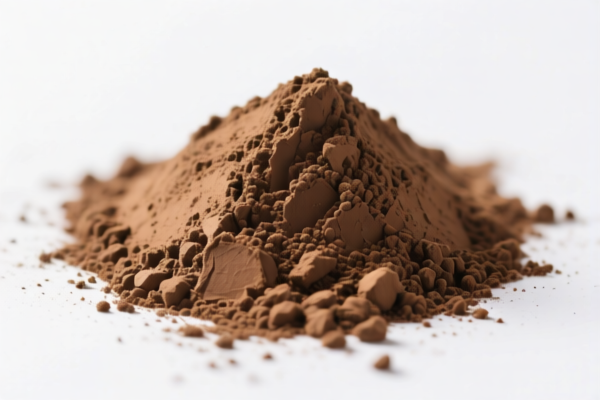
商品图片



AI分析
🧪 Polyurethane Elastomer Resins & Materials
🌐 HS Code Reference & Customs Clearance Guide | 2026 Latest Tariff Analysis | Professional Compliance Strategy
📌 I. Product Definition: What is "Polyurethane Elastomer"?
Polyurethane (PU) elastomers are polymers composed of organic units joined by carbamate (urethane) links. In international trade, they are primarily classified under Chapter 39 (Plastics and Articles Thereof) or Chapter 40 (Rubber and Articles Thereof), depending on their physical state (resin vs. finished rubber) and chemical structure.
Key Classification Distinctions: * Primary Forms (Resins): Polyols, diisocyanates, or prepolymer resins in raw, unvulcanized states → Typically HS 3909 or 3914. * Elastomeric Forms: Vulcanized or cured elastic materials that exhibit rubber-like properties → Typically HS 3909 (if polymer-specific) or 4002 (if treated as synthetic rubber).
⚠️ Critical Differentiator:
- If the material is a raw resin/polymer (liquid, powder, or solid blocks ready for processing) →归入 3909 or 3914.
- If the material is defined as a synthetic rubber/elastomer with specific rubber-like elasticity →归入 4002.
📦 II. HS Code Classification Details (2026 Latest Tariff Authority Comparison)
| HS Code | Product Description | Application Scenario | State/Form |
|---|---|---|---|
3914.00.60.00 |
Polyurethane Elastomer Resins, material is polyurethane, form is resin, matches "primary forms of polymers" description. | Raw PU resins for casting, molding, or foaming. | ✅ Resin (Primary Form) |
3909.50.50.00 |
Polyurethane Elastomer Resins, material is polyurethane, form is resin, matches "primary raw material" characteristics. | Specific PU resin variants classified under Heading 3909. | ✅ Resin (Primary Form) |
3909.50.10.00 |
Polyurethane Elastomer Resins, material is polyurethane, form is elastomer, fully matches classification requirements. | Cured or semi-cured PU elastomers classified as polymers. | ✅ Elastomer (Polymer Classification) |
3914.00.20.00 |
Polyurethane Elastomer Resins, material is polymer, form is resin, matches "primary form" characteristics. | Alternative PU resin classification under Heading 3914. | ✅ Resin (Primary Form) |
4002.80.00.00 |
Polyethylene Elastomers (Note: Data lists this as "Synthetic Rubber/Plastic" matching 4002), material is synthetic rubber/plastic. | Synthetic rubber-like materials, potentially mislabeled or broad category for elastomeric blends. | ✅ Synthetic Rubber |
🔍 Key Reminder:
- Resins vs. Elastomers: Most PU materials entering the US are resins (pre-polymers) and fall under 3909 or 3914.
- 4002 Classification: Only applies if the material is strictly defined as a synthetic rubber in primary form. Misclassification here can lead to significant duty disputes.
- 122 Clause: Items under US Section 301 (China-origin) are subject to additional tariffs.
💰 III. 2026 Latest Tariff Rate Breakdown (Including Surtaxes & Policy Add-ons)
✅ Applicable Country: United States (US)
✅ Country of Origin: China (CN)
✅ Effective Date: From November 10, 2025 onwards
🎯 1. 3914.00.60.00 – Polyurethane Elastomer Resin (Primary Form)
| Item | Content |
|---|---|
| Base Tariff | 3.9% (Ad Valorem) |
| Section 301 Surtax | +25.0% |
| Section 301 (122 Clause) Add-on | +10.0% |
| Total Tariff Rate | 38.9% |
| Tax Calculation | CIF Value × 38.9% |
| De Minimis Eligibility | ❌ No (Denied under current trade policies) |
| Legal Basis Path | HTSUS:3914.00.60.00 → USITC:301-List-1/3 → IEEPA:301-Surtax |
📌 Explanation:
- The 3.9% is the standard MFN duty for polyurethane resins.
- The 25% is the Section 301 retaliatory tariff on Chinese goods.
- The 10% is an additional specific tariff clause (often referred to as "122 Clause" in trade databases) targeting specific polymer categories.
- Total: 38.9%. This is a high-cost category. Strategic sourcing or duty drawback programs should be considered.
🎯 2. 3909.50.50.00 – Polyurethane Resin (Primary Raw Material)
| Item | Content |
|---|---|
| Base Tariff | 6.3% (Ad Valorem) |
| Section 301 Surtax | +25.0% |
| Section 301 (122 Clause) Add-on | +10.0% |
| Total Tariff Rate | 41.3% |
| Tax Calculation | CIF Value × 41.3% |
| De Minimis Eligibility | ❌ No |
| Legal Basis Path | HTSUS:3909.50.50.00 → USITC:301-List → IEEPA:301-Surtax |
📌 Note:
- This heading has a slightly higher base rate (6.3%) compared to3914.00.60.00, resulting in the highest total rate (41.3%).
- Ensure the material truly fits the "primary raw material" definition. If it can be reclassified to3914, you save 2.4% in duties.
🎯 3. 3909.50.10.00 – Polyurethane Elastomer (Fully Matched)
| Item | Content |
|---|---|
| Base Tariff | 0.0% (Ad Valorem) |
| Section 301 Surtax | +25.0% |
| Section 301 (122 Clause) Add-on | +10.0% |
| Total Tariff Rate | 35.0% |
| Tax Calculation | CIF Value × 35.0% |
| De Minimis Eligibility | ❌ No |
| Legal Basis Path | HTSUS:3909.50.10.00 → USITC:301-List → IEEPA:301-Surtax |
📌 Explanation:
- Zero Base Duty: This is the most advantageous classification in terms of base rate.
- Total Rate: 35.0% (still high due to 301 surtaxes, but 3.9% lower than3914.00.60.00).
- Requirement: The product must be explicitly defined as an "elastomer" and match the specific subheading criteria under 3909.50.10.00. Documentation must prove elastomeric properties.
🎯 4. 3914.00.20.00 – Polyurethane Polymer Resin
| Item | Content |
|---|---|
| Base Tariff | 0.0% (Ad Valorem) |
| Section 301 Surtax | +25.0% |
| Section 301 (122 Clause) Add-on | +10.0% |
| Total Tariff Rate | 35.0% |
| Tax Calculation | CIF Value × 35.0% |
| De Minimis Eligibility | ❌ No |
| Legal Basis Path | HTSUS:3914.00.20.00 → USITC:301-List → IEEPA:301-Surtax |
📌 Note:
- Similar to3909.50.10.00, this has a 0% base rate.
- Total Rate: 35.0%.
- Use this code if the material is classified under Heading 3914 but fits the specific subheading for "Other" resins. Ensure consistency with chemical composition.
🎯 5. 4002.80.00.00 – Synthetic Rubber/Elastomer
| Item | Content |
|---|---|
| Base Tariff | 0.0% (Ad Valorem) |
| Section 301 Surtax | +25.0% |
| Section 301 (122 Clause) Add-on | +10.0% |
| Total Tariff Rate | 35.0% |
| Tax Calculation | CIF Value × 35.0% |
| De Minimis Eligibility | ❌ No |
| Legal Basis Path | HTSUS:4002.80.00.00 → USITC:301-List → IEEPA:301-Surtax |
📌 Warning:
- This code is for Synthetic Rubber. If your product is Polyurethane, using this code may trigger a customs audit for misclassification unless it is a PU-blend specifically treated as synthetic rubber.
- Total Rate: 35.0%. Lower risk if correctly classified, but high risk if incorrectly applied to pure PU resins.
🛠️ IV. Customs Clearance Practical Advice (Battle-Tested Pitfall Guide)
✅ 1. Required Documentation Checklist (Non-Negotiable)
| Document | Mandatory | Description |
|---|---|---|
| ✅ Technical Data Sheet (TDS) | ✔️ | Must clearly state chemical composition, state (resin vs. cured), and HS classification justification. |
| ✅ Formula/Composition Certificate | ✔️ | Breakdown of polyols, isocyanates, and additives. Crucial for distinguishing 3909 vs 3914 vs 4002. |
| ✅ Product Photos | ✔️ | Show physical state (liquid, solid block, powder) and packaging. |
| ✅ Statement of Origin | ✔️ | Confirm China origin to apply correct 301 tariffs. |
| ✅ Commercial Invoice | ✔️ | Must accurately describe item as "Polyurethane Resin" or "Elastomer," NOT generic "Plastic Material." |
| ✅ Packaging List | ✔️ | Detail net/gross weight and number of containers. |
✅ 2. Declaration Tips (Key Mnemonics)
🔥 “State Defines Code, Resin or Rubber, 301 Hits Hard, Don’t Guess, Ask!”
| Scenario | Correct Declaration | Incorrect Action |
|---|---|---|
| Raw PU Liquid/Solid Resin | 3909.50.10.00 or 3914.00.20.00 (0% base) |
Declaring as 3914.00.60.00 (3.9% base) → +3.9% extra cost |
| Specific Primary Raw Material | 3909.50.50.00 |
Declaring as 3909.50.10.00 → Risk of audit |
| Cured PU Elastomer (Rubber-like) | 4002.80.00.00 |
Declaring as 3909 → Misclassification Penalty |
| Any PU Product from China | Assume 301 + 122 Clause applies | Assuming "De Minimis" exemption → Goods Seized |
✅ 3. Special Case Handling
| Situation | Handling Advice |
|---|---|
| PU Blends | Provide detailed % composition. If rubber content >50%, 4002 might apply. If polymer dominant, 3909/3914. |
| Prepolymers | Usually fall under 3909 or 3914. Ensure TDS labels them as "prepolymer resin." |
| Recycled PU | May require additional environmental compliance docs. Check for specific subheadings for recycled materials. |
| OEM/Custom Mixes | Provide formulation sheet. Customs may require a Binding Ruling if the classification is ambiguous. |
🌍 V. Global Market Comparison (2026 Latest)
| Country/Region | Recommended HS Code | Tariff (China Origin) | Certification | Remarks |
|---|---|---|---|---|
| 🇺🇸 USA | 3909.50.10.00 |
35.0% | None specific | Highest surtaxes. |
| 🇨🇳 China | 3909.50.10.00 |
0-6% | REACH (if export to EU) | No 301 surtax. |
| 🇪🇺 EU | 3909.10 |
0-3% | REACH Registration | No additional surtaxes. |
| 🇲🇽 Mexico | 3909.50 |
0% (USMCA) | N/A | Preferential if qualified. |
| 🇻🇳 Vietnam | 3909.50 |
Low/0% (Check FTA) | None | Alternative sourcing hub. |
📌 Conclusion:
- USA is the most expensive market due to 38.9% - 41.3% effective rates.
- EU and China have minimal duties.
- Mexico/Vietnam may offer duty-free advantages if USMCA or other FTAs apply, but origin rules must be strictly met.
📌 VI. Common Mistakes & Pitfall Guide (Lessons Learned)
❌ Mistake 1: Calling "Polyurethane Resin" a "Plastic" or "Rubber" generically.
👉 Consequence: Customs officer assigns highest default duty → 35%+ audit risk.
❌ Mistake 2: Ignoring the 122 Clause (10%).
👉 Consequence: Underpayment of duties → Back taxes + Penalties.
❌ Mistake 3: Using 4002 for standard PU Resin.
👉 Consequence: Misclassification → Goods held for re-evaluation, delays, potential seizure.
❌ Mistake 4: Assuming small shipments avoid tariffs.
👉 Consequence: De Minimis is denied for Chinese goods under current 301/122 rules. Even small packages are taxed.
✅ Correct Approach:
"Polyurethane Elastomer Resin, Prepolymer Form, for Casting, Chemical Composition: X% Polyol, Y% Isocyanate, HS 3909.50.10.00, Country of Origin: China."
🎯 VII. Conclusion: Precise Classification Saves Money!
🎯 Remember the Mantra:
🔹 "Resin Base 0, Rubber Base 0, 301 Adds 25, 122 Adds 10, Total 35-41%."
🔹 "Don't guess the HS Code, get a Binding Ruling, save thousands!"
📌 Pro Tip:
If your product qualifies as a new material or has unique chemical properties, consider applying for a Section 301 Exclusion (if available) or a Customs Binding Ruling to lock in the 0% base rate code (3909.50.10.00 or 3914.00.20.00).
📣 Immediate Action:
📞 Consult a licensed customs broker + Provide TDS/Formula + Request Pre-Ruling from CBP.
🚀 Ensure your Polyurethane Elastomers clear smoothly, minimize tax leakage, and maximize profit margins!
✨ Professional clearance starts with precise classification!
💼 Every percentage point of duty counts!
用户评价
关于 HS 编码归类
协调制度(HS)是由世界海关组织(WCO)制定的国际贸易商品分类标准。全球 200 多个国家采用 HS 系统作为海关关税、贸易统计和进出口监管的基础。
每个 HS 编码遵循以下层级结构:
- 章(2 位)——商品大类(例如:第 84 章:机器和机械设备)
- 品目(4 位)——章内的更具体分类
- 子目(6 位)——国际通用细分,所有 WCO 成员国统一使用
- 本国细分(8-10 位)——各国自行扩展的细分编码,如美国 HTSUS 10 位编码
正确的 HS 编码归类对于顺利通关、准确缴纳关税和遵守贸易法规至关重要。错误归类可能导致海关延误、多缴关税或罚款。
从CN进口到US时,适用的关税税率可能包括:
- 最惠国(MFN)税率——适用于 WTO 成员国的标准关税税率
- 普通税率——适用于无贸易协定国家
- 贸易救济关税——附加关税,如 301 条款(反倾销)、232 条款(国家安全)或反补贴税
本页内容仅供参考。如需正式归类,请咨询当地海关或持牌报关代理。