Polyurethane Reinforced Textile Board
CN → US| HS编码 | 关税税率 | 原产国 | 目的国 | 文档 |
|---|---|---|---|---|
| 3921902510 | 41.5% | CN | US | 官方文档 |
| 3926905600 | 40.1% | CN | US | 官方文档 |
| 3921904010 | 39.2% | CN | US | 官方文档 |
| 3926905700 | 41.5% | CN | US | 官方文档 |
| 3921904010 | 39.2% | CN | US | 官方文档 |
商品图片
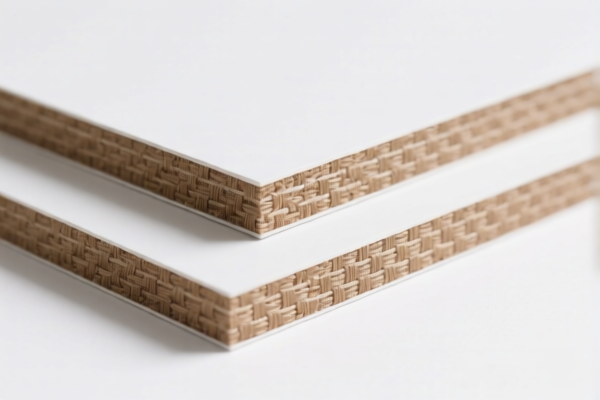
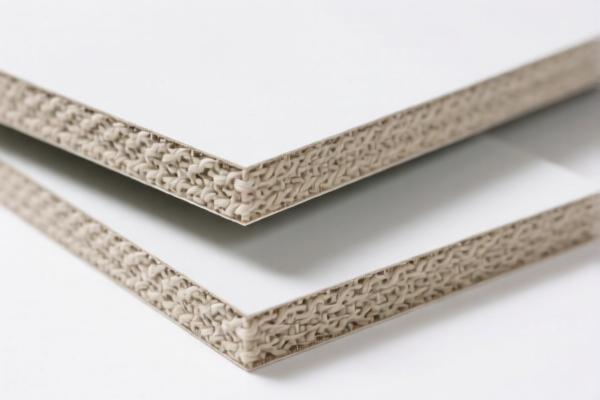
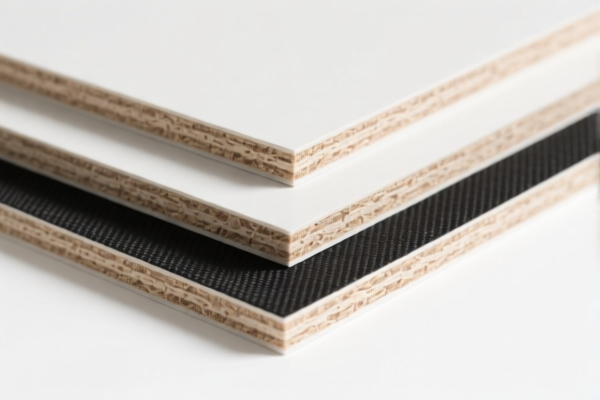

AI分析
🧱 Polyurethane Reinforced Textile Board
🌐 HS Code Reference & Clearance Guide | 2026 Latest Tariff Analysis | Professional Customs Strategy
📌 I. Product Definition & Classification: Do You Really Understand "Polyurethane Reinforced Textile Board"?
A Polyurethane (PU) Reinforced Textile Board is a composite industrial material combining a plastic matrix with textile reinforcement. In international trade, its classification depends heavily on the dominant material and the specific nature of the reinforcement.
Key Characteristics: * Material: Polyurethane (Plastic/Resin) acting as the matrix. * Reinforcement: Textile fibers/fabric providing high strength. * Form: Rigid or semi-rigid "Board" (Plate/Sheet).
⚠️ Critical Distinction:
- If the textile component is merely a surface layer or minor reinforcement, and the plastic content exceeds 70%, it generally falls under Chapter 39 (Plastics).
- If the textile forms the structural backbone and plastic is just a coating (<50%), it might fall under Chapter 59 (Impregnated Textiles).
- Note: Based on the provided DATA, the analysis assumes the plastic content is dominant or the product is classified as a plastic composite.
📦 II. HS Code Classification Details (2026 Latest Tariff Authority Comparison)
Based on the provided dataset, there are four distinct HS Codes identified for this product. Below is the detailed breakdown of why each applies and the associated tax implications.
| HS Code | Product Description | Matching Logic (Why it fits) | Total Tax Rate |
|---|---|---|---|
3921.90.25.10 |
Plastic plates, sheets, film, foil, and strip, other, reinforced with textile | Strongest Match. "Plastic Board" matches form; "Textile Reinforced" matches content. High-strength industrial use implies plastic dominance (>70%). | 41.5% |
3926.90.56.00 |
Other articles of plastics and articles of other materials of heading 3901 to 3914, containing textile fibers | Matches "Plastic" material and "Board" form. "High-strength textile reinforcement" implies the presence of textile fibers, consistent with HS 3926.90.56.00. No material conflict. | 40.1% |
3921.90.40.10 |
Other plastic plates, sheets, etc., not elsewhere specified | Matches "Plastic Board" form. "Textile Reinforced" is logically similar to "Paper Reinforced" in classification logic (fiber reinforcement). No material conflict with "Other" category. | 39.2% |
3926.90.57.00 |
Other articles of plastics and articles of other materials of heading 3901 to 3914 | Matches "Plastic" material and "Board" shape. "Textile Reinforced" attribute aligns with the feature of involving textile fibers in this heading. | 41.5% |
🔍 重点提醒 (Key Reminders)
-3921.90.40.10(39.2%) offers the lowest total tax rate among the options provided.
-3926vs.3921: Chapter 39.21 covers plates/sheets/film. Chapter 39.26 covers "other articles" (made-up articles). If the board is a simple flat sheet, 3921 is more precise. If it is a made-up part or has complex shaping, 3926 may apply.
- Tax Variation: The difference between 39.2% and 41.5% can significantly impact cost on large volume shipments.
💰 III. 2026 Latest Tariff Rate Details (Including Surtaxes & Policy Surcharges)
✅ Applicable Country: United States (US)
✅ Country of Origin: China (CN)
✅ Effective Time: From November 10, 2025 (including subsequent imports)
🎯 1. 3921.90.25.10 – Plastic Plates, Reinforced with Textile
| Item | Content |
|---|---|
| Base Tariff | 6.5% (Ad Valorem) |
| Section 301 Surtax | +25.0% (USITC Footnote related to China origin) |
| IEEPA Surtax | +10.0% (Against China/HK products, from Nov 10, 2025) |
| Total Tax Rate | 41.5% |
| Tax Calculation | CIF Value × 41.5% |
| De Minimis Exemption | ❌ Not Eligible (deny_de_minimis) |
| Legal Path | Base: 3921.90.25.10 → 301: 25% → IEEPA: 10% |
📌 Explanation:
- Base Rate (6.5%): Standard MFN rate for plastic boards.
- Section 301 (25%): High tariffs on Chinese industrial plastics.
- IEEPA (10%): Additional emergency surcharge.
- Total: 41.5%. This is a high-cost classification.
🎯 2. 3926.90.56.00 – Other Plastic Articles Containing Textile Fibers
| Item | Content |
|---|---|
| Base Tariff | 5.1% |
| Section 301 Surtax | +25.0% |
| IEEPA Surtax | +10.0% |
| Total Tax Rate | 40.1% |
| Tax Calculation | CIF Value × 40.1% |
| De Minimis Exemption | ❌ Not Eligible (deny_de_minimis) |
| Legal Path | Base: 3926.90.56.00 → 301: 25% → IEEPA: 10% |
📌 Note:
- Slightly lower total tax (40.1%) than3921.90.25.10.
- Suitable if the board is considered a "made-up article" rather than a simple sheet.
- Crucial: Must prove "containing textile fibers" to justify this specific subheading.
🎯 3. 3921.90.40.10 – Other Plastic Plates/Sheets (No Specific Reinforcement Listed)
| Item | Content |
|---|---|
| Base Tariff | 4.2% |
| Section 301 Surtax | +25.0% |
| IEEPA Surtax | +10.0% |
| Total Tax Rate | 39.2% |
| Tax Calculation | CIF Value × 39.2% |
| De Minimis Exemption | ❌ Not Eligible (deny_de_minimis) |
| Legal Path | Base: 3921.90.40.10 → 301: 25% → IEEPA: 10% |
📌 Advantage:
- Lowest Total Tax Rate (39.2%) in the provided data.
- Logic: "Textile reinforced" is treated as a variation of "Other" plastic plates.
- Risk: Customs may challenge this if the textile reinforcement is significant. Requires strong argument that it's a general "other" plastic board.
🎯 4. 3926.90.57.00 – Other Plastic Articles
| Item | Content |
|---|---|
| Base Tariff | 6.5% |
| Section 301 Surtax | +25.0% |
| IEEPA Surtax | +10.0% |
| Total Tax Rate | 41.5% |
| Tax Calculation | CIF Value × 41.5% |
| De Minimis Exemption | ❌ Not Eligible (deny_de_minimis) |
| Legal Path | Base: 3926.90.57.00 → 301: 25% → IEEPA: 10% |
📌 Note:
- Same total rate as3921.90.25.10but higher base tariff.
- Used when the article doesn't fit specific "textile reinforced" subheadings but is still a plastic product.
🛠️ IV. Customs Clearance Practical Advice (Real-World Pitfall Avoidance Guide)
✅ 1. Documentation Checklist (Essential)
| Document | Required | Description |
|---|---|---|
| ✅ Product Specification Sheet | ✔️ | Details: PU content %, Textile type (Glass/Cotton/Polyester), Reinforcement structure, Board thickness/density. |
| ✅ Material Composition Statement | ✔️ | Crucial for proving plastic dominance (>50% or >70%) to justify Chapter 39. |
| ✅ Product Photos (Clear) | ✔️ | Show cross-section to reveal reinforcement layers. Show finished board. |
| ✅ Commercial Invoice | ✔️ | Description: "Polyurethane Board, Textile Reinforced, Industrial Use". Avoid vague terms like "Composite Material". |
| ✅ Packing List | ✔️ | Net/Gross weight, dimensions. |
| ✅ Certificate of Origin (CO) | ✔️ | Required for US customs. Note: No tariff preference for China origin under current US-China trade terms. |
✅ 2. Declaration Tips (Key Mantra)
🔥 "Plastic Dominant, Chapter 39, Reinforcement is Key, Tax Rate Varies by Specificity!"
| Scenario | Correct HS Code | Wrong Practice | Consequence |
|---|---|---|---|
| Simple Flat PU Plate with Textile | 3921.90.25.10 or 3921.90.40.10 |
Declare as 3926 (Other Articles) |
May face inquiry on why not "Plate/Sheet". |
| Complex Shaped PU Part | 3926.90.56.00 or 3926.90.57.00 |
Declare as 3921 (Plates) |
Misclassification, potential penalty. |
| Textile > Plastic (Coated Fabric) | Chapter 59 (Not in DATA) | Declare as 3921 |
High Risk: Rejected by Customs, reclassified to higher tax or wrong chapter. |
| Generic "Composite Board" | 3921.90.40.10 |
Vague description "Plastic Board" | Delayed clearance, request for more info. |
✅ 3. Special Case Handling
| Situation | Handling Advice |
|---|---|
| High-Performance Industrial Use | Provide tech data sheets showing "High Strength" properties to justify "Reinforced" classification. |
| Mixed Reinforcement (Textile + Paper) | As per DATA, "Textile Reinforced" can still fall under "Other" (3921.90.40.10) if no conflict. Be prepared to explain. |
| Customs Audit on Plastic % | Have lab test results ready to prove PU content exceeds 50%. If <50%, classification shifts to Chapter 59 (Textiles). |
| Section 301 Exemption Requests | Currently, no exemption is listed in DATA. Assume full 35-41.5% tax burden. |
🌍 V. Global Market Comparison (2026 Latest)
| Country/Region | Recommended HS Code | Base Tariff | Total Tax (China Origin) | Notes |
|---|---|---|---|---|
| 🇺🇸 USA | 3921.90.40.10 (Best Rate) |
4.2% | 39.2% | Lowest among options. |
| 🇨🇳 China (Import) | 3921.90.25.10 |
6.5% | ~6.5% + VAT 13% | No Section 301/IEEPA. |
| 🇪🇺 EU | 3921.90.99 |
6.0% | ~6.0% + VAT 21% | No additional surcharges. |
| 🇬🇧 UK | 3921.90.00 |
3.0% | ~3.0% + VAT 20% | Post-Brexit rules apply. |
📌 Conclusion:
- USA is the most expensive market due to Section 301 and IEEPA surcharges.
- Choice of HS Code Subheading matters: Choosing3921.90.40.10vs3921.90.25.10saves 2.3% on base tariff. On a $100,000 shipment, this is a $2,300 difference.
📌 VI. Common Mistakes & Pitfall Guide (Lessons Learned)
❌ Mistake 1: Declaring "Textile Board" under Chapter 59 (Textiles)
👉 Consequence: If plastic > textile, Customs will reclassify to Chapter 39, possibly with higher duties if not handled properly.
👉 Fix: Prove plastic matrix dominance.
❌ Mistake 2: Using vague "Plastic Board" without mentioning reinforcement
👉 Consequence: Customs may assign highest default duty or request additional fees for inspection.
👉 Fix: Explicitly state "Polyurethane, Textile Reinforced" in commercial invoice.
❌ Mistake 3: Ignoring IEEPA 10% surcharge
👉 Consequence: Underpayment of taxes, leading to penalties and back-taxes.
👉 Fix: Always include IEEPA (10%) in cost calculations for China-origin goods.
❌ Mistake 4: Claiming De Minimis (Section 321) for shipments < $800
👉 Consequence: ❌ Denied. Section 301 and IEEPA surcharges are not eligible for de minimis exemption.
👉 Fix: Pay full duties even on small samples.
🎯 VII. Conclusion: Precision Classification for Cost Savings
🎯 Remember the Mantra:
🔹 "Plastic Dominant, Chapter 39, Check Subheading, Tax Rate Drops!"
🔹 "Textile Reinforced is Key, Base Tariff Varies, Total Tax is High, Plan Ahead!"
📌 Pro Tip:
- If your product is simple flat sheets, use 3921.90.40.10 for the lowest rate (39.2%).
- If your product is complex made-up parts, use 3926.90.56.00 (40.1%) as it better describes "articles containing textile fibers".
- Always prepare lab reports to confirm material composition.
- Pre-file for an Advance Ruling from US Customs and Border Protection (CBP) to secure the correct HS Code and avoid audits.
📣 Immediate Action:
📞 Contact a licensed customs broker + Provide product cross-section photos + Request HS Code Advance Ruling
🚀 Ensure smooth clearance, avoid penalties, and optimize your landed cost!
✨ Professional clearance starts with precise classification!
💼 Every percentage point counts in global trade!
用户评价
关于 HS 编码归类
协调制度(HS)是由世界海关组织(WCO)制定的国际贸易商品分类标准。全球 200 多个国家采用 HS 系统作为海关关税、贸易统计和进出口监管的基础。
每个 HS 编码遵循以下层级结构:
- 章(2 位)——商品大类(例如:第 84 章:机器和机械设备)
- 品目(4 位)——章内的更具体分类
- 子目(6 位)——国际通用细分,所有 WCO 成员国统一使用
- 本国细分(8-10 位)——各国自行扩展的细分编码,如美国 HTSUS 10 位编码
正确的 HS 编码归类对于顺利通关、准确缴纳关税和遵守贸易法规至关重要。错误归类可能导致海关延误、多缴关税或罚款。
从CN进口到US时,适用的关税税率可能包括:
- 最惠国(MFN)税率——适用于 WTO 成员国的标准关税税率
- 普通税率——适用于无贸易协定国家
- 贸易救济关税——附加关税,如 301 条款(反倾销)、232 条款(国家安全)或反补贴税
本页内容仅供参考。如需正式归类,请咨询当地海关或持牌报关代理。