Polyurethane Textile Composite Corrosion Resistant Board
CN → US| HS编码 | 关税税率 | 原产国 | 目的国 | 文档 |
|---|---|---|---|---|
| 3921131500 | 41.5% | CN | US | 官方文档 |
| 3921131950 | 40.3% | CN | US | 官方文档 |
| 5903202500 | 42.5% | CN | US | 官方文档 |
| 5903202000 | 35.0% | CN | US | 官方文档 |
| 6810990080 | 35.0% | CN | US | 官方文档 |
商品图片
AI分析
🏗️ Polyurethane Textile Composite Corrosion-Resistant Board (PU-TXT Composite Panels)
🌐 HS Code Reference & Customs Clearance Guide | 2026 Latest Tariff Analysis | Professional Classification Strategy
📌 I. Product Definition & Classification: What Exactly Is This Board?
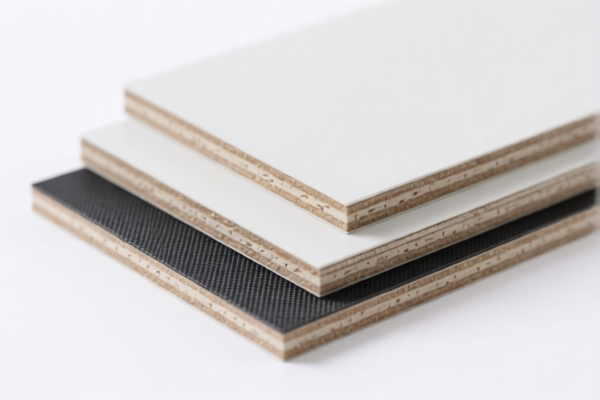
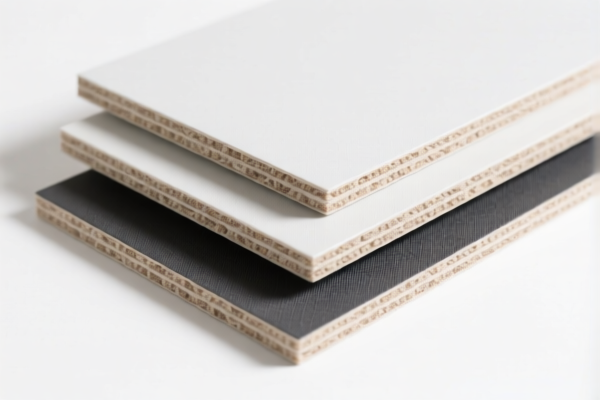
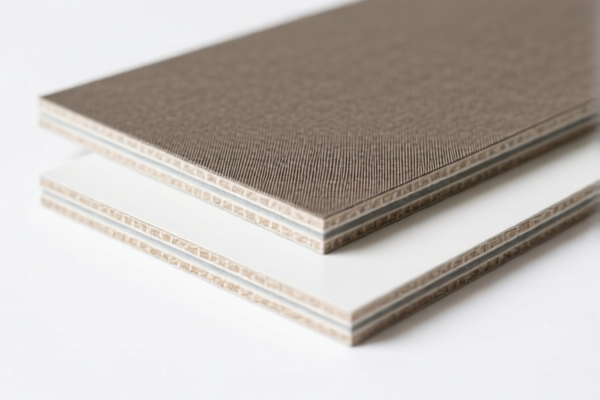
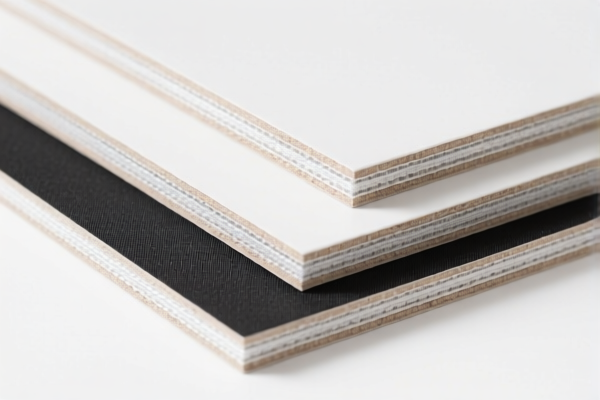
The Polyurethane Textile Composite Corrosion-Resistant Board is a specialized construction material characterized by a multi-layer structure: 1. Core/Material: Polyurethane (PU), providing insulation, cushioning, and chemical resistance. 2. Reinforcement/Matrix: Textile materials (fabric, mesh, or non-woven), providing tensile strength and structural integrity. 3. Form: Rigid or semi-rigid boards/panels. 4. Application: Construction use, specifically noted for corrosion resistance (chemical/erosion protection).
⚠️ Critical Classification Dilemma:
The classification hinges on whether the textile acts as the essential character (making it a textile product) or if the polyurethane coating/lamination defines it as a plastic product.
- If the textile is merely a carrier for the PU coating → Chapter 39 (Plastics).
- If the textile is impregnated/coated with PU to create a composite fabric → Chapter 59 (Textiles impregnated/coated).
- Misclassification can lead to significant tariff discrepancies (0% vs. 6.5% base duty) and customs holds.
📦 II. HS Code Classification Details (2026 Latest Tariff Authority Cross-Reference)
| HS Code | Product Description | Applicability Scenario | Key Classification Feature |
|---|---|---|---|
3921.13.15.00 |
PU Textile Composite Board (Textile-Reinforced) | Construction panels where PU and textile are clearly composite, textile provides structure | ✅ Composite Panel: PU + Textile blend, specifically for construction |
3921.13.19.50 |
PU Composite Board (General Plastic Board) | Rigid boards primarily classified as plastic articles, less textile-focused | ✅ Plastic Article: PU-based sheet/board, general construction use |
5903.20.25.00 |
PU-Impregnated Textile Fabric | Boards made from PU-treated textile fabrics where fabric structure dominates | ✅ Textile Focus: PU-coated/impregnated artificial fiber textile fabric |
5903.20.20.00 |
PU-Laminated/Coated Textile (Chemical Resistant) | High corrosion resistance boards using PU-laminated textiles | ✅ Chemical Treatment: Heavy PU impregnation/lamination on textile |
6810.99.00.80 |
Non-Specific Construction Composite Board | Incorrect/Alternative classification assuming "cement/concrete-like" composite | ⚠️ High Risk: Usually incorrect for PU-based products; low duty but high audit risk |
🔍 Key Distinction Logic:
- Chapters 39 vs. 59: The US Harmonized Tariff Schedule (HTSUS) Note 2 to Section XI and Note 1 to Chapter 39 are critical. If the textile backing is completely covered or the plastic impregnation is substantial enough to change the essential character, Chapter 39 may apply. However, if the textile structure remains dominant, Chapter 59 is often preferred for "composite fabrics."
- Application Note: Despite being "Construction Boards," they rarely fall under Chapter 68 (Stone/Cement) unless they mimic concrete heavily, which is unlikely for PU-Textile composites.
💰 III. 2026 Latest Tariff Rate Breakdown (Including Additional Duties & Policy Surcharges)
✅ Applicable Country: United States (US)
✅ Country of Origin: China (CN)
✅ Effective Date: November 10, 2025 (and ongoing)
🎯 1. 3921.13.15.00 – Polyurethane Textile Composite Board (Construction)
| Item | Detail |
|---|---|
| Base Duty Rate | 6.5% (Ad Valorem) |
| Section 301 Duty (25%) | +25% (USITC Footnote related to Chinese goods) |
| IEEPA Surcharge (122) | +10% (Section 122 of the Trade Expansion Act/Other EO provisions) |
| Total Effective Rate | 41.5% |
| Calculation Basis | CIF Value × 41.5% |
| De Minimis Exemption | ❌ Not Eligible (Deny De Minimis) |
| Legal Pathway | IEEPA:9903.01.24 → USITC:3921.13.15.00 → 301:Footnote |
📌 Analysis:
- This is the most specific "composite panel" code.
- The 6.5% base is higher than some textile codes but safer for "board" applications.
- Total 41.5% is a heavy burden, requiring careful cost-benefit analysis.
🎯 2. 3921.13.19.50 – Polyurethane Composite Board (Other)
| Item | Detail |
|---|---|
| Base Duty Rate | 5.3% (Ad Valorem) |
| Section 301 Duty (25%) | +25% |
| IEEPA Surcharge (122) | +10% |
| Total Effective Rate | 40.3% |
| Calculation Basis | CIF Value × 40.3% |
| De Minimis Exemption | ❌ Not Eligible |
| Legal Pathway | IEEPA:9903.01.24 → USITC:3921.13.19.50 → 301:Footnote |
📌 Analysis:
- A slight variation of the above, for boards where the specific "textile composite" definition isn't perfectly met but still plastic-based.
- Saves 1.2% compared to3921.13.15.00.
🎯 3. 5903.20.25.00 – PU-Impregnated Textile Fabric
| Item | Detail |
|---|---|
| Base Duty Rate | 7.5% (Ad Valorem) |
| Section 301 Duty (25%) | +25% |
| IEEPA Surcharge (122) | +10% |
| Total Effective Rate | 42.5% |
| Calculation Basis | CIF Value × 42.5% |
| De Minimis Exemption | ❌ Not Eligible |
| Legal Pathway | IEEPA:9903.01.24 → USITC:5903.20.25.00 → 301:Footnote |
📌 Analysis:
- Highest base duty (7.5%) among the valid options.
- Applies if the product is viewed primarily as a "textile fabric" that is then cut into boards.
- Risk: If customs determines it's a "board" and not "fabric," this code may be rejected.
🎯 4. 5903.20.20.00 – PU-Laminated/Coated Textile (Corrosion Resistant)
| Item | Detail |
|---|---|
| Base Duty Rate | 0.0% (Ad Valorem) |
| Section 301 Duty (25%) | +25% |
| IEEPA Surcharge (122) | +10% |
| Total Effective Rate | 35.0% |
| Calculation Basis | CIF Value × 35.0% |
| De Minimis Exemption | ❌ Not Eligible |
| Legal Pathway | IEEPA:9903.01.24 → USITC:5903.20.20.00 → 301:Footnote |
📌 Analysis:
- LOWEST TOTAL TARIFF (35%)!
- Requires strong justification that the product is a textile fabric (impregnated/laminated) rather than a rigid board.
- Must emphasize the "chemical treatment" (corrosion resistance) aspect of the PU layer.
- High Audit Risk: Customs may challenge the "textile" classification if the board is rigid and used structurally.
🎯 5. 6810.99.00.80 – Other Construction Articles (Stone/Cement)
| Item | Detail |
|---|---|
| Base Duty Rate | 0.0% (Ad Valorem) |
| Section 301 Duty (25%) | +25% |
| IEEPA Surcharge (122) | +10% |
| Total Effective Rate | 35.0% |
| Calculation Basis | CIF Value × 35.0% |
| De Minimis Exemption | ❌ Not Eligible |
| Legal Pathway | IEEPA:9903.01.24 → USITC:6810.99.00.80 → 301:Footnote |
📌 Analysis:
- Misclassification Danger: This code is for "cement, concrete, or artificial stone."
- PU-Textile composites are organic/plastic-based, not mineral-based.
- Using this code is highly likely to result in a seizure, fine, or forced reclassification with penalties.
- Do not use unless the product is specifically a PU-modified cement board (which is rare for "textile composite").
🛠️ IV. Customs Clearance Practical Advice (Real-World Pitfall Avoidance)
✅ 1. Documentation Checklist (Non-Negotiable)
| Document | Required? | Purpose |
|---|---|---|
| ✅ Product Specification Sheet | ✔️ | Must detail layers: Textile type, PU weight/coating %, Corrosion resistance test results. |
| ✅ Cross-Section Diagram | ✔️ | Visually prove the "composite" structure. Essential for Chapter 39 vs. 59 dispute. |
| ✅ Photos of Product & Packaging | ✔️ | Show rigidity, edges, and application context. |
| ✅ Material Safety Data Sheet (MSDS) | ✔️ | To prove chemical composition (Polyurethane vs. Cement). |
| ✅ Commercial Invoice | ✔️ | Clearly state: "Polyurethane Textile Composite Board for Construction" – avoid vague terms like "Plastic Sheet." |
| ✅ Certificate of Origin | ✔️ | Crucial for applying Section 301 surcharges correctly. |
✅ 2. Classification Strategy & Negotiation Tips
🔥 “Structure Defines Character: Rigid = Ch39, Flexible Fabric = Ch59, Wrong = Penalty!”
| Scenario | Recommended HS Code | Strategy |
|---|---|---|
| Rigid Board, PU Core, Textile Skin | 3921.13.15.00 or 3921.13.19.50 |
Emphasize "Board" and "Construction Application." Justify Ch39 over Ch59 because it's rigid. |
| Flexible Roll-Cut Board, High PU Content | 5903.20.20.00 |
Argue "Essential Character is Textile." Highlight corrosion resistance as a chemical treatment of fabric. Lowest Duty (35%). |
| Mimicking Cement Panels | AVOID 6810.99.00.80 |
Do not use unless it contains significant cement. Risk of fraud allegations is too high. |
✅ 3. Special Considerations for "Corrosion Resistance"
- Marketing Claim vs. Physical Property: If you claim "Corrosion Resistant," customs may inspect the chemical resistance. Ensure your MSDS matches the HS Code description (especially for
5903.20.20.00which implies treated textiles). - Section 122 (IEEPA): The 10% surcharge applies to almost all Chinese-origin goods entering the US under current executive orders. Ensure your broker has the correct Section 122 code linked to your HTSUS entry.
🌍 V. Global Market Comparison (2026 Update)
| Region | Recommended HS Code | Total Duty (China Origin) | Key Requirement |
|---|---|---|---|
| 🇺🇸 USA | 3921.13.15.00 (Safe) / 5903.20.20.00 (Aggressive) |
35.0% – 41.5% | Detailed specs; Pre-ruling advised. |
| 🇨🇳 China (Import) | 3921.13.15.00 / 5903.20.20.00 |
~6.5% - 7.5% | No Section 301. Standard CN tariff. |
| 🇪🇺 EU | 3921.13.00 / 5903.20.90 |
~6.5% | REACH Compliance for PU chemicals. |
| 🇯🇵 Japan | 3921.13.000 / 5903.20.000 |
~6.0% | JIS Standards for construction materials. |
📌 Conclusion:
- The USA is the most complex market due to Section 301 (25%) and IEEPA (10%) surcharges.
- The EU and Japan offer lower base duties but have strict environmental regulations (REACH in EU) for polyurethane products.
📌 VI. Common Errors & Pitfall Guide (Lessons Learned)
❌ Error 1: Classifying rigid PU-Textile boards as "Fabric" (5903.20.20.00) when they are structural panels.
👉 Consequence: Customs reclassifies to 3921 (higher base duty) + penalties for misdeclaration.
❌ Error 2: Using 6810.99.00.80 (Stone/Cement) to get 0% base duty.
👉 Consequence: Seizure. Customs labs will test the material, find it's PU, and levy fines + retroactive duties.
❌ Error 3: Ignoring the "Textile" component in description.
👉 Consequence: Customs may view it as a pure plastic product and deny textile-based arguments, or vice versa, leading to delays.
✅ Correct Approach:
"Polyurethane-Coated Textile Composite Board, Rigid, for Construction, Corrosion-Resistant."
Provide a cross-section photo showing the textile reinforcement embedded in the PU matrix.
🎯 VII. Conclusion: Precision in Classification Saves Costs!
🎯 Key Takeaway:
🔹 "Rigid Panel = Ch39 (Safer), Flexible Fabric = Ch59 (Cheaper but Riskier), Stone = Ch68 (Wrong for PU)."
🔹 "Total Duty is ~35-42% for US Imports. There is NO De Minimis Exemption."
🔹 "Document the 'Composite' Nature. Prove the 'Corrosion Resistance' via MSDS."
📌 Pro Tip:
If your product is borderline between Chapter 39 and 59, consider applying for a Binding Ruling (Pre-classification) from US Customs and Border Protection (CBP). This provides legal certainty and prevents future disputes.
📣 Immediate Action Plan:
📞 Step 1: Consult a licensed customs broker with the product's cross-section diagram.
📞 Step 2: Decide between Safety (3921.13.15.00) vs. Savings (5903.20.20.00) based on product rigidity.
📞 Step 3: Prepare MSDS and Commercial Invoice with precise technical descriptions.
🚀 Goal: Clear customs smoothly, avoid 40+ day delays, and optimize the 35-42% total landed cost.
✨ Professional Clearance Starts with Accurate Classification!
💼 Your Product's Value Depends on Its Paperwork!
用户评价
关于 HS 编码归类
协调制度(HS)是由世界海关组织(WCO)制定的国际贸易商品分类标准。全球 200 多个国家采用 HS 系统作为海关关税、贸易统计和进出口监管的基础。
每个 HS 编码遵循以下层级结构:
- 章(2 位)——商品大类(例如:第 84 章:机器和机械设备)
- 品目(4 位)——章内的更具体分类
- 子目(6 位)——国际通用细分,所有 WCO 成员国统一使用
- 本国细分(8-10 位)——各国自行扩展的细分编码,如美国 HTSUS 10 位编码
正确的 HS 编码归类对于顺利通关、准确缴纳关税和遵守贸易法规至关重要。错误归类可能导致海关延误、多缴关税或罚款。
从CN进口到US时,适用的关税税率可能包括:
- 最惠国(MFN)税率——适用于 WTO 成员国的标准关税税率
- 普通税率——适用于无贸易协定国家
- 贸易救济关税——附加关税,如 301 条款(反倾销)、232 条款(国家安全)或反补贴税
本页内容仅供参考。如需正式归类,请咨询当地海关或持牌报关代理。