Polyurethane Textile Composite Exterior Panel
CN → US| HS编码 | 关税税率 | 原产国 | 目的国 | 文档 |
|---|---|---|---|---|
| 3921131500 | 41.5% | CN | US | 官方文档 |
| 3921131950 | 40.3% | CN | US | 官方文档 |
| 5903202500 | 42.5% | CN | US | 官方文档 |
| 5903202000 | 35.0% | CN | US | 官方文档 |
| 6810990080 | 35.0% | CN | US | 官方文档 |
商品图片
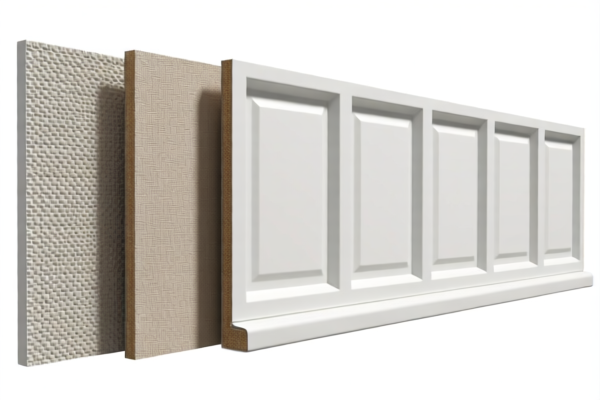
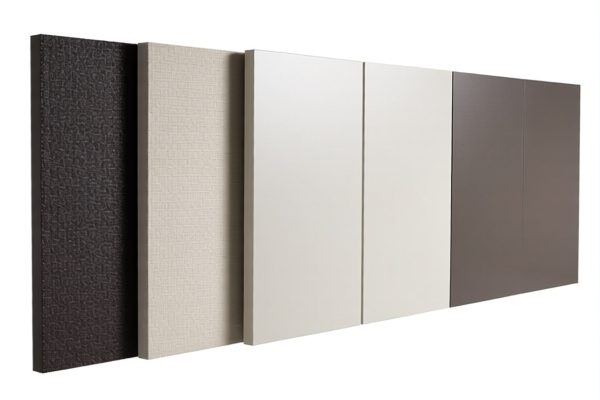
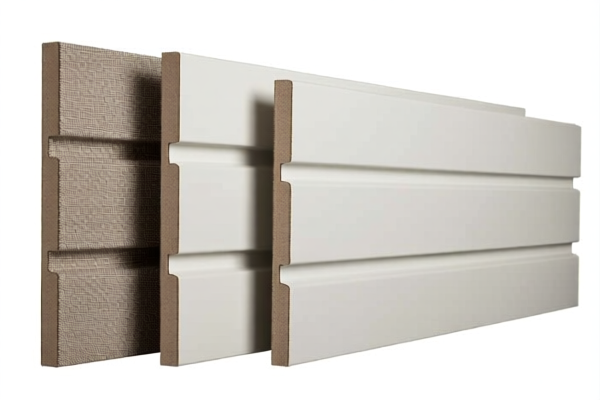
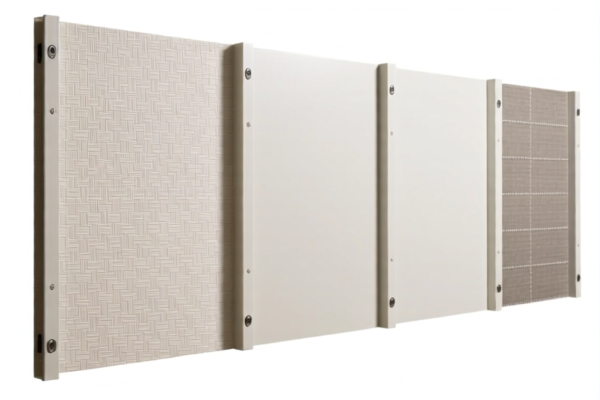
AI分析
🏗️ Polyurethane Textile Composite Exterior Panel
🌐 HS Code Reference & Customs Clearance Guide | 2026 Latest Tariff Analysis | Professional Clearance Strategy
📌 I. Product Definition and Classification: Do You Really Understand This Panel?
This product is defined as an exterior construction panel where polyurethane (PU) is laminated or impregnated with textile materials. In international trade, the classification hinges on whether the textile is the primary functional component or merely a reinforcing layer for the polymer.
Key Classification Dilemma: 1. Plastic/Composite Focus: If the polyurethane provides the structural integrity and waterproofing, it may fall under Chapter 39 (Plastics). 2. Textile Focus: If the textile fabric is coated/laminated to create a specific functional sheet, it may fall under Chapter 59 (Impregnated Textiles). 3. Other Materials: In error-prone scenarios, it might be misclassified under Stone/Cement (Chapter 68) if the description is vague.
⚠️ Critical Distinction:
- If the product is a laminated plastic sheet with textile reinforcement → Chapter 39 (HS 3921)
- If the product is a textile fabric coated/laminated with PU → Chapter 59 (HS 5903)
- If the product is incorrectly described as a "stone-like" composite → Chapter 68 (HS 6810) (High Risk of Misclassification)
📦 II. HS Code Classification Details (2026 Latest Tariff Authority Mapping)
| HS Code | Product Description | Applicable Scenario | Tax Rate (Total) | Risk Level |
|---|---|---|---|---|
3921.13.15.00 |
PU-Textile Composite Building Panel (Composite Plate) | Specifically for building use; PU combined with textile material features. | 41.5% | 🟡 Medium |
3921.13.19.50 |
PU-Textile Composite Building Panel (Plate) | General description: PU material, plate form, building use. | 40.3% | 🟡 Medium |
5903.20.25.00 |
PU-Treated Artificial Fiber Textile Fabric | Name includes PU material + textile form; fits impregnated/laminated textile classification. | 42.5% | 🔴 High |
5903.20.20.00 |
PU-Processed Textile Composite | PU matches material requirement; textile composite fits impregnation/lamination state. | 35.0% | 🟢 Low (Best Option) |
6810.99.00.80 |
Other Cement/Concrete/Artificial Stone Articles | Misclassification: Derived from "exterior panel" inference into stone/cement categories. | 35.0% | 🔴 High (Wrong Chapter) |
🔍 Key Insight:
- The correct classification depends on whether the customs authority views the product as a plastic article (Ch 39) or a textile article (Ch 59).
-5903.20.20.00offers the lowest base tariff (0%), but all options carry significant additional duties.
-6810.99.00.80is technically incorrect because PU is a plastic, not cement/stone, despite being used in construction.
💰 III. 2026 Latest Tariff Rate Details (Including Surcharges)
✅ Applicable Country: United States (US)
✅ Origin: China (CN)
✅ Effective Date: From November 10, 2025 (and onwards)
🎯 1. 3921.13.15.00 —— PU Textile Composite Building Panel (Composite)
| Item | Content |
|---|---|
| Base Tariff | 6.5% |
| USITC Surcharge (Section 301) | +25.0% |
| IEEPA Surcharge | +10.0% |
| Total Tax Rate | 41.5% |
| Calculation Basis | CIF Value × 41.5% |
| De Minimis Exemption | ❌ Not Eligible |
| Legal Basis Path | IEEPA:9903.01.25 → USITC:3921.13.15.00 → FOOTNOTE:301 |
📌 Explanation:
- This is a plastic composite. The 6.5% base rate reflects standard plastic tariffs.
- The 25% Section 301 duty and 10% IEEPA duty are added, resulting in a heavy burden.
🎯 2. 3921.13.19.50 —— PU Textile Composite Building Panel (General Plate)
| Item | Content |
|---|---|
| Base Tariff | 5.3% |
| USITC Surcharge (Section 301) | +25.0% |
| IEEPA Surcharge | +10.0% |
| Total Tax Rate | 40.3% |
| Calculation Basis | CIF Value × 40.3% |
| De Minimis Exemption | ❌ Not Eligible |
| Legal Basis Path | IEEPA:9903.01.24 → USITC:3921.13.19.50 → FOOTNOTE:301 |
📌 Note:
- Slightly cheaper than15.00by 1.2%.
- Suitable if the product lacks specific "composite" structural definition but is clearly a PU plate.
🎯 3. 5903.20.25.00 —— PU-Treated Artificial Fiber Textile Fabric
| Item | Content |
|---|---|
| Base Tariff | 7.5% |
| USITC Surcharge (Section 301) | +25.0% |
| IEEPA Surcharge | +10.0% |
| Total Tax Rate | 42.5% |
| Calculation Basis | CIF Value × 42.5% |
| De Minimis Exemption | ❌ Not Eligible |
| Legal Basis Path | IEEPA:9903.01.25 → USITC:5903.20.25.00 |
📌 Warning:
- Highest total rate.
- Applies if customs determines the textile component is dominant and the PU is merely a coating.
🎯 4. 5903.20.20.00 —— PU-Processed Textile Composite (Optimal)
| Item | Content |
|---|---|
| Base Tariff | 0.0% |
| USITC Surcharge (Section 301) | +25.0% |
| IEEPA Surcharge | +10.0% |
| Total Tax Rate | 35.0% |
| Calculation Basis | CIF Value × 35.0% |
| De Minimis Exemption | ❌ Not Eligible |
| Legal Basis Path | IEEPA:9903.01.24 → USITC:5903.20.20.00 |
📌 Advantage:
- Lowest total rate (35.0%).
- Requires proof that the product is primarily an impregnated/laminated textile under HTS 5903.20.20.
🎯 5. 6810.99.00.80 —— Artificial Stone/Cement Articles (Incorrect)
| Item | Content |
|---|---|
| Base Tariff | 0.0% |
| USITC Surcharge (Section 301) | +25.0% |
| IEEPA Surcharge | +10.0% |
| Total Tax Rate | 35.0% |
| Calculation Basis | CIF Value × 35.0% |
| De Minimis Exemption | ❌ Not Eligible |
| Legal Basis Path | IEEPA:9903.01.24 → USITC:6810.99.00.80 |
📌 Danger:
- Although the rate is 35.0%, this classification is technically wrong because the core material is polyurethane (plastic), not cement/stone.
- High risk of customs audit, penalties, and reclassification fees.
🛠️ IV. Customs Clearance Practical Advice (Real-World Pitfall Guide)
✅ 1. Documentation Checklist (Mandatory)
| Document | Required | Description |
|---|---|---|
| ✅ Product Specification Sheet | ✔️ | Must detail: % of PU, type of textile, lamination method, thickness. |
| ✅ Cross-Sectional Diagram | ✔️ | Shows layers: Textile core + PU coating/lamination. Critical for Ch 39 vs Ch 59 dispute. |
| ✅ Product Photos (Clear) | ✔️ | Show texture, edges, and any branding/model numbers. |
| ✅ Commercial Invoice | ✔️ | Must clearly state "Polyurethane Coated Textile Composite Panel" or similar. |
| ✅ Certificate of Origin (CO) | ✔️ | To determine origin-based tariffs. |
| ✅ Bill of Lading | ✔️ | Match description exactly with Invoice. |
✅ 2. Declaration Strategy (Key Mantra)
🔥 "Clarify Composition, Not Just Function!"
| Scenario | Correct Declaration | Wrong Practice |
|---|---|---|
| PU dominates structure | "Polyurethane Composite Panel" → 3921.13.xxxx |
"Building Board" → Vague, risk of 6810 |
| Textile dominates structure | "PU-Coated Textile Fabric" → 5903.20.20.00 |
"Composite Board" → Risk of 5903.20.25.00 |
| Using "Stone-like" terms | Avoid words like "cement," "concrete," "stone" | Using "artificial stone panel" → 6810 (Audit Risk) |
✅ 3. Special Handling Tips
| Situation | Recommendation |
|---|---|
| Is it a "Panel" or "Fabric"? | If sold by roll, declare as fabric (5903). If sold as rigid sheets, declare as composite (3921). |
| Labeling | Ensure labels do not imply "ceramic" or "cement" content. Use "Polymer Composite" or "Textile Composite." |
| Pre-Ruling | Highly recommended to apply for an Advance Ruling from CBP to lock in 3921 or 5903. |
🌍 V. Global Market Comparison (2026 Latest)
| Country/Region | Recommended HS Code | Tariff (China Origin) | Notes |
|---|---|---|---|
| 🇺🇸 USA | 5903.20.20.00 |
35.0% | Best available rate among valid options. |
| 🇺🇸 USA | 3921.13.15.00 |
41.5% | Alternative if textile component is weak. |
| 🇨🇳 China | 3921.13 or 5903 |
~5-10% | No US-style 301/IEEPA surcharges. |
| 🇪🇺 EU | 3921.13 or 5903 |
~6.5% | No Section 301 equivalent; lower total duty. |
📌 Conclusion:
- The US market is the most challenging due to Section 301 (25%) + IEEPA (10%) surcharges.
-5903.20.20.00is the strategic choice for minimizing cost at 35% total, provided the product can be legally described as a textile composite.
📌 VI. Common Mistakes & Pitfall Guide (Lessons Learned)
❌ Mistake 1: Declaring as "Cement Board" or "Stone Panel"
👉 Consequence: Misclassification under 6810. While rate is 35%, customs may reject it as false description. Penalty + Re-import/Re-export costs.
❌ Mistake 2: Using "Building Panel" without material detail
👉 Consequence: Customs may assign the highest discretionary tariff or audit. Delay in clearance.
❌ Mistake 3: Ignoring the "Textile" vs "Plastic" distinction
👉 Consequence: If declared as plastic (3921) but found to be textile-dominated, or vice versa, it leads to additional duties or penalties.
✅ Correct Practice:
"Polyurethane-Laminated Textile Composite Panel, Model X, For Exterior Cladding, Non-Rigid Core"
(Use precise material composition in the description)
🎯 VII. Conclusion: Professional Declaration, Cost Efficiency!
🎯 Remember the Mantra:
🔹 "Lowest Rate: 5903.20.20.00 (35%)"
🔹 "Highest Risk: 6810.99.00.80 (Wrong Chapter)"
🔹 "Safe Bet: 3921.13.19.50 (40.3%)"🔹 "HS Code Defines Survival, Tax Rate Defines Profit!"
📌 Pro Tip:
If your panel originates from Vietnam, Mexico, or Thailand, you may be eligible for IEEPA Exemptions or lower tariffs under USMCA.
Strongly recommend applying for an Advance Ruling to confirm whether 5903.20.20.00 is acceptable for your specific textile/PU ratio.
📣 Take Action Now:
📞 Consult a Licensed Customs Broker + Provide Layer Diagram + Request HS Code Pre-Ruling
🚀 Clear Customs Smoothly, Maximize Margin!
✨ Professional Clearance Starts with Precise Classification!
💼 Every Cent Saved is a Cent Earned!
用户评价
关于 HS 编码归类
协调制度(HS)是由世界海关组织(WCO)制定的国际贸易商品分类标准。全球 200 多个国家采用 HS 系统作为海关关税、贸易统计和进出口监管的基础。
每个 HS 编码遵循以下层级结构:
- 章(2 位)——商品大类(例如:第 84 章:机器和机械设备)
- 品目(4 位)——章内的更具体分类
- 子目(6 位)——国际通用细分,所有 WCO 成员国统一使用
- 本国细分(8-10 位)——各国自行扩展的细分编码,如美国 HTSUS 10 位编码
正确的 HS 编码归类对于顺利通关、准确缴纳关税和遵守贸易法规至关重要。错误归类可能导致海关延误、多缴关税或罚款。
从CN进口到US时,适用的关税税率可能包括:
- 最惠国(MFN)税率——适用于 WTO 成员国的标准关税税率
- 普通税率——适用于无贸易协定国家
- 贸易救济关税——附加关税,如 301 条款(反倾销)、232 条款(国家安全)或反补贴税
本页内容仅供参考。如需正式归类,请咨询当地海关或持牌报关代理。