Polyurethane Textile Composite Molding Board
CN → US| HS编码 | 关税税率 | 原产国 | 目的国 | 文档 |
|---|---|---|---|---|
| 3921131500 | 41.5% | CN | US | 官方文档 |
| 3921131950 | 40.3% | CN | US | 官方文档 |
| 5903202500 | 42.5% | CN | US | 官方文档 |
| 5903202000 | 35.0% | CN | US | 官方文档 |
| 6810990080 | 35.0% | CN | US | 官方文档 |
商品图片
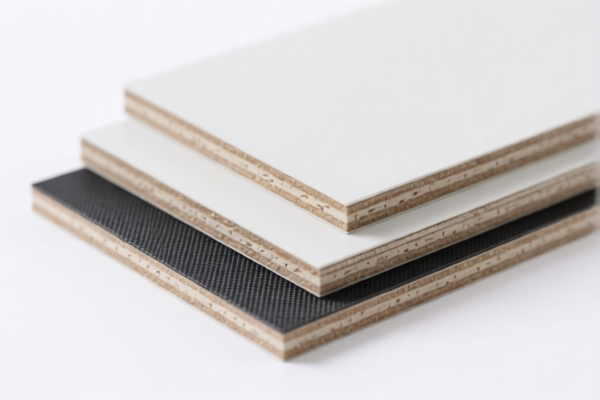
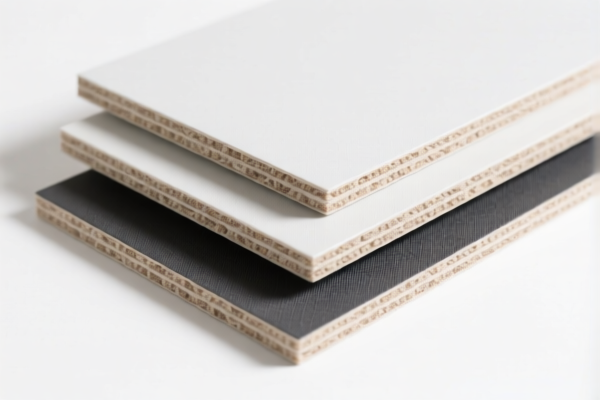
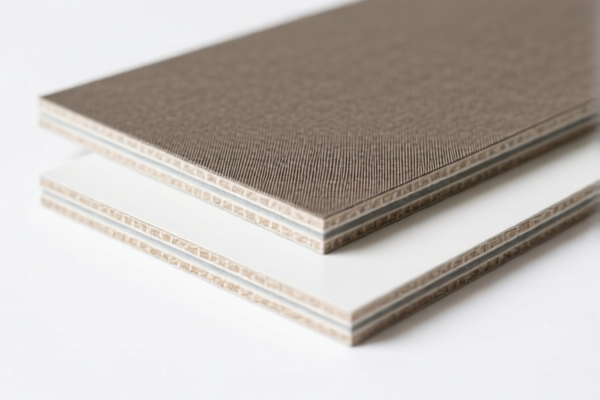
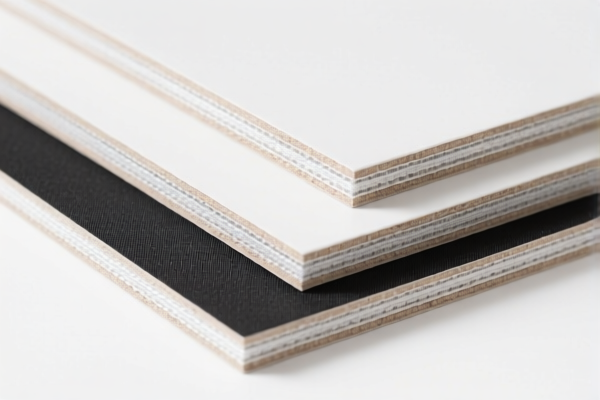
AI分析
🏗️ Polyurethane Textile Composite Molding Board (PU-Textile Composite Building Board)
🌐 HS Code Reference & Customs Clearance Guide | 2026 Latest Tariff Analysis | Professional Entry Strategy
📌 Part 1: Product Definition & Classification: Do You Really Understand "PU-Textile Composite Boards"?
Polyurethane Textile Composite Molding Boards are advanced building materials consisting of polyurethane (PU) bonded or laminated with textile materials. In international trade, the classification is highly sensitive to the primary character of the composite material: * Plastic-Primary (Chapter 39): If the PU layer provides the essential character (e.g., waterproofing, structural integrity via plastic properties), it falls under plastics. * Textile-Primary (Chapter 59): If the textile fabric is coated, impregnated, or laminated with PU for specific functional purposes (e.g., reinforcement, specific texture), it falls under treated textile fabrics. * Other Materials (Chapter 68): If classified based on end-use as a construction component similar to cement/concrete alternatives (less common but possible if heavily mineral-filled, though PU suggests otherwise, the data includes a potential mismatch).
⚠️ Key Distinction: * If the board is primarily a plastic sheet/board with textile backing → Chapter 39. * If the board is primarily a textile fabric coated/laminated with PU → Chapter 59. * If misclassified as generic construction material → Chapter 68 (High Risk/High Duty).
📦 Part 2: HS Code Classification Details (2026 Latest Tariff Authority Comparison)
| HS Code | Product Description | Application Scenario | Primary Material Characteristic |
|---|---|---|---|
3921.13.15.00 |
Polyurethane textile composite building board, material is PU, form is composite board. | Building use, fits the characteristic of PU combined with textile materials. | ✅ Plastic-First (Composite Board) |
3921.13.19.50 |
Polyurethane textile composite building board, material is PU, form is board/sheet/film. | Building use, fits the description of "Polyurethane, board, sheet, film, and other." | ✅ Plastic-First (General Plastic Board) |
5903.20.25.00 |
Polyurethane textile composite building board, name includes PU material and textile form. | Fits the classification characteristics of PU-treated man-made fiber textile fabrics. | ✅ Textile-First (Treated Fabric) |
5903.20.20.00 |
Polyurethane textile composite building board, PU meets material requirements, textile composite meets impregnation/coating/lamination form. | Building board is the downstream application scenario. | ✅ Textile-First (Impregnated/Laminated) |
6810.99.00.80 |
Polyurethane textile composite building board, inferred as "other articles" under cement/concrete or artificial stone categories. | Misclassification Risk: Fits "other articles" under construction materials. | ❌ High Risk (Incorrect Material Basis) |
🔍 Key Reminder: * Classification hinges on GRI 3(b) (Essential Character). Is it a "Plastic Board with Fabric Backing" (
39) or a "Fabric Coated with PU" (59)? *6810.99.00.80is likely an incorrect classification for pure PU/Textile composites unless specific mineral fillers dominate, leading to potential audits.
💰 Part 3: 2026 Latest Tariff Rate Details (Including Additional Taxes & Policy Add-ons)
✅ Applicable Country: United States (US)
✅ Country of Origin: China (CN)
✅ Effective Date: From November 10, 2025 (including subsequent imports)
🎯 1. 3921.13.15.00 —— Polyurethane Textile Composite Board (Plastic Primary)
| Item | Content |
|---|---|
| Base Tariff | 6.5% |
| Section 301 Additional Duty | +25.0% |
| Section 122 Clause Duty | +10.0% |
| Total Tariff Rate | 41.5% |
| Tax Calculation | CIF Value × 41.5% |
| De Minimis Eligibility | ❌ Not Applicable (High duty rate exceeds exemptions) |
| Legal Basis Path | HTSUS:3921.13.15.00 → Section 301: Footnote 9903.88.01 → Section 122: IEEPA |
📌 Explanation: * Base Rate 6.5%: Standard Most Favored Nation (MFN) rate for plastic plates/sheets/laminates. * Section 301 (+25%): Added tariff on Chinese plastic articles. * Section 122 (+10%): Additional levy on Chinese imports under specific emergency powers. * Total 41.5%: Significant cost impact. Must be factored into FOB pricing.
🎯 2. 3921.13.19.50 —— Other Polyurethane Boards (Plastic Primary)
| Item | Content |
|---|---|
| Base Tariff | 5.3% |
| Section 301 Additional Duty | +25.0% |
| Section 122 Clause Duty | +10.0% |
| Total Tariff Rate | 40.3% |
| Tax Calculation | CIF Value × 40.3% |
| De Minimis Eligibility | ❌ Not Applicable |
| Legal Basis Path | HTSUS:3921.13.19.50 → Section 301 → Section 122 |
📌 Note: * Slightly lower base rate (5.3%) compared to
3921.13.15.00due to being a "residual" plastic category. * Total duty remains high at 40.3%.
🎯 3. 5903.20.25.00 —— PU-Treated Man-Made Fiber Textile Fabric (Textile Primary)
| Item | Content |
|---|---|
| Base Tariff | 7.5% |
| Section 301 Additional Duty | +25.0% |
| Section 122 Clause Duty | +10.0% |
| Total Tariff Rate | 42.5% |
| Tax Calculation | CIF Value × 42.5% |
| De Minimis Eligibility | ❌ Not Applicable |
| Legal Basis Path | HTSUS:5903.20.25.00 → Section 301 → Section 122 |
📌 Warning: * This category has the highest total tariff (42.5%). * Only use this if the textile fabric is clearly the essential character and meets the "man-made fiber" specific criteria.
🎯 4. 5903.20.20.00 —— Other PU-Coated/Laminated Textile Fabrics (Textile Primary)
| Item | Content |
|---|---|
| Base Tariff | 0.0% |
| Section 301 Additional Duty | +25.0% |
| Section 122 Clause Duty | +10.0% |
| Total Tariff Rate | 35.0% |
| Tax Calculation | CIF Value × 35.0% |
| De Minimis Eligibility | ❌ Not Applicable |
| Legal Basis Path | HTSUS:5903.20.20.00 → Section 301 → Section 122 |
📌 Optimization Opportunity: * Lowest Total Duty: 35.0%. * The base rate is 0%, which is advantageous. * Crucial Condition: The product must strictly qualify as "Other PU-coated/laminated textile fabrics" under
5903.20.20.00. It cannot be a rigid "board" in the plastic sense. If Customs views it as a "board," they may reclassify it to Chapter 39 (higher duty). * Strategy: Provide strong evidence that the product is a flexible textile composite, not a rigid plastic board.
🎯 5. 6810.99.00.80 —— Other Articles of Cement/Concrete/Artificial Stone (Misclassification Risk)
| Item | Content |
|---|---|
| Base Tariff | 0.0% |
| Section 301 Additional Duty | +25.0% |
| Section 122 Clause Duty | +10.0% |
| Total Tariff Rate | 35.0% |
| Tax Calculation | CIF Value × 35.0% |
| De Minimis Eligibility | ❌ Not Applicable |
| Legal Basis Path | HTSUS:6810.99.00.80 → Section 301 → Section 122 |
📌 Critical Warning: * This classification is highly risky. PU (polyurethane) is a polymer/plastic, not a cement or stone product. * Customs may reject this classification during inspection, leading to reclassification penalties, back duties, and storage fees. * Only use if the board contains significant mineral/cement fillers such that it loses its plastic character (unlikely for pure PU-Textile). * Recommendation: Avoid this HS Code unless specifically advised by a customs broker with physical samples in hand.
🛠️ Part 4: Customs Clearance Practical Advice (Battle-Tested Pitfall Avoidance Guide)
✅ 1. Required Documentation Checklist (Non-negotiable)
| Document | Mandatory? | Description |
|---|---|---|
| ✅ Product Specification Sheet | ✔️ | Must detail material composition (PU %, Textile Type %), dimensions, thickness, and lamination process. |
| ✅ Technical Data Sheet (TDS) | ✔️ | Explains the "Essential Character." Is it flexible fabric or rigid board? |
| ✅ Product Photos (Clear) | ✔️ | Show cross-section to prove PU-Textile bonding. Show flexibility if claiming Chapter 59. |
| ✅ Commercial Invoice | ✔️ | Clearly state: "Polyurethane Coated Textile Composite Board for Building Use." Avoid vague terms like "Building Board." |
| ✅ Packing List | ✔️ | Detailed weight and dimensions. |
| ✅ Bill of Lading/Air Waybill | ✔️ | Standard shipping docs. |
| ✅ Pre-Clearance Ruling (Optional but Recommended) | ✔️ | If possible, obtain an Advance Ruling from CBP to lock in HS Code 5903.20.20.00 for lower duty. |
✅ 2. Declaration Tactics (Key Mnemonics)
🔥 "Flexible Textile, Chapter 59, Zero Base; Rigid Board, Chapter 39, Higher Rate."
| Scenario | Correct Declaration | Error to Avoid |
|---|---|---|
| Flexible PU-Coated Fabric Rolls | 5903.20.20.00 (35% Total) |
Declaring as "Building Board" (Chapter 68) → Audit Risk |
| Rigid PU-Textile Composite Panels | 3921.13.15.00 (41.5% Total) |
Declaring as "Textile" to save duty → Rejection & Penalty |
| Mixed Container (Plastic + Textile Parts) | Split HS Codes | Mixed shipment under one HS Code → Seizure |
| Mineral-Filled PU Boards | 6810.99.00.80 (35% Total) |
High Risk. Only if >50% mineral content by weight. |
📌 Strategy Note: * If the product is flexible and can be rolled, argue for Chapter 59 (
5903.20.20.00) to achieve the 35% total duty rate. * If the product is rigid and cannot be bent without breaking, it must be Chapter 39 (3921.13.15.00or3921.13.19.50), resulting in 40-42% duty. * Do not force6810unless it is truly a composite cement product.
✅ 3. Special Situation Handling
| Situation | Handling Advice |
|---|---|
| OEM Custom Colors | Provide color swatches and fabric weave details. |
| Fire-Retardant Treatment | Declare as "Fire-Retardant PU-Textile Composite." May trigger additional safety tests (CPSC). |
| Insulated Building Panels | If used for insulation, ensure it doesn't contain fiberglass/cement (which would push it to Chapter 68 or 39.21.19). |
| Sample vs. Bulk | Ensure bulk shipment matches sample description. Discrepancies lead to "Material Misdescription." |
🌍 Part 5: Global Major Market Clearance Comparison (2026 Latest)
| Country/Region | Recommended HS Code | Total Tariff (CN Origin) | Certification Requirements | Notes |
|---|---|---|---|---|
| 🇺🇸 United States | 5903.20.20.00 |
35% | None specific | Lowest duty option if classified as textile. 6810 is risky. |
| 🇺🇸 United States | 3921.13.15.00 |
41.5% | None specific | If classified as plastic board. |
| 🇪🇺 European Union | 3921.13.10 |
~4% + VAT | REACH, RoHS | No Section 301/122 duties. Much lower cost. |
| 🇨🇳 China | 3921.13 or 5903.20 |
~5-7% | CCC (if applicable) | Domestic trade benefits from low tariffs. |
| 🇬🇧 United Kingdom | 3921.13 or 5903.20 |
~4% + VAT | UKCA | Post-Brexit rules. No US-style extra tariffs. |
📌 Conclusion: * US Market is the most expensive due to 35-42% combined duties. * EU/UK are much more competitive (~4% + VAT). * For US exports, Chapter 59 (
5903.20.20.00) is the strategic sweet spot if the product form allows.
📌 Part 6: Common Errors & Pitfall Guide (Blood & Tears Lessons)
❌ Error 1: Classifying rigid PU boards as 6810 (Cement/Stone) to get 0% base rate.
👉 Consequence: Customs rejects it. Reclassifies to 3921 or 5903. Back duties + 10% penalty.
❌ Error 2: Declaring "Building Board" without specifying "PU-Coated Textile."
👉 Consequence: Customs guesses the HS code. Likely picks 3921 (41.5%) instead of 5903 (35%). Lost savings.
❌ Error 3: Ignoring the Section 122 and Section 301 taxes. 👉 Consequence: Underpayment. CBP issues 100% duty refund demand + interest.
❌ Error 4: Using 5903.20.25.00 (42.5%) when 5903.20.20.00 (35%) is applicable.
👉 Consequence: Overpaying 7.5% unnecessarily. Profit margin erosion.
✅ Correct Approach:
"Polyurethane Coated Man-Made Fiber Textile Fabric, Laminated, For Building Insulation/Cladding, Flexible Roll, 2026"
🎯 Part 7: Conclusion: Precise Classification Saves Costs!
🎯 Remember the Motto:
🔹 "Flexible = Textile (35%), Rigid = Plastic (41-42%), Stone = Risk (6810)."
🔹 "HS Code determines profit margin. 7.5% difference is huge on large volumes."
🔹 "Section 301 + 122 = Non-negotiable 35% Minimum for China Origin."
📌 Pro Tip:
If your product is flexible, ensure the commercial invoice says "Textile Fabric" and the physical product bends easily. This supports the
5903.20.20.00classification. If rigid, be honest about3921classification. Try to negotiate FOB prices with suppliers to absorb the 41.5% duty.
📣 Immediate Action:
📞 Consult a Customs Broker with physical samples. 🚀 Request an Advance Ruling from CBP for
5903.20.20.00if possible. 💼 Optimize your Bill of Lading description to match the HS Code.
✨ Professional Clearance Starts with Accurate Classification!
💼 Every percentage point saved is pure profit!
用户评价
关于 HS 编码归类
协调制度(HS)是由世界海关组织(WCO)制定的国际贸易商品分类标准。全球 200 多个国家采用 HS 系统作为海关关税、贸易统计和进出口监管的基础。
每个 HS 编码遵循以下层级结构:
- 章(2 位)——商品大类(例如:第 84 章:机器和机械设备)
- 品目(4 位)——章内的更具体分类
- 子目(6 位)——国际通用细分,所有 WCO 成员国统一使用
- 本国细分(8-10 位)——各国自行扩展的细分编码,如美国 HTSUS 10 位编码
正确的 HS 编码归类对于顺利通关、准确缴纳关税和遵守贸易法规至关重要。错误归类可能导致海关延误、多缴关税或罚款。
从CN进口到US时,适用的关税税率可能包括:
- 最惠国(MFN)税率——适用于 WTO 成员国的标准关税税率
- 普通税率——适用于无贸易协定国家
- 贸易救济关税——附加关税,如 301 条款(反倾销)、232 条款(国家安全)或反补贴税
本页内容仅供参考。如需正式归类,请咨询当地海关或持牌报关代理。