Polyvinyl Chloride Plastic Industrial Pipes
CN → US| HS编码 | 关税税率 | 原产国 | 目的国 | 文档 |
|---|---|---|---|---|
| 3917230000 | 38.1% | CN | US | 官方文档 |
| 3917320010 | 38.1% | CN | US | 官方文档 |
| 3916200091 | 40.8% | CN | US | 官方文档 |
| 3916200020 | 40.8% | CN | US | 官方文档 |
| 3926909987 | 22.8% | CN | US | 官方文档 |
商品图片
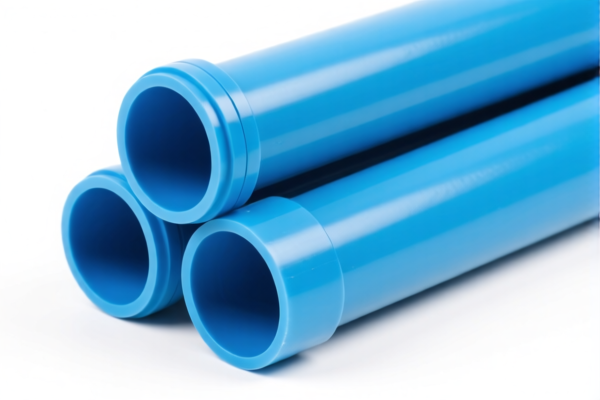
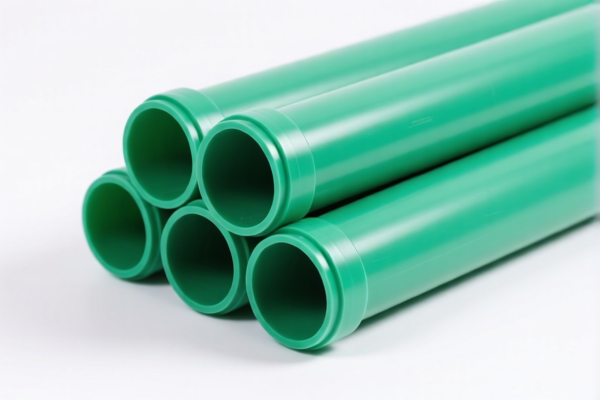
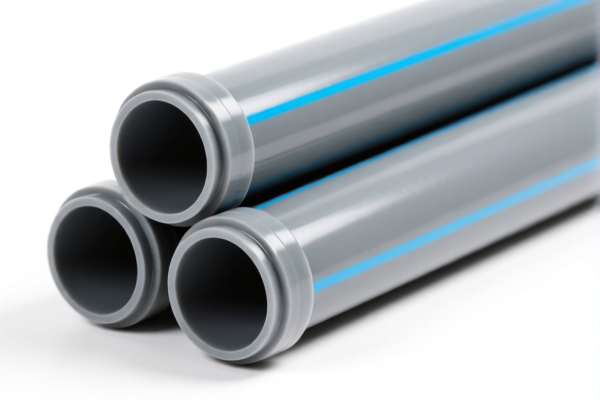
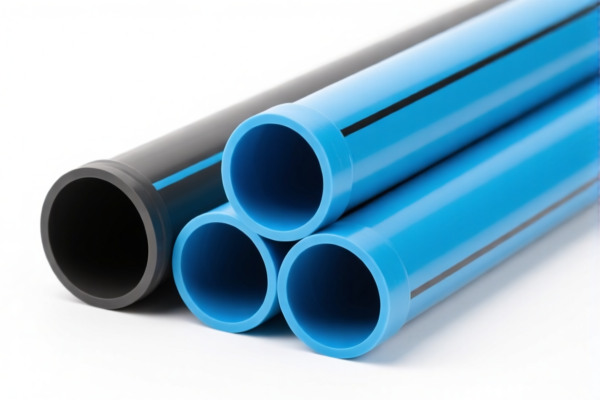
AI分析
🏭 Industrial PVC Pipes: The Ultimate Clearance Guide for 2026
🌐 HS Code Reference & Customs Strategy | 2026 Latest Tariff Analysis | Professional Clearance Protocol
📌 Product Definition: What Exactly Are "Industrial PVC Pipes"?
Polyvinyl Chloride (PVC) pipes are rigid thermoplastic pipes widely used in industrial applications for fluid transport, drainage, and chemical processing. However, in international trade, classification precision is the difference between smooth clearance and costly delays.
The key to classification lies in three factors: 1. Material: Is it pure PVC or a derivative? 2. Form: Is it a finished pipe, a raw profile (rod/bar), or a general plastic article? 3. Usage: Is it strictly industrial, or does it overlap with general plastic goods?
⚠️ Critical Distinction: * Finished Pipes (3917): Must be ready-to-install conduits with specific end-finishes. * Raw Profiles (3916): Rods, bars, and shapes that could be machined into pipes but are not yet finished pipes. * General Articles (3926): Plastic parts that don't fit specific pipe or profile definitions.
📦 HS Code Classification Matrix (2026 Authority Cross-Reference)
| HS Code | Product Description | Classification Logic | Key Characteristic |
|---|---|---|---|
3917.23.00.00 |
Food-Grade PVC Plastic Pipes | Finished pipes made of PVC. | Food-Grade designation; standard pipe form. |
3917.32.00.10 |
PVC Plastic Pipes (Food-Grade) | Finished pipes meeting specific sub-category requirements. | Food-Grade; precise form match. |
3916.20.00.91 |
Vinyl Polymers: Rods/Bars/Profiles | PVC in raw form, not yet a finished pipe. | Raw Profile (Rod/Bar/Section); "Other" category. |
3916.20.00.20 |
PVC Pipes (as Profiles/Rods) | PVC classified as rod/bar/profile despite being "pipe" in name. | Raw Form treated as profile; high tax bracket. |
3926.90.99.87 |
Other PVC Plastic Articles | PVC items fitting "pipe" description but categorized as general plastic goods. | General Article; often for smaller/different fittings. |
🔍 Key Insight: * 3917 vs 3916: The battle is between "Finished Pipe" (3917) and "Raw Profile" (3916). Customs often scrutinizes whether the product has been cut, finished, or is still in bulk/profile form. * Tax Impact: 3916 codes often attract higher base tariffs (5.8%) compared to 3917 (3.1%).
💰 2026 Latest Tariff Rate Breakdown (Including Surtaxes & Policies)
✅ Target Market: USA (US)
✅ Origin: China (CN)
✅ Effective Date: November 10, 2025, onwards (for subsequent imports)
🎯 1. 3917.23.00.00 & 3917.32.00.10 —— Food-Grade PVC Pipes
These codes represent finished PVC pipes intended for food-grade applications.
| Item | Detail |
|---|---|
| Base Tariff | 3.1% (Ad Valorem) |
| Section 301 Surtax | +25.0% (Trade Act 301) |
| Section 122 Tariff | +10.0% (Specific provision) |
| Total Effective Rate | 38.1% |
| Tax Calculation | CIF Value × 38.1% |
| De Minimis Exemption | ❌ Not Eligible (Denied) |
| Legal Pathway | Base: 3917 → S301: 25% → Sec122: 10% |
📌 Explanation: * The 3.1% is the standard Most Favored Nation (MFN) rate for PVC pipes. * The 25% is the standard Section 301 surcharge on Chinese PVC products. * The 10% Section 122 tariff applies specifically to certain PVC items. * Total: 38.1%. This is a significant cost driver.
🎯 2. 3916.20.00.91 & 3916.20.00.20 —— PVC Rods/Bars/Profiles (Classified as Pipes)
These codes classify PVC as raw polymer profiles (rods, bars, sections), even if used for pipe manufacturing.
| Item | Detail |
|---|---|
| Base Tariff | 5.8% (Ad Valorem) |
| Section 301 Surtax | +25.0% (Trade Act 301) |
| Section 122 Tariff | +10.0% (Specific provision) |
| Total Effective Rate | 40.8% |
| Tax Calculation | CIF Value × 40.8% |
| De Minimis Exemption | ❌ Not Eligible (Denied) |
| Legal Pathway | Base: 3916 → S301: 25% → Sec122: 10% |
📌 Explanation: * The base rate (5.8%) is higher than finished pipes (3.1%) because raw polymers/profiles are taxed differently. * The surtaxes remain the same (+25% + +10%). * Total: 40.8%. This is the highest tax bracket in the dataset. Misclassifying a finished pipe as a raw profile can increase your tax burden by 2.7%.
🎯 3. 3926.90.99.87 —— Other PVC Plastic Articles
This code is for PVC items that are considered "general plastic articles" rather than specific pipes or profiles.
| Item | Detail |
|---|---|
| Base Tariff | 5.3% (Ad Valorem) |
| Section 301 Surtax | +7.5% (Reduced Surtax?) |
| Section 122 Tariff | +10.0% (Specific provision) |
| Total Effective Rate | 22.8% |
| Tax Calculation | CIF Value × 22.8% |
| De Minimis Exemption | ❌ Not Eligible (Denied) |
| Legal Pathway | Base: 3926 → S301: 7.5% → Sec122: 10% |
📌 Explanation: * This is the lowest tax bracket (22.8%). * The Section 301 surtax is reduced to 7.5% (likely due to specific exclusions or different classification logic for general articles). * ⚠️ Risk: Customs may challenge this classification if the item is clearly a standard pipe, demanding reclassification to 3917 (38.1%) or 3916 (40.8%). Only use if the product truly fits "Other Plastic Articles" (e.g., complex fittings, non-standard shapes).
🛠️ 4. Customs Clearance Practical Advice (Real-World Pitfall Avoidance)
✅ 1. Required Documentation Checklist (Non-Negotiable)
| Document | Must Provide? | Notes |
|---|---|---|
| ✅ Product Specification Sheet | ✔️ | Material composition (PVC grade), dimensions, pressure rating. |
| ✅ Commercial Invoice | ✔️ | Must clearly state "Polyvinyl Chloride Plastic Pipe" and HS Code. |
| ✅ Packing List | ✔️ | Detail quantity, weight, and packaging type. |
| ✅ Certificate of Origin (CO) | ✔️ | To prove Chinese origin (triggers surtaxes). |
| ✅ Manufacturer’s Declaration | ✔️ | Confirming whether it is "Food-Grade" or "Industrial/General". |
| ✅ Photos of Product | ✔️ | Show ends, markings, and any certifications printed on the pipe. |
| ✅ Import License | ✔️ | If required for specific PVC types. |
✅ 2. Declaration Strategy (Key Mantra)
🔥 "Form Determines Code, Grade Determines Rate, Accuracy Saves Cash!"
| Scenario | Correct Declaration | Incorrect Declaration | Consequence |
|---|---|---|---|
| Finished Food-Grade Pipe | 3917.23.00.00 |
3926.90.99.87 |
Under-declaration Risk: Customs may reassess to 38.1% + penalties. |
| Raw PVC Profile/Rod | 3916.20.00.20 |
3917.23.00.00 |
Misclassification: Overpaying tax? Or if seized, heavy fines for false declaration. |
| General PVC Fitting/Part | 3926.90.99.87 |
3917.23.00.00 |
Under-declaration: If deemed a pipe, tax jumps from 22.8% to 38.1%. |
| Standard Industrial Pipe | 3917.32.00.10 |
3916.20.00.91 |
Tax Increase: 38.1% vs 40.8%. Save 2.7% by correctly identifying as finished pipe. |
✅ 3. Special Handling Tips
- "Food-Grade" Claim: If you declare
3917.23.00.00or3917.32.00.10, be prepared to provide FDA compliance certificates or equivalent food-contact safety data. Failure to prove "Food-Grade" may lead to reclassification. - End-Finish: If the pipe ends are cut, threaded, or flanged, it strongly supports 3917 (Finished Pipe). If it’s a continuous bulk roll or uncut profile, it may be pushed to 3916 (Profile).
- Section 122 Tariff: Ensure your supplier’s documentation explicitly mentions compliance with any specific Section 122 requirements if applicable to your product type.
🌍 5. Global Market Comparison (2026 Quick Reference)
| Market | Recommended HS Code | Base Tariff | Surtax (China) | Total Est. Rate | Notes |
|---|---|---|---|---|---|
| 🇺🇸 USA | 3917.23.00.00 |
3.1% | +35% (301+122) | 38.1% | High barrier. Check for exclusions. |
| 🇺🇸 USA | 3926.90.99.87 |
5.3% | +17.5% (301+122) | 22.8% | Lowest US Rate, but high classification risk. |
| 🇪🇺 EU | 3917.21/3917.23 | 0-6.5% | 0% | ~0-6.5% | No Section 301. Much more competitive. |
| 🇨🇳 China | 3917.23 | 3.1% | 0% | 3.1% | Low import duty for domestic use. |
📌 Conclusion: * USA is the most challenging market due to Section 301 and Section 122 tariffs. * 3926.90.99.87 offers the lowest US rate (22.8%), but only if your product genuinely qualifies as an "Other Plastic Article" and not a standard pipe. * EU and China have significantly lower tax burdens, making them more attractive for PVC exports if logistics allow.
📌 6. Common Mistakes & Pitfalls (Lessons Learned)
❌ Mistake 1: Declaring all PVC pipes as 3926.90.99.87 to save tax.
👉 Result: Customs audit reveals standard pipe characteristics. Reclassification to 3917 (38.1%) + back taxes + penalties.
❌ Mistake 2: Using "PVC Profile" (3916) for finished pipes.
👉 Result: Overpaying tax (40.8% vs 38.1%). No real benefit, just wasted capital.
❌ Mistake 3: Ignoring "Food-Grade" documentation.
👉 Result: If you claim 3917.23.00.00 but cannot prove food-grade, customs may reject the classification, causing delays.
❌ Mistake 4: Assuming Section 301 surtax is always 25%.
👉 Result: For 3926, the surtax is 7.5%. Misunderstanding this leads to incorrect cost forecasting.
✅ Best Practice:
"Polyvinyl Chloride Pipe, Industrial Grade, Uninsulated, 4-inch Diameter, ASTM D1785 Compliant"
🎯 7. Conclusion: Precise Classification, Maximum Profitability
🎯 Remember the Mantra:
🔹 "Finished Pipe = 3917 (38.1%)
Raw Profile = 3916 (40.8%)
General Article = 3926 (22.8%) — But Risky!"
📌 Final Tip: If your PVC pipes do not originate from China (e.g., Vietnam, Mexico, Malaysia), you may be exempt from Section 301 surtaxes, drastically reducing the total tariff to the base rate only (3.1% - 5.8%). Always verify the Country of Origin before calculating costs.
📣 Immediate Action:
📞 Engage a licensed customs broker to pre-classify your specific PVC product.
📄 Gather FDA certificates (if food-grade) and detailed technical specs.
🚀 Ensure your commercial invoice matches the HS Code exactly to avoid delays.
✨ Professional Clearance, Starts with Accurate Classification!
💼 Every 1% of tax savings is pure profit!
用户评价
关于 HS 编码归类
协调制度(HS)是由世界海关组织(WCO)制定的国际贸易商品分类标准。全球 200 多个国家采用 HS 系统作为海关关税、贸易统计和进出口监管的基础。
每个 HS 编码遵循以下层级结构:
- 章(2 位)——商品大类(例如:第 84 章:机器和机械设备)
- 品目(4 位)——章内的更具体分类
- 子目(6 位)——国际通用细分,所有 WCO 成员国统一使用
- 本国细分(8-10 位)——各国自行扩展的细分编码,如美国 HTSUS 10 位编码
正确的 HS 编码归类对于顺利通关、准确缴纳关税和遵守贸易法规至关重要。错误归类可能导致海关延误、多缴关税或罚款。
从CN进口到US时,适用的关税税率可能包括:
- 最惠国(MFN)税率——适用于 WTO 成员国的标准关税税率
- 普通税率——适用于无贸易协定国家
- 贸易救济关税——附加关税,如 301 条款(反倾销)、232 条款(国家安全)或反补贴税
本页内容仅供参考。如需正式归类,请咨询当地海关或持牌报关代理。