Polyvinyl Chloride Resin (High Flow)
CN → US| HS编码 | 关税税率 | 原产国 | 目的国 | 文档 |
|---|---|---|---|---|
| 3901909000 | 41.5% | CN | US | 官方文档 |
| 3901905501 | 41.5% | CN | US | 官方文档 |
| 3904100000 | 41.5% | CN | US | 官方文档 |
| 3904220000 | 41.5% | CN | US | 官方文档 |
| 3904100000 | 41.5% | CN | US | 官方文档 |
商品图片


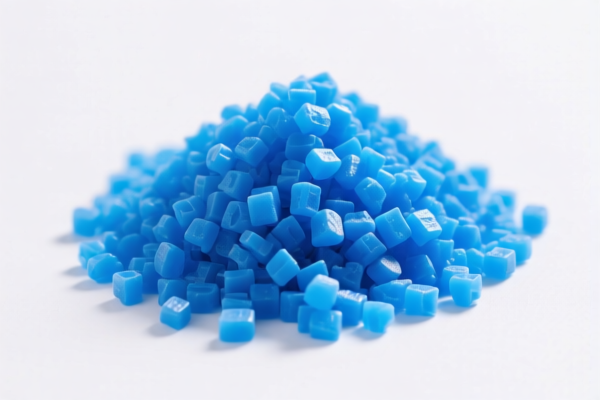
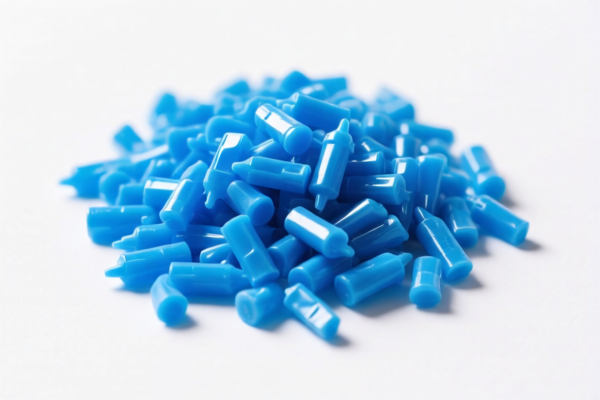
AI分析
🧪 Polyvinyl Chloride Resin (High Flow / PVC Resin)
🌐 HS Code Reference & Customs Clearance Guide | 2026 Latest Tariff Analysis | Professional Customs Strategy
📌 Part I: Product Definition & Classification: What Exactly is "High Flow PVC"?
Polyvinyl Chloride (PVC) Resin is the most widely used general-purpose plastic resin in the world. "High Flow" PVC specifically refers to a formulation with enhanced plasticizing speed and fluidity, designed to improve production efficiency in extrusion and injection molding processes (such as pipes, profiles, and rigid containers).
In international trade, PVC Resin falls under Chapter 39 (Plastics and Articles Thereof), specifically Heading 3904 (Vinyl Chloride Polymers in Primary Forms).
⚠️ Critical Distinction:
- "Primary Form" (初级形态): This is the key legal definition. It includes powders, granules, flakes, or liquids that have not yet been processed into final articles (like pipes or cables). Even if "High Flow" additives are mixed in, as long as it remains a raw polymer material, it stays in Heading 3904.
- "Finished Goods": If the PVC is already extruded into a pipe, molded into a bottle, or compounded into a finished cable sheath, it does NOT belong here. It must be raw resin.
📦 Part II: HS Code Classification Details (2026 Latest Tariff Authority对照)
Based on the provided data, all applicable HS Codes for Polyvinyl Chloride Resin (Primary Form) share the same tariff structure. The slight variations in codes typically reflect specific manufacturing standards or minor sub-classifications by customs authorities (e.g., China/US specific sub-codes), but the tariff impact is identical.
| HS Code | Product Description | Application Scenario | Key Feature |
|---|---|---|---|
3901.90.90.00 |
Polyvinyl Chloride Resin, Primary Form Polymer | General industrial PVC powder/granules | Raw Resin |
3901.90.55.01 |
Polyvinyl Chloride Resin, Primary Form Polymer | Specific grade of PVC resin | Raw Resin |
3904.10.00.00 |
Vinyl Chloride Polymers, Primary Form | Pure PVC polymer powders/granules | Raw Resin |
3904.22.00.00 |
Polyvinyl Chloride, Primary Form Resin | Standard PVC resin for molding | Raw Resin |
🔍 Important Note:
- Despite different HS codes (3901vs3904), all listed items in the data set are subject to the same total tax rate.
-3904.10.00.00is often the most globally recognized code for "Vinyl Chloride Polymers in Primary Forms."
-3901and3904sub-codes may vary by country’s national tariff schedule, but for US Customs (HTSUS), they often converge on similar duty treatments for China-origin goods.
💰 Part III: 2026 Latest Tariff Rate Details (Including Additional Taxes & Policy Surcharges)
✅ Applicable Country: United States (US)
✅ Origin: China (CN)
✅ Effective Date: Current rates apply (2025-2026)
🎯 Universal Tariff Breakdown for All Listed HS Codes
| Item | Content |
|---|---|
| Base Tariff Rate | 6.5% (Standard MFN Rate for PVC Resin) |
| Section 301 Additional Tariff | +25.0% (Retaliatory tariffs against China) |
| Section 122 Tariff | +10.0% (Additional levy on specific chemical/polymer imports) |
| Total Tax Rate | 41.5% |
| Tax Calculation | CIF Value × 41.5% |
| De Minimis Eligibility | ❌ Not Eligible (High-value raw materials excluded from $800 exemption) |
| Legal Basis Path | HTSUS:3904/3901 → Section 301: Footnote 9903.88.01 → Section 122: Specific Chemical Provisions |
📌 Explanation:
- "Base Tariff 6.5%": The standard Most Favored Nation (MFN) duty for PVC resin under normal trade conditions.
- "Section 301 Additional Tariff 25%": Imposed under the US Trade Representative (USTR) due to unfair trade practices. This applies to nearly all Chinese-origin PVC products.
- "Section 122 Tariff 10%": An additional surcharge often applied to strategic materials or specific polymer categories to protect domestic manufacturing.
- Total 41.5%: This is a very high effective duty rate. Importers must factor this into their landed cost calculations immediately.
🛠️ Part IV: Customs Clearance Practical Advice (Combat Pitfall Guide)
✅ 1. Required Documentation Checklist (缺一不可)
| Document | Mandatory? | Description |
|---|---|---|
| ✅ Product Specification Sheet | ✔️ | Must clearly state "Polyvinyl Chloride Resin," "K-Value," "Vicat Softening Point," and "Flow Rate." |
| ✅ Certificate of Origin (CO) | ✔️ | Essential to prove origin. If from China, confirm the manufacturer name matches the export license. |
| ✅ Commercial Invoice | ✔️ | Must use precise description: "PVC Resin, Primary Form, High Flow, K-Value XX" NOT just "Plastic." |
| ✅ Packing List | ✔️ | Specify net/gross weight. PVC resin is often shipped in 25kg bags. |
| ✅ Safety Data Sheet (SDS) | ✔️ | Required for chemical customs clearance. Confirm no hazardous additives are present that would change classification. |
| ✅ Import License (if applicable) | ✔️ | Check if your specific HS sub-code requires an EPA or FDA registration for food-grade PVC. |
✅ 2. Declaration Tips (Key Mantra)
🔥 "Primary Form, Raw Resin, No Finished Parts! Declare K-Value, Not Application!"
| Scenario | Correct Declaration | Wrong Practice |
|---|---|---|
| PVC Powder/Granules | 3904.10.00.00 PVC Resin |
Declare as "Plastic Pellets for Toy Making" → Ambiguous |
| PVC Resin + Additives (Stabilizers) | Still 3904.xx if not >5% by weight |
Declare as "Compounded PVC" → May trigger different codes |
| PVC Pipes/Profiles | NOT Chapter 39 | Declaring pipes as "PVC Resin" → Smuggling/Fraud Risk |
| Recycled PVC Flakes | Check specific sub-code | Raw vs. Recycled status changes duty eligibility |
📌 Warning:
- Do NOT declare "High Flow PVC" as a finished product.
- Ensure the description explicitly mentions "Primary Form" (初级形态) to avoid classification disputes.
- If the resin is compounded with more than 5% other polymers, it may shift out of Heading 3904.
✅ 3. Special Case Handling
| Situation | Handling Advice |
|---|---|
| Food-Grade PVC | Must declare as "FDA Compliant" or "EU 10/2011 Compliant" to avoid rejection. May require additional testing reports. |
| High Flow Additives | If additives are >5% by weight, consult a customs broker. It might be classified as a "Compound" rather than "Resin." |
| Origin Switching | If PVC is shipped from Vietnam but made in China, declare China Origin. US Customs will apply the 41.5% tariff. Provenance is strictly audited. |
| Samples | Small samples (<$800) might qualify for de minimis, but large commercial shipments do not. |
🌍 Part V: Global Market Comparison (2026 Latest)
| Country/Region | Recommended HS Code | Tariff (China Origin) | Certification | Notes |
|---|---|---|---|---|
| 🇺🇸 USA | 3904.10.00.00 |
41.5% (6.5% + 25% + 10%) | None specific | High barrier due to Section 301 & 122. |
| 🇨🇳 China | 3904.10.00.00 |
5-6.5% | GB Standards | Exporter perspective. |
| 🇪🇺 EU | 3904.10.00 |
6.5% (Standard) | REACH Registration | No Section 301. Much lower duty than US. |
| 🇮🇳 India | 3904.10.00 |
Varies (Base + SWS) | BIS Certification | High protective duties. |
| 🇲🇽 Mexico | 3904.10.00 |
0-5% (with USMCA) | NOM Certification | Potential for low duty if meeting rules of origin. |
📌 Strategic Insight:
- The US is the most expensive market for Chinese PVC resin due to the 41.5% total duty.
- Consider supply chain diversification (e.g., sourcing from Vietnam, Mexico, or Middle East) to mitigate Section 301 tariffs.
- The EU offers a significantly lower duty rate (6.5%) but requires strict REACH compliance.
📌 Part VI: Common Errors & Pitfalls (Blood & Tears Lessons)
❌ Error 1: Declaring PVC Resin as "Plastic Granules" without specifying "PVC"
👉 Consequence: Customs classification error → 100% duty penalty + seizure risk!
❌ Error 2: Failing to declare "High Flow" characteristics in the spec sheet
👉 Consequence: Customs may classify as generic PVC, leading to audit delays while they verify the formulation.
❌ Error 3: Ignoring the Section 122 surcharge
👉 Consequence: Underpayment of duties → Back taxes + Interest + Fines.
❌ Error 4: Importing PVC intended for medical devices without FDA pre-clearance
👉 Consequence: Shipment blocked at port. PVC for medical use has stricter biocompatibility requirements.
✅ Correct Declaration Example:
"Polyvinyl Chloride Resin, Primary Form, High Flow Type, K-Value 68, Non-Foaming, in 25kg Bags, Model XYZ, Compliant with FDA 21 CFR 177.1600"
🎯 Part VII: Conclusion: Precise Classification, Cost Efficiency!
🎯 Remember the Mantra:
🔹 "Primary Form, Raw Material, 41.5% Duty!"
🔹 "HS Code 3904 is the Home, Add 25% + 10% for China Origin!"
🔹 "Clear Spec, Prove Origin, Avoid the Penalty!"
📌 Pro Tip:
- If your PVC resin is not from China (e.g., from the US, Europe, or ASEAN), the Section 301 (25%) and Section 122 (10%) tariffs DO NOT APPLY. You will pay only the base rate (6.5%).
- Action: Verify your supplier's Certificate of Origin immediately. A small change in supply chain can save you 35% in duties!
📣 Immediate Action:
📞 Consult a Licensed Customs Broker to verify the exact sub-code for your specific PVC formulation.
📄 Request a Binding Ruling from US Customs (CBP) if you are importing large volumes regularly.
🚀 Optimize Landed Cost: Factor in the 41.5% duty from day one of your procurement negotiations.
✨ Professional Clearance Starts with Accurate Classification!
💼 Your Profit Margin Depends on the Details!
用户评价
关于 HS 编码归类
协调制度(HS)是由世界海关组织(WCO)制定的国际贸易商品分类标准。全球 200 多个国家采用 HS 系统作为海关关税、贸易统计和进出口监管的基础。
每个 HS 编码遵循以下层级结构:
- 章(2 位)——商品大类(例如:第 84 章:机器和机械设备)
- 品目(4 位)——章内的更具体分类
- 子目(6 位)——国际通用细分,所有 WCO 成员国统一使用
- 本国细分(8-10 位)——各国自行扩展的细分编码,如美国 HTSUS 10 位编码
正确的 HS 编码归类对于顺利通关、准确缴纳关税和遵守贸易法规至关重要。错误归类可能导致海关延误、多缴关税或罚款。
从CN进口到US时,适用的关税税率可能包括:
- 最惠国(MFN)税率——适用于 WTO 成员国的标准关税税率
- 普通税率——适用于无贸易协定国家
- 贸易救济关税——附加关税,如 301 条款(反倾销)、232 条款(国家安全)或反补贴税
本页内容仅供参考。如需正式归类,请咨询当地海关或持牌报关代理。