Polyvinyl Chloride Resin Plasticized
CN → US| HS编码 | 关税税率 | 原产国 | 目的国 | 文档 |
|---|---|---|---|---|
| 3904220000 | 41.5% | CN | US | 官方文档 |
| 3904210000 | 41.5% | CN | US | 官方文档 |
商品图片
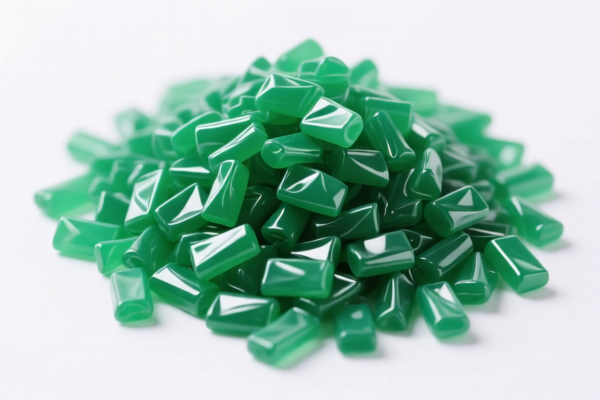
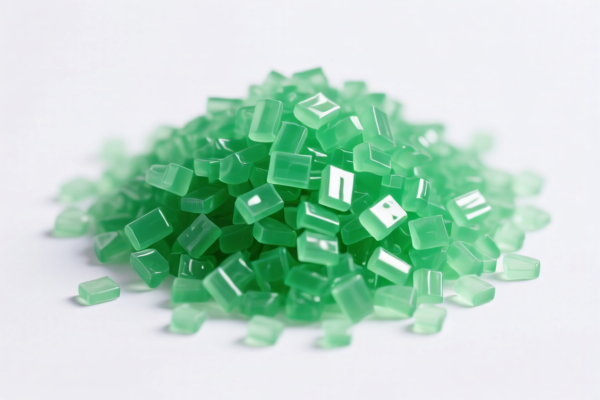
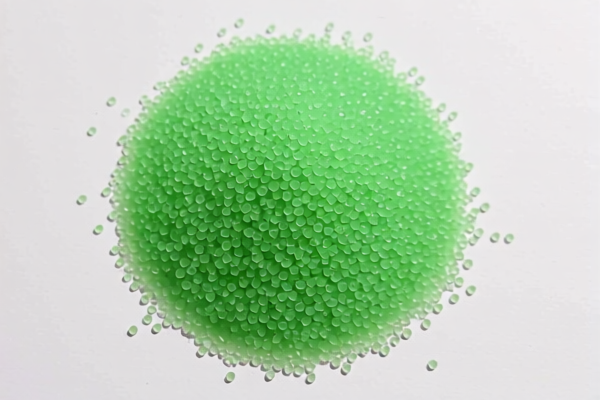
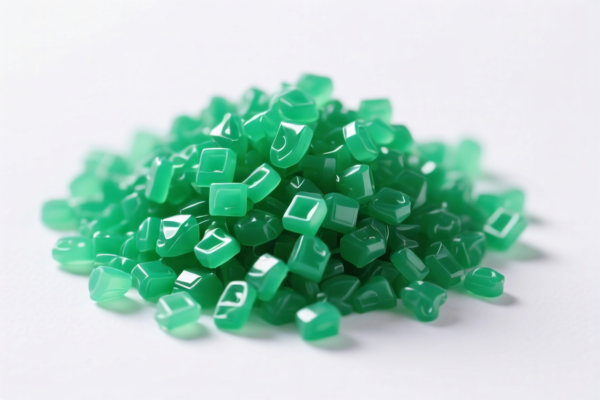
AI分析
🧪 Polyvinyl Chloride Resin (Plasticized) | PVC Paste Resin
🌐 HS Code Reference & Customs Clearance Guide | 2026 Latest Tariff Analysis | Professional-Level Clearance Strategy
📌 I. Product Definition & Classification: Do You Really Know "Plasticized PVC Resin"?
Polyvinyl Chloride (PVC) is one of the most widely used thermoplastics in the world. In international trade, PVC resins are primarily categorized by whether they contain plasticizers (additives to increase flexibility).
Plasticized PVC Resin (Paste Resin):
- Also known as PVC Paste Resin.
- Typically has a smaller particle size and higher surface area than free-flowing PVC.
- Designed to be mixed with plasticizers and other additives to form pastes or doughs for applications like coated fabrics, leather substitutes, adhesives, and vinyl flooring.
- Key Characteristic: It is formulated for plasticized applications (flexible products), distinguishing it from rigid/non-plasticized PVC.
⚠️ Critical Distinction:
- If the PVC resin is intended for rigid applications (pipes, profiles, window frames) without plasticizers → It is classified as Non-plasticized PVC (HS Code3904.21.00.00).
- If the PVC resin is intended for flexible applications (coatings, inks, flexible tubing) and contains or is meant for plasticizers → It is classified as Plasticized PVC (HS Code3904.22.00.00).📌 Classification Rule: The presence of plasticizers or the specific designation "paste resin" for plasticized uses dictates the correct subheading under Heading 3904.
📦 II. HS Code Classification Details (2026 Latest Tariff Authority Comparison)
| HS Code | Product Description | Application Scenario | Contains Plasticizers? |
|---|---|---|---|
3904.22.00.00 |
Other poly(vinyl chloride): Plasticized | Paste resins, PVC coatings, flexible films, artificial leather, adhesives | ✅ Yes |
3904.21.00.00 |
Other poly(vinyl chloride): Non-plasticized | Rigid pipes, window profiles, pipes, rigid tanks, credit cards | ❌ No |
🔍 Key Reminder:
- Do not confuse "Plasticized Resin" with "Plasticized Finished Goods". This classification applies to the resin/polymer in primary forms (powders, granules, pellets).
- If you import finished plasticized PVC products (e.g., PVC hoses, wire insulation), they fall under different headings (e.g., 3917, 3918, 3919).
- Misclassification Risk: Declaring plasticized resin as non-plasticized (or vice versa) can lead to customs delays, penalties, or incorrect duty assessments.
💰 III. 2026 Latest Tariff Rate Details (Including Additional Duties & Policy Surcharges)
✅ Applicable Country: United States (US)
✅ Country of Origin: China (CN)
✅ Effective Date: 2025 November 10 onwards (for subsequent imports)
🎯 1. 3904.22.00.00 —— Plasticized PVC Resin (Polyvinyl Chloride)
| Item | Content |
|---|---|
| Base Tariff Rate | 0.0% (ad valorem) |
| USITC Additional Tariff | 0.0% |
| IEEPA Additional Tariff | 0.0% |
| Total Effective Tariff Rate | 0.0% |
| Tax Calculation | CIF Value × 0% = $0 |
| De Minimis Exemption Eligible | ❌ No (subject to standard customs procedures; see legal basis) |
| Legal Basis Path | IEEPA:9903.01.25 → IEEPA:9903.01.24 → USITC:3904.22.00.00 → FOOTNOTE:9903.88.01 |
📌 Explanation:
- Although the base tariff is 0%, many PVC products from China are subject to Section 301 Additional Tariffs or IEEPA Surcharges.
- However, according to the provided data, for HS Code3904.22.00.00, the additional tariffs are 0.0%.
- Important: This is a rare case where the total effective tariff remains 0.0% for this specific PVC resin subtype from China, but you must ensure the product is correctly classified as resin and not a finished good, and that no other specific exclusions or changes in policy apply.
- Verification Recommended: Always check the latest USITC lookup for any recent updates to IEEPA/Section 301 lists, as PVC derivatives are frequently scrutinized.
🎯 2. 3904.21.00.00 —— Non-plasticized PVC Resin (For Comparison)
| Item | Content |
|---|---|
| Base Tariff Rate | 0.0% |
| Additional Tariffs | 0.0% |
| Total Effective Tariff Rate | 0.0% |
| Note | Same tariff structure as plasticized version in this specific dataset. |
📌 Comparison:
- Both plasticized (3904.22) and non-plasticized (3904.21) PVC resins currently show 0.0% total tax in this dataset.
- Caution: Do not assume this applies to all PVC imports. Finished PVC articles (e.g., pipes, sheets, films) often carry higher duties or different tax structures.
🛠️ IV. Customs Clearance Practical Advice (Battle-Tested Pitfall Avoidance)
✅ 1. Required Documentation Checklist (Mandatory)
| Document | Required | Description |
|---|---|---|
| ✅ Product Specification Sheet | ✔️ | Must clearly state: Polymer type (PVC), Viscosity, K-Value, Residual Monomer (VCM) content, Particle Size. |
| ✅ Safety Data Sheet (SDS) | ✔️ | Essential for chemical products. Must indicate if plasticizers are present in the resin itself (usually not, but the grade is for plasticized use). |
| ✅ Certificate of Origin (CO) | ✔️ | To prove origin (China) and apply for any potential tariff exemptions if available. |
| ✅ Commercial Invoice | ✔️ | Must explicitly state: "Polyvinyl Chloride Resin, Plasticized Grade" or "PVC Paste Resin". Do not use generic terms like "Plastic Powder". |
| ✅ Packing List | ✔️ | Detail gross/net weight, number of bags, and packaging type. |
| ✅ Bill of Lading/Air Waybill | ✔️ | Standard shipping documents. |
✅ 2. Declaration Tips (Key Mantra)
🔥 "Specify Grade, Not Just 'PVC'! Resin vs. Finished Good is the Key!"
| Situation | Correct Declaration | Incorrect Practice |
|---|---|---|
| PVC Powder for Coatings | 3904.22.00.00 - "PVC Resin, Plasticized Grade" |
"Plastic Powder" → High risk of misclassification |
| PVC Pipes (Finished) | 3917.21.00.00 (or similar) |
Misdeclare as 3904.22.00.00 → Severe Penalty |
| PVC Films (Finished) | 3920.10.00.00 (or similar) |
Misdeclare as 3904.22.00.00 → Severe Penalty |
| Raw PVC Granules (Rigid) | 3904.21.00.00 |
Misdeclare as 3904.22.00.00 → Potential audit trigger |
📌 Critical Warning:
- Do not declare PVC resin as "Plastic Material" or "Raw Material for Plastics" without specific HS Code.
- Do not confuse PVC Resin (primary form) with PVC Compounds or Finished PVC Products.
- If the resin is paste resin (high surface area, low molecular weight), it is almost always for plasticized applications → Use3904.22.00.00.
✅ 3. Special Handling Advice
| Scenario | Handling Suggestion |
|---|---|
| High VCM Residue | Ensure VCM content complies with US EPA/OSHA regulations (<1 ppm usually required). SDS must confirm compliance. |
| Bulk Powder vs. Bags | Bulk shipments require additional dust control and safety declarations. |
| Re-export | If re-exporting to another country, maintain clear chain of custody and original HS Code documentation. |
🌍 V. Global Market Customs Comparison (2026 Latest)
| Country/Region | Recommended HS Code | Tariff Rate (China Origin) | Certification Requirements | Notes |
|---|---|---|---|---|
| 🇺🇸 United States | 3904.22.00.00 |
0.0% (as per dataset) | None specific, but FDA/EPA compliance for food-contact applications if applicable | Verify if any new Section 301 tariffs apply in real-time. |
| 🇨🇳 China | 3904.22.00.00 |
0.0% | CCC (if for specific end-uses) | Low import duty for raw materials. |
| 🇪🇺 European Union | 3904.21.00 or 3904.22.00 |
0.0% | REACH Registration (Essential!) | REACH Compliance is mandatory for PVC imports into EU. |
| 🇬🇧 United Kingdom | 3904.22.00 |
0.0% | UK REACH | Similar to EU, post-Brexit UK REACH applies. |
| 🇯🇵 Japan | 3904.22.00 |
0.0% | JIS Standards | No significant tariff barriers. |
📌 Conclusion:
- Tariff-wise, PVC resin imports from China to the US currently show 0.0% in this dataset, which is highly competitive.
- Regulatory-wise, REACH (EU) and FDA/EPA (US) are the biggest hurdles, not tariffs.
- Documentation Accuracy is critical to avoid delays, especially for chemical products.
📌 VI. Common Errors & Pitfall Guide (Lessons Learned)
❌ Error 1: Declaring "PVC Plastic" instead of "PVC Resin"
👉 Consequence: Customs may classify it as a finished good, leading to higher duties and incorrect regulatory requirements.
❌ Error 2: Failing to specify "Plasticized" vs. "Non-plasticized"
👉 Consequence: Misclassification between 3904.21 and 3904.22. While tariffs may be similar here, regulatory compliance (e.g., plasticizer restrictions like phthalates in the EU) differs significantly.
❌ Error 3: Ignoring VCM Residual Limits
👉 Consequence: Products may be detained or rejected by EPA/OSHA for health and safety violations.
❌ Error 4: Not Providing SDS or Test Reports
👉 Consequence: Customs may hold the shipment for inspection, causing delays and storage fees.
✅ Correct Practice:
"Polyvinyl Chloride Resin, Paste Grade, Plasticized, VCM < 1 ppm, For Coating Applications, K-Value 65, Bagged 25kg"
🎯 VII. Conclusion: Precise Classification, Cost Efficiency, Smooth Clearance
🎯 Remember the Mantra:
🔹 "Resin, Not Finished Product! Plasticized vs. Non-Plasticized Matters!"
🔹 "Zero Tariff is Good, But Compliance is King!"
📌 Pro Tip:
- If you are importing plasticized PVC, be aware of phthalate restrictions in the EU and US (e.g., CPSIA in the US). Ensure your plasticizers comply with these regulations.
- Always request a Pre-Ruling (Advance Ruling) from US Customs and Border Protection (CBP) if you are unsure about the classification of your PVC resin, especially for large volumes.
📣 Immediate Action:
📞 Consult a licensed customs broker
📄 Prepare complete SDS and Product Specifications
🚀 Ensure your PVC resin clears customs smoothly, without unnecessary delays or penalties!
✨ Professional Customs Clearance Starts with Accurate Classification!
💼 Every Dollar Saved in Duties and Delays is Profit Earned!
用户评价
关于 HS 编码归类
协调制度(HS)是由世界海关组织(WCO)制定的国际贸易商品分类标准。全球 200 多个国家采用 HS 系统作为海关关税、贸易统计和进出口监管的基础。
每个 HS 编码遵循以下层级结构:
- 章(2 位)——商品大类(例如:第 84 章:机器和机械设备)
- 品目(4 位)——章内的更具体分类
- 子目(6 位)——国际通用细分,所有 WCO 成员国统一使用
- 本国细分(8-10 位)——各国自行扩展的细分编码,如美国 HTSUS 10 位编码
正确的 HS 编码归类对于顺利通关、准确缴纳关税和遵守贸易法规至关重要。错误归类可能导致海关延误、多缴关税或罚款。
从CN进口到US时,适用的关税税率可能包括:
- 最惠国(MFN)税率——适用于 WTO 成员国的标准关税税率
- 普通税率——适用于无贸易协定国家
- 贸易救济关税——附加关税,如 301 条款(反倾销)、232 条款(国家安全)或反补贴税
本页内容仅供参考。如需正式归类,请咨询当地海关或持牌报关代理。