Polyvinyl Chloride Resin Powder (for Paints)
CN → US| HS编码 | 关税税率 | 原产国 | 目的国 | 文档 |
|---|---|---|---|---|
| 3904210000 | 41.5% | CN | US | 官方文档 |
| 3904100000 | 41.5% | CN | US | 官方文档 |
| 3904220000 | 41.5% | CN | US | 官方文档 |
商品图片
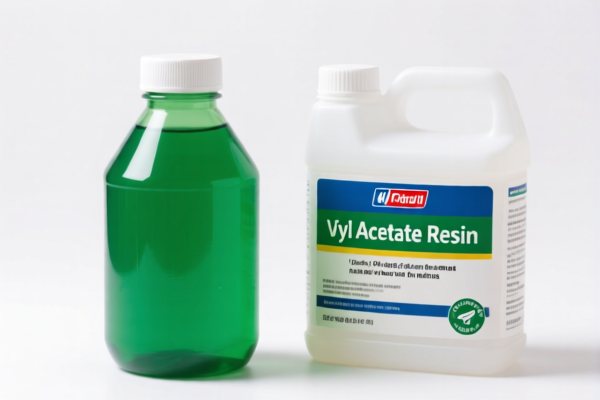
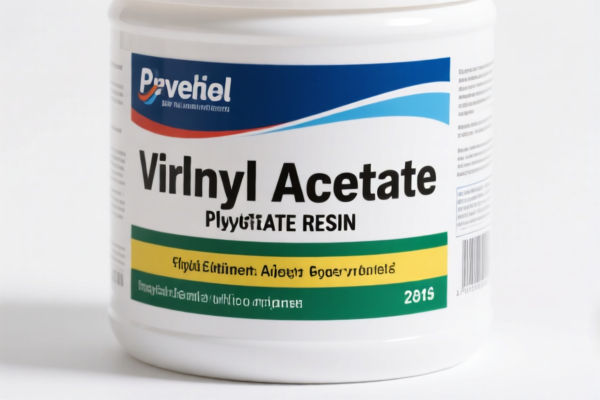
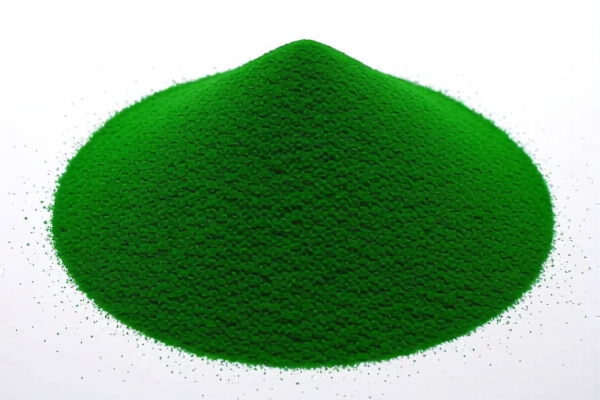
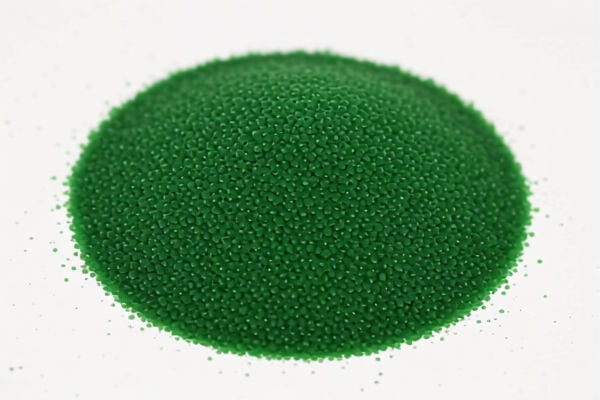
AI分析
🧪 Polyvinyl Chloride Resin Powder (for Paints)
🌐 HS Code Reference & Customs Clearance Guide | 2026 Latest Tariff Analysis | Professional Import Strategy
📌 I. Product Definition & Classification: What Exactly Is "PVC Resin Powder"?
Polyvinyl Chloride (PVC) resin powder is the foundational raw material for producing PVC products. In international trade, it is classified under Chapter 39 (Plastics and Articles Thereof). The classification depends critically on its chemical composition and physical form.
⚠️ Key Distinction:
- Pure PVC Resin: Contains only polyvinyl chloride polymer, with no added plasticizers or other substances. → HS Code 3904.10.00.00
- Non-Plasticized PVC: PVC that may have other additives (stabilizers, etc.) but no plasticizers. → HS Code 3904.21.00.00
- Plasticized PVC: If plasticizers are added (common in soft PVC films/tubes), it falls under 3904.22 (NOT covered in this data set).🔍 Note on "For Paints":
While the end-use is "paints," the chemical nature determines the HS code. PVC resin powder used as a binder or additive in paints is still classified under Chapter 39 if it remains in primary form (powder/granules) and meets the PVC criteria.
📦 II. HS Code Classification Details (2026 Latest Tariff Authority Mapping)
| HS Code | Product Description | Applicable Scenario | Mixed with Other Substances? |
|---|---|---|---|
3904.10.00.00 |
Polymers of vinyl chloride or of other halogenated olefins, in primary forms: Poly(vinyl chloride), not mixed with any other substances | Pure PVC resin powder, unmodified, ready for compounding | ❌ No |
3904.21.00.00 |
Polymers of vinyl chloride or of other halogenated olefins, in primary forms: Other poly(vinyl chloride): Nonplasticized | PVC resin with stabilizers, fillers, or other non-plasticizing additives | ✅ Yes (but no plasticizers) |
📌 Critical Reminder:
- "Not mixed with any other substances" means the polymer is essentially pure. Even trace additives might push it to 3904.21.
- "Nonplasticized" means no plasticizers (like phthalates) are added. If plasticizers are present, it becomes 3904.22 (soft PVC), which is not in this dataset.
💰 III. 2026 Latest Tariff Rate Breakdown (Including Surtax & Policy Surcharges)
✅ Applicable Country: United States (US)
✅ Origin: China (CN)
✅ Effective Date: 2025–2026 (Subject to Trade War Policies)
🎯 1. 3904.10.00.00 — Pure PVC Resin (Not Mixed)
| Item | Content |
|---|---|
| Base Tariff | 0.0% |
| Section 301 Surtax | 0.0% |
| Total Tax | 0.0% |
| Tax Calculation | CIF Value × 0.0% = $0 |
| De Minimis Eligibility | ❌ N/A (No tax, so de minimis not applicable) |
| Legal Basis | HTSUS 3904.10.00.00 + USITC Footnotes |
📌 Explanation:
- Pure PVC resin powder from China currently enjoys a 0% total tariff under current USITC rulings.
- However, this is subject to change if Section 301 tariffs are expanded to specific chemical intermediates. As of 2026 data provided, it is 0%.
- No additional IEEPA surtax is listed for this specific code in the provided data.
🎯 2. 3904.21.00.00 — Non-Plasticized PVC (Other)
| Item | Content |
|---|---|
| Base Tariff | 0.0% |
| Section 301 Surtax | 0.0% |
| Total Tax | 0.0% |
| Tax Calculation | CIF Value × 0.0% = $0 |
| De Minimis Eligibility | ❌ N/A |
| Legal Basis | HTSUS 3904.21.00.00 + USITC Footnotes |
📌 Explanation:
- Non-plasticized PVC resin (with minor additives) also has a 0% total tariff.
- This code is often used for PVC resins that contain stabilizers (e.g., heat stabilizers) which are common in industrial-grade powders.
🛠️ IV. Customs Clearance Practical Advice (Battle-Tested Pitfall Guide)
✅ 1. Documentation Checklist (Non-Negotiable)
| Document | Required | Notes |
|---|---|---|
| ✅ Certificate of Analysis (COA) | ✔️ | Must specify "No Plasticizers Added" and "PVC Content ≥ 99.9%" to support 3904.10.00.00 |
| ✅ Material Safety Data Sheet (MSDS/SDS) | ✔️ | Required for hazardous chemical declarations |
| ✅ Commercial Invoice | ✔️ | Clearly state "Polyvinyl Chloride Resin Powder, Primary Form, Non-Plasticized" |
| ✅ Packing List | ✔️ | Detail net/gross weight; PVC powder is often hygroscopic, note packaging type |
| ✅ Origin Certificate | ✔️ | Confirm Country of Origin (e.g., China) for tariff determination |
| ✅ TSCA Compliance Certificate | ✔️ | CRITICAL for US: EPA requires TSCA (Toxic Substances Control Act) certification for all chemical imports |
✅ 2. Declaration Tips (Key Mnemonics)
🔥 “Pure vs. Additive: Know Your PVC, Keep Tax at Zero!”
| Scenario | Correct HS Code | Error Risk |
|---|---|---|
| Pure PVC powder, no additives | 3904.10.00.00 |
Misdeclaring as 3904.21 → No tax difference, but compliance risk |
| PVC powder with stabilizers, no plasticizers | 3904.21.00.00 |
Misdeclaring as 3904.22 (plasticized) → Higher scrutiny, potential penalties |
| PVC paste resin (for coatings/paints) | 3904.30.00.00 (Not in data) |
If misdeclared as powder, high risk of audit |
| Finished PVC paint/binder | 3208.90 (Not in data) |
Raw resin ≠ Finished product. Never confuse! |
✅ 3. Special Considerations
| Situation | Handling Advice |
|---|---|
| TSCA Compliance | US EPA strictly enforces TSCA. Importers must submit a Significant New Use Notice (SNUN) or certify under existing rules. Failure = Cargo Holded! |
| Hygroscopic Nature | PVC powder absorbs moisture. Ensure packaging is sealed and labeled "Keep Dry." |
| End-Use Declaration | Even if "for paints," declare as "PVC Resin Powder." Do not declare as "Paint" (Chapter 32) unless it is already a formulated product. |
| Antidumping Duties | Check if PVC resin from your origin country faces antidumping duties. As of 2026 data, none are listed for China, but verify with CBP. |
🌍 V. Global Market Comparison (2026 Latest)
| Country/Region | Recommended HS Code | Tariff | Key Certification | Notes |
|---|---|---|---|---|
| 🇺🇸 USA | 3904.10.00.00 or 3904.21.00.00 |
0.0% | TSCA, SDS | No surtax currently |
| 🇨🇳 China | 3904.10.00.00 |
0.0% | GB Standards | No surtax |
| 🇪🇺 EU | 3904.10 |
0.0% | REACH, CLP | REACH registration required for chemicals >1 ton/year |
| 🇬🇧 UK | 3904.10 |
0.0% | UK REACH | Post-Brexit UK REACH applies |
| 🇦🇺 Australia | 3904.10 |
5.0% | AICIS | Standard MFN rate |
📌 Conclusion:
- USA, China, EU, UK offer 0% tariffs for PVC resin powder.
- Australia charges 5%.
- Compliance (TSCA/REACH) is more critical than tariff cost.
📌 VI. Common Mistakes & Pitfalls (Lessons Learned)
❌ Mistake 1: Declaring PVC paste resin (for paints/coatings) as "PVC Powder"
👉 Consequence: HS Code mismatch (3904.30 vs 3904.10). CBP may reclassify and impose penalties + back duties.
❌ Mistake 2: Ignoring TSCA Compliance
👉 Consequence: Cargo detained by EPA/CBP. Fines up to $50,000 per day.
❌ Mistake 3: Claiming "Plasticized" when it’s "Non-Plasticized"
👉 Consequence: Audit risk. Plasticizers are regulated substances. Misdeclaration can lead to environmental violations.
❌ Mistake 4: Using "PVC Paint" as Product Name for Raw Resin
👉 Consequence: Confusion with Chapter 32. Customs may reject the declaration.
✅ Correct Approach:
“Polyvinyl Chloride Resin Powder, Primary Form, Non-Plasticized, for Use in Paint Manufacturing, TSCA Compliant, Model: PVC-500, Origin: China”
🎯 VII. Conclusion: Professional Declaration, Save Time & Money!
🎯 Remember the Mantra:
🔹 “Pure PVC = 3904.10, Non-Plasticized = 3904.21, Both 0% in US!”
🔹 “TSCA is King, No TSCA, No Entry!”
🔹 “Resin ≠ Paint, Raw ≠ Formulated!”
📌 Pro Tip:
- If your PVC resin is modified (e.g., chlorinated PVC, C-PVC), it may fall under 3904.30 or 3904.40, which may have different tariffs.
- Always request a CBP Advance Ruling if your product has borderline characteristics (e.g., slight plasticizer content).
📣 Immediate Action:
📞 Contact your customs broker + Provide TSCA Certificate + Verify HS Code with CBP
🚀 Ensure smooth customs clearance, avoid EPA holds, and maintain 0% tariff savings!
✨ Professional Classification, From the Ground Up!
💼 Every kilogram of PVC Resin, Declared with Precision!
用户评价
关于 HS 编码归类
协调制度(HS)是由世界海关组织(WCO)制定的国际贸易商品分类标准。全球 200 多个国家采用 HS 系统作为海关关税、贸易统计和进出口监管的基础。
每个 HS 编码遵循以下层级结构:
- 章(2 位)——商品大类(例如:第 84 章:机器和机械设备)
- 品目(4 位)——章内的更具体分类
- 子目(6 位)——国际通用细分,所有 WCO 成员国统一使用
- 本国细分(8-10 位)——各国自行扩展的细分编码,如美国 HTSUS 10 位编码
正确的 HS 编码归类对于顺利通关、准确缴纳关税和遵守贸易法规至关重要。错误归类可能导致海关延误、多缴关税或罚款。
从CN进口到US时,适用的关税税率可能包括:
- 最惠国(MFN)税率——适用于 WTO 成员国的标准关税税率
- 普通税率——适用于无贸易协定国家
- 贸易救济关税——附加关税,如 301 条款(反倾销)、232 条款(国家安全)或反补贴税
本页内容仅供参考。如需正式归类,请咨询当地海关或持牌报关代理。