Portable Food Bag
CN → US| HS编码 | 关税税率 | 原产国 | 目的国 | 文档 |
|---|---|---|---|---|
| 3923290000 | 38.0% | CN | US | 官方文档 |
| 3926903300 | 16.5% | CN | US | 官方文档 |
| 3926901000 | 20.9% | CN | US | 官方文档 |
| 4202920809 | 42.0% | CN | US | 官方文档 |
| 4202920807 | 42.0% | CN | US | 官方文档 |
商品图片
AI分析
🥡 Portable Food Bags (Polyester/Polymer Pouches)
🌐 HS Code Reference & Customs Clearance Guide | 2026 Latest Tariff Analysis | Professional Strategy
📌 I. Product Definition & Classification: What Exactly Is a "Portable Food Bag"?
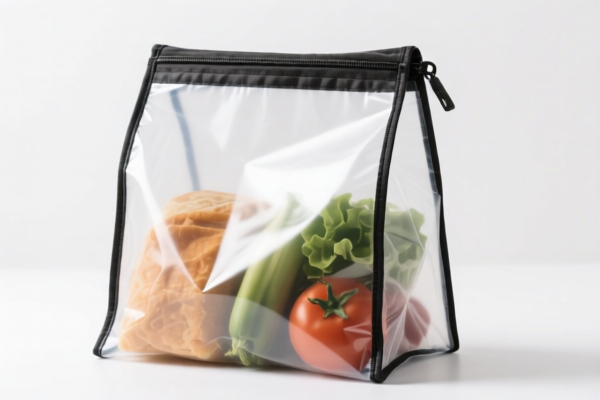
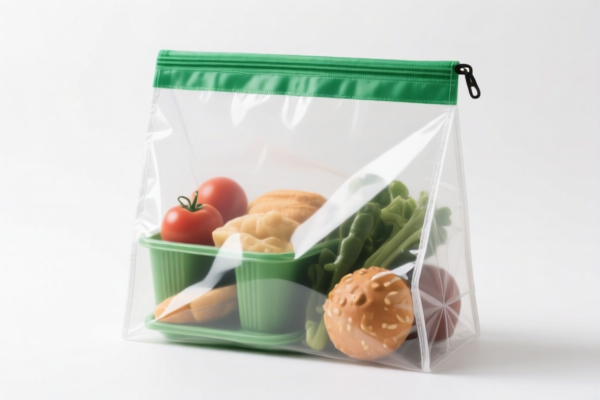
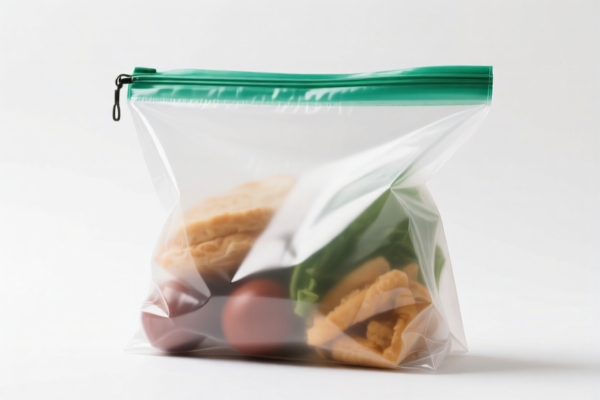
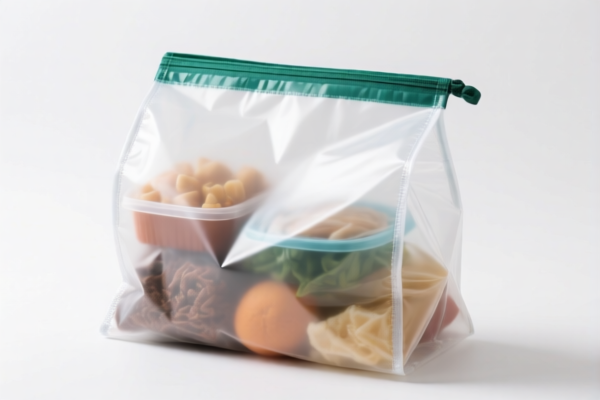
A Portable Food Bag typically refers to insulated pouches, cooler bags, or sealed polymer containers used for carrying meals, lunches, or snacks. In international trade, the classification depends heavily on the material composition and the intended function (e.g., simple packaging vs. insulated thermal retention).
Because the product is specified as "Polyester" (聚酯) in the provided data, the classification splits between general plastic articles, specific polymer packaging, and insulated textile bags.
⚠️ Key Distinction Point:
- If the bag is purely for food packaging/containment (no insulation structure): It falls under Chapter 39 (Plastics) or Chapter 42 (Articles of Apparel).
- If the bag is insulated/thermal (for keeping food hot/cold): It typically falls under 4202.92 (Articles of apparel and clothing accessories, n.e.s. of leather or of composition leather; of paper yarn; of textiles, except knitted or crocheted).
- Material Note: Even if made of polyester, if it has an insulated lining or structure, Customs may view it as a "textile/textile-based insulated bag" rather than just a "plastic bag."
📦 II. HS Code Classification Details (Based on Provided Data)
| HS Code | Summary / Description | Total Tax Rate | Tax Breakdown (Base + Additional) |
|---|---|---|---|
| 3923.29.00.00 | Plastic bags and pouches (Sacs and Pouches) | 38.0% | Base: 3.0% + Sec. 301: 25.0% + Section 122: 10% |
| 3926.90.33.00 | Other plastic articles (Bags) | 16.5% | Base: 6.5% + Sec. 301: 0.0% + Section 122: 10% |
| 3926.90.10.00 | Other plastic articles (Polyester finished forms) | 20.9% | Base: 3.4% + Sec. 301: 7.5% + Section 122: 10% |
| 4202.92.08.09 | Other insulated food/drink bags | 42.0% | Base: 7.0% + Sec. 301: 25.0% + Section 122: 10% |
| 4202.92.08.07 | Other insulated bags (Insulating/Thermal nature) | 42.0% | Base: 7.0% + Sec. 301: 25.0% + Section 122: 10% |
🔍 Analysis of Differences:
- 3923.29 vs. 3926.90: Both are plastic-related. 3923.29 is specifically for "sacs and pouches" (packaging), attracting a high additional tariff (25%). 3926.90 is "other plastic articles." The subtype 3926.90.33 has 0% Section 301 tax, making it significantly cheaper than 3923.29. - 4202.92: This chapter covers textile-based insulated bags. Even if the outer material is polyester, if it is classified as an "insulated bag," it falls here. The high base tax (7%) plus 25% Section 301 results in the highest total tax (42%).
💰 III. 2026 Latest Tariff Rate Details (US Market)
✅ Applicable Country: United States (US)
✅ Origin: China (CN)
✅ Effective Date: Current rates apply (Section 122 and Section 301 in effect)
🎯 1. 3923.29.00.00 — Plastic Bags and Pouches
The most direct "packaging" classification.
| Item | Detail |
|---|---|
| Base Duty | 3.0% |
| Section 301 Duty | +25.0% |
| Section 122 Duty | +10.0% |
| Total Tax Rate | 38.0% |
| Calculation | CIF Value × 38.0% |
| De Minimis Eligibility | ❌ No (Section 301 and 122 taxes generally negate de minimis exemptions for Chinese goods) |
📌 Interpretation:
- This code is used if the bag is strictly a plastic pouch for food packaging.
- The 25% Section 301 tax makes this expensive.
- Risk: If Customs determines the bag is "insulated" or "textile-based," this code may be challenged, leading to reclassification and penalties.
🎯 2. 3926.90.33.00 — Other Plastic Articles (Bags)
The most cost-effective option IF eligible.
| Item | Detail |
|---|---|
| Base Duty | 6.5% |
| Section 301 Duty | 0.0% |
| Section 122 Duty | +10.0% |
| Total Tax Rate | 16.5% |
| Calculation | CIF Value × 16.5% |
| De Minimis Eligibility | ❌ No (Section 122 still applies) |
📌 Interpretation:
- CRITICAL SAVINGS OPPORTUNITY: This code has NO Section 301 tax.
- It applies if the bag is considered an "Other plastic article" rather than a specific "packaging pouch."
- Condition: You must justify that it is not a standard "sac or pouch" (3923) but an "other article" (3926). This often depends on construction (e.g., rigid handles, complex sealing, non-standard shape).
🎯 3. 3926.90.10.00 — Other Plastic Articles (Polyester)
Mid-range option for polyester-specific plastics.
| Item | Detail |
|---|---|
| Base Duty | 3.4% |
| Section 301 Duty | +7.5% |
| Section 122 Duty | +10.0% |
| Total Tax Rate | 20.9% |
| Calculation | CIF Value × 20.9% |
| De Minimis Eligibility | ❌ No |
📌 Interpretation:
- Used if the bag is specifically identified as "polyester plastic articles."
- Lower base tax than 3926.90.33, but includes a 7.5% Section 301 tax, making it more expensive than 3926.90.33.
🎯 4. 4202.92.08.09 & 07 — Insulated Food/Drink Bags
Highest tax rate, for thermally insulated bags.
| Item | Detail |
|---|---|
| Base Duty | 7.0% |
| Section 301 Duty | +25.0% |
| Section 122 Duty | +10.0% |
| Total Tax Rate | 42.0% |
| Calculation | CIF Value × 42.0% |
| De Minimis Eligibility | ❌ No |
📌 Interpretation:
- Applies if the bag is insulated (has foil lining, foam, etc.) and designed for temperature retention.
- Even though it's "polyester," the function (insulation) drives it to Chapter 42.
- Highest cost: 42% total tax. Avoid this code if you can justify a Chapter 39 classification.
🛠️ IV. Customs Clearance Practical Advice
✅ 1. Documentation Checklist (Non-negotiable)
| Document | Required? | Purpose |
|---|---|---|
| Product Specification Sheet | ✅ Yes | Must detail material (e.g., "100% Polyester"), thickness, lining (insulated or non-insulated), and closure type. |
| Product Photos | ✅ Yes | Clear images of the bag, including interior lining (if any) to prove insulation status. |
| Commercial Invoice | ✅ Yes | Description must match the HS Code logic. E.g., if using 3926.90.33, describe as "Plastic Food Container Bag," not "Insulated Lunch Bag." |
| Material Certificate | ✅ Yes | Proof of polyester content if claiming textile vs. plastic. |
| Packing List | ✅ Yes | To verify quantity and weight. |
✅ 2. Classification Strategy & Tips
🔥 "Function Dictates Code, Material Dictates Detail!"
| Scenario | Recommended HS Code | Reasoning | Tax Impact |
|---|---|---|---|
| Simple Plastic Pouch (No insulation, standard zipper) | 3923.29.00.00 |
Clearly a "pouch" for packaging. | 38.0% (High) |
| Unique Plastic Bag (Non-standard, rigid, or complex structure) | 3926.90.33.00 |
"Other plastic article" to avoid Sec. 301. | 16.5% (Best) |
| Polyester Plastic Article (Specific polyester claim) | 3926.90.10.00 |
If 3926.90.33 is rejected. | 20.9% |
| Insulated Lunch Bag (Has foil/foam lining) | 4202.92.08.09 |
Function is insulation; Chapter 42 applies. | 42.0% (Highest) |
📌 Critical Tip:
- If your bag does not have insulation, DO NOT use4202.92. It will be flagged for high tax.
- If you want to use3926.90.33.00(16.5%), ensure your product description emphasizes "Plastic Article" and "Non-insulated" and avoids words like "Thermal," "Insulated," or "Cooler."
✅ 3. Special Cases
| Case | Handling Advice |
|---|---|
| OEM Custom Bags | Provide design drawings. If the shape is unique, argue for 3926.90.33.00. |
| With/Without Lining | If there is no lining, strongly argue for Chapter 39. If there is foil/insulation, Chapter 42 is likely. |
| Mixed Materials | If polyester is coated with plastic, still Chapter 39. If polyester is woven with insulation, Chapter 42. |
🌍 V. Global Market Comparison (2026)
| Market | Likely HS Code | Estimated Tax (China Origin) | Notes |
|---|---|---|---|
| 🇺🇸 USA | 3926.90.33.00 or 4202.92.08.09 |
16.5% - 42.0% | High Section 301 & 122 taxes. Strategy: Aim for 3926.90.33 if possible. |
| 🇨🇳 China | 3923.29.00 or 4202.92.00 |
5% - 12% | No additional Section 301/122 taxes. |
| 🇪🇺 EU | 3923.29 or 4202.92 |
6.5% - 12% | No US-style retaliatory tariffs. |
📌 Conclusion:
- The US market is the most challenging due to Section 301 and 122 tariffs.
- Optimization Goal: Try to classify under3926.90.33.00(16.5%) instead of4202.92.08.09(42.0%) or3923.29.00.00(38.0%).
📌 VI. Common Errors & Pitfalls (Lessons Learned)
❌ Error 1: Calling a simple plastic bag an "Insulated Lunch Bag" to match a customer's marketing name.
👉 Result: Customs classifies it as 4202.92.08.09 → 42% Tax.
✅ Fix: If no insulation, describe as "Polyester Food Storage Pouch."
❌ Error 2: Using 3923.29.00.00 for a complex, non-standard plastic bag.
👉 Result: 38% Tax.
✅ Fix: Argue for 3926.90.33.00 (16.5%) by highlighting unique structural features.
❌ Error 3: Ignoring Section 122 Tax.
👉 Result: All above codes include 10% Section 122 tax. It is unavoidable for Chinese goods. Plan your margin accordingly.
🎯 VII. Conclusion: Strategic Classification for Cost Savings
🎯 Remember the Strategy:
🔹 "No Insulation? Think Plastic (Ch. 39)."
🔹 "Insulated? Think Textile/Articulated (Ch. 42)."
🔹 "Best US Tax? Aim for 3926.90.33.00 (16.5%)."
🔹 "Worst US Tax? 4202.92.08.09 (42.0%)."
📌 Pro Tip:
If your bag is polyester, ensure the plastic content/coating is dominant if you want to stay in Chapter 39. If it's a woven polyester bag with insulation, Chapter 42 is likely correct.
Apply for a Pre-Ruling if the bag's structure is ambiguous.
📣 Action Item:
📞 Consult a Customs Broker to review your product samples.
📝 Ensure your Invoice Description aligns with the HS Code Logic (e.g., don't write "Insulated" if using a Chapter 39 code).
🚀 Minimize Duty, Maximize Profit!
✨ Accurate Classification, Smoother Clearance!
💼 Every Percentage Point Saved Is Pure Profit!
用户评价
关于 HS 编码归类
协调制度(HS)是由世界海关组织(WCO)制定的国际贸易商品分类标准。全球 200 多个国家采用 HS 系统作为海关关税、贸易统计和进出口监管的基础。
每个 HS 编码遵循以下层级结构:
- 章(2 位)——商品大类(例如:第 84 章:机器和机械设备)
- 品目(4 位)——章内的更具体分类
- 子目(6 位)——国际通用细分,所有 WCO 成员国统一使用
- 本国细分(8-10 位)——各国自行扩展的细分编码,如美国 HTSUS 10 位编码
正确的 HS 编码归类对于顺利通关、准确缴纳关税和遵守贸易法规至关重要。错误归类可能导致海关延误、多缴关税或罚款。
从CN进口到US时,适用的关税税率可能包括:
- 最惠国(MFN)税率——适用于 WTO 成员国的标准关税税率
- 普通税率——适用于无贸易协定国家
- 贸易救济关税——附加关税,如 301 条款(反倾销)、232 条款(国家安全)或反补贴税
本页内容仅供参考。如需正式归类,请咨询当地海关或持牌报关代理。