Powder Protective Teething Bracelet
CN → US| HS编码 | 关税税率 | 原产国 | 目的国 | 文档 |
|---|---|---|---|---|
| 9503000073 | 10.0% | CN | US | 官方文档 |
| 9503000071 | 10.0% | CN | US | 官方文档 |
商品图片
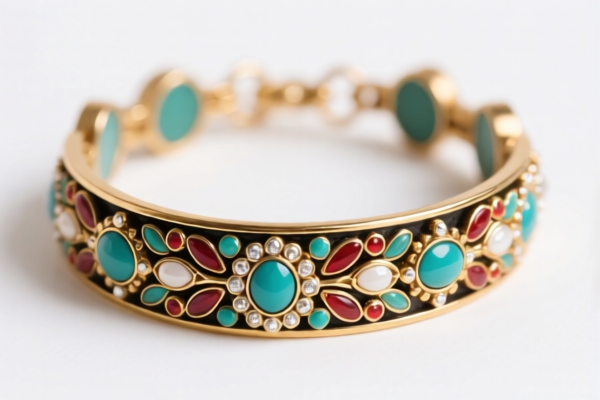
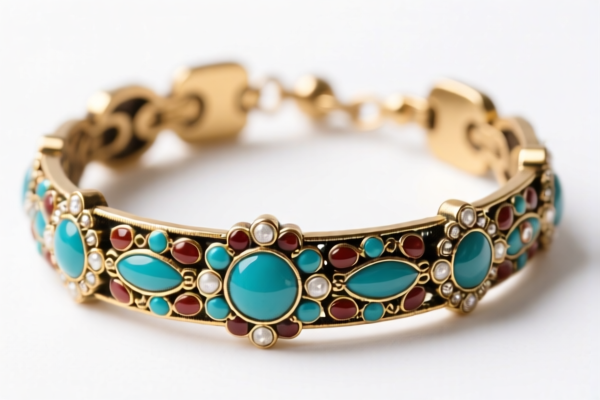
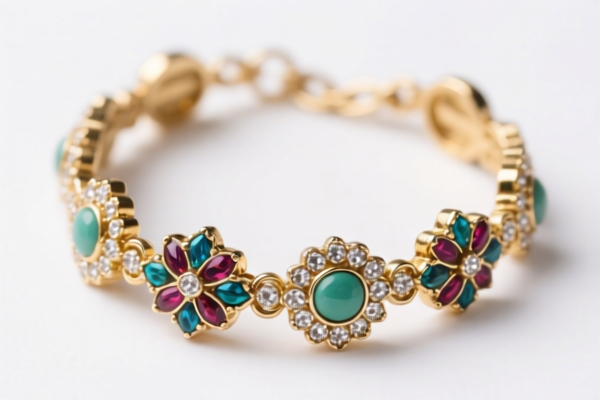
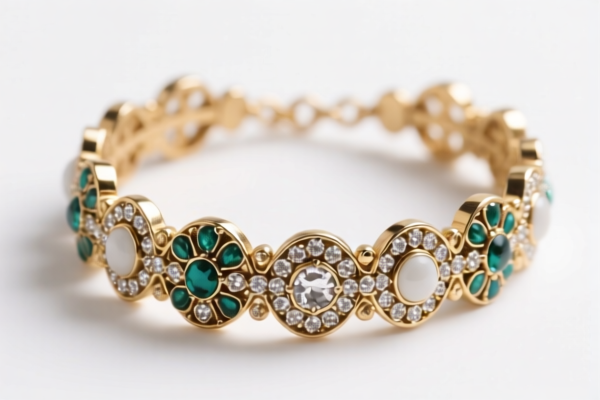
AI分析
🛡️ Powder Protective Teething Bracelet (Baby Teether Jewelry)
🌐 HS Code Reference & Customs Clearance Guide | 2026 Latest Tariff Analysis | Professional Clearance Strategy 📌 I. Product Definition & Classification: What exactly is a "Teething Bracelet"?
Powder protective teething bracelets are accessories designed for infants to soothe gum pain during teething. In international trade, they fall strictly under the category of "Toys" and "Children's Products," not jewelry or fashion accessories.
Core Characteristics: * Function: Designed for chewing/sucking to relieve teething pain. * Material: Silicone, rubber, or food-grade plastic (often coated or filled with "powder" like cornstarch or medicinal herbs, though US safety laws strictly regulate fillers). * Target User: Infants and toddlers (Under 3 years old). * Regulatory Status: Regulated as a Children's Product under the Consumer Product Safety Improvement Act (CPSIA) in the US.
⚠️ Critical Distinction:
- If the item is designed for play, chewing, or sensory stimulation for a child → HS Code 9503 (Toys).
- If it is purely decorative jewelry for adults → HS Code 7117 (Imitation Jewelry).
- Most "Teething Bracelets" sold online are classified as Toys because their primary function is for the child's use (teething relief), even if worn by an adult or baby. Misclassification as jewelry can lead to severe customs penalties.
📦 II. HS Code Classification Details (2026 Latest Tariff Authority Comparison)
Based on your provided data, there are two specific HS Codes for this product, differentiated strictly by age labeling.
| HS Code | Product Description | Intended Age Group | Key Differentiator |
|---|---|---|---|
9503.00.00.71 |
Tricycles, scooters, pedal cars and similar wheeled toys; dolls’ carriages; dolls, other toys; reduced-scale (“scale”) models and similar recreational models, working or not; puzzles of all kinds; parts and accessories thereof “Children’s products” as defined in 15 U.S.C. § 2052: Other: Labeled or determined by importer as intended for use by persons: Under 3 years of age |
Under 3 Years | 🔹 Must be labeled for <3 yrs 🔹 Requires stricter CPSIA compliance (lead, phthalates) 🔹 Most common for teething bracelets |
9503.00.00.73 |
Tricycles, scooters, pedal cars and similar wheeled toys; dolls’ carriages; dolls, other toys; reduced-scale (“scale”) models and similar recreational models, working or not; puzzles of all kinds; parts and accessories thereof “Children’s products” as defined in 15 U.S.C. § 2052: Other: Labeled or determined by importer as intended for use by persons: 3 to 12 years of age |
3 to 12 Years | 🔹 Must be labeled for 3-12 yrs 🔹 Slightly less stringent age-specific labeling 🔹 Rare for teething items (teething ends ~3 yrs) |
🔍 Key Takeaway:
- 99% of teething bracelets should be classified under9503.00.00.71because they are intended for infants under 3 years old.
- The phrase "Labeled or determined by importer as intended for use by persons: Under 3 years of age" is the critical legal trigger for the.71code.
💰 III. 2026 Latest Tariff Rate Details (Including Surtaxes & Policy Add-ons)
✅ Applicable Country: United States (US)
✅ Origin: China (CN)
✅ Effective Date: 2025 November 10 onwards (for subsequent imports)
🎯 1. 9503.00.00.71 —— Toys for Children Under 3 Years Old
| Item | Content |
|---|---|
| Base Tariff Rate | 0.0% (ad valorem) |
| Section 301 Surtax | 0.0% |
| IEEPA Surtax | 0.0% |
| Total Tariff Rate | 0.0% |
| Tax Calculation | CIF Value × 0% = $0 |
| De Minimis Eligibility | ✅ Yes (If shipped via postal/courier under $800) |
| Legal Basis Path | HS:9503.00.00.71 → Note: Children's Product <3 yrs → Tariff: 0% |
📌 Explanation:
- According to the provided data, toy imports under HS 9503.00.00.71 and .73 currently have a total tax rate of 0.0% (0% base + 0% surtax).
- This is a significant advantage compared to other categories (like electronics or steel) which face high tariffs.
- However, "0% tariff" does not mean "0% compliance cost."
- CPSIA Compliance is Mandatory: Even with 0% duty, you MUST provide:
- CPC (Children’s Product Certificate)
- Third-party lab testing results for Lead (≤100ppm) and Phthalates (≤0.1%)
- Tracking Labels on product and packaging
- ASTM F963 Safety Standard compliance
🎯 2. 9503.00.00.73 —— Toys for Children 3-12 Years Old
| Item | Content |
|---|---|
| Base Tariff Rate | 0.0% (ad valorem) |
| Section 301 Surtax | 0.0% |
| IEEPA Surtax | 0.0% |
| Total Tariff Rate | 0.0% |
| Tax Calculation | CIF Value × 0% = $0 |
| De Minimis Eligibility | ✅ Yes (If shipped via postal/courier under $800) |
📌 Note:
- Same 0% tariff rate, but age labeling must explicitly state 3-12 years.
- Risk: If a teething bracelet is labeled for 3-12 years, customs may question its appropriateness (teething usually ends before age 3), potentially triggering additional safety scrutiny.
🛠️ IV. Customs Clearance Practical Advice (Battle-Tested Pitfall Guide)
✅ 1. Required Documentation Checklist (Non-Negotiable)
| Document | Required | Notes |
|---|---|---|
| ✅ Children’s Product Certificate (CPC) | ✔️ | Issued by importer, based on CPSC-accepted lab tests. Must specify age group (<3 or 3-12). |
| ✅ Third-Party Lab Test Report | ✔️ | Must cover Lead Content and Phthalates. Test must be from CPSC-accepted laboratory. |
| ✅ ASTM F963 Compliance Statement | ✔️ | Proof that toy meets US safety standards. |
| ✅ Tracking Label | ✔️ | Product & packaging must have permanent tracking info (manufacturer, date, batch). |
| ✅ Commercial Invoice | ✔️ | Clearly state: "Teething Bracelet, Silicone, for Infants <3 Years, HS 9503.00.00.71" |
| ✅ Product Photos | ✔️ | Show choking hazard warnings, small parts warning (if applicable), and material composition. |
⚠️ Critical Warning for "Powder" Filled Bracelets:
- If the bracelet contains powder (e.g., herbal, cornstarch), it may be classified as a cosmetic or drug if claimed to have medicinal benefits.
- Do NOT claim medicinal benefits (e.g., "cures colic") unless you have FDA approval.
- Label only as a "Teething Toy" or "Silicone Chew Bead".
- If the powder is loose and can leak, it may be flagged as a hazardous material or choking risk.
✅ 2. Declaration Tips (Key Mantra)
🔥 “Age Matters, Lab Test Ready, Powder Must Be Safe, CPC is King!”
| Situation | Correct Declaration | Wrong Practice |
|---|---|---|
| Teething bracelet for babies | 9503.00.00.71 + CPC + ASTM F963 |
Declared as "Jewelry" → HS 7117 → Higher duty + No CPC |
| Bracelet labeled for 4-year-old | 9503.00.00.73 |
Labeled for <3 but declared as 3-12 → Inconsistent labeling → Delay |
| Powder-filled bracelet | Declare as "Silicone Teething Toy with Filled Beads" | Declare as "Herbal Medicine Bracelet" → FDA/Customs seizure |
| Small detachable parts | Include "Choking Hazard: Not for children under 3" | Omit warning → Product recall risk |
✅ 3. Special Case Handling
| Case | Handling Advice |
|---|---|
| OEM/White Label Products | Ensure the CPC matches the actual manufacturer listed on the tracking label. |
| Bracelets with Chains | If the chain is detachable and poses a strangulation risk, it must meet ASTM F963 choking/small parts tests. |
| Multi-Color/Multi-Pack | Each SKU must have its own CPC if formulations or colors affect safety testing. |
| Dropshipping | The importer of record (you) is responsible for CPC and lab tests, even if the supplier holds them. |
🌍 V. Global Market Comparison (2026 Latest)
| Country/Region | Recommended HS Code | Tariff (China Origin) | Certification Required | Notes |
|---|---|---|---|---|
| 🇺🇸 USA | 9503.00.00.71 |
0% | CPC, ASTM F963, CPSIA | Strict safety compliance; 0% tariff is key advantage |
| 🇪🇺 EU | 9503.00.95.00 |
0% | CE, EN71, REACH | Requires CE Marking and EN71 safety tests |
| 🇬🇧 UK | 9503.00.00.99 |
0% | UKCA, UKCA Mark | Post-Brexit, UKCA required |
| 🇨🇦 Canada | 9503.00.00.99 |
0% | Canada Consumer Product Safety Act | Requires non-toxic certification |
| 🇦🇺 Australia | 9503.00.00.99 |
5% | GEMS Declaration, AS/NZS ISO 8124 | 5% duty, strict chemical limits |
📌 Conclusion:
- USA offers the best tariff advantage (0%) for teething bracelets under HS 9503.00.00.71.
- However, compliance costs (lab tests, CPC) are high in the US due to strict CPSIA regulations.
- EU/UK require CE/UKCA, which adds complexity but no duty.
📌 VI. Common Mistakes & Pitfalls (Lessons Learned)
❌ Mistake 1: Declaring as "Jewelry" (HS 7117)
👉 Consequence: Higher tariffs (up to 5-10%), no CPC required → BUT if found to be a toy, customs will penalize for misclassification.
✅ Fix: Always declare as Toy (HS 9503) if intended for child use.
❌ Mistake 2: No CPC (Children’s Product Certificate)
👉 Consequence: Detained by CBP, product seized, fines up to $10,000 per violation.
✅ Fix: Obtain CPC from CPSC-accepted lab before shipping.
❌ Mistake 3: Ignoring Phthalate Limits
👉 Consequence: Silicone/rubber must pass 8 phthalate tests. Failure = Recall.
✅ Fix: Test all elastomeric parts for phthalates.
❌ Mistake 4: Loose Powder Leakage
👉 Consequence: If powder leaks, it may be classified as a hazardous substance or choking hazard.
✅ Fix: Ensure beads are sealed and non-removable. Label as "Non-dismantleable."
🎯 VII. Conclusion: Professional Declaration Saves Money & Time!
🎯 Remember the Mantra:
🔹 "Toy Code 9503, Age Under 3 Gets 0% Duty!"
🔹 "CPC is Mandatory, Lab Test is Key!"
🔹 "Powder Must Be Sealed, No Medicinal Claims!"
📌 Pro Tip:
- If your teething bracelet is 100% silicone with no powder, it simplifies compliance.
- If it contains herbal powder, ensure the powder is food-grade and non-toxic, and provide a Letter of Guarantee from the supplier.
- Apply for an Advance Ruling from CBP if unsure about classification.
📣 Action Required:
📞 Contact a CPSC-accepted lab for testing
📄 Prepare CPC and ASTM F963 compliance
🚀 Declare as HS 9503.00.00.71 to enjoy 0% Tariff
✨ Professional Customs Clearance Starts with Accurate Classification!
💼 Your Compliance Cost is Low, But Your Risk is High if You Skip CPC!
用户评价
关于 HS 编码归类
协调制度(HS)是由世界海关组织(WCO)制定的国际贸易商品分类标准。全球 200 多个国家采用 HS 系统作为海关关税、贸易统计和进出口监管的基础。
每个 HS 编码遵循以下层级结构:
- 章(2 位)——商品大类(例如:第 84 章:机器和机械设备)
- 品目(4 位)——章内的更具体分类
- 子目(6 位)——国际通用细分,所有 WCO 成员国统一使用
- 本国细分(8-10 位)——各国自行扩展的细分编码,如美国 HTSUS 10 位编码
正确的 HS 编码归类对于顺利通关、准确缴纳关税和遵守贸易法规至关重要。错误归类可能导致海关延误、多缴关税或罚款。
从CN进口到US时,适用的关税税率可能包括:
- 最惠国(MFN)税率——适用于 WTO 成员国的标准关税税率
- 普通税率——适用于无贸易协定国家
- 贸易救济关税——附加关税,如 301 条款(反倾销)、232 条款(国家安全)或反补贴税
本页内容仅供参考。如需正式归类,请咨询当地海关或持牌报关代理。