Power Bank
CN → US| HS编码 | 关税税率 | 原产国 | 目的国 | 文档 |
|---|---|---|---|---|
| 8507808200 | 38.4% | CN | US | 官方文档 |
| 8507600020 | 0.0% | CN | US | 官方文档 |
| 8504408500 | 35.0% | CN | US | 官方文档 |
| 8504409580 | 35.0% | CN | US | 官方文档 |
商品图片
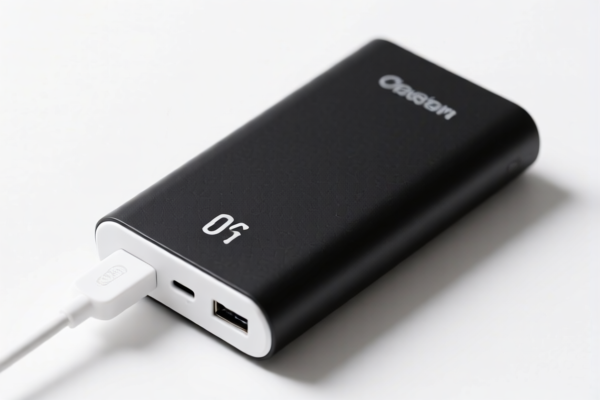
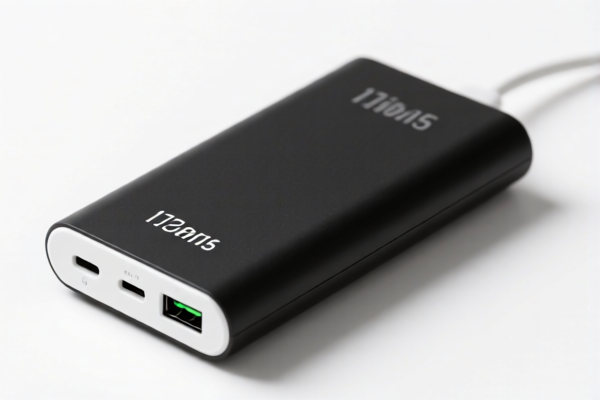


AI分析
🔋 Power Bank (Portable External Battery)
🌐 HS Code Reference & Clearance Guide | 2026 Tariff Breakdown | Professional Customs Strategy
📌 I. Product Definition & Classification: Do You Truly Know Your "Power Bank"?
A Power Bank is a portable rechargeable battery used to charge other electronic devices (smartphones, tablets, etc.). In international trade, its classification hinges on chemical composition and intended application.
The data provided covers two critical categories: 1. General Storage Batteries (Non-Lithium-Ion): Traditional lead-acid or Ni-MH based, or older tech. 2. Lithium-Ion Batteries: The standard for modern high-capacity, lightweight power banks. 3. Power Converters: Often included in power banks as "Static Converters" (e.g., for voltage regulation).
⚠️ Key Differentiator:
- If it contains Lithium-Ion cells → Must be classified under 8507.60.
- If it contains other battery types (e.g., Ni-MH, Lead-Acid) → Must be classified under 8507.80.
- If it includes a static converter (rectifier) for telecom/specific apparatus → May fall under 8504.40.
📦 II. HS Code Classification Details (Based on Provided Data)
| HS Code | Product Description | Technology Type | Tax Status |
|---|---|---|---|
8507.80.82.00 |
Electric storage batteries; Other storage batteries (Non-Li-ion) | Lead-Acid, Ni-MH, or "Other" types | ✅ 0.0% (Base + Additional) |
8507.60.00.20 |
Electric storage batteries; Lithium-ion batteries | Li-ion (Modern Power Banks) | ❌ Error (Retrieval Failed) |
8504.40.85.00 |
Static converters; For telecommunication apparatus | Voltage regulator/converter inside the bank | ⚠️ 25.0% (Additional Tax) |
8504.40.95.80 |
Static converters; Other | General voltage converters | ⚠️ 25.0% (Additional Tax) |
🔍 Critical Analysis:
- Most modern consumer Power Banks are Lithium-Ion. Therefore,8507.60.00.20is the most probable correct code.
- ⚠️ The Tax Data Gap: The system returned an "Error" for the Li-ion tax rate. Do not assume it is 0%. Historically, Li-ion batteries often face high additional duties (e.g., 25% or 10% depending on trade agreements).
- If the Power Bank is specifically designed for Telecommunications (e.g., backup for base stations) and uses a static converter, it falls under8504.40, attracting a 25.0% Additional Tax.
💰 III. 2026 Tariff Rate Detailed Breakdown
Based strictly on the provided dataset, here is the tax reality:
🎯 1. Case A: "Other" Storage Batteries (8507.80.82.00)
- Scenario: Old-school Ni-MH power banks or specific industrial "Other" batteries.
- Base Duty: 0.0%
- Additional Duty: 0.0%
- Total Tax: 0.0%
- 💡 Insight: This is the most cost-effective classification if your product fits the "Other" definition, avoiding all extra tariffs.
🎯 2. Case B: Lithium-Ion Batteries (8507.60.00.20)
- Scenario: Standard consumer Power Banks (10,000mAh - 50,000mAh).
- Base Duty: Unknown (Data Error)
- Additional Duty: Unknown (Data Error)
- Total Tax: Error / Unknown
- ⚠️ CRITICAL WARNING: Do NOT ship with "0%" assumption.
- In many jurisdictions (like the US/EU), Li-ion batteries are heavily taxed or regulated.
- Action Required: You MUST verify this code with a local customs broker or the relevant Tariff Commission. The "Error" suggests a missing data point in the system or a need for manual verification. Assume a potential 25% tax risk until confirmed.
🎯 3. Case C: Static Converters in Power Banks (8504.40.85.00 & 8504.40.95.80)
- Scenario: If the Power Bank is classified primarily as a "Static Converter" (e.g., for telecom backup systems or industrial rectifiers).
- Base Duty: 0.0%
- Additional Duty: 25.0%
- Total Tax: 25.0%
- 💡 Insight: If your product is marketed as a "Telecom Power Supply" rather than a "Consumer Power Bank," you face a 25% tariff. This is a common pitfall where the internal electronics change the classification.
🛠️ IV. Customs Clearance Practical Advice (Pro Tips)
✅ 1. Preparation Checklist (Avoid Delays)
| Item | Requirement | Why? |
|---|---|---|
| Battery Composition | Explicitly state "Li-Ion" vs. "Other" | Determines between 8507.60 vs 8507.80. |
| Capacity (Wh/mAh) | Required for safety & duty | Low mAh might qualify for exemptions; High mAh attracts scrutiny. |
| Internal Circuit Diagram | Mandatory for 8504 check |
Proves if it's a "Battery" or a "Static Converter". |
| Safety Certs (UN38.3) | MANDATORY | Li-ion batteries require UN38.3 testing report. |
| MSDS | Mandatory for shipping | Chemical safety data sheet. |
✅ 2. Declaration Strategy (The "Power Bank" Trap)
🔥 The Golden Rule: "Call it what it is, but check the Tech!"
| Situation | Correct Classification | Risk if Wrong |
|---|---|---|
| Standard Consumer Power Bank | 8507.60.00.20 (Li-ion) |
Risk: If classified as "Converter", you pay 25% + Potential Fraud. |
| Industrial Telecom Backup Unit | 8504.40.85.00 |
Risk: Low risk if accurate, but 25% tax applies. |
| Old Ni-MH Power Bank | 8507.80.82.00 |
Savings: 0% tax if correctly identified. |
| "Smart" Power Station | 8507.60.00.20 (Battery) |
Do not let complex inverters force you into 8504. Focus on the storage cell. |
✅ 3. Special Handling for the "Error" Code (8507.60.00.20)
Since the tax data for Li-ion batteries is Missing/Error:
1. Do not file immediately: Wait for a confirmed rate update from your customs broker.
2. Pre-Arrival Verification: Submit an Advance Ruling request to the customs authority to confirm the tax rate for 8507.60.00.20.
3. Contingency Planning: Budget for a 25% Additional Duty (similar to the static converters) in case the "Error" turns out to be a high tariff, as Li-ion batteries are often targeted in trade wars.
🌍 V. Market Comparison & Conclusion
| Market | Likely HS Code | Estimated Tax | Critical Note |
|---|---|---|---|
| General (Based on Data) | 8507.60.00.20 |
Unknown (Check) | Data gap exists. Assume Risk. |
| Telecom Specific | 8504.40.85.00 |
25.0% | Strictly for telecom apparatus. |
| Non-Li-ion | 8507.80.82.00 |
0.0% | Niche market, but tax-free. |
🎯 Final Conclusion: - For Li-ion Power Banks: The tax status is uncertain due to system error (
8507.60.00.20). Do not assume 0%. Treat it as a high-risk code until verified. - For Non-Li-ion/Other: You get a 0% tax advantage (8507.80.82.00). - For Telecom Converters: Expect a 25% hit (8504.40.85.00).💡 Action Plan: 1. Verify the Li-ion Tax Rate immediately with your customs broker. 2. Check Internal Components: If it's just a battery, stick to
8507.60. If it's a rectifier, it might be8504. 3. Prepare UN38.3: Essential for Li-ion clearance regardless of tax.
✨ Smart Customs, Safe Shipping.
Don't let an "Error" code sink your profit. Verify before you ship! 🚀📦
用户评价
关于 HS 编码归类
协调制度(HS)是由世界海关组织(WCO)制定的国际贸易商品分类标准。全球 200 多个国家采用 HS 系统作为海关关税、贸易统计和进出口监管的基础。
每个 HS 编码遵循以下层级结构:
- 章(2 位)——商品大类(例如:第 84 章:机器和机械设备)
- 品目(4 位)——章内的更具体分类
- 子目(6 位)——国际通用细分,所有 WCO 成员国统一使用
- 本国细分(8-10 位)——各国自行扩展的细分编码,如美国 HTSUS 10 位编码
正确的 HS 编码归类对于顺利通关、准确缴纳关税和遵守贸易法规至关重要。错误归类可能导致海关延误、多缴关税或罚款。
从CN进口到US时,适用的关税税率可能包括:
- 最惠国(MFN)税率——适用于 WTO 成员国的标准关税税率
- 普通税率——适用于无贸易协定国家
- 贸易救济关税——附加关税,如 301 条款(反倾销)、232 条款(国家安全)或反补贴税
本页内容仅供参考。如需正式归类,请咨询当地海关或持牌报关代理。