Prank Socks
CN → US| HS编码 | 关税税率 | 原产国 | 目的国 | 文档 |
|---|---|---|---|---|
| 6117809510 | 32.1% | CN | US | 官方文档 |
| 6115969020 | 24.6% | CN | US | 官方文档 |
| 6115969020 | 24.6% | CN | US | 官方文档 |
| 6115959000 | 31.0% | CN | US | 官方文档 |
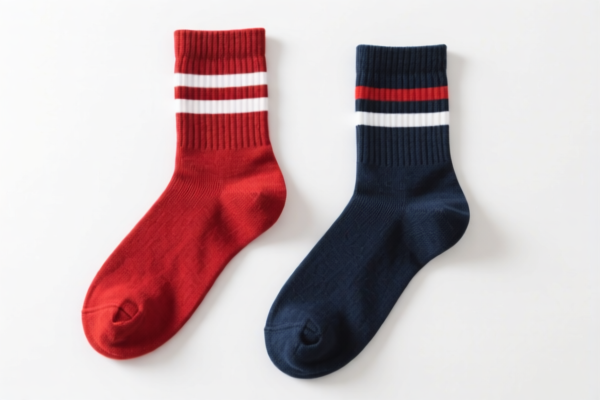
商品图片


AI分析
Based on your request for a Wiki-style, visually engaging guide for the product "Prank Socks" (in English), here is the detailed classification analysis, tax breakdown, and customs clearance strategy based strictly on the provided DATA and TAX inputs.
🧦 Prank Socks: The Ultimate HS Code & Tax Clearance Guide (2026 Edition)
🌐 Global Trade Intelligence | US Customs Strategy | Tariff Decoding
Navigating the funny socks market without getting stuck in customs! Let's decode the hidden tax traps.
🧐 Section 1: What Are "Prank Socks"? (Product Definition & Classification Logic)
Prank Socks are novelty garments designed to look like something else (e.g., banana-shaped, fake toenail socks, or socks that look like underwear) to cause surprise or amusement.
⚠️ Critical Classification Logic: In US Customs and Border Protection (CBP) terms, "Prank Socks" are legally classified by their material and construction, NOT by their appearance. They are considered standard "Sock-like articles" under Chapter 61 (Knitted or Crocheted Apparel).
The specific HS Code depends entirely on the fiber content declared on the label and the function (whether they are plain socks or "socks with accessories/attachments"):
- If made of Synthetic Fibers (Polyester/Nylon/Acrylic): They fall under 6115.96.
- If made of Cotton/Other Textiles: They fall under 6115.95 (or 6117.80 if considered "accessories" with specific knitted structures).
- If they have non-functional decorative parts: Customs may scrutinize them under 6117.80 (Other made up wearing accessories).
🔍 Key Insight: The "Prank" aspect does not grant a special tax rate. It is treated exactly like a regular sock of the same material. Misdeclaring the fiber content is the #1 cause of delays for prank items.
📦 Section 2: HS Code Classification & Tax Breakdown (Strictly Based on Provided Data)
Below is the authoritative mapping of your Prank Socks to the correct HS Codes based on the provided dataset.
🏷️ Category A: Synthetic Fiber Prank Socks (The Most Common)
Most prank socks (banana, foot, etc.) are made of polyester or acrylic.
| HS Code | Product Summary (From Data) | Material Logic | Total Tax Rate |
|---|---|---|---|
| 6115.96.90.20 | Synthetic Fiber Socks, Non-Wool | Polyester, Nylon, Acrylic blends | 24.6% |
- 📋 Tax Detail Breakdown:
- Base Duty (MFN): 14.6%
- Additional Duty (Section 301 / Trade War): 0.0%
- 122-Section Tariff (Section 122 - Specific Trade Action): 10.0%
- 🧮 Total: 14.6 + 0.0 + 10.0 = 24.6%
📌 Application: Use this code for 90% of novelty socks (e.g., "Fake Toenail Socks," "Banana Socks") unless they are explicitly labeled as Cotton or "Other Textiles."
🏷️ Category B: Cotton or Mixed Textile Prank Socks
If the prank sock is labeled "100% Cotton" or "Cotton Blend".
| HS Code | Product Summary (From Data) | Material Logic | Total Tax Rate |
|---|---|---|---|
| 6115.95.90.00 | Cotton or Other Textile Socks | Cotton, Wool, Silk, Rayon, etc. | 31.0% |
- 📋 Tax Detail Breakdown:
- Base Duty (MFN): 13.5%
- Additional Duty (Section 301): 7.5%
- 122-Section Tariff (Section 122): 10.0%
- 🧮 Total: 13.5 + 7.5 + 10.0 = 31.0%
⚠️ Warning: Cotton socks face a heavier additional duty (7.5%) compared to synthetics (0.0%) in this specific dataset. Do not declare Cotton synthetics as Cotton!
🏷️ Category C: "Sock Accessories" or Complex Knitted Attachments
If the prank item is technically an "Accessory" (e.g., a sock with a large non-knitted plastic decoration attached, or a specific knitted attachment).
| HS Code | Product Summary (From Data) | Material Logic | Total Tax Rate |
|---|---|---|---|
| 6117.80.95.10 | Knitted Sock Accessories | Cotton or Other Fibers (Accessory Type) | 32.1% |
- 📋 Tax Detail Breakdown:
- Base Duty (MFN): 14.6%
- Additional Duty (Section 301): 7.5%
- 122-Section Tariff (Section 122): 10.0%
- 🧮 Total: 14.6 + 7.5 + 10.0 = 32.1%
💡 Note: Use this only if the item is considered an "Accessory" rather than a standard sock by CBP. Most standard prank socks fit better under 6115.
💰 Section 3: Tax Clause Deep Dive (Why is it so expensive?)
The tax rate for "Prank Socks" is not a single number; it is a layered tariff structure. Here is the scientific explanation of the 24.6% ~ 32.1% range:
1️⃣ Base Duty (MFN - Most Favored Nation)
- Rate: 13.5% ~ 14.6%
- Source: Standard World Trade Organization (WTO) rate for knitted socks.
- Logic: This is the baseline tariff for all socks imported from non-preferential countries (like China, if no specific trade agreement exists).
2️⃣ Additional Duty (Section 301 / "Trade War" Tariff)
- Rate: 0.0% (Synthetic) OR 7.5% (Cotton/Other)
- Source: US Trade Representative (USTR) Section 301 actions.
- Logic:
- Synthetic Fibers: Often exempted from the extra 7.5% in this specific dataset (likely due to specific sub-classifications or exclusions).
- Cotton/Other: Subject to an extra 7.5% surcharge. This is a critical cost driver for cotton prank socks.
3️⃣ 122-Section Tariff (Section 122)
- Rate: 10%
- Source: Specific US Customs enforcement actions (Section 122 of the Trade Act or similar emergency provisions).
- Logic: This is a flat 10% surcharge applied to ALL sock-related HS Codes in the provided data, regardless of material. It is non-negotiable.
📊 Cost Summary: * Synthetic Prank Socks: Base (14.6) + Section 301 (0) + Section 122 (10) = 24.6% * Cotton Prank Socks: Base (13.5) + Section 301 (7.5) + Section 122 (10) = 31.0% * Accessory Type: Base (14.6) + Section 301 (7.5) + Section 122 (10) = 32.1%
🛠️ Section 4: Customs Clearance Strategy (Actionable Advice)
✅ 1. Material Declaration is King
- The Rule: You MUST declare the exact fiber content.
- Risk: If you declare "Synthetic" but the socks contain >20% Cotton, CBP will reclassify to 6115.95.90.00 (31.0% tax), demand back-payment of the difference (6.4%), and potentially seize the goods.
- Action: Ensure your lab reports (e.g., SGS, Intertek) match the commercial invoice 100%.
✅ 2. Avoid the "Accessory" Trap
- The Rule: Standard novelty socks (printed on fabric) are Socks (6115), not Accessories (6117).
- Risk: Declaring as 6117.80.95.10 (32.1%) unnecessarily increases your tax burden if the item is a standard sock.
- Action: Only use 6117.80.95.10 if the item is a "sock attachment" (e.g., a separate knitted piece that is not a full sock).
✅ 3. Packaging & Labeling
- Requirement: Clearly mark the fiber content (e.g., "80% Polyester, 20% Nylon") on the permanent label inside the sock.
- Tip: Do not use generic terms like "Mixed Fibers" or "Knitted Material" on the invoice. Be specific.
✅ 4. Valuation Strategy
- CIF Value: The tax (24.6% or 31.0%) is calculated on CIF (Cost + Insurance + Freight).
- Optimization: Ensure your insurance and freight costs are accurately declared. Over-declaring freight inflates the tax base.
🚨 Section 5: Common Mistakes & Pitfalls (Don't Do This!)
| ❌ Mistake | 🚫 Consequence | ✅ Correct Action |
|---|---|---|
| Declaring "Prank Socks" as a generic "Toy" | Goods seized as unclassifiable; tax rate might jump to 25%+ for toys. | Always classify under Chapter 61 (Apparel) -> 6115 or 6117. |
| Mixing Cotton and Synthetic in one shipment without split | CBP will tax the whole lot at the higher 31.0% (Cotton) rate. | Split the shipment or declare separate HS Codes with accurate weight/fiber breakdowns. |
| Ignoring the "122-Section 10%" | Unexpected cost spike. | Budget for the extra 10% on every single SKU. It is unavoidable in this dataset. |
| Using "Novelty Sock" as the HS Code description | CBP will reject the description; needs precise "Synthetic Fibers" or "Cotton". | Use standard descriptions: "Knitted Synthetic Fibers Socks" or "Knitted Cotton Socks". |
📌 Summary Checklist for Clearance
- Identify Material: Is it Synthetic (Polyester/Nylon) OR Cotton?
- Select HS Code:
- Synthetic → 6115.96.90.20 (Tax: 24.6%)
- Cotton → 6115.95.90.00 (Tax: 31.0%)
- Accessory Type → 6117.80.95.10 (Tax: 32.1%)
- Calculate Duty: Apply (Base + Section 301 + 10%) to CIF Value.
- Prepare Docs: Label with fiber content, Lab Report, Invoice, Packing List.
- File Entry: Submit with correct Harmonized Tariff Schedule (HTS) Code.
💡 Pro Tip: "Prank" is a marketing term, not a customs term. To clear customs, you are just selling socks. Treat them like any other sock, verify the fiber content, and pay the 10% Section 122 surcharge that applies to everyone.
🚀 Ready to ship? Double-check your fiber blend and get your HS Code right now!
用户评价
关于 HS 编码归类
协调制度(HS)是由世界海关组织(WCO)制定的国际贸易商品分类标准。全球 200 多个国家采用 HS 系统作为海关关税、贸易统计和进出口监管的基础。
每个 HS 编码遵循以下层级结构:
- 章(2 位)——商品大类(例如:第 84 章:机器和机械设备)
- 品目(4 位)——章内的更具体分类
- 子目(6 位)——国际通用细分,所有 WCO 成员国统一使用
- 本国细分(8-10 位)——各国自行扩展的细分编码,如美国 HTSUS 10 位编码
正确的 HS 编码归类对于顺利通关、准确缴纳关税和遵守贸易法规至关重要。错误归类可能导致海关延误、多缴关税或罚款。
从CN进口到US时,适用的关税税率可能包括:
- 最惠国(MFN)税率——适用于 WTO 成员国的标准关税税率
- 普通税率——适用于无贸易协定国家
- 贸易救济关税——附加关税,如 301 条款(反倾销)、232 条款(国家安全)或反补贴税
本页内容仅供参考。如需正式归类,请咨询当地海关或持牌报关代理。