Preserved Coniferous Wood Poles
CN → US| HS编码 | 关税税率 | 原产国 | 目的国 | 文档 |
|---|---|---|---|---|
| 4407110002 | 35.0% | CN | US | 官方文档 |
| 4407120002 | 35.0% | CN | US | 官方文档 |
商品图片
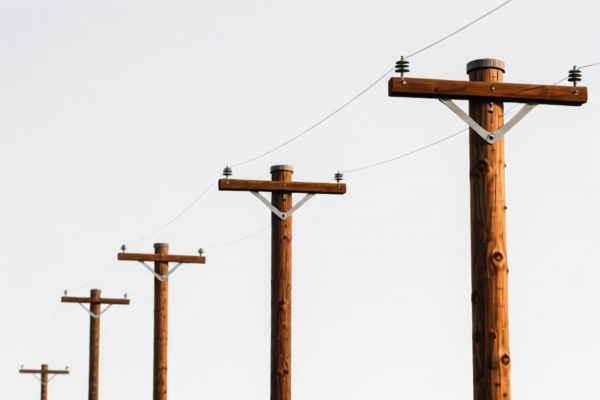
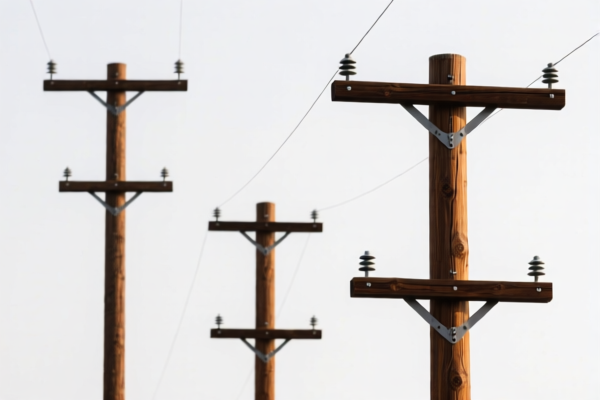
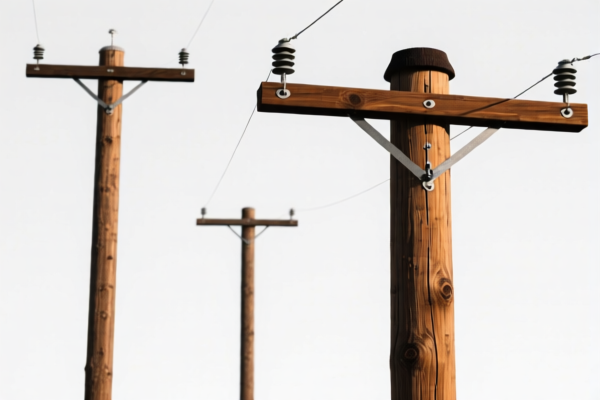
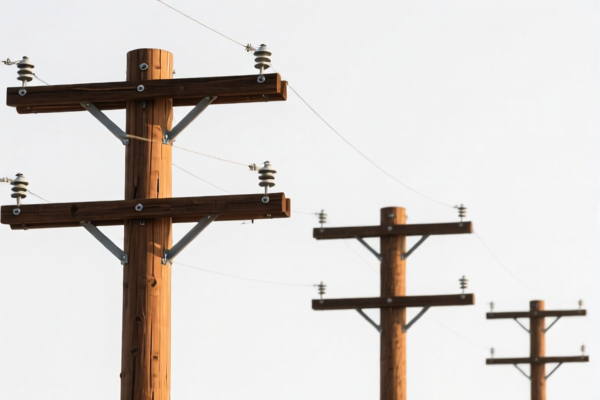
AI分析
🌲 Preserved Coniferous Wood Poles (Treated Timber)
🌐 HS Code Reference & Customs Clearance Guide | 2026 Latest Tariff Analysis | Professional Transit Strategy
📌 I. Product Definition & Classification: Do You Understand "Preserved Wood" Really?
Preserved coniferous wood poles are the backbone of infrastructure, utility networks, and construction. In international trade, "coniferous wood" refers to softwood (pine, spruce, fir, etc.), and "preserved" means the wood has undergone chemical treatment to resist decay, insects, and weathering.
Key Distinction: * Raw Wood: Untreated, natural appearance → Lower duties (usually 0%), but restricted import into many regions due to pest control laws. * Treated/Preserved Wood: Coated with paint, stain, creosote, or other preservatives → Subject to high additional tariffs (25%) in specific markets (e.g., USA).
⚠️ Critical Classification Point:
- If the wood is >6mm thick, lengthwise sawn/chipped/sliced, and treated → It falls under Chapter 44, Heading 4407.
- Specifically, if it is Pine (Pinus spp.) or Fir/Spruce (Abies/Picea spp.), it maps to 4407.11.00.02 or 4407.12.00.02.
📦 II. HS Code Classification Details (2026 Latest Tariff Authority)
Based on the provided data, here are the precise classifications for treated coniferous wood:
| HS Code | Product Description | Application Scenario | Treatment Status |
|---|---|---|---|
4407.11.00.02 |
Wood of Pine (Pinus spp.), thickness >6mm, treated with paint, stain, creosote, or other preservative | Pine utility poles, fence posts, treated structural beams | ✅ Treated |
4407.12.00.02 |
Wood of Fir (Abies spp.) and Spruce (Picea spp.), thickness >6mm, treated with paint, stain, creosote, or other preservative | Fir/Spruce construction timber, treated poles, landscaping wood | ✅ Treated |
🔍 Key Reminder:
- The .02 suffix specifically denotes "Treated with paint, stain, creosote or other preservative".
- Do NOT use codes for raw wood (e.g., .01 or .00) if the wood is chemically treated. Misclassification can lead to severe penalties or customs delays.
- Both codes apply to wood exceeding 6mm in thickness. Thinner veneers fall under different headings.
💰 III. 2026 Latest Tariff Rate Breakdown (Including Additional Duties)
✅ Applicable Market: United States (US) (Based on 25% additional tariff pattern)
✅ Origin: China (CN) (Assumed due to 25% "Additional Tariff" which aligns with US Section 301 tariffs on Chinese goods)
✅ Effective Date: Ongoing (Subject to current trade policies)
🎯 1. 4407.11.00.02 – Pine Wood, Treated
| Item | Content |
|---|---|
| Base Tariff Rate | 0.0% (ad valorem) |
| Additional Tariff (Section 301) | +25.0% |
| Total Tax Rate | 25.0% |
| Tax Calculation | CIF Value × 25% |
| De Minimis Exemption? | ❌ NO (High-value industrial goods typically excluded or not beneficial) |
| Legal Basis Path | HTSUS:4407.11.00.02 → Section 301 Tariff List → Additional Duty: 25% |
📌 Explanation:
- Base Duty is 0%: Raw timber often enjoys low base duties to encourage construction materials.
- 25% Additional Tariff: This is the critical cost driver. The US imposes a 25% additional duty on many Chinese-origin wood products under trade remedy actions.
- Total Cost Impact: For every $10,000 CIF value, you pay $2,500 in duties alone. This is a significant margin compressor.
🎯 2. 4407.12.00.02 – Fir/Spruce Wood, Treated
| Item | Content |
|---|---|
| Base Tariff Rate | 0.0% |
| Additional Tariff (Section 301) | +25.0% |
| Total Tax Rate | 25.0% |
| Tax Calculation | CIF Value × 25% |
| De Minimis Exemption? | ❌ NO |
| Legal Basis Path | HTSUS:4407.12.00.02 → Section 301 Tariff List → Additional Duty: 25% |
📌 Note:
- Fir and Spruce are the most common species for construction and utility poles.
- The tax treatment is identical to Pine in this context.
- Whether it's "Creosote-treated" (for underground/utility) or "Waterborne preservative" (for above-ground), as long as it's "treated," it falls under the .02 subheading and attracts the 25% duty.
🛠️ IV. Customs Clearance Practical Advice (Real-World Pitfall Guide)
✅ 1. Required Documentation Checklist (Non-Negotiable)
| Document | Must Provide? | Description |
|---|---|---|
| ✅ Treatment Certificate | ✔️ | Proof of preservative used (e.g., Creosote, Copper Azole). Must match HS .02 description. |
| ✅ ISPM 15 Marking (if applicable) | ✔️ | If packaging is wood, it must be heat-treated/fumigated. Raw wood poles themselves are already treated, but confirm compliance with plant health laws. |
| ✅ Commercial Invoice | ✔️ | Must clearly state: "Treated Pine/Fir Wood, Thickness >6mm, Preservative: [Type]". Do not just say "Wood Poles." |
| ✅ Material Safety Data Sheet (MSDS) | ✔️ | Required for chemically treated wood to prove chemical content for customs and EPA compliance. |
| ✅ Bill of Lading / Packing List | ✔️ | Ensure weight and volume are accurate for duty calculation. |
✅ 2. Declaration Tips (Key Mantras)
🔥 "Specify Species, Declare Treatment, Avoid Ambiguity!"
| Scenario | Correct Declaration | Wrong Action |
|---|---|---|
| Treated Pine Poles | HS 4407.11.00.02 + Description: "Pine wood, treated with creosote" |
Declaring as "Raw Wood" (0% duty) → Fraud/High Penalty |
| Treated Spruce Lumber | HS 4407.12.00.02 + Description: "Spruce wood, painted/preserved" |
Declaring as "Unprocessed Timber" → Audit Risk |
| Wood Thickness ≤6mm | Different HS Code (e.g., Veneer/Sheeting) | Using 4407 codes for thin slices → Classification Error |
| Non-Coniferous (e.g., Oak) | Different Chapter (e.g., 4407.91) | Using 4407.1x codes → Rejection |
✅ 3. Special Case Handling
| Situation | Handling Advice |
|---|---|
| OEM Custom Dimensions | Provide cut-lists. Ensure thickness is consistently >6mm. If mixed with thinner pieces, clarify in packing list. |
| Chemical Leakage Risk | Ensure creosote/treatments are sealed. Customs may inspect for environmental compliance (EPA). |
| Origin Misdeclaration | If wood is grown in USA but shipped from China, origin is USA. If grown in China, origin is China. 25% duty applies ONLY to Chinese origin. Verify COO strictly. |
| Used vs. New | If used wood, ensure it meets ISPM 15 and pest-free requirements. Used wood imports are heavily restricted. |
🌍 V. Global Market Comparison (2026 Latest)
| Country/Region | Recommended HS Code | Tariff Rate | Certification/Notes | Remarks |
|---|---|---|---|---|
| 🇺🇸 USA | 4407.11.00.02 / 4407.12.00.02 |
25% (China Origin) | EPA Compliance | High tariff due to Section 301. Base duty 0%. |
| 🇨🇳 China | 4407.11.00 / 4407.12.00 |
~5-8% | Fumigation Certificate | Importing treated wood requires phytosanitary cert. |
| 🇪🇺 EU | 4407.10 / 4407.21 |
0-5% (if GSP) | REACH Compliance | Stricter chemical regulations (REACH) for preservatives. |
| 🇨🇦 Canada | 4407.11 / 4407.12 |
0% (CUSMA if local) | CFIA Approval | Strict biosecurity. Must prove no live pests. |
📌 Conclusion:
- The USA imposes the highest burden on Chinese-origin treated wood due to the 25% additional tariff.
- EU and Canada focus more on environmental/pest compliance than high tariffs (if origin eligible).
- Cost Management: For USA imports, the 25% duty is unavoidable for Chinese-origin wood. Consider supply chain diversification (e.g., Vietnam, Mexico) if eligible for duty exemptions.
📌 VI. Common Errors & Pitfall Guide (Lessons Learned)
❌ Error 1: Declaring "Treated Wood" as "Raw Wood" to avoid 25% duty.
👉 Consequence: Customs inspection reveals chemical treatment → Penalty + Back Duties + Seizure.
❌ Error 2: Ignoring the >6mm thickness rule.
👉 Consequence: If some planks are thinner, they fall under different HS codes (e.g., veneers), causing shipment mismatch and delays.
❌ Error 3: Not specifying the Preservative Type.
👉 Consequence: Customs cannot verify the ".02" subheading → Hold for further inspection → Demurrage fees.
❌ Error 4: Confusing Fir/Spruce with Pine.
👉 Consequence: While tax rates are similar here, incorrect species description can trigger phytosanitary audits if the species is suspect.
✅ Correct Approach:
"Treated Spruce Poles, Length: 10ft, Diameter: 8", Thickness: >6mm, Preservative: Copper Azole, Origin: China, HS: 4407.12.00.02"
🎯 VII. Conclusion: Precision in Classification Saves Money!
🎯 Remember the Mantra:
🔹 "Species Matters, Treatment Defines, Thickness Limits."
🔹 "0% Base + 25% Add. = 25% Total. Don't Cut Corners!"
🔹 "Chinese Origin + Treated Wood = High Duty. Plan Ahead!"
📌 Pro Tip:
- If you are importing into the USA, verify if your supplier qualifies for any exclusions under the Section 301 list (though wood poles are rarely excluded).
- For environmental compliance, ensure the preservative used does not violate EPA restrictions on certain chemicals (e.g., Pentachlorophenol is banned; Creosote is restricted).
- Always request the Treatment Certificate from your supplier to prove the "Treated" status for accurate HS classification.
📣 Immediate Action:
📞 Consult a licensed customs broker for Pre-Ruling on your specific wood treatment and origin.
🚀 Accurate HS Code = Accurate Duty = Smooth Clearance.
✨ Professional Clearance Starts with Correct Classification!
💼 Every Percent Counts in Global Trade!
用户评价
关于 HS 编码归类
协调制度(HS)是由世界海关组织(WCO)制定的国际贸易商品分类标准。全球 200 多个国家采用 HS 系统作为海关关税、贸易统计和进出口监管的基础。
每个 HS 编码遵循以下层级结构:
- 章(2 位)——商品大类(例如:第 84 章:机器和机械设备)
- 品目(4 位)——章内的更具体分类
- 子目(6 位)——国际通用细分,所有 WCO 成员国统一使用
- 本国细分(8-10 位)——各国自行扩展的细分编码,如美国 HTSUS 10 位编码
正确的 HS 编码归类对于顺利通关、准确缴纳关税和遵守贸易法规至关重要。错误归类可能导致海关延误、多缴关税或罚款。
从CN进口到US时,适用的关税税率可能包括:
- 最惠国(MFN)税率——适用于 WTO 成员国的标准关税税率
- 普通税率——适用于无贸易协定国家
- 贸易救济关税——附加关税,如 301 条款(反倾销)、232 条款(国家安全)或反补贴税
本页内容仅供参考。如需正式归类,请咨询当地海关或持牌报关代理。