Prestressed Steel Strand Coating Material
CN → US| HS编码 | 关税税率 | 原产国 | 目的国 | 文档 |
|---|---|---|---|---|
| 3824994900 | 41.5% | CN | US | 官方文档 |
| 3824997510 | 38.7% | CN | US | 官方文档 |
| 3208100000 | 38.7% | CN | US | 官方文档 |
| 3208200000 | 38.6% | CN | US | 官方文档 |
商品图片

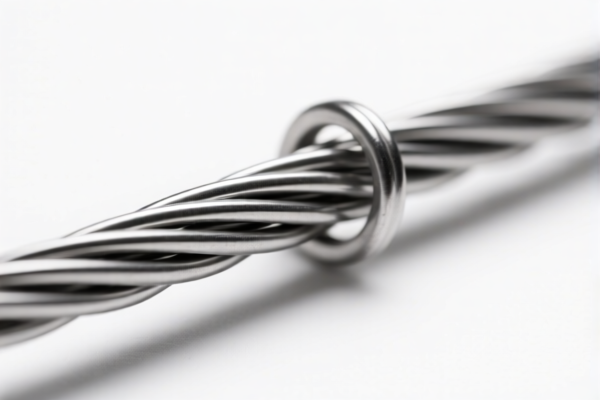

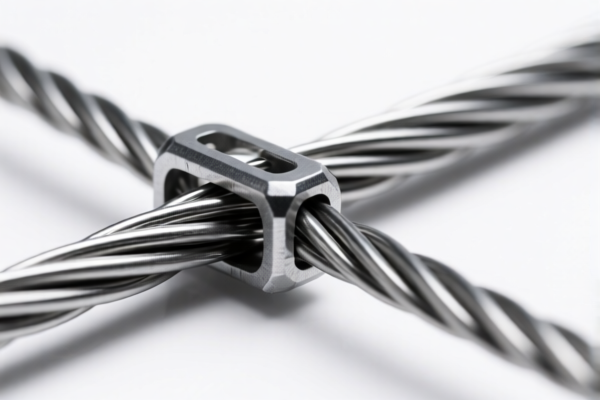
AI分析
🔩 Prestressed Steel Strand Coating Material (Cementitious or Polymer-Based)
🌐 HS Code Classification & Customs Clearance Guide | 2026 Tariff Analysis | Professional Compliance Strategy
📌 1. Product Definition & Classification: What Exactly Are We Declaring?
"Prestressed Steel Strand Coating Material" is not a single standardized term in the Harmonized System (HS). Its classification depends entirely on its chemical composition and primary function. In international trade, this material typically falls into one of two major categories:
- Paints/Varnishes Based on Synthetic Polymers: If the coating is primarily a paint, enamel, or lacquer used to protect steel strands from corrosion (based on polyesters, acrylics, or vinyl polymers).
- Prepared Chemical Mixtures: If the material is a cementitious grout, epoxy coating, or bituminous/petroleum-derived mixture used for bonding, waterproofing, or specific chemical treatment that doesn't fit the strict definition of a "paint."
⚠️ Critical Distinction:
- If it is a paint-like substance (solvent-based or water-based dispersion of synthetic polymers) → Go to Chapter 32.
- If it is a mixture of hydrocarbons or naphthenic acids (often found in certain anti-corrosion grease or specialized chemical binders) → Go to Chapter 38.
📦 2. HS Code Classification Details (Based on Provided Data)
Since the user input is generic, we must evaluate the two most likely HS Codes from the provided dataset based on the physical nature of the coating.
Option A: Polymer-Based Paints/Var Nishes (Most Common for "Coating")
If the coating is a standard protective paint (e.g., epoxy-based, polyurethane, or acrylic-based anti-corrosion paint):
| HS Code | Product Description | Key Characteristics | Tax Rate (China-Origin to US) |
|---|---|---|---|
| 3208.10.00.00 | Paints/varnishes based on polyesters, dispersed/dissolved in non-aqueous medium | Polyester-based resins, solvent-borne | 0.0% (Base + Additional) |
| 3208.20.00.00 | Paints/varnishes based on acrylic or vinyl polymers, dispersed/dissolved in non-aqueous medium | Acrylic/Vinyl resins, common for steel protection | 0.0% (Base + Additional) |
📌 Note: Both codes fall under Chapter 32. The distinction depends on the resin type. If it's a water-based dispersion, different sub-headings might apply, but the provided data specifies "nonaqueous medium". If your product is solvent-based, these are the primary candidates.
Option B: Specialized Chemical Mixtures (Non-Paint)
If the "coating material" is a grease, wax, naphthenic acid ester, or hydrocarbon-based mixture (common in some specialized prestressing grease applications):
| HS Code | Product Description | Key Characteristics | Tax Rate (China-Origin to US) |
|---|---|---|---|
| 3824.99.49.00 | Prepared binders; chemical mixtures not elsewhere specified: Mixtures of hydrocarbons derived from petroleum, shale oil, or natural gas | Petroleum-based greases, waxes, or hydrocarbon mixtures | 31.5% (6.5% Base + 25% Additional) |
| 3824.99.75.10 | Prepared binders; chemical mixtures not elsewhere specified: Naphthenic acids, their salts, and esters | Naphthenic acid-based compounds | 28.7% (3.7% Base + 25% Additional) |
📌 Note: These codes apply if the product is not a paint/lacquer but rather a chemical mixture or grease. This is common for prestressing strand grease (a wax/grease coating inside the sheath or on the strand).
💰 3. 2026 Tariff Rate Breakdown (Detailed Tax Analysis)
✅ Applicable Country: United States (US)
✅ Origin: China (CN)
✅ Effective Date: Current 2025/2026 Trade Rules (Section 301 + IEEPA)
🎯 1. Polymer-Based Coatings (HS 3208.10 / 3208.20)
| Item | Detail |
|---|---|
| HS Codes | 3208.10.00.00 (Polyester) OR 3208.20.00.00 (Acrylic/Vinyl) |
| Base Tariff | 0.0% (ad valorem) |
| Section 301 Additional Tariff | 0.0% |
| IEEPA Additional Tariff | 0.0% |
| Total Tariff Rate | 0.0% |
| De Minimis Eligibility | ❌ Likely Not Applicable (Chemical products often excluded or subject to stricter scrutiny) |
| Legal Basis | HTSUS Chapter 32 Notes |
📌 Explanation:
- Many chemical paints and varnishes currently have 0% duty under US Harmonized Tariff Schedule. - Crucially, unlike some electronics or steel products, paints based on synthetic polymers (3208) are NOT subject to the 25% Section 301 tariff or IEEPA tariffs in the provided data. - This is a significant cost advantage if the product can be correctly classified as a polymer-based paint.
🎯 2. Hydrocarbon/Naphthenic Acid Mixtures (HS 3824.99.49 / 3824.99.75)
| Item | Detail |
|---|---|
| HS Codes | 3824.99.49.00 (Hydrocarbon Mixtures) OR 3824.99.75.10 (Naphthenic Acids) |
| Base Tariff | 6.5% (for 3824.99.49) or 3.7% (for 3824.99.75) |
| Section 301 Additional Tariff | 25.0% |
| IEEPA Additional Tariff | 0.0% (Not listed in data) |
| Total Tariff Rate | 31.5% (for 3824.99.49) or 28.7% (for 3824.99.75) |
| De Minimis Eligibility | ❌ No |
| Legal Basis | HTSUS Chapter 38 Notes, Section 301 Footnotes |
📌 Explanation:
- If the coating is a grease or hydrocarbon-based substance, it falls under Chapter 38. - These are heavily taxed due to Section 301 tariffs on Chinese imports. - 31.5% or 28.7% is a massive cost impact compared to 0%.
🛠️ 4. Customs Clearance Practical Advice
✅ 1. Critical Documentation Checklist
| Document | Required? | Why? |
|---|---|---|
| Technical Data Sheet (TDS) | ✅ Essential | Must show chemical composition to prove if it’s a polymer paint (3208) or hydrocarbon mixture (3824). |
| Formula/Composition Statement | ✅ Essential | Proportion of polyester/acrylic vs. petroleum-based ingredients. |
| Material Safety Data Sheet (MSDS) | ✅ Required | For hazmat classification and handling. |
| Certificate of Origin | ✅ Required | To confirm China origin and apply correct tariffs. |
| Commercial Invoice | ✅ Required | Must clearly state: "Polyester-based protective coating for steel strands" or "Naphthenic acid-based grease" — DO NOT use vague terms like "Steel Coating." |
| Product Photos | ✅ Recommended | Show container type, label, and consistency (liquid paint vs. grease). |
✅ 2. Classification Strategy & Risk Mitigation
🔥 Key Strategy: Fight for Chapter 32 (0% Duty) over Chapter 38 (28-31% Duty).
| Scenario | Correct Classification | Risk if Misclassified |
|---|---|---|
| Solvent-based Acrylic/Polyester Paint | 3208.20.00.00 or 3208.10.00.00 |
❌ If misclassified as 3824 → Save $28-31 per $100. High risk of audit. |
| Prestressing Strand Grease (Wax/Oil) | 3824.99.49.00 or 3824.99.75.10 |
❌ If misclassified as 3208 → Penalties + Back Dues. Grease is not a "paint." |
| Epoxy-Based Coating | Check if Polyester/Acrylic | Epoxies often fall under 3208 if resin-based. Confirm with TDS. |
📌 Actionable Advice:
1. If your product is a liquid paint/coating: Ensure your TDS highlights polyester or acrylic resin content. Declare as 3208.10 or 3208.20.
2. If your product is a grease/wax: You cannot avoid the 301 tariff. Use 3824.99.49.00 (hydrocarbon mixture) or 3824.99.75.10 (naphthenic acid).
3. Avoid Ambiguity: Do NOT declare as "Chemical Coating" without specifying the base resin. Customs will classify based on the worst-case or highest-tax scenario.
✅ 3. Special Cases & Pitfalls
| Pitfall | Consequence | Solution |
|---|---|---|
| Using "Paint" for a Grease | Customs may reject or reclassify to 3824, applying 31.5% tariff + penalties. | Ensure product form matches description (liquid vs. semi-solid). |
| Vague Description | Delayed clearance, additional exams. | Use precise HS Code descriptions in invoice. |
| Ignoring MSDS | Hazmat hold or rejection. | Provide complete MSDS with UN number and hazardous class. |
🌍 5. Global Market Comparison (2026)
| Country | Recommended HS Code | Est. Tariff (China) | Notes |
|---|---|---|---|
| 🇺🇸 USA | 3208.10.00.00 / 3208.20.00.00 |
0.0% | Best case if classified as paint. |
| 🇪🇺 EU | 3208.10 / 3208.20 | ~6.5% | No Section 301 equivalent. |
| 🇨🇳 China (Import) | 3208.10 / 3208.20 | ~5-6% | Low duty for imported chemicals. |
| 🇯🇵 Japan | 3208.10 / 3208.20 | ~6.0% | Standard duty. |
📌 Conclusion:
The US market offers a significant tariff advantage (0%) for polymer-based coatings (Chapter 32) compared to hydrocarbon mixtures (Chapter 38).
Strategy: If possible, reformulate or specify the product as a polyester or acrylic-based paint to qualify for 0% duty.
📌 6. Common Errors & Avoidance Guide
❌ Error 1: Declaring "Prestressing Grease" as "Paint" to avoid tariff.
👉 Result: Customs detection via density/viscosity test → Back duties + 25% Section 301 + Penalty.
❌ Error 2: Using generic term "Coating Material" without HS Code.
👉 Result: Customs assigns highest possible rate (often 31.5%) pending investigation.
❌ Error 3: Ignoring the "Nonaqueous Medium" requirement in 3208.
👉 Result: If water-based, it may fall under 3210 (not listed in data) or different rates. Check formulation.
✅ Correct Declaration Example:
"Protective Coating for Prestressed Steel Strands, Based on Polyester Resin, Solvent-Borne, Non-Water Dispersed, HTS 3208.10.00.00"
🎯 7. Final Recommendation
- Identify Base Resin: Is it Polyester (
3208.10) or Acrylic/Vinyl (3208.20)? → 0% Duty. - If Grease/Oil: It is Hydrocarbon/Naphthenic (
3824.99.49or3824.99.75) → 28-31% Duty. - Document: Ensure MSDS and TDS align with the declared HS Code.
- Pre-Ruling: Consider applying for an HS Code Pre-Ruling from CBP if the product is ambiguous.
📣 Immediate Action:
📞 Contact your chemist: Confirm if the coating is polymer-based (paint) or hydrocarbon-based (grease).
📄 Update Invoice: Use precise HS Code descriptions.
🚀 Savings Potential: Shifting from 31.5% to 0% is a massive competitive advantage in the US market.
✨ Precision in Classification = Profit in Clearance!
💼 Don’t let vague descriptions cost you 31.5% of your value!
用户评价
关于 HS 编码归类
协调制度(HS)是由世界海关组织(WCO)制定的国际贸易商品分类标准。全球 200 多个国家采用 HS 系统作为海关关税、贸易统计和进出口监管的基础。
每个 HS 编码遵循以下层级结构:
- 章(2 位)——商品大类(例如:第 84 章:机器和机械设备)
- 品目(4 位)——章内的更具体分类
- 子目(6 位)——国际通用细分,所有 WCO 成员国统一使用
- 本国细分(8-10 位)——各国自行扩展的细分编码,如美国 HTSUS 10 位编码
正确的 HS 编码归类对于顺利通关、准确缴纳关税和遵守贸易法规至关重要。错误归类可能导致海关延误、多缴关税或罚款。
从CN进口到US时,适用的关税税率可能包括:
- 最惠国(MFN)税率——适用于 WTO 成员国的标准关税税率
- 普通税率——适用于无贸易协定国家
- 贸易救济关税——附加关税,如 301 条款(反倾销)、232 条款(国家安全)或反补贴税
本页内容仅供参考。如需正式归类,请咨询当地海关或持牌报关代理。