Printed Image Fabric
CN → US| HS编码 | 关税税率 | 原产国 | 目的国 | 文档 |
|---|---|---|---|---|
| 5111905000 | 42.0% | CN | US | 官方文档 |
| 5007200035 | 35.0% | CN | US | 官方文档 |
| 5208516060 | 46.4% | CN | US | 官方文档 |
| 5208524055 | 46.4% | CN | US | 官方文档 |
| 5407540020 | 32.4% | CN | US | 官方文档 |
商品图片
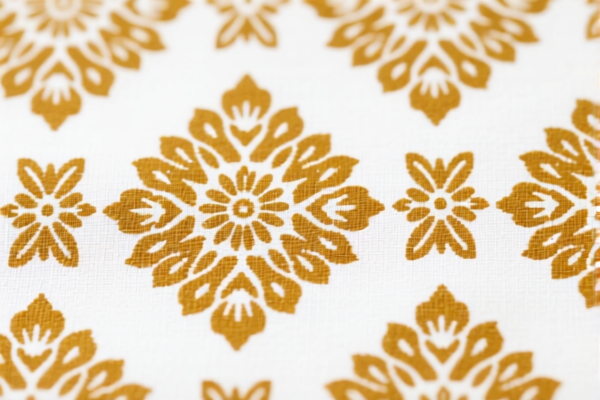
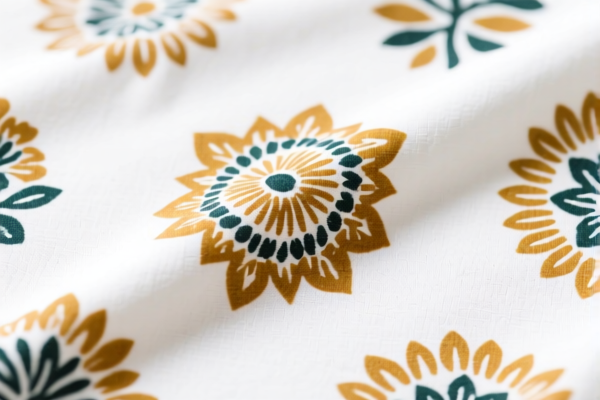
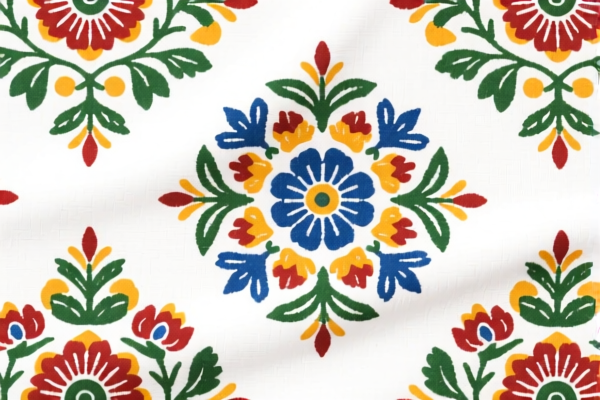
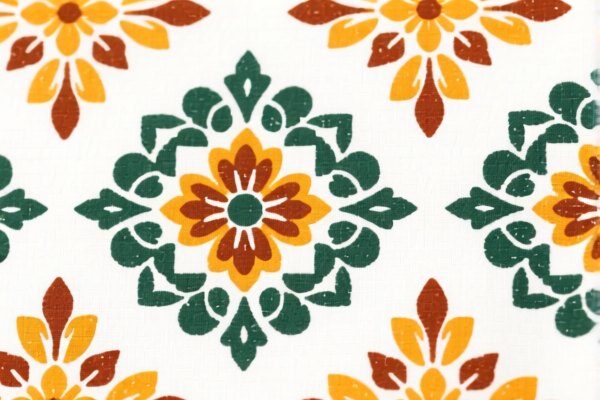
AI分析
🧵 Printed Image Fabric (花卉印花色面料)
🌐 HS Code Reference & Customs Clearance Guide | 2026 Latest Tariff Analysis | Strategic Import Strategy for US Market
📌 I. Product Definition & Classification: What Exactly is "Printed Image Fabric"?
"Printed Image Fabric" is a generic term that creates significant classification ambiguity in international trade. It generally refers to woven fabrics with floral or image patterns printed on the surface. However, the HS Code depends entirely on the base fiber material (Wool, Silk, Cotton, or Synthetic).
In the context of US imports from China, misclassification can lead to severe tariff penalties. Below is the precise breakdown based on fiber content.
⚠️ Critical Distinction Point:
- If the fabric is Wool/Fine Animal Hair → It is NOT clothing; it is raw material for tailoring.
- If the fabric is Silk → It is a luxury natural fiber product.
- If the fabric is Cotton → It is a common commodity, but subject to specific textile quotas/tariffs.
- If the fabric is Synthetic (Polyester) → It is the most common fast-fashion material, but heavily scrutinized under Section 301.
📦 II. HS Code Classification Details (2026 Latest Tariff Authority)
| HS Code | Product Description | Base Material | Pattern Type | Key Indicator |
|---|---|---|---|---|
5111.90.50.00 |
Woven Fabric of Wool or Fine Animal Hair | Wool / Fine Animal Hair | Printed (Floral/Image) | Soft, warm, non-synthetic feel |
5007.20.00.35 |
Woven Fabric of Silk | Silk | Printed (Floral/Image) | Shiny, smooth, natural protein fiber |
5208.51.60.60 |
Woven Cotton Fabric, Other Than Dyed or Printed | Cotton | Printed (Floral/Image) | Note: Description in data says "Printed", but HS 5208.51 often refers to specific weights weaves. Here treated as Cotton Printed. |
5208.52.40.55 |
Woven Cotton Fabric, Synthetic Fiber Mixed | Cotton / Mixed Fiber | Printed (Floral/Image) | Blend or specific cotton composition |
5407.54.00.20 |
Woven Fabric of Synthetic Filament | Polyester (Synthetic) | Printed (Floral/Image) | Durable, wrinkle-resistant, synthetic sheen |
🔍 Key Insight:
- Do NOT assume "Fabric" means one HS code. You must specify the Fiber Content (e.g., "100% Cotton Printed Fabric") on the commercial invoice.
- The term "Printed Image Fabric" is too vague for Customs. Use "Printed Woven Fabric" + Fiber Composition.
💰 III. 2026 Latest Tariff Rate Breakdown (Including Surcharge Policies)
✅ Applicable Country: United States (US)
✅ Origin: China (CN)
✅ Effective Date: November 10, 2025 (and ongoing)
🎯 1. Wool/Fine Animal Hair Fabric
HS Code: 5111.90.50.00
| Item | Content |
|---|---|
| Base Tariff Rate | 7.0% |
| Section 301 Surcharge (USITC) | +25.0% |
| IEEPA Surcharge (China-specific) | +10.0% |
| Total Effective Rate | 42.0% |
| Tax Calculation | CIF Value × 42.0% |
| De Minimis Exemption | ❌ Not Applicable |
| Legal Basis Path | USITC:5111.90.50.00 → FOOTNOTE:301.88.01 → IEEPA:9903.01.24 |
📌 Explanation:
- Wool fabrics are considered non-essential consumer goods.
- The 25% Section 301 tariff applies because it is a Chinese-origin textile.
- The 10% IEEPA tariff is a blanket surcharge on Chinese imports.
- Total: 42% is a high barrier. Consider sourcing from Vietnam or India to avoid these.
🎯 2. Silk Fabric
HS Code: 5007.20.00.35
| Item | Content |
|---|---|
| Base Tariff Rate | 0.0% |
| Section 301 Surcharge (USITC) | +25.0% |
| IEEPA Surcharge (China-specific) | +10.0% |
| Total Effective Rate | 35.0% |
| Tax Calculation | CIF Value × 35.0% |
| De Minimis Exemption | ❌ Not Applicable |
| Legal Basis Path | USITC:5007.20.00.35 → FOOTNOTE:301.88.01 → IEEPA:9903.01.24 |
📌 Note:
- Silk has a 0% base rate in normal trade.
- However, the 35% total (25% + 10%) makes it expensive.
- Silk is often a high-value item; ensure proper valuation to avoid audit flags.
🎯 3. Cotton Fabric (Specific Grades)
HS Codes: 5208.51.60.60 & 5208.52.40.55
| Item | Content |
|---|---|
| Base Tariff Rate | 11.4% |
| Section 301 Surcharge (USITC) | +25.0% |
| IEEPA Surcharge (China-specific) | +10.0% |
| Total Effective Rate | 46.4% |
| Tax Calculation | CIF Value × 46.4% |
| De Minimis Exemption | ❌ Not Applicable |
| Legal Basis Path | USITC:5208.xxxx → FOOTNOTE:301.88.01 → IEEPA:9903.01.24 |
📌 Warning:
- Cotton fabrics from China face the highest total burden (46.4%).
- Even though the base rate is 11.4%, the surcharges dominate the cost.
- Recommendation: Avoid importing printed cotton fabrics from China if possible. Switch to Bangladesh, Vietnam, or Turkey.
🎯 4. Polyester/Synthetic Filament Fabric
HS Code: 5407.54.00.20
| Item | Content |
|---|---|
| Base Tariff Rate | 14.9% |
| Section 301 Surcharge (USITC) | +7.5% |
| IEEPA Surcharge (China-specific) | +10.0% |
| Total Effective Rate | 32.4% |
| Tax Calculation | CIF Value × 32.4% |
| De Minimis Exemption | ❌ Not Applicable |
| Legal Basis Path | USITC:5407.54.00.20 → FOOTNOTE:301.88.01 → IEEPA:9903.01.24 |
📌 Insight:
- Polyester has a higher base rate (14.9%) but a lower Section 301 surcharge (7.5%) compared to natural fibers.
- Total 32.4% is relatively more favorable than Cotton (46.4%) or Wool (42%).
- This is the most common choice for fast fashion, but cost optimization is key.
🛠️ IV. Customs Clearance Practical Advice (Real-World Pitfall Guide)
✅ 1. Required Documentation Checklist (Non-Negotiable)
| Document | Mandatory? | Description |
|---|---|---|
| ✅ Commercial Invoice | ✔️ | Must specify "Printed Woven Fabric" + 100% Cotton/Poly/Wool/Silk |
| ✅ Packing List | ✔️ | Include dimensions, weight, and roll count |
| ✅ Fiber Content Statement | ✔️ | Certified lab report (e.g., ASTM D276) proving fiber composition |
| ✅ Certificate of Origin (CO) | ✔️ | Critical for proving Chinese origin (triggers surcharges) |
| ✅ Product Photos | ✔️ | Clear shots of fabric pattern, selvage, and label |
| ✅ Bill of Lading | ✔️ | Ensure description matches invoice exactly |
✅ 2. Declaration Tips (Key Mnemonics)
🔥 "Fiber First, Pattern Second, Origin Matters!"
| Scenario | Correct Declaration | Wrong Practice |
|---|---|---|
| Polyester Fabric | 5407.54.00.20 - "Printed Polyester Woven Fabric" |
"Textile Material" → Vague, leads to inspection |
| Cotton Fabric | 5208.51.60.60 - "Printed Cotton Woven Fabric" |
"Cotton Cloth" → Incomplete, may delay |
| Silk Fabric | 5007.20.00.35 - "Printed Silk Woven Fabric" |
"Luxury Fabric" → Not a valid HS description |
| Wool Fabric | 5111.90.50.00 - "Printed Wool Woven Fabric" |
"Wool Material" → Risk of misclassification |
✅ 3. Special Handling Scenarios
| Situation | Handling Advice |
|---|---|
| Mixed Fibers | If fabric is 50% Cotton, 50% Polyester, classify under the principal fiber. If equal, use the last in numerical order rule. |
| Small Sample Imports | Still subject to 32.4%–46.4% tariffs. De Minimis (Section 321) does NOT apply to textile goods from China due to IEEPA restrictions. |
| OEM Custom Prints | Provide design files. Ensure the print content doesn’t violate IP rights or contain prohibited imagery. |
| Roll vs. Cut | If shipped in rolls, use woven fabric HS codes. If cut into garments, use apparel HS codes (which may have different rates). |
🌍 V. Global Market Comparison (2026 Latest)
| Country/Region | Recommended HS Code (Example) | Base Tariff | China Surcharge | Total Tax | Notes |
|---|---|---|---|---|---|
| 🇺🇸 United States | 5407.54.00.20 (Polyester) |
14.9% | +17.5% (301+IEEPA) | 32.4% | Highest duty burden for textiles |
| 🇨🇳 China | 5407.54.00.20 |
7.0% | 0% | 7.0% | Low duty, but export taxes may apply |
| 🇪🇺 European Union | 5407.54.00 |
6.5% | 0% | 6.5% | No Section 301 equivalent |
| 🇬🇧 United Kingdom | 5407.54.00 |
8.0% | 0% | 8.0% | Post-Brexit tariff structure |
| 🇦🇺 Australia | 5407.54.00 |
5.0% | 0% | 5.0% | Free trade agreement with China |
📌 Conclusion:
- The US is the most expensive market for Chinese-printed fabrics due to Section 301 + IEEPA.
- Consider supply chain diversification to ASEAN countries (Vietnam, Indonesia) to bypass these tariffs.
- Polyester is the most tariff-efficient among the options listed (32.4% vs 46.4% for Cotton).
📌 VI. Common Mistakes & Pitfalls (Lessons Learned)
❌ Mistake 1: Declaring "Fabric" without fiber content
👉 Consequence: Customs issues a Request for Information (RFI), delaying shipment by 7–14 days.
❌ Mistake 2: Assuming small shipments qualify for de minimis
👉 Consequence: Full duty charged (32.4%–46.4%) on every parcel from China.
❌ Mistake 3: Using generic terms like "Printed Cloth"
👉 Consequence: Misclassification risk → Penalties + Back Taxes.
✅ Correct Practice:
"100% Polyester Printed Woven Fabric, Floral Pattern, Width 150cm, Weight 120gsm, HS 5407.54.00.20"
🎯 VII. Conclusion: Smart Sourcing, Lower Costs
🎯 Key Takeaways:
🔹 "Fiber determines the HS Code; Origin determines the Surcharge."
🔹 Cotton is the most expensive (46.4%) due to high base + surcharges.
🔹 Polyester is the most cost-effective (32.4%) among Chinese imports.
🔹 Always declare fiber content explicitly.
📌 Pro Tip:
If you are importing under $800 per shipment, note that Section 321 de minimis is currently suspended for Chinese textiles due to IEEPA. All shipments are taxed.
Consider consolidating shipments or using third-party logistics in Southeast Asia for re-export if possible.
📣 Immediate Action:
📞 Consult your customs broker for Pre-Ruling on complex blended fabrics.
📊 Compare landed costs for Polyester vs. Cotton vs. Silk for your specific product.
🚀 Optimize your supply chain to reduce tariff burden.
✨ Professional Classification Saves Money!
💼 Every percentage point of tariff impacts your bottom line.
用户评价
关于 HS 编码归类
协调制度(HS)是由世界海关组织(WCO)制定的国际贸易商品分类标准。全球 200 多个国家采用 HS 系统作为海关关税、贸易统计和进出口监管的基础。
每个 HS 编码遵循以下层级结构:
- 章(2 位)——商品大类(例如:第 84 章:机器和机械设备)
- 品目(4 位)——章内的更具体分类
- 子目(6 位)——国际通用细分,所有 WCO 成员国统一使用
- 本国细分(8-10 位)——各国自行扩展的细分编码,如美国 HTSUS 10 位编码
正确的 HS 编码归类对于顺利通关、准确缴纳关税和遵守贸易法规至关重要。错误归类可能导致海关延误、多缴关税或罚款。
从CN进口到US时,适用的关税税率可能包括:
- 最惠国(MFN)税率——适用于 WTO 成员国的标准关税税率
- 普通税率——适用于无贸易协定国家
- 贸易救济关税——附加关税,如 301 条款(反倾销)、232 条款(国家安全)或反补贴税
本页内容仅供参考。如需正式归类,请咨询当地海关或持牌报关代理。