Printing Machine Parts
CN → US| HS编码 | 关税税率 | 原产国 | 目的国 | 文档 |
|---|---|---|---|---|
| 8473509000 | 35.0% | CN | US | 官方文档 |
| 8485909000 | 35.0% | CN | US | 官方文档 |
| 8443193000 | 35.0% | CN | US | 官方文档 |
| 8442300150 | 35.0% | CN | US | 官方文档 |
| 8443321020 | 17.5% | CN | US | 官方文档 |
商品图片
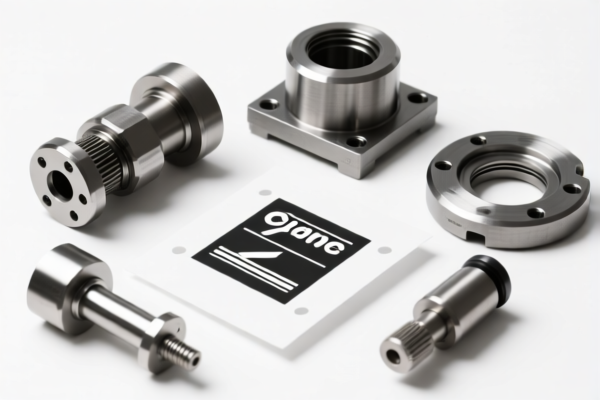
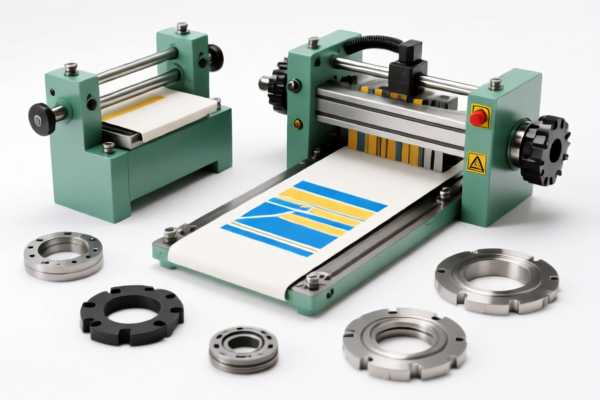
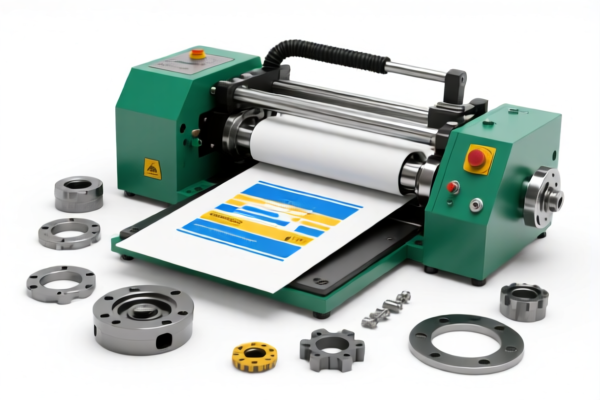
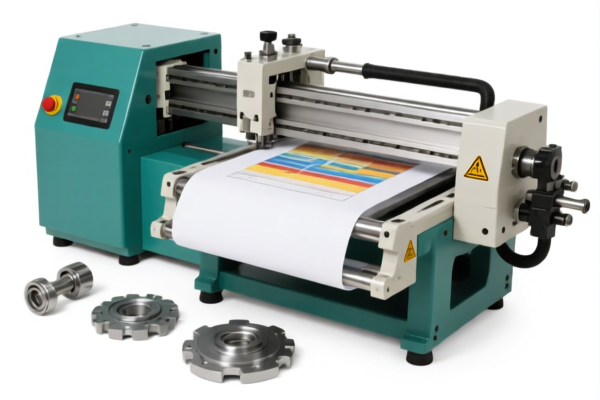
AI分析
🖨️ Printing Machine Parts (Components for Printing Equipment)
🌐 HS Code Reference & Customs Clearance Guide | 2026 Latest Tariff Analysis | Professional Entry Strategy
📌 I. Product Definition & Classification: Are You Declaring the Right Part?
"Printing Machine Parts" is a broad term in international trade. In the Harmonized System (HS), parts are classified based on the specific machinery they serve and their functionality.
The core distinction lies in whether the part is: 1. General Office/Computer Equipment Accessory: e.g., toner cartridges for printers, feed rollers for dot-matrix printers. 2. Industrial Printing Press Component: e.g., cylinders for gravure printing, ink ducts for offset presses. 3. Additive Manufacturing (3D Printing) Component: e.g., nozzles or build plates for 3D printers.
⚠️ Critical Distinction:
- If the part is for a computer peripheral (like a standard desktop printer), it often falls under Chapter 84 (Section XVII) or Chapter 85 accessories.
- If the part is for industrial printing presses (rotary, flexographic, etc.), it falls under Chapter 84, Heading 8442 or 8443.
- If the part is for 3D printing, it may be classified under 8485 or specific printer accessories.
📦 II. HS Code Classification Details (2026 Latest Tariff Authority Cross-Reference)
Based on the provided data, here are the 5 specific HS Codes applicable to different types of "Printing Machine Parts":
| HS Code | Product Description | Application Scenario | Key Characteristic |
|---|---|---|---|
8473.50.90.00 |
Parts for Office/Calculating/Printing Machinery | Parts for typewriters, stencil duplicators (oil duplicators), and other office printing machines. | No material conflict; general office accessory logic. |
8485.90.90.00 |
Parts for Additive Manufacturing (3D Printing) | Components for 3D printers (e.g., print heads, nozzles, build chambers). | Belong to "Additive Manufacturing" related components. |
8443.19.30.00 |
Printing Equipment / Units | Printing equipment units that match printing machinery functions exactly. | "Other category" logic; no material conflict. |
8442.30.01.50 |
Printing Equipment (Manufacturing Components) | Machinery used to manufacture printing components or specialized printing machinery. | "Other category" fallback logic; matches manufacturing of printing parts. |
8443.32.10.20 |
Printing Equipment (Printer Units) | Printer units (e.g., laser/inkjet engine units) consistent with printer functionality. | "Other category" logic; no material conflict. |
🔍 Key Reminder:
-8473.50.90.00is for traditional office printing parts (like duplicators).
-8443and8442are for industrial or advanced printing equipment/units.
-8485.90.90.00is specifically for 3D printing parts. Misclassifying 3D parts as office parts can lead to significant tax differences.
💰 III. 2026 Latest Tariff Rate Breakdown (Including Surcharges & Policy Add-ons)
✅ Applicable Country: United States (US)
✅ Country of Origin: China (CN)
✅ Effective Date: From November 10, 2025 (including subsequent imports)
🎯 1. 8473.50.90.00 – Parts for Oil Duplicators/Office Printing
| Item | Content |
|---|---|
| Base Tariff | 0.0% (ad valorem) |
| USITC Surcharge | +25.0% (Section 301 duties) |
| 122 Clause Tariff | +10.0% (Specific provision for certain Chinese goods) |
| Total Tariff Rate | 35.0% |
| Tax Calculation | CIF Value × 35% |
| De Minimis Exemption | ❌ Not Eligible (Deny de minimis) |
| Legal Basis Path | USITC:8473.50.90.00 → Section 301: 25% → 122 Clause: 10% |
📌 Explanation:
- "Base Tariff 0%" means the standard MFN duty is low, but Section 301 adds 25% and Clause 122 adds 10%.
- Total 35% is a high cost driver for office equipment parts.
🎯 2. 8485.90.90.00 – Parts for Additive Manufacturing (3D Printing)
| Item | Content |
|---|---|
| Base Tariff | 0.0% |
| USITC Surcharge | +25.0% |
| 122 Clause Tariff | +10.0% |
| Total Tariff Rate | 35.0% |
| Tax Calculation | CIF × 35% |
| De Minimis Exemption | ❌ Not Eligible |
| Legal Basis Path | USITC:8485.90.90.00 → Section 301: 25% → 122 Clause: 10% |
📌 Note:
- Despite "3D Printing" being a high-tech field, it is not exempt from current US-China trade tariffs.
- Ensure the product is explicitly identified as an additive manufacturing component to avoid misclassification under general machinery parts which might have different surcharges.
🎯 3. 8443.19.30.00 – Printing Equipment (General)
| Item | Content |
|---|---|
| Base Tariff | 0.0% |
| USITC Surcharge | +25.0% |
| 122 Clause Tariff | +10.0% |
| Total Tariff Rate | 35.0% |
| Tax Calculation | CIF × 35% |
| De Minimis Exemption | ❌ Not Eligible |
| Legal Basis Path | USITC:8443.19.30.00 → Section 301: 25% → 122 Clause: 10% |
🎯 4. 8442.30.01.50 – Printing Equipment (Manufacturing Machinery)
| Item | Content |
|---|---|
| Base Tariff | 0.0% |
| USITC Surcharge | +25.0% |
| 122 Clause Tariff | +10.0% |
| Total Tariff Rate | 35.0% |
| Tax Calculation | CIF × 35% |
| De Minimis Exemption | ❌ Not Eligible |
| Legal Basis Path | USITC:8442.30.01.50 → Section 301: 25% → 122 Clause: 10% |
🎯 5. 8443.32.10.20 – Printing Equipment (Printer Units)
| Item | Content |
|---|---|
| Base Tariff | 0.0% |
| USITC Surcharge | +7.5% |
| 122 Clause Tariff | +10.0% |
| Total Tariff Rate | 17.5% |
| Tax Calculation | CIF × 17.5% |
| De Minimis Exemption | ❌ Not Eligible |
| Legal Basis Path | USITC:8443.32.10.20 → Section 301: 7.5% (Note: Lower 301 rate for this specific subheading) → 122 Clause: 10% |
📌 Crucial Insight:
-8443.32.10.20is the most tariff-efficient option among the listed codes, with a 17.5% total rate vs. 35% for others.
- This lower 301 surcharge (7.5%) applies specifically to certain printer units. If your "parts" can be classified as integral printer units rather than generic components, this classification saves 17.5% in duties.
- Warning: This requires strong technical justification that the item is a "printer unit" (e.g., a complete print engine) and not just a spare part.
🛠️ IV. Customs Clearance Practical Advice (Pitfall Avoidance Guide)
✅ 1. Preparation Checklist (Non-negotiable)
| Document | Mandatory | Explanation |
|---|---|---|
| ✅ Product Specification Sheet | ✔️ | Must detail function, voltage, interface, and specific machine compatibility. |
| ✅ Technical Diagrams/Photos | ✔️ | To prove whether it's a "part," a "unit," or a "complete machine." |
| ✅ Commercial Invoice | ✔️ | Clearly state "Parts for [Specific Printing Machine Model]" not just "Printing Parts." |
| ✅ Packing List | ✔️ | Show if items are shipped as assemblies or loose parts. |
| ✅ Certificate of Origin (CO) | ✔️ | Essential for determining country of origin for 301/122 clauses. |
| ✅ FCC/CE Certification | ✔️ | Required for electronic components in printing equipment. |
✅ 2. Declaration Strategy (Key Mantras)
🔥 "Unit vs. Part, 17.5% or 35%? Name Matters!"
| Scenario | Correct Declaration | Wrong Approach |
|---|---|---|
| Complete Print Engine | 8443.32.10.20 (17.5%) |
Declared as "Part" → 8473.50.90.00 (35%) |
| 3D Printer Nozzle | 8485.90.90.00 (35%) |
Declared as "General Machine Part" → Risk of audit |
| Typewriter Ribbon Roller | 8473.50.90.00 (35%) |
Declared as "Industrial Press Part" → Mismatch |
| Offset Press Cylinder | 8442 or 8443 (35%) |
Declared as "Computer Part" → High Risk of Rejection |
✅ 3. Special Case Handling
| Situation | Advice |
|---|---|
| Hybrid Parts (3D + Office) | If a part is used in both, classify based on primary intended use or the higher tariff risk. |
| Kit Assemblies | If sold as a kit (e.g., print head + cable), declare as one unit to avoid split-rate confusion. |
| Aftermarket Parts | Must be clearly marked as "Aftermarket" or "Compatible with [Brand]" to avoid IP issues, but ensure HS code reflects function, not brand. |
| "Printer Unit" Claim | To use 8443.32.10.20 (17.5%), provide evidence that the part functions as a standalone printing engine or critical unit, not just a replaceable screw or roller. |
🌍 V. Global Market Comparison (2026 Update)
| Market | Recommended HS Code | Est. Total Duty (China Origin) | Key Requirement |
|---|---|---|---|
| 🇺🇸 USA | Varies (See above) | 17.5% - 35% | Strict 301/122 enforcement; detailed tech docs needed. |
| 🇨🇳 China | Varies | 5% - 8% | CCC certification for electronic parts. |
| 🇪🇺 EU | Varies | 0% - 4% | CE marking; generally no trade war surcharges. |
| 🇬🇧 UK | Varies | 0% - 5% | Post-Brexit rules; UKCA marking. |
📌 Conclusion:
- The US market is the most complex due to Section 301 and Clause 122.
- Cost Optimization Tip: If possible, restructure the product definition to fit8443.32.10.20(17.5%) instead of generic parts (35%). This requires engineering and documentation alignment.
📌 VI. Common Errors & Pitfalls (Lessons Learned)
❌ Error 1: Using "Printing Parts" as a generic description
👉 Result: Customs may assign a default higher tariff or request extensive clarification → Delay.
❌ Error 2: Misclassifying 3D printing parts as office printer parts
👉 Result: While both are 35%, the regulatory scrutiny differs. 3D printing may trigger additional export control checks.
❌ Error 3: Ignoring the 122 Clause
👉 Result: The 10% surcharge is often overlooked by shippers, leading to unexpected costs at destination.
❌ Error 4: Claiming 17.5% for a generic spare part
👉 Result: Customs will audit the technical specs. If it's a simple roller or belt, it won't qualify as a "Printer Unit" under 8443.32.10.20 → Back taxes + Penalties.
✅ Best Practice:
"Print Engine Unit, Model XYZ, for Digital Printing System, FCC Certified, Intended for Commercial Use"
🎯 VII. Conclusion: Precision Classification Saves Money
🎯 Remember the Mantra:
🔹 "Units are 17.5%, Parts are 35%."
🔹 "3D, Office, Industrial – Know Your Chapter."
🔹 "122 Clause adds 10% – Don't Forget It!"
📌 Pro Tip:
If your component is critical, consider Applying for an Advance Ruling from US Customs (CBP) to lock in the 17.5% classification for printer units if technically justifiable.
📣 Immediate Action:
📞 Consult with a licensed customs broker.
📄 Provide technical datasheets for HS Code Pre-classification.
🚀 Avoid surprises at the border.
✨ Professional Clearance Starts with Accurate Classification!
💼 Every percentage point counts in global trade.
用户评价
关于 HS 编码归类
协调制度(HS)是由世界海关组织(WCO)制定的国际贸易商品分类标准。全球 200 多个国家采用 HS 系统作为海关关税、贸易统计和进出口监管的基础。
每个 HS 编码遵循以下层级结构:
- 章(2 位)——商品大类(例如:第 84 章:机器和机械设备)
- 品目(4 位)——章内的更具体分类
- 子目(6 位)——国际通用细分,所有 WCO 成员国统一使用
- 本国细分(8-10 位)——各国自行扩展的细分编码,如美国 HTSUS 10 位编码
正确的 HS 编码归类对于顺利通关、准确缴纳关税和遵守贸易法规至关重要。错误归类可能导致海关延误、多缴关税或罚款。
从CN进口到US时,适用的关税税率可能包括:
- 最惠国(MFN)税率——适用于 WTO 成员国的标准关税税率
- 普通税率——适用于无贸易协定国家
- 贸易救济关税——附加关税,如 301 条款(反倾销)、232 条款(国家安全)或反补贴税
本页内容仅供参考。如需正式归类,请咨询当地海关或持牌报关代理。