Processed Chinese hemp tow
CN → US| HS编码 | 关税税率 | 原产国 | 目的国 | 文档 |
|---|---|---|---|---|
| 5302100000 | 35.0% | CN | US | 官方文档 |
| 5302900000 | 35.0% | CN | US | 官方文档 |
| 1404901000 | 0.0% | CN | US | 官方文档 |
| 1404909090 | 35.0% | CN | US | 官方文档 |
| 5308200000 | 35.0% | CN | US | 官方文档 |
商品图片
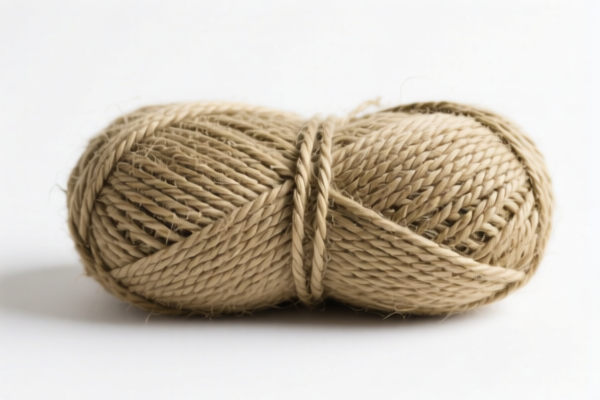
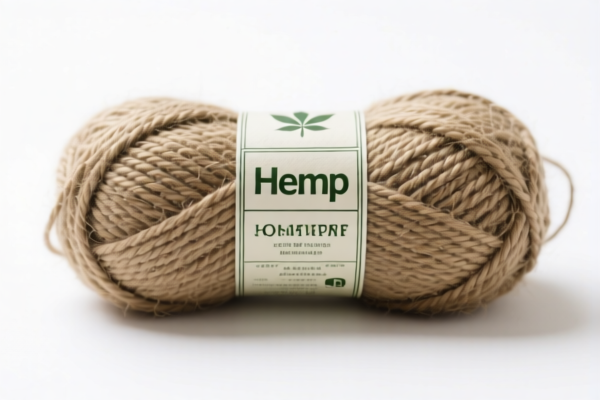
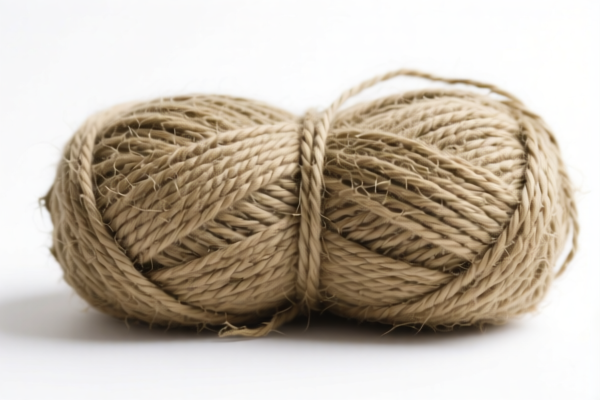
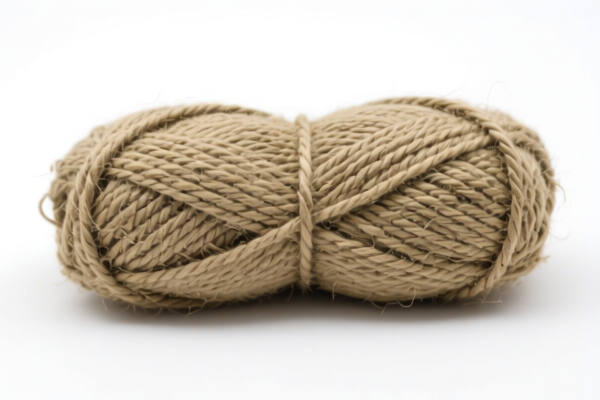
AI分析
🌿 Processed Chinese Hemp Tow (Industrial Hemp Fiber)
🌐 HS Code Reference & Customs Clearance Guide | 2026 Latest Tariff Analysis | Strategic Clearance Strategy for Hemp Products
📌 Part 1: Product Definition & Classification: Do You Really Understand "Processed Hemp Tow"?
Hemp tow, derived from Cannabis sativa L., is a versatile natural fiber widely used in construction (hempcrete), composites, textiles, and bioplastics. In international trade, the classification hinges on the state of processing:
Raw/Hackled Hemp (Tow): Fibers that have been separated from the woody core (shives) via retting and hacking but remain in a loose, unspun state. This includes "tow" (shorter fibers) and "line" (longer fibers). Processed/Refined Hemp: Fibers that have undergone further mechanical or chemical treatment but are still not spun into yarn.
⚠️ Key Classification Distinction:
- If the hemp is raw, hackled, or retted and in its natural fibrous state → Falls under Chapter 53 (Vegetable Textile Fibers)
- If the hemp is processed into non-textile industrial applications without spinning → May fall under Chapter 14 (Other Vegetable Products)
- Crucial Note: Once spun into yarn, it moves to Chapter 53/54. But "tow" implies unspun fibers.
📦 Part 2: HS Code Classification Details (2026 Latest Tariff Authority Comparison)
Based on the provided data for Processed Chinese Hemp Tow, here are the matched HS Codes and their rationales:
| HS Code | Product Description | Matching Rationale | Tax Status (China Origin → US) |
|---|---|---|---|
5302.10.00.00 |
Hemp, raw or retted; hackled or spun but not woven | ✅ Material Match: Fits "hemp" (Cannabis sativa L.). ✅ Form Match: "Tow" represents a semi-processed, unspun fiber state. ✅ Definition: Aligns with raw or steeped (retted) hemp definition. |
35.0% (Base 0% + USITC 25% + IEEPA 10%) |
5302.90.00.00 |
Other hemp | ✅ Material Match: Covers hemp fibers processed beyond raw/retted but not woven/spun. ✅ Form Match: Includes processed fibers like tow, if not explicitly "raw/retted". |
35.0% (Base 0% + USITC 25% + IEEPA 10%) |
1404.90.10.00 |
Other vegetable products (Plant fibers) | ✅ Material Match: Hemp is a plant fiber. No conflict with "vegetable fiber" category. ⚠️ Risk: Less specific than Chapter 53 for textile-grade hemp. |
0.5¢/kg + 35.0% (Specific Duty + Ad Valorem) |
1404.90.90.90 |
Other plant products (Miscellaneous) | ✅ Material Match: Classified as "other plant products" if not fitting other specific vegetable categories. ✅ No Conflict: Generic plant fiber classification. |
35.0% (Base 0% + USITC 25% + IEEPA 10%) |
5308.20.00.00 |
Yarn of other vegetable textile fibers | ✅ Material Match: Hemp is a vegetable fiber. ⚠️ Conflict Check: "Tow" is not yarn. This code is for yarn. However, some systems may loosely map if misclassified. Use with caution. |
35.0% (Base 0% + USITC 25% + IEEPA 10%) |
🔍 Critical Insight:
- Chapter 53 (5302.10/5302.90) is the most accurate for hemp tow as it specifically covers hemp fibers in their unspun state.
- Chapter 14 (1404.90) is a fallback for non-textile plant fibers. It may be used if the hemp is heavily processed for non-textile use (e.g., industrial absorbents).
-5308.20is likely a misclassification for "tow" since tow is not spun yarn. Only use if the product is actually spun into coarse yarn.
💰 Part 3: 2026 Latest Tariff Rate Breakdown (Including Surtaxes & Policy Add-ons)
✅ Applicable Country: United States (US)
✅ Country of Origin: China (CN)
✅ Effective Date: November 10, 2025 (and subsequent imports)
🎯 1. Primary Codes: 5302.10.00.00 & 5302.90.00.00 (Hemp Tow)
| Item | Content |
|---|---|
| Base Tariff Rate | 0% (Ad Valorem) |
| USITC Surtax (Section 301) | +25% (Footnote 9903.88.01 / 9903.88.02) |
| IEEPA Surtax (China-Specific) | +10% (Effective Nov 10, 2025, for Chinese-origin hemp products) |
| Total Tariff Rate | 35.0% |
| Tax Calculation | CIF Value × 35% |
| De Minimis Eligibility | ❌ Not Eligible (deny_de_minimis) |
| Legal Authority Path | IEEPA:9903.01.25 → USITC:5302.10.00.00 / 5302.90.00.00 |
📌 Explanation:
- 25% USITC Surtax: Applies to most textile fibers from China under Section 301.
- 10% IEEPA Surtax: New additional tariff targeting specific Chinese goods, including agricultural/fiber products.
- Total 35%: High cost impact. Must be factored into landed cost calculations.
🎯 2. Secondary Code: 1404.90.10.00 (Vegetable Fibers)
| Item | Content |
|---|---|
| Base Tariff Rate | 0.5¢/kg (Specific Duty) |
| USITC Surtax | +25% |
| IEEPA Surtax | +10% |
| Total Tariff Rate | 0.5¢/kg + 35.0% |
| Tax Calculation | (0.5¢ × Weight in kg) + (CIF Value × 35%) |
| De Minimis Eligibility | ❌ Not Eligible |
📌 Note: The specific duty of 0.5¢/kg is negligible for high-value hemp but adds complexity. The ad valorem component remains 35%.
🛠️ Part 4: Customs Clearance Practical Advice (Risk Mitigation Guide)
✅ 1. Required Documentation Checklist (Mandatory)
| Document | Required? | Notes |
|---|---|---|
| ✅ Commercial Invoice | ✔️ | Must clearly state: "Processed Hemp Tow, Cannabis sativa L., Non-Textile/Textile Use" |
| ✅ Packing List | ✔️ | Detail weight, volume, and packaging type |
| ✅ Certificate of Origin (CO) | ✔️ | Essential for verifying China origin (triggers 35% tariff) |
| ✅ Product Specification Sheet | ✔️ | Include: Fiber length, fineness, retting method, moisture content |
| ✅ Non-Seed/Non-Drug Declaration | ✔️ | Critical: Prove THC content <0.3% (US Federal Hemp Farming Act) |
| ✅ Bill of Lading | ✔️ | Standard shipping document |
✅ 2. Declaration Tips (Key Mnemonics)
🔥 “Hemp Tow, Not Yarn; Chapter 53, Stay Safe; THC Low, Declaration Flow; 35% Tax, Plan Ahead!”
| Scenario | Correct Declaration | Wrong Practice |
|---|---|---|
| Loose, unspun fibers | 5302.10.00.00 or 5302.90.00.00 |
Misclassify as "Yarn" → 5308.20 → Audit risk |
| Heavily processed for insulation | 1404.90.10.00 |
Use Chapter 53 if not textile-grade |
| With seeds attached | ❌ Prohibited | Must declare "Seed-Free" |
| Mixed with synthetic fibers | Declare composite nature | Single HS Code → Misdeclaration |
✅ 3. Special Case Handling
| Situation | Recommendation |
|---|---|
| OEM Custom Hemp Tow | Provide customer specs + material safety data sheet (MSDS) |
| Hemp Tow for Non-Textile Use (e.g., biocomposites) | Consider 1404.90.10.00 if Chapter 53 is challenged |
| Hemp Tow with High THC (>0.3%) | ❌ Cannot enter US without DEA/FDA exemption |
| Mixed Containers (Hemp + Other Fibers) | Split-line invoice required; assign HS codes per component |
🌍 Part 5: Global Market Comparison (2026 Latest)
| Country/Region | Recommended HS Code | Tariff (China Origin) | Certification | Notes |
|---|---|---|---|---|
| 🇺🇸 USA | 5302.10.00.00 |
35% | USDA (if for planting), Non-Seed Proof | High tariff due to 301 + IEEPA |
| 🇨🇳 China | 5302.10.00.00 |
0% (Domestic) | CCC (if textile) | No export tariffs |
| 🇪🇺 EU | 5302.10.00 |
0% (if organic) | GOTS, OEKO-TEX | No surtaxes |
| 🇬🇧 UK | 5302.10.00 |
0% | UKCA (if applicable) | Post-Brexit tariffs low |
| 🇯🇵 Japan | 5302.10.00 |
0% | JAS (if organic) | No surtaxes |
📌 Conclusion:
- USA is the only major market with high surtaxes (35%) for Chinese hemp tow.
- EU, UK, Japan, and China have low or zero tariffs, making them more cost-effective for hemp products.
- Strategy: Consider transshipment or third-country processing (if rules of origin are met) to mitigate US tariffs, but ensure compliance with de minimis and origin rules.
📌 Part 6: Common Mistakes & Pitfalls (Lessons Learned)
❌ Mistake 1: Declaring hemp tow as "textile yarn" when it’s unspun
👉 Consequence: Misclassification → 5308.20 → Audit, penalties, or detention.
❌ Mistake 2: Failing to prove THC <0.3%
👉 Consequence: Seizure & Deportation by CBP/DEA. Hemp is regulated as a controlled substance if THC exceeds limits.
❌ Mistake 3: Ignoring IEEPA 10% Surtax
👉 Consequence: Underpayment → Back taxes + Interest + Penalties.
❌ Mistake 4: Using generic "Plant Fiber" code for textile-grade hemp
👉 Consequence: Potential audit for preferential treatment misuse.
✅ Correct Approach:
“Hemp Tow, Cannabis sativa L., Retted & Hackled, THC <0.3%, Unspun Fiber, for Industrial Use, Model HT-2024, USDA Compliant”
🎯 Part 7: Conclusion: Smart Classification, Cost Control, Smooth Clearance!
🎯 Remember the Mnemonic:
🔹 “Hemp Tow, Chapter 53, 35% Tax is High; THC Proof, Docs Ready, Avoid the Sky!”
🔹 “HS Code Decides Fate, 35% Gap, Misdeclare, Pay the Gap!”
📌 Pro Tip:
If your hemp tow is originating from Canada, EU, or other non-China sources, you may avoid the 35% surtax. However, Chinese hemp tow is heavily taxed.
Consider:
1. Pre-Ruling Request: File a Binding Ruling with CBP to confirm HS Code.
2. Supply Chain Diversification: Source hemp from low-tariff countries if targeting the US market.
3. Value-Add Processing: If processed into non-textile goods in a third country, rules of origin may apply.
📣 Take Action Now:
📞 Consult a Licensed Customs Broker + Provide THC Lab Report + Request CBP Pre-Ruling
🚀 Ensure Smooth Clearance, Minimize Taxes, Maximize Profits!
✨ Professional Clearance Starts with Accurate Classification!
💼 Every Penny Saved is Profit Gained!
用户评价
关于 HS 编码归类
协调制度(HS)是由世界海关组织(WCO)制定的国际贸易商品分类标准。全球 200 多个国家采用 HS 系统作为海关关税、贸易统计和进出口监管的基础。
每个 HS 编码遵循以下层级结构:
- 章(2 位)——商品大类(例如:第 84 章:机器和机械设备)
- 品目(4 位)——章内的更具体分类
- 子目(6 位)——国际通用细分,所有 WCO 成员国统一使用
- 本国细分(8-10 位)——各国自行扩展的细分编码,如美国 HTSUS 10 位编码
正确的 HS 编码归类对于顺利通关、准确缴纳关税和遵守贸易法规至关重要。错误归类可能导致海关延误、多缴关税或罚款。
从CN进口到US时,适用的关税税率可能包括:
- 最惠国(MFN)税率——适用于 WTO 成员国的标准关税税率
- 普通税率——适用于无贸易协定国家
- 贸易救济关税——附加关税,如 301 条款(反倾销)、232 条款(国家安全)或反补贴税
本页内容仅供参考。如需正式归类,请咨询当地海关或持牌报关代理。