Processed Natural Rubber
CN → US| HS编码 | 关税税率 | 原产国 | 目的国 | 文档 |
|---|---|---|---|---|
| 4016993000 | 35.0% | CN | US | 官方文档 |
| 4008111000 | 35.0% | CN | US | 官方文档 |
| 4001100000 | 35.0% | CN | US | 官方文档 |
| 4001290000 | 35.0% | CN | US | 官方文档 |
| 4016993510 | 35.0% | CN | US | 官方文档 |
| 4001210030 | 35.0% | CN | US | 官方文档 |
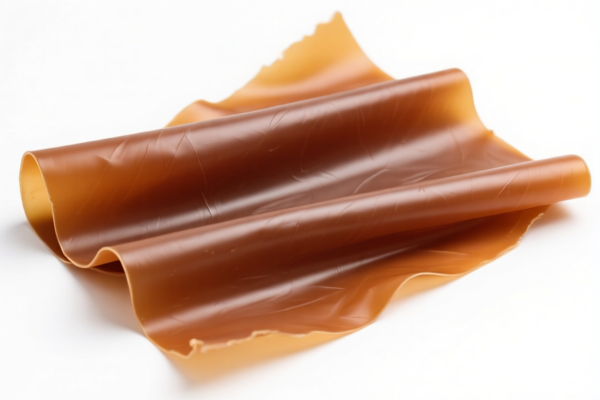
商品图片



AI分析
🧪 Natural Rubber (Processed) – The Backbone of Global Manufacturing
🌐 HS Code Reference & Customs Clearance Guide | 2026 Latest Tariff Analysis | Professional Entry Strategy
📌 I. Product Definition: What Exactly Is "Processed Natural Rubber"?
Natural rubber, when processed, refers to the raw latex from the Hevea brasiliensis tree that has been coagulated, dried, or otherwise treated for transport and further manufacturing. It is the primary raw material for tires, gloves, tubing, and industrial components.
In international trade, the classification depends heavily on its physical form and degree of processing:
- Sheets (Smoked Sheets/Crepe Sheets): Dried in sheets, often smoked to prevent mold. Highly common for tire treads.
- Blocks/Cubes: Compressed blocks of rubber, often used for general industrial purposes.
- Latex (Liquid): Emulsified rubber, used for dipped goods (gloves, balloons).
- Lumps/Scrap: Less refined forms, often used for recycling or low-grade products.
⚠️ Key Distinction:
- If it is raw, unvulcanized rubber in basic forms (sheets, blocks, latex) → Chapter 40 (Rubber and Articles Thereof).
- If it is vulcanized (hardened/rubberized into final parts like tires or mats) → It may fall under Chapter 40 (Articles) or other chapters depending on the specific end-use (e.g., tires in 4011).
- Note: The HS codes provided in the data below all relate to raw/semi-processed natural rubber (Chapter 40 Headings 4001, 4008, 4016), not finished vulcanized goods.
📦 II. HS Code Classification Details (Based on Provided Data)
The following HS codes represent potential classifications for "Processed Natural Rubber" based on the input data. The classification hinges on the specific physical state (sheet, block, lump) and whether it is a "general purpose" or "specialized" form.
| HS Code | Product Description | Physical Form / Characteristics | Summary from Data |
|---|---|---|---|
| 4001.10.00.00 | Sheets, strips, or plates of natural rubber | Typically "Smoked Sheets" (RSS) or "Crepe Sheets". The most standard form for export. | "Contains natural rubber; fits core material requirements for this category." |
| 4001.21.00.30 | Concentrated natural rubber latex (or similar specific natural rubber form) | Latex or specific technical forms not listed elsewhere. | "Natural rubber matches classification material completely." |
| 4001.29.00.00 | Other natural rubber (e.g., specific processed blocks, lumps, or non-specified forms) | Any natural rubber not covered by 4001.10 (sheets) or 4001.21/22 (latex). | "Contains natural rubber; no conflict in form or usage found." |
| 4008.11.10.00 | Plates, sheets, or strip of natural rubber (vulcanized or not) | Usually refers to compounded or specifically treated natural rubber plates/strips, possibly with additives. | "Product name includes natural rubber; preference based on material due to lack of form description." |
| 4016.99.30.00 | Other articles of vulcanized rubber other than hard rubber (General Fallback) | A "catch-all" category if the rubber is in a specific article form (e.g., gaskets, seals) that doesn't fit other specific headings. | "Matches natural rubber material; usage vague but no conflict; fits fallback category." |
| 4016.99.35.10 | Other articles of vulcanized rubber (Specific Fallback) | Similar to above, often used for specific industrial rubber goods. | "Explicitly natural rubber; consistent with material attributes; based on fallback rules for 'other' categories." |
🔍 Critical Analysis:
- Headings 4001.10, 4001.21, 4001.29 are the primary choices for raw/processed natural rubber in basic forms (sheets, latex, blocks).
- Heading 4008 usually applies to plates/sheets/strips that may be compounded or have specific physical properties distinct from raw 4001 sheets.
- Headings 4016.99.30/35.10 are fallbacks. They should only be used if the rubber is already formed into an article (like a seal, gasket, or mat) rather than a raw material. If you are shipping raw rubber bales/sheets, these codes are likely incorrect.
💰 III. 2026 Latest Tariff Rate Breakdown (Including Surtaxes & Policy Add-ons)
✅ Applicable Country: United States (US)
✅ Country of Origin: China (CN)
✅ Effective Date: November 10, 2025 (and subsequent imports)
🎯 1. General Rate for Natural Rubber HS Codes (4001, 4008, 4016 variants)
| Item | Content |
|---|---|
| Base Duty Rate | 0.0% (Ad Valorem) |
| USITC Surcharge (Section 301) | +25.0% |
| IEEPA Surcharge (122 Clause) | +10.0% |
| Total Effective Tariff Rate | 35.0% |
| Tax Calculation | CIF Value × 35% |
| De Minimis Exemption | ❌ Not Eligible (deny_de_minimis) |
| Legal Basis Path | USITC:4001.10.00.00 → FOOTNOTE:301 (25%) → IEEPA:122 (10%) |
📌 Explanation:
- Base Rate (0%): Natural rubber is often exempt from base duties to encourage US manufacturing, but this is overridden by trade wars.
- 25% Section 301 Tariff: Imposed by the USITC on Chinese goods to address trade imbalances.
- 10% IEEPA Tariff (122 Clause): A specific additional tariff applied to Chinese products under the International Emergency Economic Powers Act.
- Total 35%: This is a significant cost for importers. The margin for raw material importation must account for this.
🛠️ IV. Customs Clearance Practical Advice (Real-World Pitfall Avoidance)
✅ 1. Document Checklist (Mandatory)
| Document | Required | Purpose |
|---|---|---|
| ✅ Certificate of Origin (CO) | ✔️ | Proves Chinese origin (triggers the 35% tax). If shipped from Vietnam/Malaysia, different rules apply. |
| ✅ Commercial Invoice | ✔️ | Must clearly state "Natural Rubber" and the specific type (e.g., "RSS3 Smoke Sheet"). |
| ✅ Bill of Lading (B/L) | ✔️ | Matches invoice weight and value. |
| ✅ Quality Specification Sheet | ✔️ | Crucial to distinguish between 4001 (raw) and 4008/4016 (processed articles). |
| ✅ Phytosanitary Certificate | ✔️ | Often required for plant-based products to prove freedom from pests/diseases. |
| ✅ MSDS (Material Safety Data Sheet) | ✔️ | Required by US Customs and FDA (if applicable) for chemical safety. |
✅ 2. Declaration Tips (Key Mantras)
🔥 "Form Defines Code, Origin Defines Tax!"
| Scenario | Correct HS Code | Incorrect Code | Risk |
|---|---|---|---|
| Raw Smoke Sheets (RSS) | 4001.10.00.00 |
4016.99.30.00 |
Over-complication; potential scrutiny. |
| Liquid Latex | 4001.21.00.30 |
4001.10.00.00 |
Misclassification Penalty + Retroactive Tax. |
| Rubber Gaskets/Seals (Finished) | 4016.99.30.00 |
4001.10.00.00 |
Under-declaration of Duty if 4001 was cheaper (though here both are 35%, accuracy is key for regulations). |
| Compounded Rubber Sheets (with additives) | 4008.11.10.00 |
4001.10.00.00 |
Discrepancy in material description. |
✅ 3. Special Case Handling
| Situation | Handling Advice |
|---|---|
| Transshipment via 3rd Country | If rubber is processed in Vietnam and shipped to US, may avoid 35% tariff. Requires proof of substantial transformation. |
| Hybrid Products | If rubber is mixed with synthetic rubber, check % composition. If >50% natural, 4001 may apply. |
| Sampling/Testing | Customs may hold shipment for lab testing to verify "Natural" vs. "Synthetic". Allow extra 7-10 days. |
🌍 V. Global Market Comparison (2026 Latest)
| Country/Region | Recommended HS Code | Duty Rate (CN Origin) | Certification Required | Notes |
|---|---|---|---|---|
| 🇺🇸 USA | 4001.10.00.00 |
35% | FDA/MSDS/Phytosanitary | High tariff wall. |
| 🇨🇳 China | 4001.10.00.00 |
0% (Import Duty) | N/A | China is a major exporter, not importer of raw rubber. |
| 🇪🇺 EU | 4001.10.00.00 |
0% - 2% | REACH Registration | No major surtaxes like US. |
| 🇯🇵 Japan | 4001.10.00.00 |
0% | JIS Standard | Favorable trade agreement possible. |
| 🇻🇳 Vietnam | 4001.10.00.00 |
0% | Phytosanitary | Hub for re-processing and re-export. |
📌 Conclusion:
- The US is the most expensive market for Chinese natural rubber due to the 35% combined tariff.
- EU and Japan offer significantly lower barriers (0-2%), making them more attractive for direct exports from China.
- Vietnam/Malaysia are key hubs for transshipment or re-processing to mitigate US tariffs.
📌 VI. Common Mistakes & Pitfalls (Lessons Learned)
❌ Mistake 1: Declaring "Rubber Sheets" as 4016.99.30.00 when they are raw RSS sheets.
👉 Consequence: While the tax rate is the same (35%), the regulatory compliance requirements differ (e.g., FDA vs. General Customs). Misclassification can lead to audits.
❌ Mistake 2: Ignoring the IEEPA 10% Surcharge.
👉 Consequence: Underestimating landed cost by 10%. Budgeting must include the full 35%.
❌ Mistake 3: Failing to provide a Phytosanitary Certificate.
👉 Consequence: Shipment detained at US port for inspection. Demurrage costs can exceed the duty itself.
❌ Mistake 4: Confusing Latex with Solid Rubber.
👉 Consequence: Wrong HS Code (e.g., 4001.21 vs 4001.10). While tax may be similar, the description must match the physical state.
✅ Correct Practice:
"Natural Rubber, Smoke Sheets (RSS3), 20MT, HS Code 4001.10.00.00, Origin China, CIF Los Angeles, MSDS Attached, Phytosanitary Cert Attached."
🎯 VII. Conclusion: Professional Classification, Cost Control, and Compliance
🎯 Remember the Mantra:
🔹 "Natural Rubber Raw? Think 4001. Articles? Think 4016."
🔹 "US Importers? Budget 35%. No Surprises."
🔹 "Paperwork is Key: CoO, MSDS, Phyto are Non-Negotiable."
📌 Pro Tip:
If your product is vulcanized (hardened), it is NOT natural rubber raw material. It is a "Rubber Article."
- Tires → 4011
- Gloves → 4015
- Hoses → 4009
Ensure you are not misclassifying finished goods as raw materials to avoid severe penalties.
📣 Immediate Action:
📞 Consult a licensed customs broker for Pre-Classification Ruling if unsure about the form (Sheet vs. Article).
🚀 Calculate landed cost including 35% duty + insurance/freight to ensure profitability.
✨ Precision in Classification Saves Millions!
💼 Your Supply Chain's Success Depends on the First Line of Data Entry!
用户评价
关于 HS 编码归类
协调制度(HS)是由世界海关组织(WCO)制定的国际贸易商品分类标准。全球 200 多个国家采用 HS 系统作为海关关税、贸易统计和进出口监管的基础。
每个 HS 编码遵循以下层级结构:
- 章(2 位)——商品大类(例如:第 84 章:机器和机械设备)
- 品目(4 位)——章内的更具体分类
- 子目(6 位)——国际通用细分,所有 WCO 成员国统一使用
- 本国细分(8-10 位)——各国自行扩展的细分编码,如美国 HTSUS 10 位编码
正确的 HS 编码归类对于顺利通关、准确缴纳关税和遵守贸易法规至关重要。错误归类可能导致海关延误、多缴关税或罚款。
从CN进口到US时,适用的关税税率可能包括:
- 最惠国(MFN)税率——适用于 WTO 成员国的标准关税税率
- 普通税率——适用于无贸易协定国家
- 贸易救济关税——附加关税,如 301 条款(反倾销)、232 条款(国家安全)或反补贴税
本页内容仅供参考。如需正式归类,请咨询当地海关或持牌报关代理。