Production Record Book
CN → US| HS编码 | 关税税率 | 原产国 | 目的国 | 文档 |
|---|---|---|---|---|
| 4820104000 | 35.0% | CN | US | 官方文档 |
| 4820102060 | 35.0% | CN | US | 官方文档 |
商品图片
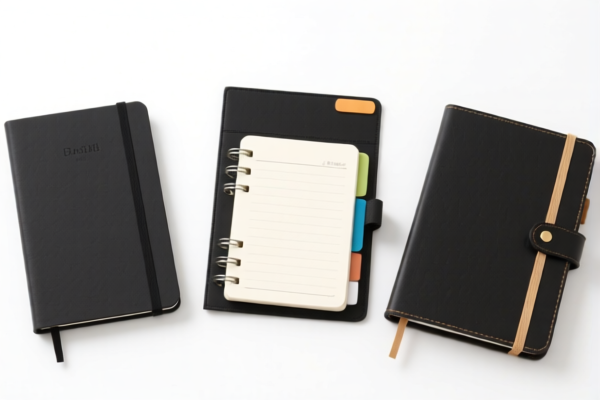
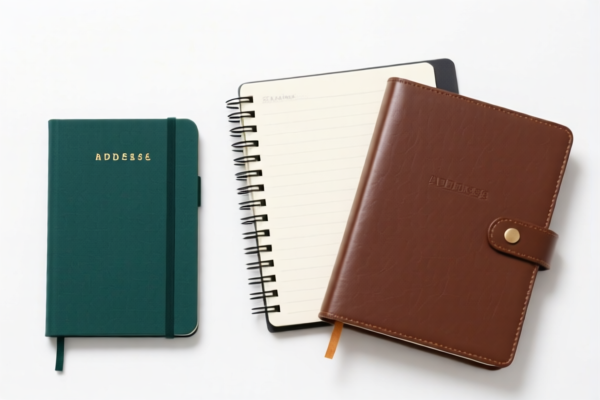


AI分析
📓 Production Record Book (Registers, Account Books, Notebooks, Order Books, Receipt Books, Letter Pads, Memorandum Pads, Diaries and Similar Articles, Exercise Books, Blotting Pads, Binders (Looseleaf or Other), Folders, File Covers, Manifold Business Forms, Interleaved Carbon Sets and Other Articles of Stationery, of Paper or Paperboard; Albums for Samples or for Collections and Book Covers (Including Cover Boards and Book Jackets) of Paper or Paperboard)
🌐 HS Code Reference & Clearance Guide | 2026 Latest Tariff Analysis | Professional Clearance Strategy
📌 I. Product Definition & Classification: Do You Really Understand "Production Record Books"?
Production Record Books are essential documentation tools in manufacturing, quality control, and administrative workflows. In international trade, they fall under the broader category of stationery of paper or paperboard. They are not merely "notebooks" but specialized forms of registers, account books, order books, receipt books, letter pads, memorandum pads, diaries, and similar articles.
Key Classification Points:
- Material: Must be made of paper or paperboard.
- Function: Used for recording, registering, or ordering purposes (e.g., production logs, account ledgers, order receipts).
- Structure: Can be bound, loose-leaf, or loose sheets in folders.
⚠️ Critical Distinction:
- If it is a bound diary, notebook, or address book → It falls under 4820.10.20.60.
- If it is an other type of register, account book, or similar article not specifically listed as bound diaries/notebooks → It falls under 4820.10.40.00.
- Do NOT classify as "electronic records" or "digital logs" — this classification applies only to physical paper products.
📦 II. HS Code Classification Details (2026 Latest Tariff Authoritative Comparison)
| HS Code | Product Description | Applicable Scenario | Binding Type |
|---|---|---|---|
4820.10.20.60 |
Diaries, notebooks, and address books, bound; memorandum pads, letter pads, and similar articles Other | Bound production logs, bound diary-style record books, letter pads | ✅ Bound |
4820.10.40.00 |
Registers, account books, notebooks, order books, receipt books, letter pads, memorandum pads, diaries, and similar articles: Other | Unbound or loose-leaf record books, other specialized registers not classified as bound diaries/notebooks | ❌ Not specifically bound as diary/notebook |
🔍 Key Reminder:
- Bound record books (like diaries) go to4820.10.20.60.
- Other record books (loose-leaf, specific registers) go to4820.10.40.00.
- Both are made of paper or paperboard.
- Do not confuse with plastic binders (which may fall under different categories if not primarily paper-based).
💰 III. 2026 Latest Tariff Rate Details (Including Surtaxes, Policy Surcharges)
✅ Applicable Country: United States (US)
✅ Country of Origin: China (CN)
✅ Effective Date: From November 10, 2025 (including subsequent imports)
🎯 1. 4820.10.20.60 —— Diaries, Notebooks, Address Books, Bound; Memorandum Pads, Letter Pads, and Similar Articles (Other)
| Item | Details |
|---|---|
| Base Tariff Rate | 0% (ad valorem) |
| USITC Surtax | +25% (from USITC Footnote 9903.88.01) |
| IEEPA Surtax | +10% (for China/HK products, effective Nov 10, 2025) |
| Total Tariff Rate | 35% |
| Tax Calculation | CIF Value × 35% |
| De Minimis Exemption Eligible | ❌ Not Eligible (deny_de_minimis) |
| Legal Basis Path | IEEPA:9903.01.25 → IEEPA:9903.01.24 → USITC:4820.10.20.60 → FOOTNOTE:9903.88.01 |
📌 Explanation:
- The 25% USITC surtax is part of the "Section 301" additional tariffs against China.
- The 10% IEEPA surtax is an additional tariff under the International Emergency Economic Powers Act.
- Total: 35% — a significant cost factor that must be factored into pricing.
🎯 2. 4820.10.40.00 —— Registers, Account Books, Notebooks, Order Books, Receipt Books, Letter Pads, Memorandum Pads, Diaries, and Similar Articles: Other
| Item | Details |
|---|---|
| Base Tariff Rate | 0% (ad valorem) |
| USITC Surtax | +25% |
| IEEPA Surtax | +10% |
| Total Tariff Rate | 35% |
| Tax Calculation | CIF Value × 35% |
| De Minimis Exemption Eligible | ❌ Not Eligible (deny_de_minimis) |
| Legal Basis Path | IEEPA:9903.01.25 → IEEPA:9903.01.24 → USITC:4820.10.40.00 → FOOTNOTE:9903.88.01 |
📌 Note:
- Same tariff structure as4820.10.20.60.
- Applies to other types of paper stationery used for registration, ordering, or recording.
- Whether it’s a loose-leaf binder, manifold form, or specialized register, the rate is consistent.
🛠️ IV. Clearance Practical Advice (Real-World Pitfall Avoidance Guide)
✅ 1. Required Documentation List (All Mandatory)
| Document | Must Provide | Description |
|---|---|---|
| ✅ Product Specification Sheet | ✔️ | Includes material (paper type), size, binding type (bound/loose), quantity of pages |
| ✅ Product Photos | ✔️ | Clear images of the book, cover, binding, and sample page content |
| ✅ Commercial Invoice | ✔️ | Must clearly state “Production Record Book, Paper” or similar |
| ✅ Packing List | ✔️ | Details net/gross weight, number of units, packaging type |
| ✅ Certificate of Origin (CO) | ✔️ | If non-China origin, may apply for preferential rates |
| ✅ Bill of Lading | ✔️ | Standard shipping document |
✅ 2. Declaration Tips (Key Mantras)
🔥 “Paper Basis, Clear Function, Bind Type Matters, 35% Is the Rate!”
| Scenario | Correct Declaration | Wrong Practice |
|---|---|---|
| Bound diary-style record book | 4820.10.20.60 |
Misdeclare as loose sheets → 35% (still same, but risk of inspection) |
| Loose-leaf production log | 4820.10.40.00 |
Misdeclare as electronic device → 0% (but rejected) |
| Packaged with plastic binders | Still 4820.10.40.00 if primary material is paper | Declaring as plastic goods → Different HS Code, potential penalty |
| Digital tablet for record-keeping | NOT 4820 | Must declare as electronic device (e.g., 8471.xx) |
✅ 3. Special Cases Handling
| Scenario | Handling Advice |
|---|---|
| OEM Custom Record Books | Provide design specs + customer order to prove custom nature |
| Record Books with Pre-Printed Forms | Still falls under 4820.10.40.00 or 4820.10.20.60 depending on binding |
| Mixed Packages (Paper + Electronic) | Separate declaration for each item; do not combine |
| Used/Recycled Paper Books | May require additional environmental compliance documents |
🌍 V. Global Market Clearance Comparison (2026 Latest)
| Country/Region | Recommended HS Code | Tariff | Certification Required | Notes |
|---|---|---|---|---|
| 🇺🇸 USA | 4820.10.20.60 / 4820.10.40.00 |
35% (China origin) | None | High tariff, no de minimis |
| 🇨🇳 China | 4820.10.20.60 / 4820.10.40.00 |
0-10% | None | Lower tariffs, import-friendly |
| 🇪🇺 EU | 4820.10.20.60 / 4820.10.40.00 |
0-6.5% | CE (if applicable) | No surtaxes |
| 🇦🇺 Australia | 4820.10.20.60 / 4820.10.40.00 |
5% | None | Moderate tariff |
| 🇯🇵 Japan | 4820.10.20.60 / 4820.10.40.00 |
0-8% | PSE (if electronic) | No surtaxes |
📌 Conclusion:
- USA imposes a 35% total tariff on Chinese-origin paper stationery.
- EU, Japan, Australia have significantly lower or zero tariffs.
- Consider supply chain diversification if targeting the US market.
📌 VI. Common Mistakes & Pitfall Avoidance (Lessons Learned)
❌ Mistake 1: Declaring a bound diary as a loose-leaf notebook
👉 Consequence: Wrong HS Code → Potential audit, delays, or penalties.
❌ Mistake 2: Claiming de minimis exemption for shipments under $800
👉 Consequence: Denied (deny_de_minimis) → Full 35% tariff applied.
❌ Mistake 3: Misclassifying electronic record keepers as paper products
👉 Consequence: Rejection of entry, fines, or seizure.
❌ Mistake 4: Omitting binding type in description
👉 Consequence: Customs may reclassify, leading to delays.
✅ Correct Practice:
“Production Record Book, Paper, Bound, 100 Pages, Model XYZ, For Manufacturing Use”
🎯 VII. Conclusion: Professional Declaration, Save Time & Cost!
🎯 Remember the Mantra:
🔹 “Paper is Key, Bound or Loose, 35% Is the Rate, No De Minimis, Be Precise!”
🔹 “HS Code Determines Duty, 35% Can Hurt, Declaring Right Saves Money!”
📌 Pro Tip:
If your product is originating from Vietnam, Mexico, Thailand, or Malaysia, you may be eligible for IEEPA exemptions or lower tariffs under trade agreements.
Consider applying for an Advance Ruling before shipment to avoid clearance risks.
📣 Take Action Now:
📞 Contact a professional customs broker + Provide product photos + Apply for HS Code Advance Ruling
🚀 Ensure smooth clearance, reduce costs, and boost your export efficiency!
✨ Professional clearance starts with accurate classification!
💼 Every cent of cost deserves precise calculation!
用户评价
关于 HS 编码归类
协调制度(HS)是由世界海关组织(WCO)制定的国际贸易商品分类标准。全球 200 多个国家采用 HS 系统作为海关关税、贸易统计和进出口监管的基础。
每个 HS 编码遵循以下层级结构:
- 章(2 位)——商品大类(例如:第 84 章:机器和机械设备)
- 品目(4 位)——章内的更具体分类
- 子目(6 位)——国际通用细分,所有 WCO 成员国统一使用
- 本国细分(8-10 位)——各国自行扩展的细分编码,如美国 HTSUS 10 位编码
正确的 HS 编码归类对于顺利通关、准确缴纳关税和遵守贸易法规至关重要。错误归类可能导致海关延误、多缴关税或罚款。
从CN进口到US时,适用的关税税率可能包括:
- 最惠国(MFN)税率——适用于 WTO 成员国的标准关税税率
- 普通税率——适用于无贸易协定国家
- 贸易救济关税——附加关税,如 301 条款(反倾销)、232 条款(国家安全)或反补贴税
本页内容仅供参考。如需正式归类,请咨询当地海关或持牌报关代理。