Pulp Deinking Chemicals
CN → US商品图片
AI分析
📄 Pulp Deinking Chemicals (Deinking Additives)
🌐 HS Code Reference & Customs Clearance Guide | 2026 Latest Tariff Analysis | Professional Clearance Strategy for Paper Recycling
📌 Part 1: Product Definition & Classification: What are "Deinking Chemicals"?
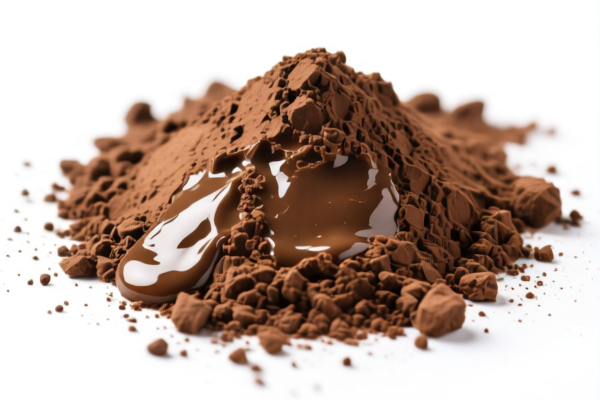
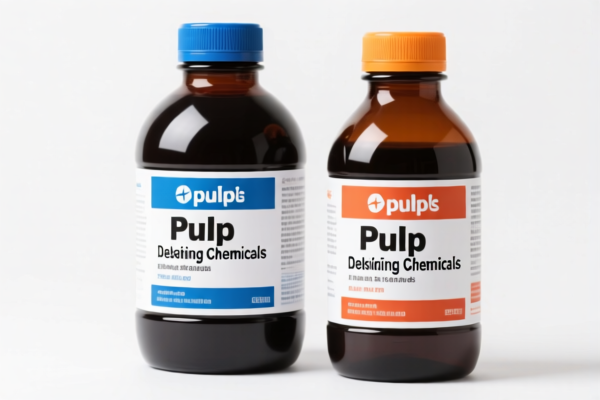
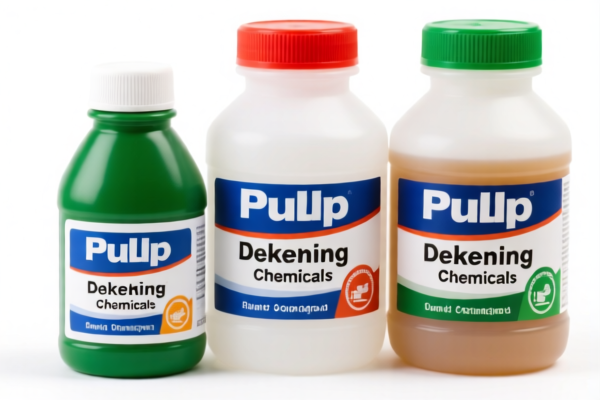
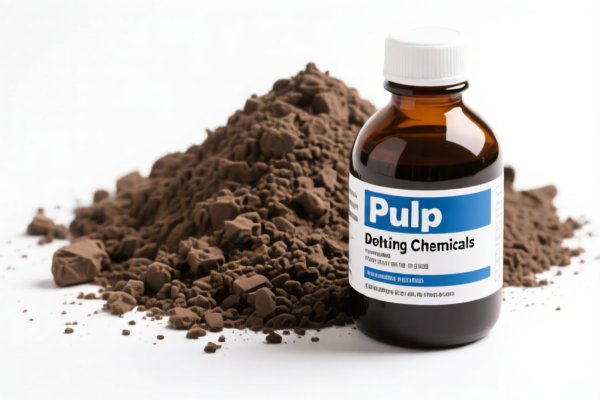
Deinking chemicals are specialized chemical additives used in the mechanical and chemical recycling of waste paper to remove ink, adhesives, and other contaminants from pulp. These chemicals facilitate the separation of ink particles from fiber strands during the flotation or washing processes.
They are not final paper products, nor are they simple raw materials like wood pulp. They are complex formulations usually containing: 1. Surfactants (Anionic/Nonionic): To wet the fibers and detach ink. 2. Alkalis (Caustic Soda/Potash): To maintain pH and saponify fatty acids. 3. Chelating Agents: To bind metals that interfere with flotation. 4. Dispersion Agents/Polymers: To keep ink particles suspended in water.
⚠️ Key Classification Distinction: - If the product is a mixture/formulation specifically designed for deinking (containing surfactants, chelants, etc.), it generally falls under Chapter 38 (Miscellaneous Chemical Products). - If the product is a pure, single chemical (e.g., pure Sodium Dodecyl Sulfate) not formulated for a specific industrial process like deinking, it might fall under Chapter 34 (Soaps/Detergents) or Chapter 29 (Organic Chemicals), but mixed deinking chemicals are overwhelmingly classified under Chapter 38. - Crucial Rule: If the mixture’s essential character is derived from surfactants/detergents but it is formulated for a specific technical use (like paper recycling) and not for cleaning household surfaces, HS 3824 is the primary candidate.
📦 Part 2: HS Code Classification Details (2026 Latest Tariff Authority Comparison)
| HS Code | Product Description | Application Scenario | Key Components |
|---|---|---|---|
3824.99.94.00 |
Other chemical products and preparations (incl. deinking chemicals) | Commercial deinking agents, flotation aids, dispersion chemicals for paper recycling | Surfactants, polymers, chelants, alkalis (formulated mixture) |
3402.90.00.00 |
Organic surface-active agents (prepared) for use as emulsifying agents, wetting agents, etc. | Pure surfactant preparations not specifically formulated for deinking | Mostly single-type surfactants, general detergents |
2905.43.00.00 |
Polyethyleneglycols (PEGs), other than those of heading 39.12 | Specific chemical ingredient (e.g., PEG-based dispersants) | Single organic compound |
3824.99.99.00 |
Other prepared binders for foundry mold cores; other chemical products | Generic "other" fallback if specific subheading doesn’t fit | Non-specific chemical mixtures |
🔍 Critical Reminder: -
3824.99.94.00is the most accurate and widely accepted HS Code for commercial deinking chemical formulations in the US and many other jurisdictions. - Do not misclassify as3402(soaps/detergents) unless the product is clearly a household cleaning agent or a pure surfactant without other specific deinking additives. - If the product is labeled "Deinking Aid," "Flotation Chemical," or "Paper Recycling Additive,"3824.99.94.00is the safest and most defensible code.
💰 Part 3: 2026 Latest Tariff Rate Details (Including Additional Taxes)
✅ Applicable Country: United States (US)
✅ Country of Origin: China (CN)
✅ Effective Date: November 10, 2025 (including subsequent imports)
🎯 1. 3824.99.94.00 —— Chemical Products & Preparations (incl. Deinking Chemicals)
| Item | Content |
|---|---|
| Base Tariff Rate | 5.3% (Ad Valorem) |
| USITC Additional Tariff | +25% (From USITC Footnote 9903.88.01, Section 301) |
| IEEPA Additional Tariff | +10% (Against China/HK products, effective from Nov 10, 2025) |
| Total Effective Tariff | 40.3% |
| Tax Calculation | CIF Value × 40.3% |
| De Minimis Exemption Eligible? | ❌ NO (deny_de_minimis applies to Section 301 & IEEPA goods) |
| Legal Authority Path | IEEPA:9903.01.25 → IEEPA:9903.01.24 → USITC:3824.99.94.00 → FOOTNOTE:9903.88.01 |
📌 Explanation: - The 25% USITC tariff is part of the ongoing "Section 301" trade war measures against Chinese industrial chemicals. - The 10% IEEPA tariff is a new additional layer for Chinese-origin goods. - Total Rate: 40.3%. This is a high-cost category for Chinese exports. - No De Minimis: Packages under $800 (Section 321) are NOT exempt from these additional tariffs. Full duty applies even for small shipments.
🎯 2. Alternative HS Code: 3402.90.00.00 (If Pure Surfactant Preparation)
| Item | Content |
|---|---|
| Base Tariff Rate | 5.7% |
| USITC Additional Tariff | +25% (Section 301) |
| IEEPA Additional Tariff | +10% |
| Total Effective Tariff | 40.7% |
| De Minimis Exemption Eligible? | ❌ NO |
📌 Note: - Even if classified under
3402, the additional tariffs are the same (25% + 10%). - Misclassification to lower base rates (e.g., if a specific chemical component had a 0% base rate) does not avoid the 301/IEEPA surcharges for Chinese origin.
🛠️ Part 4: Customs Clearance Practical Advice (Avoiding Pitfalls)
✅ 1. Required Documentation Checklist (Non-negotiable)
| Document | Mandatory? | Description |
|---|---|---|
| ✅ Product Specifications | ✔️ | Detailed formulation list (INCI or CAS numbers) |
| ✅ Safety Data Sheet (SDS) | ✔️ | Must show proper hazard classification (GHS) |
| ✅ Certificate of Analysis (COA) | ✔️ | Confirms chemical composition and purity |
| ✅ Commercial Invoice | ✔️ | Must clearly state "Deinking Chemicals for Paper Recycling" |
| ✅ Packing List | ✔️ | Net/Gross weight, packaging type (drums, totes, etc.) |
| ✅ Customs Bond | ✔️ | Required for commercial entry |
| ✅ FCC/CPSC (if applicable) | ❌ | Generally not needed for industrial chemicals, but check EPA TSCA |
✅ 2. Declaration Tips (Key Mantra)
🔥 "Formula Disclosed, Use Specified, Origin Clear, Tariff Predicted!"
| Scenario | Correct Declaration | Common Mistake |
|---|---|---|
| Commercial Deinking Blend | 3824.99.94.00 "Deinking chemicals, chemical preparations" |
Declaring as "Soap" (3402) |
| Pure Chemical Ingredient | 29xx.xx (Specific subheading) |
Declaring as "Other Chemicals" (3824) |
| Mixed with Solvents | 3824.99.94.00 |
Ignoring solvent content |
| Origin: China | Declare CN | Declaring "Vietnam" to evade tariffs (Fraud!) |
✅ 3. Special Considerations
| Situation | Handling Advice |
|---|---|
| EPA TSCA Compliance | Ensure the chemical components are listed on the TSCA Inventory or have an EPA exemption. Non-compliance leads to customs seizure. |
| Hazardous Material (HazMat) | Many deinking chemicals are flammable or corrosive. Must declare HazMat for air/sea freight. Additional fees apply. |
| Pre-Clearance Ruling | Highly recommended to file a Type 86 Entry or seek a Binding Ruling if the formulation is novel. |
| Supply Chain Diversification | Consider sourcing from Vietnam, India, or Mexico to avoid Section 301/IEEPA tariffs (if tariff engineering is possible). |
🌍 Part 5: Global Market Comparison (2026 Latest)
| Country/Region | Recommended HS Code | Base Tariff | Additional Taxes | Remarks |
|---|---|---|---|---|
| 🇺🇸 USA | 3824.99.94.00 |
5.3% | +35% (301+IEEPA) | Total: 40.3% |
| 🇨🇳 China | 3824.99.90.00 |
5.0% | None | No additional tariffs |
| 🇪🇺 EU | 3824.99.99 |
4.0% | None | No additional tariffs |
| 🇬🇧 UK | 3824.99.99 |
4.0% | None | No additional tariffs |
| 🇦🇺 Australia | 3824.99.99 |
5.0% | None | No additional tariffs |
| 🇯🇵 Japan | 3824.99.90 |
5.0% | None | No additional tariffs |
📌 Conclusion: - The US market is exceptionally high-cost for Chinese deinking chemicals due to the 40.3% effective tariff rate. - EU, UK, and Asia markets remain competitive with base rates around 4-5%. - Consider tariff engineering (adjusting formulation to change HS Code) or supply chain relocation for US-bound goods.
📌 Part 6: Common Mistakes & Pitfalls (Lessons Learned)
❌ Mistake 1: Declaring deinking chemicals as "Industrial Detergents" (3402) to get a lower base rate.
👉 Consequence: Customs may reclassify to 3824 + apply penalties + back duties. The additional tariffs (35%) remain the same anyway!
❌ Mistake 2: Ignoring TSCA (Toxic Substances Control Act) compliance.
👉 Consequence: Goods seized by CBP/EPA. Fines up to $50,000 per day of violation.
❌ Mistake 3: Using "De Minimis" ($800) for small samples.
👉 Consequence: DENIED. Section 301 and IEEPA taxes apply to all shipments from China, regardless of value.
❌ Mistake 4: Mislabeling origin as "Made in Vietnam" when produced in China.
👉 Consequence: Customs fraud detection is advanced. Seizure, fines, and blacklisting of importer.
✅ Correct Approach:
"Deinking Chemicals, Paper Recycling Additives, Formulation: Surfactant/Chelant/Alkali Blend, HS: 3824.99.94.00, Origin: China, Tariff: 40.3%"
🎯 Part 7: Conclusion: Professional Declaration, Cost Control, Efficiency!
🎯 Remember the Mantra:
🔹 "Formulation Dictates Code, Origin Dictates Tax, TSCA Dictates Legality!"
🔹 "HS 3824 is the Home, 40.3% is the Cost, Avoid the Rest!"
📌 Pro Tip:
If your deinking chemicals are originally from India, Vietnam, or Mexico, you may qualify for 0%~5% tariffs in the US.
Consider tariff engineering or supply chain shifts for US-bound shipments.
Request a Pre-Ruling from CBP if your formulation is complex.
📣 Immediate Action:
📞 Contact a licensed customs broker + Provide SDS + Verify TSCA Status
🚀 Ensure your deinking chemicals clear US Customs smoothly, efficiently, and profitably!
✨ Professional Clearance Starts with Accurate Classification!
💼 Every dollar of duty is worth calculating precisely!
用户评价
关于 HS 编码归类
协调制度(HS)是由世界海关组织(WCO)制定的国际贸易商品分类标准。全球 200 多个国家采用 HS 系统作为海关关税、贸易统计和进出口监管的基础。
每个 HS 编码遵循以下层级结构:
- 章(2 位)——商品大类(例如:第 84 章:机器和机械设备)
- 品目(4 位)——章内的更具体分类
- 子目(6 位)——国际通用细分,所有 WCO 成员国统一使用
- 本国细分(8-10 位)——各国自行扩展的细分编码,如美国 HTSUS 10 位编码
正确的 HS 编码归类对于顺利通关、准确缴纳关税和遵守贸易法规至关重要。错误归类可能导致海关延误、多缴关税或罚款。
从CN进口到US时,适用的关税税率可能包括:
- 最惠国(MFN)税率——适用于 WTO 成员国的标准关税税率
- 普通税率——适用于无贸易协定国家
- 贸易救济关税——附加关税,如 301 条款(反倾销)、232 条款(国家安全)或反补贴税
本页内容仅供参考。如需正式归类,请咨询当地海关或持牌报关代理。