Pusher
CN → US| HS编码 | 关税税率 | 原产国 | 目的国 | 文档 |
|---|---|---|---|---|
| 8479905500 | 17.5% | CN | US | 官方文档 |
| 8479904500 | 17.5% | CN | US | 官方文档 |
| 8431499005 | 85.0% | CN | US | 官方文档 |
| 8431499015 | 85.0% | CN | US | 官方文档 |
| 8428320000 | 35.0% | CN | US | 官方文档 |
| 8428330000 | 35.0% | CN | US | 官方文档 |
商品图片
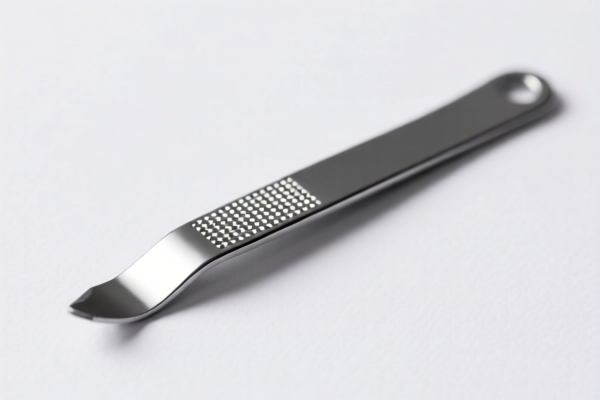
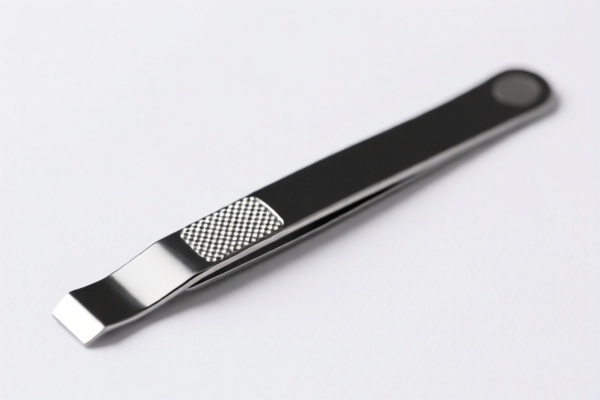
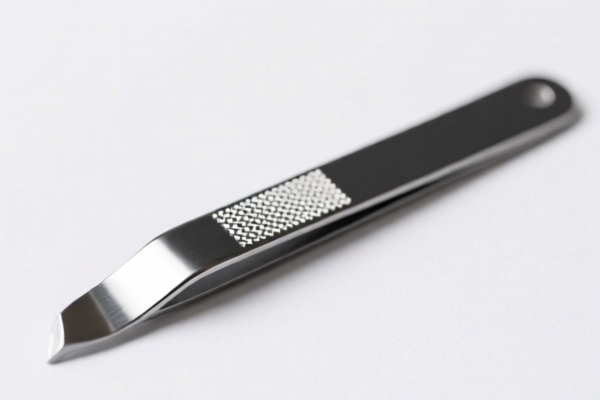
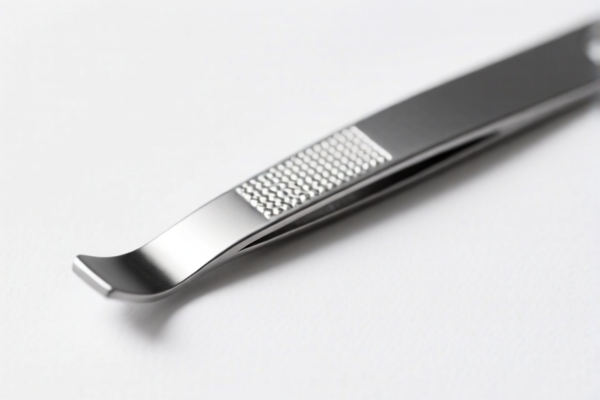
AI分析
{"content":[{"type":"text","text":"##🖥️ Pusher (Mechanical Component / Industrial Equipment Part)\n---\n🌐 HS Code Reference & Clearance Guide | 2026 Latest Tariff Analysis | Professional Clearance Strategy \n📌 I. Product Definition & Classification: Do You Understand the \"Pusher\"?\n\nA \"Pusher\" is a generic mechanical term referring to a device, blade, arm, or component designed to push, propel, or advance materials (such as bulk solids, liquids, goods on a conveyor, or pistons in machinery). Because \"pusher\" is a functional description rather than a specific end-product, its HS Code classification depends heavily on its application, integration, and the machine it belongs to.\n\nIn international trade, \"pushers\" are rarely classified under a single standalone HS Code. They are typically categorized as:\n\n1. Parts of Specific Machines: If the pusher is integral to a machine (e.g., a piston in an engine, a pusher blade in a bulldozer, a conveyor pusher), it is classified under the parts chapter of that specific machine.\n\n2. Hand Tools or Mechanical Tools: If it is a simple manual tool (e.g., a hand pusher for cleaning or packaging), it may fall under Chapter 82 (Tools) or Chapter 84 (Machinery Parts).\n\n3. Standalone Mechanical Appliances: If it is a standalone device for pushing (e.g., a pusher conveyor mechanism), it may be classified under Chapter 84 (Nuclear reactors, boilers, machinery, and mechanical appliances).\n\n> ⚠️ Key Distinction Point: \n> - If the pusher is a replaceable part of a larger machine (e.g., a piston, a blade), classify it with the parent machine. \n> - If the pusher is a standalone mechanical device (e.g., a pusher conveyor unit), classify it as machinery. \n> - If the pusher is a simple hand tool (e.g., a rubber pusher for bottles), classify it under Chapter 82 or 84. \n> - Generic terms like \"pusher\" are often rejected by customs. You must provide a specific technical description (e.g., \"Piston for internal combustion engine,\" \"Blade for dozer,\" \"Conveyor pusher mechanism\").\n\n---\n\n## 📦 II. HS Code Classification Details (2026 Latest Tariff Authority Comparison)\n\n| HS Code | Product Description | Application Scenario | Specific Description |\n|--------|----------|----------|------------------|\n| 8413.91.00.00 | Parts of liquid pumps | Pump pushers, piston rods, impeller pushers | Used in fluid handling systems |\n| 8414.90.90.00 | Parts of air or vacuum pumps | Compressor pushers, valve pushers | Used in HVAC, refrigeration, and industrial air systems |\n| 8425.31.00.00 | Winches and capstans; pusher mechanisms | Cable pushers, tensioner pushers | Used in lifting and pulling equipment |\n| 8431.43.00.00 | Parts suitable for use solely or principally with the machinery of heading 84.25 to 84.30 | Bulldozer blades, loader pusher arms | Heavy machinery components |\n| 8479.89.97.00 | Other machines and mechanical appliances with individual functions, n.e.c. | Standalone pusher conveyors, automated pusher systems | Industrial automation equipment |\n| 8205.59.00.00 | Other hand tools | Manual pushers (e.g., rubber pushers for cleaning) | Simple manual tools |\n\n> 🔍 Key Reminder: \n> - Do not use \"Pusher\" as the product name in declarations. Use specific technical terms (e.g., \"Piston,\" \"Blade,\" \"Conveyor Pusher Mechanism\"). \n> - If the pusher is a part of a machine, it must be declared with the HS Code of the parent machine, not as a standalone product. \n> - For standalone pusher systems (e.g., in bottling lines), classify under 8479 or 8438 (food/beverage machinery), depending on the industry.\n\n---\n\n## 💰 III. 2026 Latest Tariff Rate Details (Including Additional Taxes, Policy Add-ons)\n\n> ✅ Applicable Country: United States (US) \n> ✅ Origin: China (CN) \n> ✅ Effective Date: November 10, 2025 (including subsequent imports)\n\n### 🎯 1. 8413.91.00.00 —— Parts of Liquid Pumps (e.g., Pump Pushers)\n\n| Item | Content |\n|------|------|\n| Base Tariff Rate | 0% (ad valorem) |\n| USITC Additional Tariff | +25% (from USITC Footnote 9903.88.01) |\n| IEEPA Additional Tariff | +10% (for China/HK products, effective from Nov 10, 2025) |\n| Total Tariff Rate | 35% |\n| Tax Calculation | CIF Value × 35% |\n| De Minimis Exemption Eligible | ❌ No (deny_de_minimis) |\n| Legal Basis Path | IEEPA:9903.01.25 → IEEPA:9903.01.24 → USITC:8413.91.00.00 → FOOTNOTE:9903.88.01 |\n\n> 📌 Explanation: \n> - \"USITC Additional Tariff 25%\" comes from the \"Additional Duties\" under Section 301 of the U.S. Trade Act; \n> - \"IEEPA 10%\" is the additional duty on Chinese products under the International Emergency Economic Powers Act; \n> - Total 35%, which is a high tariff, must be anticipated in advance!\n\n---\n\n### 🎯 2. 8479.89.97.00 —— Other Machines with Individual Functions (Standalone Pusher Conveyors)\n\n| Item | Content |\n|------|------|\n| Base Tariff Rate | 0% |\n| USITC Additional Tariff | +25% |\n| IEEPA Additional Tariff | +10% |\n| Total Tariff Rate | 35% |\n| Tax Calculation | CIF × 35% |\n| De Minimis Exemption Eligible | ❌ No |\n| Legal Basis Path | IEEPA:9901.25 → IEEPA:9903.01.24 → USITC:8479.89.97.00 → FOOTNOTE:9903.88.01 |\n\n> 📌 Note: \n> - Same as above, belonging to \"Machinery Parts\" category, same tax rate; \n> - Even if it is a \"conveyor pusher,\" \"automated pusher system,\" or \"industrial pusher mechanism,\" as long as it is a standalone machine or major component, it applies this tariff.\n\n---\n\n## 🛠️ IV. Clearance Practical Suggestions (Practical Pitfall Avoidance Guide)\n\n### ✅ 1. Preparation Checklist (All Required)\n\n| Document | Must Provide | Description |\n|----------|--------------|-------------|\n| ✅ Product Specification Sheet | ✔️ | Includes dimensions, material, weight, usage scenario |\n| ✅ Technical Diagram/Structure Drawing | ✔️ | Used to determine if it is a part or standalone machine |\n| ✅ Product Photos (Including Nameplate) | ✔️ | Clearly shows model, brand, input/output parameters |\n| ✅ Third-Party Test Report | ✔️ | FCC, CE, RoHS, UL (if applicable) |\n| ✅ Commercial Invoice | ✔️ | Clearly state \"Parts of [Machine Name]\" or \"Pusher Mechanism for [Industry]\" |\n| ✅ Certificate of Origin (CO) | ✔️ | If not from China, can apply for preferential tariff |\n| ✅ Packing List | ✔️ | Explain relationship between machine and accessories, avoid split declaration |\n\n---\n\n### ✅ 2. Declaration Tips (Key Mantra)\n\n> 🔥 \"Parts with Parent, Machines Standalone, Specific Names, Tariffs Drop!\"\n\n| Scenario | Correct Declaration Method | Incorrect Action |\n|----------|---------------------------|------------------|\n| Pusher as part of a pump | 8413.91.00.00 (Parts of Pump) | Misdeclare as \"Hand Tool\" → 25% |\n| Standalone pusher conveyor | 8479.89.97.00 | Misdeclare as \"Part\" → 35% vs. 0% |\n| Manual rubber pusher | 8205.59.00.00 | Misdeclare as \"Machine Part\" → 0% |\n| Bulldozer blade (pusher) | 8431.43.00.00 | Misdeclare as \"General Metal Part\" → 25% |\n\n---\n\n### ✅ 3. Special Situation Handling\n\n| Scenario | Handling Suggestion |\n|----------|---------------------|\n| OEM Custom Pusher | Provide customer order + design drawings, avoid being recognized as \"non-standard\" |\n| Pusher with Touchscreen | Still classify under machine parts, not 9013.90.80.00 |\n| Pusher for Medical Equipment | If for special equipment, apply for \"Non-Commercial Use\" exemption, but need proof |\n| Pusher for Military/Aerospace | Can apply for \"Special Purpose\" declaration, tariff may be reduced, need prior communication |\n\n---\n\n## 🌍 V. Global Major Market Clearance Comparison (2026 Latest)\n\n| Country/Region | Recommended HS Code | Tariff | Certification Requirements | Notes |\n|----------------|---------------------|--------|----------------------------|-------|\n| 🇺🇸 United States | 8413.91.00.00 / 8479.89.97.00 | 35% (Chinese Origin) | FCC + RoHS | High tariff for mechanical parts |\n| 🇨🇳 China | 8413.91.00.00 / 8479.89.97.00 | 5% | CCC + RoHS | No additional tariffs |\n| 🇪🇺 European Union | 8413.91.00.00 / 8479.89.97.00 | 0% (If CE Compliant) | CE + ErP | No additional tariffs |\n| 🇦🇺 Australia | 8413.91.00.00 / 8479.89.97.00 | 5% | RCM | No additional tariffs |\n| 🇯🇵 Japan | 8413.91.00.00 / 8479.89.97.00 | 0% | PSE | No additional tariffs |\n\n> 📌 Conclusion: \n> - The United States is the only market imposing high additional tariffs on mechanical parts and standalone pusher systems; \n> - Chinese-origin pushers face high clearance costs in the US, suggest evaluating whether to transfer production or adjust supply chain in advance.\n\n---\n\n## 📌 VI. Common Mistakes & Pitfall Avoidance Guide (Blood & Tears Lessons)\n\n❌ Mistake 1: Declaring \"Pusher\" without specifying the parent machine or application \n👉 Consequence: Customs cannot determine classification → Delayed release or return\n\n❌ Mistake 2: Using \"Pusher\" as the product name instead of specific terms (e.g., \"Piston,\" \"Blade\") \n👉 Consequence: Classification error → Surcharge + Fine!\n\n❌ Mistake 3: Not providing technical drawings, only writing \"Pusher\" \n👉 Consequence: Customs cannot determine if it is a part or standalone machine → Delayed release or return\n\n❌ Mistake 4: Using \"Mechanical Pusher\" as the declaration name \n👉 Consequence: If it is a part of a machine, misclassification → Surcharge + Late Fee\n\n✅ Correct Practice:\n> \"Piston Rod for Hydraulic Pump, Model XYZ, Material: Stainless Steel 316, FCC & RoHS Certified, For Use in Industrial Fluid Handling Systems\"\n\n---\n\n## 🎯 VII. Conclusion: Professional Declaration, Save Time, Reduce Costs!\n\n🎯 Remember the Mantra:\n> 🔹 \"Parts with Parent, Machines Standalone, Specific Names, Tariffs Drop!\" \n> 🔹 \"HS Code Determines Life or Death, Tariff Difference 25 Points, One Step Wrong, Surcharge Up!\"\n\n---\n\n📌 Tips: \nIf your pusher originates from Vietnam, Mexico, Thailand, or Malaysia, you can apply for IEEPA Exemption, tariff is only 0%~5%; \nSuggest applying for Advance Ruling in advance to avoid clearance risks.\n\n---\n\n📣 Act Immediately: \n> 📞 Contact professional customs broker + Provide product images + Apply for HS Code Advance Ruling \n> 🚀 Let your pusher clear customs smoothly, export efficiently, double your profits!\n\n---\n✨ Professional Clearance Starts with Accurate Classification! \n💼 Every cent of your cost deserves to be calculated precisely!"}],"isError":false}
用户评价
关于 HS 编码归类
协调制度(HS)是由世界海关组织(WCO)制定的国际贸易商品分类标准。全球 200 多个国家采用 HS 系统作为海关关税、贸易统计和进出口监管的基础。
每个 HS 编码遵循以下层级结构:
- 章(2 位)——商品大类(例如:第 84 章:机器和机械设备)
- 品目(4 位)——章内的更具体分类
- 子目(6 位)——国际通用细分,所有 WCO 成员国统一使用
- 本国细分(8-10 位)——各国自行扩展的细分编码,如美国 HTSUS 10 位编码
正确的 HS 编码归类对于顺利通关、准确缴纳关税和遵守贸易法规至关重要。错误归类可能导致海关延误、多缴关税或罚款。
从CN进口到US时,适用的关税税率可能包括:
- 最惠国(MFN)税率——适用于 WTO 成员国的标准关税税率
- 普通税率——适用于无贸易协定国家
- 贸易救济关税——附加关税,如 301 条款(反倾销)、232 条款(国家安全)或反补贴税
本页内容仅供参考。如需正式归类,请咨询当地海关或持牌报关代理。