Pyrethrum Fresh Flowers for Insecticide
CN → US商品图片
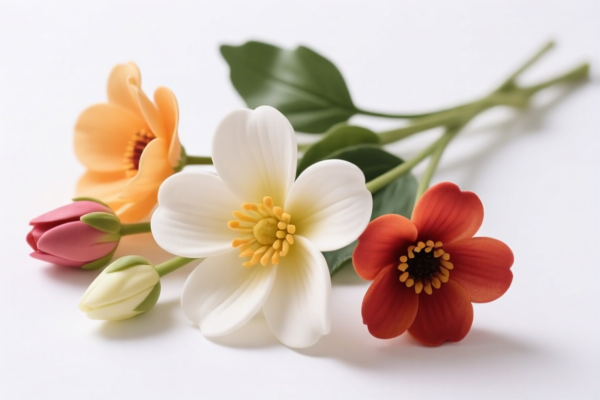



AI分析
🌿 Pyrethrum Fresh Flowers for Insecticide
🌐 HS Code Reference & Customs Clearance Guide | 2026 Latest Tariff Analysis | Professional-Level Clearance Strategy
📌 I. Product Definition and Classification: Do You Really Understand "Pyrethrum"?
Pyrethrum (from Tanacetum cinerariifolium), often referred to as the "natural insecticide," is derived from fresh or dried chrysanthemum flowers. In international trade, the distinction between fresh and dried flowers is critical, as they fall under completely different Harmonized System (HS) codes with vastly different tariff implications.
Fresh Pyrethrum Flowers: The raw agricultural product, harvested and exported in its natural state before any processing (drying, extraction, or formulation). These are considered "products of vegetable origin" in their primary state. Processed Pyrethrum (Dried/Extract): Once dried or chemically extracted into pyrethrins, the product undergoes a transformation in status, moving from agricultural produce to chemical preparations or processed botanicals.
⚠️ Key Distinction Point:
- If the flowers are fresh, cut, and exported immediately without drying or chemical treatment → Classified as Agricultural Product (Chapter 06 or 12).
- If the flowers are dried for preservation or extraction → Classified as Processed Botanical/Spices (Chapter 09 or 12).
- If the flowers are extracted into oil/concentrate → Classified as Essential Oils/Chemical Preparations (Chapter 33).
📦 II. HS Code Classification Details (2026 Latest Tariff Authority Comparison)
| HS Code | Product Description | Applicable Scenario | Processing State |
|---|---|---|---|
0603.10.00.00 |
Cut flowers and flower buds, fresh (including pyrethrum) | Freshly harvested pyrethrum flowers for immediate export or further processing | ✅ Fresh |
1211.90.26.00 |
Plants and parts of plants (including seeds), used primarily in perfumery, pharmacy, or for insecticidal, fungicidal, etc., properties (Dried Pyrethrum) | Dried pyrethrum flowers stored for extraction or direct use as dried botanical | ✅ Dried |
3301.29.00.00 |
Essential oils (terpenesless or not) and concretes; resinoids; extracts and tinctures; lemon oil | Pyrethrum extract/oil obtained from fresh or dried flowers | ✅ Extracted |
3808.94.00.00 |
Insecticides, rodenticides, fungicides, herbicides, anti-sprouting agents, plant-growth regulators, disinfectants (Preparations) | Commercial insecticide products formulated with pyrethrins | ✅ Formulated |
1302.19.90.00 |
Vegetable saps and extracts, other (Non-essential oil extracts) | Crude botanical extracts not classified as essential oils | ✅ Processed |
🔍 Critical Reminder:
- Fresh flowers MUST be declared under0603.10. Do not misdeclare as dried flowers (1211) or extracts (3301) to avoid valuation errors.
- Dried flowers fall under1211.90, specifically for plants used for insecticidal purposes.
- Extracts are chemical/natural preparations under3301or3808depending on formulation.
💰 III. 2026 Latest Tariff Rate Details (Including Surtaxes, Policy Surcharges)
✅ Applicable Country: United States (US)
✅ Country of Origin: China (CN)
✅ Effective Date: 2025-Nov-10 onwards (including subsequent imports)
🎯 1. 0603.10.00.00 —— Cut Flowers, Fresh (Including Pyrethrum)
| Item | Content |
|---|---|
| Base Tariff Rate | Free (0% ad valorem) |
| USITC Surtax | +0% |
| IEEPA Surtax | +0% (Not targeted under recent IEEPA orders for agricultural raw materials in this specific heading) |
| Total Tariff Rate | 0% |
| Tax Calculation | CIF Value × 0% = $0 |
| De Minimis Eligibility | ✅ Yes (If shipped via postal/courier under $800, though large commercial shipments are subject to formal entry) |
| Legal Basis Path | USITC:0603.10.00.00 → No additional IEEPA/Footnote surcharges for fresh cut flowers |
📌 Explanation:
- Fresh pyrethrum flowers are considered agricultural raw materials and are generally exempt from the heavy tariffs applied to processed goods or electronics.
- No IEEPA surcharge applies to fresh agricultural cuts under this specific HS code.
- Zero tariff makes this highly competitive for fresh supply chains, provided phytosanitary conditions are met.
🎯 2. 1211.90.26.00 —— Dried Pyrethrum (Insecticidal Plants)
| Item | Content |
|---|---|
| Base Tariff Rate | 3.9% |
| USITC Surtax | +0% |
| IEEPA Surtax | +7.5% (Under IEEPA Order 9901.25 for certain agricultural products of Chinese origin) |
| Total Tariff Rate | 11.4% |
| Tax Calculation | CIF Value × 11.4% |
| De Minimis Eligibility | ✅ Yes (Under $800, subject to de minimis rules) |
| Legal Basis Path | IEEPA:9901.25 → USITC:1211.90.26.00 |
📌 Note:
- Dried pyrethrum is subject to a base duty of 3.9%.
- The IEEPA surcharge of 7.5% applies to certain dried botanicals from China.
- Total burden is moderate compared to processed chemicals.
🛠️ IV. Customs Clearance Practical Advice (实战避坑指南)
✅ 1. Preparation Checklist (Mandatory)
| Material | Required | Description |
|---|---|---|
| ✅ Phytosanitary Certificate | ✔️ Mandatory | Issued by the country of origin’s plant protection agency; confirms flowers are free from pests/diseases. |
| ✅ Commercial Invoice | ✔️ | Must clearly state "Pyrethrum Fresh Flowers" and not just "Chrysanthemums." |
| ✅ Packing List | ✔️ | Detail weight, volume, and packaging type (ice packs, refrigerated containers). |
| ✅ Cold Chain Documentation | ✔️ | Proof of temperature control during transit (critical for fresh flowers). |
| ✅ Fumigation Certificate | ✔️ | If required by destination country to prevent pest introduction. |
| ✅ Manufacturer's Declaration | ✔️ | Confirming no chemical pesticides used (if marketed as organic/natural). |
✅ 2. Declaration Tips (Key Mnemonics)
🔥 “Fresh is Free, Dried is Taxed, Phytosanitary is Key, Cold Chain is Life!”
| Scenario | Correct Declaration | Wrong Practice |
|---|---|---|
| Fresh Flowers (Just Harvested) | 0603.10.00.00 |
Misdeclare as dried (1211) → 11.4% Tax |
| Dried Flowers (For Storage) | 1211.90.26.00 |
Misdeclare as fresh (0603) → Customs seizure for lack of phytosanitary compliance for fresh goods |
| Extracted Oil | 3301.29.00.00 |
Misdeclare as flowers → Valuation discrepancy |
| Formulated Insecticide | 3808.94.00.00 |
Misdeclare as raw flowers → Regulatory violation |
✅ 3. Special Cases Handling
| Situation | Handling Advice |
|---|---|
| OEM Branding | If flowers are branded, still declare as raw agricultural product; branding doesn't change HS Code. |
| Mixed Loads | Do not mix fresh pyrethrum with other fresh flowers in one shipment unless all have valid Phytosanitary Certificates. |
| Organic Certification | If marketed as organic, provide Organic Certificate; may reduce inspection delays. |
| Small Samples | Under $800, may enter under de minimis, but Phytosanitary Certificate is still often required by USDA APHIS. |
🌍 V. Global Market Clearance Comparison (2026 Latest)
| Country/Region | Recommended HS Code | Tariff (China Origin) | Certification Requirement | Notes |
|---|---|---|---|---|
| 🇺🇸 USA | 0603.10.00.00 |
0% | Phytosanitary + USDA APHIS | Zero tariff for fresh; strict biosecurity |
| 🇨🇳 China | 0603.10.00.00 |
0% | Phytosanitary | Import allowed; widely used for extraction |
| 🇪🇺 EU | 0603.10.00.00 |
0% | Phytosanitary + Plant Passport | Strict EU phytosanitary regulations |
| 🇦🇺 Australia | 0603.10.00.00 |
0% | Biosecurity Import Permit | Very strict quarantine rules |
| 🇯🇵 Japan | 0603.10.00.00 |
0% | Phytosanitary | Low tariff, high quality standards |
📌 Conclusion:
- Fresh Pyrethrum Flowers enjoy 0% tariff globally in most major markets, provided phytosanitary standards are met.
- Dried flowers incur moderate tariffs (3.9%–11.4%) in the US due to IEEPA surcharges.
- Biosecurity is the main barrier, not tariffs.
📌 VI. Common Mistakes & Pitfalls Guide (Blood & Tears Lessons)
❌ Mistake 1: Declaring fresh flowers as dried to avoid cold chain costs
👉 Consequence: Customs will reject the shipment due to lack of proper drying documentation and phytosanitary mismatch → Shipment Rejected!
❌ Mistake 2: Failing to provide Phytosanitary Certificate
👉 Consequence: USDA APHIS will seize and destroy the shipment → Total Loss!
❌ Mistake 3: Not maintaining cold chain during transit
👉 Consequence: Flowers wilt, quality drops, and customs may deem them "unsalable" → Refusal of Entry
❌ Mistake 4: Using "Chrysanthemum" as generic description
👉 Consequence: Customs may delay for species verification → Delays & Demurrage Fees
✅ Correct Practice:
"Fresh Pyrethrum Flowers (Tanacetum cinerariifolium), Harvested 2026-05-20, No Chemical Pesticides, Stored at 4°C, Phytosanitary Certificate Attached"
🎯 VII. Conclusion: Professional Declaration, Smooth Clearance, Cost Efficiency!
🎯 Remember the Mantra:
🔹 "Fresh is Free, Dried is Taxed, Phytosanitary is Key, Cold Chain is Life!"
🔹 "HS Code Determines Tariff, Phyto Certificate Determines Entry, Cold Chain Determines Quality!"
📌 Pro Tip:
If you are exporting dried pyrethrum, consider the IEEPA surcharge impact. For fresh flowers, ensure your cold chain logistics are impeccable to avoid quality disputes at customs.
📞 Contact your local customs broker + Provide Phytosanitary Certificate + Apply for Advance Ruling if unsure about species classification.
🚀 Ensure your pyrethrum flowers, clear customs smoothly, maintain quality, and maximize profit!
✨ Professional Clearance Starts with Accurate Classification!
💼 Every percent of tariff and every day of delay costs you money!
用户评价
关于 HS 编码归类
协调制度(HS)是由世界海关组织(WCO)制定的国际贸易商品分类标准。全球 200 多个国家采用 HS 系统作为海关关税、贸易统计和进出口监管的基础。
每个 HS 编码遵循以下层级结构:
- 章(2 位)——商品大类(例如:第 84 章:机器和机械设备)
- 品目(4 位)——章内的更具体分类
- 子目(6 位)——国际通用细分,所有 WCO 成员国统一使用
- 本国细分(8-10 位)——各国自行扩展的细分编码,如美国 HTSUS 10 位编码
正确的 HS 编码归类对于顺利通关、准确缴纳关税和遵守贸易法规至关重要。错误归类可能导致海关延误、多缴关税或罚款。
从CN进口到US时,适用的关税税率可能包括:
- 最惠国(MFN)税率——适用于 WTO 成员国的标准关税税率
- 普通税率——适用于无贸易协定国家
- 贸易救济关税——附加关税,如 301 条款(反倾销)、232 条款(国家安全)或反补贴税
本页内容仅供参考。如需正式归类,请咨询当地海关或持牌报关代理。