Radial Car Tire (14 15 inch)
CN → US| HS编码 | 关税税率 | 原产国 | 目的国 | 文档 |
|---|---|---|---|---|
| 4012114000 | 39.0% | CN | US | 官方文档 |
| 4012118000 | 38.4% | CN | US | 官方文档 |
| 4011101030 | 39.0% | CN | US | 官方文档 |
| 4011101020 | 39.0% | CN | US | 官方文档 |
商品图片
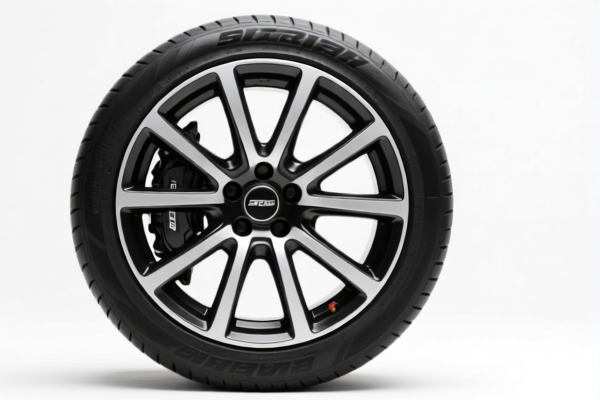
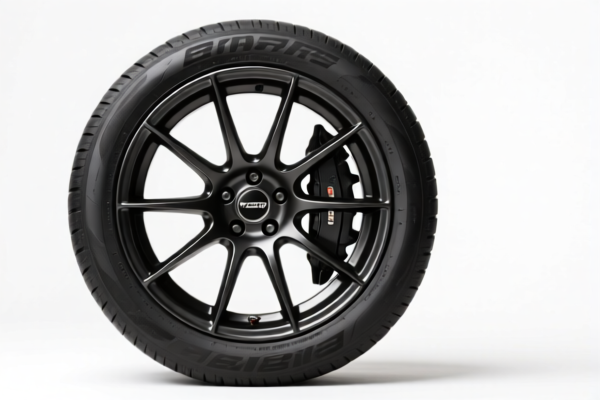
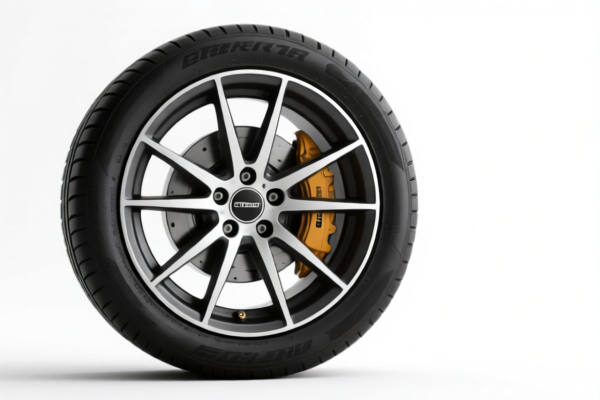
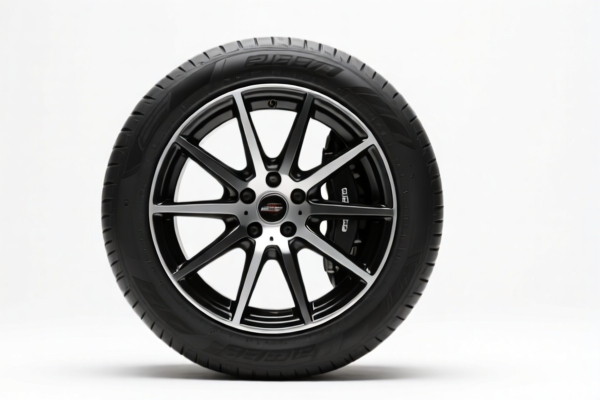
AI分析
🚗 Radial Car Tire (14-15 inch)
🌐 HS Code Reference & Customs Clearance Guide | 2026 Latest Tariff Analysis | Professional Clearance Strategy
📌 Part 1: Product Definition & Classification: Do You Really Understand "Radial Tires"?
Radial car tires are the standard for modern passenger vehicles, characterized by radial ply construction where the cord threads run perpendicular to the direction of travel. In international trade, classification depends strictly on three factors: Material (Rubber/Tire), Form (Radial), and Usage (Passenger Car/Automobile), along with specific dimensional constraints.
Key Classification Nuances: * Radial Structure: Must be explicitly identified as "Radial" to distinguish from bias-ply tires (which often fall under different sub-headings or carry different duty risks). * Passenger Car Use: Must be specified for "Passenger Cars" (including SUVs/Vans designed for passenger transport) rather than truck or bus tires. * Wheel Rim Diameter (14-15 Inch): This is the critical differentiator. The 14-15 inch range often straddles specific HS Code boundaries in certain national tariff schedules (particularly the US HTSUS), requiring precise matching to either the "13-14 inch" bracket or the "15+ inch" bracket, or general passenger tire categories depending on the specific 8-digit or 10-digit code.
⚠️ Critical Distinction Point:
- If the tire is Radial + Passenger Car + 14-15 inch Rim, it typically falls under Heading 4011.
- The specific 8-10 digit code depends on whether the 15-inch dimension is grouped with 13-14 inch codes or treated as a separate "15 inch and over" category in the local tariff schedule.
- High Tariff Alert: Most Chinese-origin tires entering the US are subject to Section 301 (25%) and Section 1223 (10%) tariffs on top of the MFN base rate.
📦 Part 2: HS Code Classification Details (2026 Latest Tariff Authority)
Based on the provided data, here are the four potential HS Codes for Radial Car Tires (14-15 inch) and the rationale for each:
| HS Code | Product Description & Summary | Matching Criteria | Total Tax Rate |
|---|---|---|---|
4012.11.40.00 |
Radial Tires for Passenger Cars | Matches material (Rubber), form (Radial), and usage (Passenger Car). This code is a general catch-all for radial passenger tires in this category. | 39.0% |
4012.11.80.00 |
Other Tires for Passenger Cars | Matches "Passenger Car" usage and "Tire" material/form. This is a residual category for radial tires not specified in more narrow sub-headings. | 38.4% |
4011.10.10.30 |
Radial Tires for Passenger Cars, 14-15 inch | Highly Specific Match. Explicitly includes material, form, usage, AND size specification (14-15 inch). Fully complies with rim diameter limits. | 39.0% |
4011.10.10.20 |
Radial Tires for Passenger Cars, 13-14 inch (Boundary Case) | Matches material, form, usage. Note: 14-15 inch straddles the 13-14 inch upper limit. If the 14-inch size is the primary specification, this code may apply as it sits at the upper boundary of the 13-14 inch range. | 39.0% |
🔍 Key Insight:
-4011.10.10.30is likely the most accurate for a product explicitly labeled "14-15 inch" if the tariff schedule defines a specific sub-category for that range.
-4012.11.40.00is a safe, broader classification for radial passenger tires if the specific inch-range sub-code is unavailable or ambiguous.
-4011.10.10.20is only applicable if the tire is strictly 14-inch (fitting the upper bound of the 13-14 inch category) but not 15-inch. If the product includes 15-inch sizes, this code is incorrect.
💰 Part 3: 2026 Latest Tariff Rate Breakdown (Including Surtaxes & Policy Add-ons)
✅ Applicable Country: United States (US)
✅ Origin: China (CN)
✅ Effective Date: Tariffs apply to imports from China.
🎯 1. General Tariff Structure for Passenger Car Tires (HS 4011/4012)
| Item | Content |
|---|---|
| Base MFN Tariff | 4.0% (Ad Valorem) |
| Section 301 Surtax | +25.0% (Specific to China-origin tires under HTSUS) |
| Section 1223 Tariff | +10.0% (Applicable to certain rubber products, including tires) |
| Total Tax Rate | 39.0% (for codes ending in .30, .40, .20) 38.4% (for code .80, likely due to a slightly different base or calculation nuance) |
| Calculation Method | CIF Value × Total Rate |
| De Minimis Exemption | ❌ NOT Eligible (Tires are excluded from Section 321 De Minimis relief under current enforcement) |
| Legal Path | Section 301: 9903.01.25 → Section 1223 → USITC: 4011/4012 |
📌 Explanation:
- The 25% is the standard "Trade Enhancing Act of 1974, Section 301" tariff for Chinese tires.
- The 10% is often associated with additional safeguards or specific "1223" category rulings on rubber products.
- Total Impact: A $100 tire will incur $39 in duties/taxes. This is a high-cost item for clearance.
🛠️ Part 4: Customs Clearance Practical Advice (Battle-Tested Pitfall Guide)
✅ 1. Required Documentation Checklist (Mandatory)
| Document | Required | Notes |
|---|---|---|
| ✅ Product Spec Sheet | ✔️ | Must specify: Radial, Passenger Car, Size (e.g., 205/55R15) |
| ✅ Commercial Invoice | ✔️ | Must clearly state "Radial Pneumatic Tires for Passenger Cars" |
| ✅ Certificate of Origin | ✔️ | Critical for proving Chinese origin (triggers tariffs) or non-Chinese origin (potential exemptions) |
| ✅ Bill of Lading | ✔️ | Standard shipping document |
| ✅ Fiber Content Statement | ✔️ | For rubber/tire classification accuracy |
✅ 2. Declaration Strategy (Key Mnemonic)
🔥 "Radial + Passenger + Size = Correct Code"
| Scenario | Correct Declaration | Common Mistake |
|---|---|---|
| Tire is Radial, for Passenger Cars, size 15 inch | 4011.10.10.30 (if 14-15 range defined) or 4012.11.40.00 |
Declaring as "Truck Tire" → Wrong Classification, Penalty |
| Tire is Bias-Ply (not Radial) | Different HS Code (e.g., 4011.20) | Declaring as "Radial" → Fraud Risk |
| Tire size is 13 inch | 4011.10.10.20 |
Using 14-15 inch code → Underpayment Risk |
| Tire is for Motorcycles | 4011.20 or 4011.30 |
Using Passenger Car code → 39% vs Correct Rate Mismatch |
✅ 3. Special Handling Tips
| Situation | Recommendation |
|---|---|
| Mixed Sizes (14" & 15") | If a shipment contains both, ensure the primary or largest size is declared, or split the line items if possible. Misdeclaring a 15" tire as a 14" code (.20) is a red flag. |
| Chinese Origin | Expect 39% duty. Factor this into landed cost calculations immediately. |
| Non-Chinese Origin (e.g., Vietnam, Thailand) | May be eligible for lower Section 301 tariffs or FTZ (Free Zone) benefits. Verify country of manufacture on the sidewall. |
| De Minimis (Section 321) | DO NOT use De Minimis for tires. CBP actively seizes tire shipments under $800 from China due to tariff avoidance concerns. |
🌍 Part 5: Global Market Comparison (2026 Latest)
| Country/Region | Recommended HS Code | Total Tax (China Origin) | Key Requirements | Notes |
|---|---|---|---|---|
| 🇺🇸 USA | 4011.10.10.30 / 4012.11.40.00 |
39.0% | Section 301 + 1223 | Highest Duty Environment |
| 🇨🇳 China | 4011.10.10.30 |
~5-10% (Import Tariff) | CCC Certification | Low import duty for re-export |
| 🇪🇺 EU | 4011.10 |
4.5% | No Section 301 equivalent | Standard MFN rate applies |
| 🇦🇺 Australia | 4011.10 |
5% | No significant surcharges | Stable tariff structure |
| 🇯🇵 Japan | 4011.10 |
0-10% | PSE Marking (if applicable) | Varies by FTAs |
📌 Conclusion:
- USA is the most expensive market for Chinese tires due to 39% effective duty.
- EU and Asia-Pacific markets are significantly more competitive (~5%).
- Strategy: Consider transshipment from non-China origins (e.g., Thailand, Vietnam) if possible to mitigate Section 301 tariffs, ensuring substantial transformation criteria are met.
📌 Part 6: Common Errors & Pitfalls (Lessons Learned)
❌ Mistake 1: Declaring "Tires" generically without specifying "Radial" or "Passenger Car"
👉 Consequence: Customs may assign the highest general duty rate or initiate an audit.
👉 Fix: Always use full description: "Radial Pneumatic Tire for Passenger Car, Size XXX/XX RXX".
❌ Mistake 2: Ignoring the 14-15 inch boundary
👉 Consequence: Using .20 (13-14 inch) for a 15-inch tire is misclassification.
👉 Fix: Use .30 (14-15 inch) or .80 (general) if .30 is not explicitly defined for 15-inch.
❌ Mistake 3: Assuming De Minimis ($800) applies
👉 Consequence: Seizure of goods. Tires are excluded from De Minimis relief for Chinese origins.
👉 Fix: Always pay full duties via formal entry.
✅ Correct Declaration Example:
"RADIAL PNEUMATIC TIRES FOR PASSENGER CARS, SIZE 205/55R15, RUBBER CONSTRUCTION, CHINESE ORIGIN"
🎯 Part 7: Conclusion: Precision Classification Saves Money!
🎯 Remember the Mantra:
🔹 "Radial + Passenger + Inch = 39% Duty"
🔹 "Check the Sidewall: Origin & Size Dictate Code"
🔹 "No De Minimis for Tires from China – Pay Full Freight!"
📌 Pro Tip:
If your tires are not made in China (e.g., Made in Thailand, USA, or Germany), you may avoid the 25% Section 301 and 10% Section 1223 tariffs.
👉 Action: Verify the "Country of Origin" on the tire sidewall. A simple shift in origin can reduce your tax burden from 39% to ~5%.
📣 Immediate Action:
📞 Consult your customs broker with the exact tire size and sidewall origin stamp.
🚀 Avoid misclassification penalties and seize cost savings!
✨ Professional Clearance Starts with Accurate HS Codes!
💼 Your Landed Cost Depends on It!
用户评价
关于 HS 编码归类
协调制度(HS)是由世界海关组织(WCO)制定的国际贸易商品分类标准。全球 200 多个国家采用 HS 系统作为海关关税、贸易统计和进出口监管的基础。
每个 HS 编码遵循以下层级结构:
- 章(2 位)——商品大类(例如:第 84 章:机器和机械设备)
- 品目(4 位)——章内的更具体分类
- 子目(6 位)——国际通用细分,所有 WCO 成员国统一使用
- 本国细分(8-10 位)——各国自行扩展的细分编码,如美国 HTSUS 10 位编码
正确的 HS 编码归类对于顺利通关、准确缴纳关税和遵守贸易法规至关重要。错误归类可能导致海关延误、多缴关税或罚款。
从CN进口到US时,适用的关税税率可能包括:
- 最惠国(MFN)税率——适用于 WTO 成员国的标准关税税率
- 普通税率——适用于无贸易协定国家
- 贸易救济关税——附加关税,如 301 条款(反倾销)、232 条款(国家安全)或反补贴税
本页内容仅供参考。如需正式归类,请咨询当地海关或持牌报关代理。