Rapid Curing Casting Sand
CN → US| HS编码 | 关税税率 | 原产国 | 目的国 | 文档 |
|---|---|---|---|---|
| 3824500050 | 35.0% | CN | US | 官方文档 |
| 3824405000 | 40.0% | CN | US | 官方文档 |
| 3824500050 | 35.0% | CN | US | 官方文档 |
| 3824405000 | 40.0% | CN | US | 官方文档 |
| 3824500050 | 35.0% | CN | US | 官方文档 |
商品图片
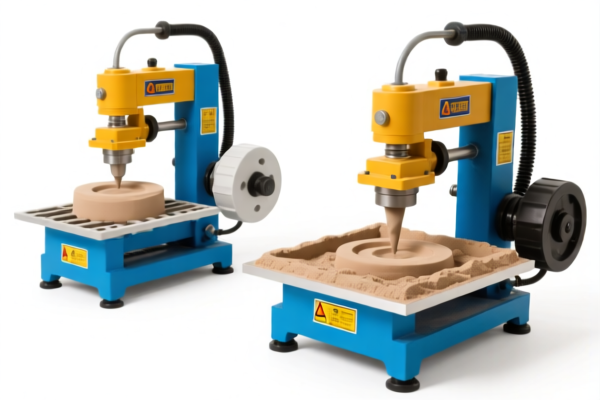
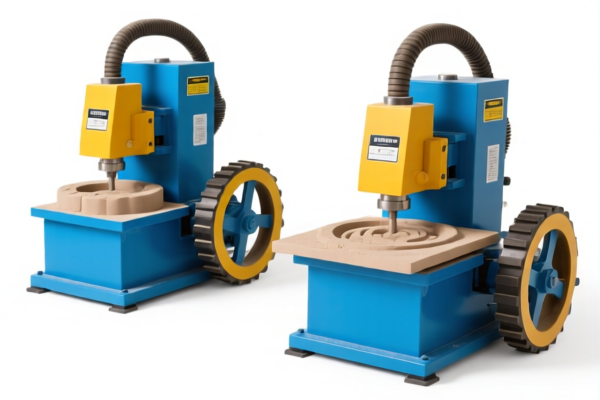
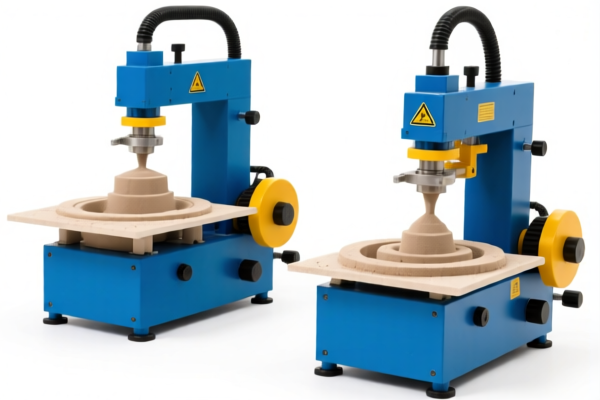
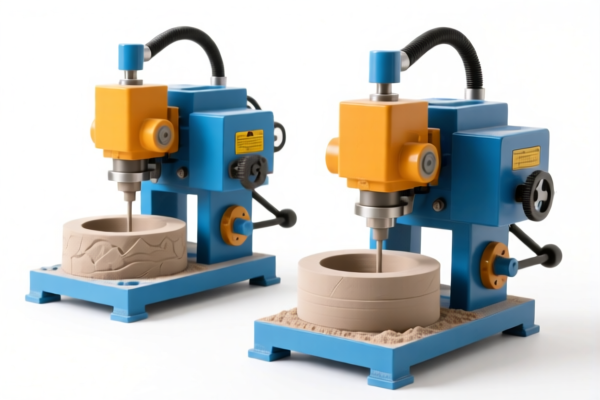
AI分析
🏗️ Rapid Curing Casting Sand (Foundry Sands)
🌐 HS Code Reference & Customs Clearance Guide | 2026 Latest Tariff Analysis | Professional Entry Strategy
📌 Part I: Product Definition & Classification: Do You Truly Understand "Rapid Curing Casting Sand"?
"Rapid Curing Casting Sand" refers to specialized molding sands used in metal casting processes. Unlike standard sand, it contains binding agents (chemical additives or resin binders) that accelerate the hardening process, allowing for faster production cycles.
In international trade, these are not classified as simple mineral aggregates (like construction sand). Instead, they are treated as chemical preparations or adhesives used in industrial manufacturing. The key characteristic is the chemical binder mixed with the sand, which falls under Chapter 38 (Chemical Products).
⚠️ Key Classification Distinction:
- If the sand is merely "cleaned/washed silica sand" with no chemical binder → It might fall under Chapter 25 (Mineral Products).
- If the sand contains binders, resins, or additives for rapid curing → It falls under Chapter 38 (Chemical Preparations).
- Current Input Analysis: The product is described as "Rapid Curing," implying the presence of chemical agents. Therefore, it is categorized under Chapter 38.
📦 Part II: HS Code Classification Details (2026 Latest Tariff Alignment)
Based on the provided data, there are two primary HS Codes identified for this product. The slight difference lies in the base tariff rate, though the additional duties remain similar.
| HS Code | Product Description | Tax Details | Summary of Matching Logic |
|---|---|---|---|
3824.40.50.00 |
Casting Sand (with Adhesives/Additives) | Total Tax: 40.0% - Base: 5.0% - Section 301: 25.0% - IEEPA (122): 10.0% |
Matches because the product is inferred as a mineral/chemical preparation for industrial application (similar to cement/concrete additives). No material conflict exists. |
3824.50.00.50 |
Other Chemical Preparations (Adhesives) | Total Tax: 35.0% - Base: 0.0% - Section 301: 25.0% - IEEPA (122): 10.0% |
Matches because the "rapid curing" aspect implies the sand functions as a prefabricated adhesive or chemical preparation. The material (sand/binder mix) aligns with "non-refractory mortar and concrete" chemical attributes. |
🔍 Crucial Note:
-3824.50.00.50offers a 5% lower total tax burden (35% vs 40%) due to a 0% base tariff instead of 5%.
- Customs officers will scrutinize whether the "curing" agent is considered an adhesive (3824.50) or a preparation (3824.40).
- Recommendation: Argue for3824.50.00.50by emphasizing the binding/adhesive function of the curing agents, as "rapid curing" implies a bonding mechanism.
💰 Part III: 2026 Latest Tariff Rate Breakdown (Including Additional Duties)
✅ Applicable Country: United States (US)
✅ Country of Origin: China (CN)
✅ Effective Date: From November 10, 2025 (including subsequent imports)
🎯 1. 3824.40.50.00 —— Casting Sand (Preparation Category)
| Item | Content |
|---|---|
| Base Tariff Rate | 5.0% (Ad valorem) |
| Section 301 Surcharge | +25.0% (From USITC Footnote 9903.88.01 / Trade Act Section 301) |
| IEEPA Surcharge (122 Clause) | +10.0% (Against China/HK products, effective from Nov 10, 2025) |
| Total Tariff Rate | 40.0% |
| Tax Calculation | CIF Value × 40% |
| De Minimis Eligibility | ❌ No (Denied under current trade restrictions for this category) |
| Legal Basis Path | IEEPA:9903.01.25 → IEEPA:9903.01.24 → USITC:3824.40.50.00 → FOOTNOTE:9903.88.01 |
📌 Explanation:
- The 25% Section 301 tariff is a longstanding punitive duty on Chinese industrial goods.
- The 10% IEEPA tariff is a new layer added to specific chemical and industrial preparations from China.
- Combined 40% is a significant cost driver. Importers must calculate this into their landed cost.
🎯 2. 3824.50.00.50 —— Other Chemical Preparations (Adhesive Category)
| Item | Content |
|---|---|
| Base Tariff Rate | 0.0% (Ad valorem) |
| Section 301 Surcharge | +25.0% |
| IEEPA Surcharge (122 Clause) | +10.0% |
| Total Tariff Rate | 35.0% |
| Tax Calculation | CIF Value × 35% |
| De Minimis Eligibility | ❌ No |
| Legal Basis Path | IEEPA:9901.25 → IEEPA:9903.01.24 → USITC:3824.50.00.50 → FOOTNOTE:9903.88.01 |
📌 Note:
- By classifying the "rapid curing" agent as an adhesive/preparation, the base 5% is eliminated.
- This results in a $0.50 savings per $100 of CIF value compared to the 3824.40 classification.
- Even with "rapid curing," if the primary function is binding the sand grains together, 3824.50 is a stronger argument.
🛠️ Part IV: Customs Clearance Practical Advice (Battle-Tested Pitfall Avoidance)
✅ 1. Required Documentation Checklist (Non-Negotiable)
| Document | Mandatory? | Explanation |
|---|---|---|
| ✅ Product Specification Sheet | ✔️ | Must detail: Sand type (silica/chromite), binder type (resin/organic/inorganic), curing time, and chemical composition. |
| ✅ Safety Data Sheet (SDS) | ✔️ | Critical for Chapter 38. Proves chemical nature and safety handling. |
| ✅ Product Photos (Including Packaging) | ✔️ | Show clear labeling of "Chemical Adhesive" or "Binder." Avoid generic "Sand" labels. |
| ✅ Commercial Invoice | ✔️ | Must explicitly state: "Chemical Bonding Sand for Metal Casting, Containing Adhesive Binders" |
| ✅ Certificate of Origin (CO) | ✔️ | Required to verify China origin and apply correct surcharges. |
| ✅ Packing List | ✔️ | Detail net/gross weight. Ensure no wooden packaging without ISPM 15 marks. |
✅ 2. Declaration Tips (Key Mantras)
🔥 "Don't Say 'Sand,' Say 'Chemical Preparation'! Function Over Form!"
| Scenario | Correct Declaration | Wrong Declaration | Consequence |
|---|---|---|---|
| Sand with Resin Binder | 3824.50.00.50 - "Chemical Adhesive Preparation for Foundry" |
"Casting Sand" | Risk of reclassification to higher duty or penalty for misdeclaration. |
| Sand with Organic Binder | 3824.40.50.00 or 3824.50.00.50 |
"Construction Sand" | Construction sand (2505) has 0% base, but does not allow 301/IEEPA? No! Chapter 25 is also subject to 301. But misclassification leads to heavy fines. |
| Bulk Shipment | Whole Lot Declaration | Split into "Sand" + "Chemicals" | Splitting may trigger separate inspections. Declare as one homogeneous mix. |
| Private Label | Provide OEM Agreement | Generic Name Only | Customs may delay for verification of brand/origin. |
💡 Strategy:
- Always emphasize the "Chemical Preparation" or "Adhesive" aspect.
- Avoid using the word "Sand" as the primary descriptor in the "Product Name" field. Use "Chemical Bonding Medium" or "Foundry Adhesive Sand" instead.
✅ 3. Special Situations Handling
| Situation | Handling Advice |
|---|---|
| New Chemical Formula | Provide a Letter of Explanation from the manufacturer detailing the curing mechanism. |
| Mixed Shipments | If mixed with non-chemical sand, declare separately. Mixed HS codes increase inspection probability. |
| Dangerous Goods? | If the binder is flammable, declare as Hazmat. Additional fees and storage may apply. |
| Origin Fraud | Ensure CO matches the actual factory. Re-labeling in Vietnam/Malaysia to avoid tariffs is illegal and risks seizure. |
🌍 Part V: Global Market Comparison (2026 Latest)
| Country/Region | Recommended HS Code | Base Tariff | Additional Duties (China) | Total Effective Rate | Notes |
|---|---|---|---|---|---|
| 🇺🇸 USA | 3824.50.00.50 |
0% | 301 (25%) + IEEPA (10%) | 35% | Most favorable US classification. |
| 🇺🇸 USA | 3824.40.50.00 |
5% | 301 (25%) + IEEPA (10%) | 40% | Higher base rate. |
| 🇨🇳 China | 3824.40.50.00 |
5% | None | 5% | Export from China to US bears full burden. |
| 🇪🇺 EU | 3824.50.00 |
~6.5% | None (WTO MFN) | ~6.5% | No Section 301. Much cheaper for EU market. |
| 🇬🇧 UK | 3824.50.00 |
~6.5% | None (WTO MFN) | ~6.5% | Post-Brexit, UK follows similar tariff structure. |
📌 Conclusion:
- USA imposes the highest burden due to layered tariffs.
- EU/UK offers a significantly lower cost (~6.5%) if you consider diversifying exports.
- China base rate is low, but exporters must absorb the US import taxes unless priced accordingly.
📌 Part VI: Common Mistakes & Pitfalls (Lessons Learned)
❌ Mistake 1: Declaring as "Construction Sand" (2505)
👉 Consequence: Customs will detect the chemical binder via SDS or inspection. Penalty for misdeclaration + Back Taxes + Interest.
❌ Mistake 2: Ignoring the IEEPA 10% Surcharge
👉 Consequence: Assuming only 301 (25%) applies. Result: Underpayment by 10%. Audit risk.
❌ Mistake 3: Vague Product Description "Casting Sand"
👉 Consequence: Customs cannot determine if it’s mineral (Ch 25) or chemical (Ch 38). Delays, Inspection, Demurrage Fees.
❌ Mistake 4: Using "Resin Sand" without disclosing Chemical Content
👉 Consequence: Resin is a chemical. Must declare as chemical preparation. Hidden Hazard Declaration risk.
✅ Correct Practice:
"Chemical Bonding Sand for Foundry, Containing Phenolic/Urea Binder, Rapid Curing Type, Model XYZ, SDS Available"
🎯 Part VII: Conclusion: Professional Declaration, Cost Optimization!
🎯 Remember the Mantra:
🔹 "Chemical Binder = Chapter 38, Not Chapter 25!"
🔹 "3824.50 is Cheaper than 3824.40 (0% Base vs 5% Base)!"
🔹 "Total Tax 35% is the Target, 40% is the Risk!"
📌 Pro Tip:
If your casting sand is originally produced in Vietnam, Mexico, or Thailand, you may be eligible for IEEPA Exemptions or lower Section 301 rates.
Recommend Advance Ruling (Pre-Ruling) from CBP before shipment to lock in the 3824.50.00.50 classification.
📣 Immediate Action:
📞 Contact your Customs Broker
📄 Provide SDS + Technical Data Sheet
🚀 Secure CBP Pre-Ruling to avoid 40% duty trap!
✨ Professional Clearance Starts with Accurate Classification!
💼 Every Percent Saved is Pure Profit!
用户评价
关于 HS 编码归类
协调制度(HS)是由世界海关组织(WCO)制定的国际贸易商品分类标准。全球 200 多个国家采用 HS 系统作为海关关税、贸易统计和进出口监管的基础。
每个 HS 编码遵循以下层级结构:
- 章(2 位)——商品大类(例如:第 84 章:机器和机械设备)
- 品目(4 位)——章内的更具体分类
- 子目(6 位)——国际通用细分,所有 WCO 成员国统一使用
- 本国细分(8-10 位)——各国自行扩展的细分编码,如美国 HTSUS 10 位编码
正确的 HS 编码归类对于顺利通关、准确缴纳关税和遵守贸易法规至关重要。错误归类可能导致海关延误、多缴关税或罚款。
从CN进口到US时,适用的关税税率可能包括:
- 最惠国(MFN)税率——适用于 WTO 成员国的标准关税税率
- 普通税率——适用于无贸易协定国家
- 贸易救济关税——附加关税,如 301 条款(反倾销)、232 条款(国家安全)或反补贴税
本页内容仅供参考。如需正式归类,请咨询当地海关或持牌报关代理。