Rattan Rug
CN → US| HS编码 | 关税税率 | 原产国 | 目的国 | 文档 |
|---|---|---|---|---|
| 5705002090 | 38.3% | CN | US | 官方文档 |
| 4602124500 | 41.6% | CN | US | 官方文档 |
| 4602123500 | 10.0% | CN | US | 官方文档 |
| 4601228000 | 35.0% | CN | US | 官方文档 |
| 4601224000 | 38.3% | CN | US | 官方文档 |
商品图片
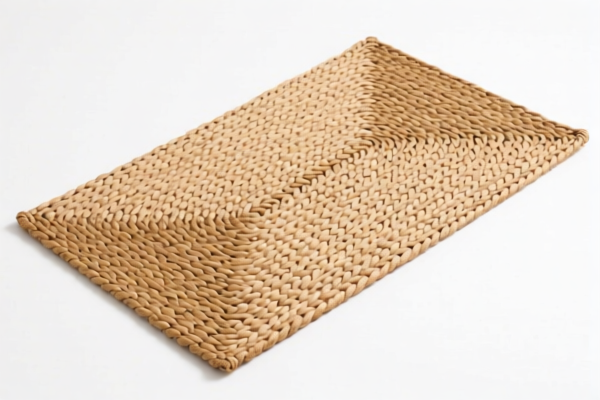
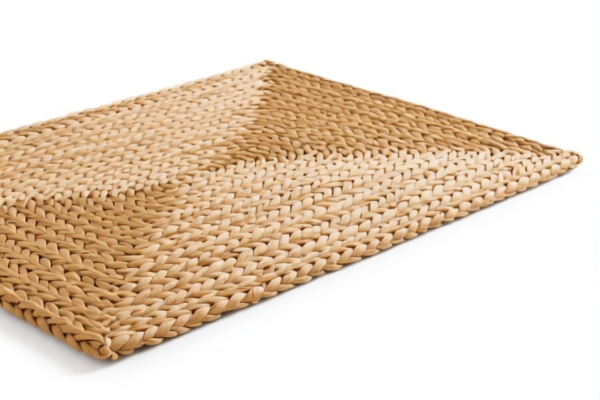
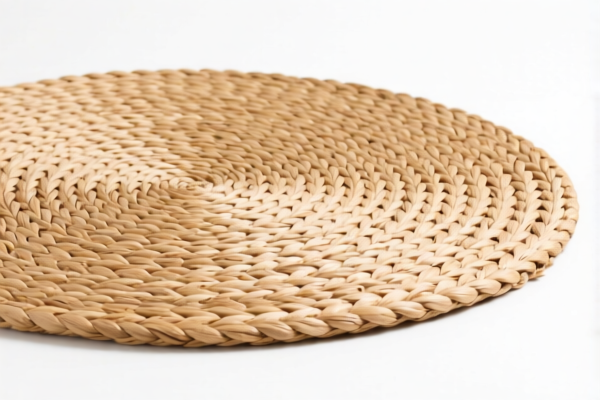
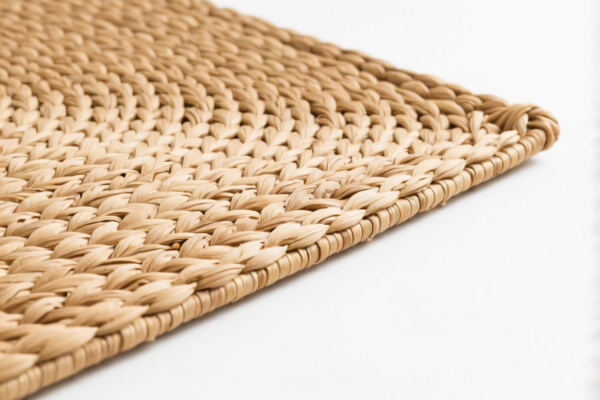
AI分析
🌿 Rattan Rug (Woven Rattan Mats/Floor Coverings)
🌐 HS Code Reference & Customs Clearance Guide | 2026 Latest Tariff Analysis | Professional Clearance Strategy
📌 I. Product Definition: Is It a "Rug" or a "Basket"?
Rattan rugs are floor coverings made from woven rattan, bamboo, or similar vegetable materials. In international trade, classification is critical because the duty rates vary drastically depending on whether customs views the product as a "Textile Carpet" or a "Woven Article of Vegetable Materials."
The core distinction lies in the material composition and manufacturing process: 1. Textile Carpets (HS 5705): Primarily made of man-made fibers or wool, potentially with rattan accents. Treated as floor coverings under Chapter 57. 2. Woven Rattan Articles (HS 4601/4602): Made primarily of natural rattan, bamboo, or similar materials woven into mats or mats-like objects. Treated under Chapter 46 (Products of vegetal plaiting materials).
⚠️ Key Classification Point:
- If the product is predominantly natural rattan/bamboo and woven/plaited → Chapter 46.
- If the product is a carpet made of synthetic fibers with minor rattan decoration → Chapter 57.
- Misclassification Risk: Declaring a pure rattan mat as a "carpet" (5705) when it is legally a "woven article" (4601/4602) can lead to severe penalties, back-duties, and shipment delays.
📦 II. HS Code Classification Matrix (2026 Latest Tariff Data)
Below is the exhaustive list of possible classifications for "Rattan Rug" based on the provided dataset.
| HS Code | Product Description | Classification Logic | Total Tax Rate |
|---|---|---|---|
| 5705.00.20.90 | Other Carpets & Textile Floor Coverings | Classified as a textile carpet. Applied when the primary material is fiber-based (synthetic/wool) or considered a "carpet" under Chapter 57. | 38.3% |
| 4602.12.45.00 | Woven Articles of Rattan (Plaiting Materials) | Classified as a woven article. Specifically for rattan-based plaited goods under heading 4602. | 41.6% |
| 4602.12.35.00 | Woven Materials of Rattan | Classified as woven rattan material. Often applies to rolls or sheets of woven rattan before final shaping, or specific sub-positions for woven mats. | 10.0% |
| 4601.22.80.00 | Plaited Goods & Floor Coverings (Other) | Classified as plaited goods/floor covering. Applies to woven mats that do not fit specific sub-categories but are floor coverings made of plaited materials. | 35.0% |
| 4601.22.40.00 | Matting & Plaited Materials | Classified as matting. For traditional rattan mats or woven floor coverings under heading 4601. | 38.3% |
🔍 Critical Insight:
- The lowest tax rate (10.0%) is available under 4602.12.35.00, but it has a strict requirement: Base Duty 0% + Section 301/122 Tariff 0%. This suggests a specific, possibly exempted or preferential sub-category for certain woven rattan materials.
- The highest tax rate (41.6%) applies to 4602.12.45.00, which includes the standard 6.6% base duty plus heavy add-on tariffs.
- Chapter 57 (5705.00.20.90) is risky because it attracts the standard 3.3% base duty plus all add-ons, totaling 38.3%.
💰 III. 2026 Tariff Rate Breakdown (Detailed Tax Analysis)
✅ Applicable Market: United States (US)
✅ Origin: China (CN)
✅ Policy Context: Includes Section 301 Tariffs (25%) and Section 122 Tariffs (10%) as per the provided data.
🎯 1. 5705.00.20.90 – Carpets & Textile Floor Coverings
| Item | Details |
|---|---|
| Base Duty | 3.3% |
| Section 301 Add-on | 25.0% |
| Section 122 Add-on | 10.0% |
| Total Rate | 38.3% |
| Calculation | CIF Value × 38.3% |
| De Minimis Exemption | ❌ No (Deemed prohibited/non-exempt) |
| Legal Basis | Standard Chapter 57 + Section 301/122 Footnotes |
📌 Analysis:
- Even though it’s called a "carpet," if it’s primarily rattan, this classification is incorrect and leads to higher costs than the optimal 4602.12.35.00 path.
- The 3.3% base duty is higher than the 0% base duty for some rattan categories.
🎯 2. 4602.12.45.00 – Woven Rattan Articles
| Item | Details |
|---|---|
| Base Duty | 6.6% |
| Section 301 Add-on | 25.0% |
| Section 122 Add-on | 10.0% |
| Total Rate | 41.6% |
| Calculation | CIF Value × 41.6% |
| De Minimis Exemption | ❌ No |
| Legal Basis | Chapter 46 + Section 301/122 Footnotes |
📌 Analysis:
- This is the most expensive classification.
- Avoid this code unless your product specifically matches the sub-category definition (which may include certain treated or processed rattan items not covered by the lower-rate 4602.12.35.00).
🎯 3. 4602.12.35.00 – Woven Rattan Materials (OPTIMAL RATE)
| Item | Details |
|---|---|
| Base Duty | 0.0% |
| Section 301 Add-on | 0.0% |
| Section 122 Add-on | 10.0% |
| Total Rate | 10.0% |
| Calculation | CIF Value × 10.0% |
| De Minimis Exemption | ❓ Check Specific Exclusions (Likely excluded due to 122) |
| Legal Basis | Chapter 46 (Woven Vegetable Plaiting Materials) |
📌 Analysis:
- This is the best-case scenario.
- Base Duty 0%: No standard tariff.
- Section 301 (25%) Waived: Likely due to specific exemption or classification nuance for "woven materials" vs. "finished articles."
- Section 122 (10%) Applies: This is a specific tariff on certain goods, possibly including rattan products.
- Action: Verify if your product fits the "woven material" definition. If it’s a finished rug, customs may still argue it’s an "article," but this is the strongest argument for low duty.
🎯 4. 4601.22.80.00 – Plaited Goods & Floor Coverings
| Item | Details |
|---|---|
| Base Duty | 0.0% |
| Section 301 Add-on | 25.0% |
| Section 122 Add-on | 10.0% |
| Total Rate | 35.0% |
| Calculation | CIF Value × 35.0% |
| De Minimis Exemption | ❌ No |
| Legal Basis | Chapter 46 + Section 301/122 |
📌 Analysis:
- Mid-range cost.
- Better than 5705 and 4602.12.45.00, but worse than 4602.12.35.00.
- Use if the product is clearly a "floor covering" but doesn't fit the "woven material" sub-category.
🎯 5. 4601.22.40.00 – Matting & Plaited Materials
| Item | Details |
|---|---|
| Base Duty | 3.3% |
| Section 301 Add-on | 25.0% |
| Section 122 Add-on | 10.0% |
| Total Rate | 38.3% |
| Calculation | CIF Value × 38.3% |
| De Minimis Exemption | ❌ No |
| Legal Basis | Chapter 46 + Section 301/122 |
📌 Analysis:
- Same total rate as the textile carpet (5705).
- No advantage over the other Chapter 46 codes unless the physical product strictly matches the definition of "matting" (4601) vs. "woven articles" (4602).
🛠️ IV. Customs Clearance Practical Advice (Avoiding Pitfalls)
✅ 1. Documentation Checklist (Mandatory)
| Document | Required? | Description |
|---|---|---|
| Product Specifications | ✔️ | Detailed description: Material (100% Rattan? Blended?), Weave Type, Dimensions, Weight. |
| Photos | ✔️ | High-res images of the front, back, edges, and any labels. Must show it’s clearly a woven mat/rug. |
| Commercial Invoice | ✔️ | Must clearly state: "Woven Rattan Mat/Rug," HS Code, Unit Price, Total Value. |
| Packing List | ✔️ | Weight, dimensions, number of pieces. |
| Origin Certificate (CO) | ✔️ | Proof of Chinese origin (if applicable). |
| Material Declaration | ✔️ | Crucial: Explicitly state "% of Rattan vs. other materials." If <50% synthetic, it may not qualify for Chapter 46. |
| Customs Ruling (Optional) | ✔️ | If unsure, apply for an Advance Ruling from CBP to confirm if it falls under 4602.12.35.00. |
✅ 2. Declaration Strategy (Key Rules)
🔥 Rule #1: "Material Defines Chapter"
- If the product is >50% rattan/vegetable material by weight or value, aim for Chapter 46.
- If it’s <50% or primarily synthetic fibers with rattan trim, it may fall under Chapter 57.🔥 Rule #2: "Article vs. Material"
- Finished Rug/Mat: Usually 4602 (Finished woven articles).
- Rolls/Sheets: Usually 4601 (Plaited materials).
- Optimization: Check if your product can be classified as 4602.12.35.00 (Woven Material) if it’s sold in rolls or basic mats. This yields the 10% rate.🔥 Rule #3: "Name Matters"
- Good: "Woven Rattan Floor Mat," "Natural Rattan Plaited Rug."
- Bad: "Synthetic Carpet with Rattan Design" (if not true), "Luxury Area Rug" (vague).
- Avoid: Terms like "Carpet" if it’s clearly a natural woven mat, as this may trigger Chapter 57 scrutiny.
✅ 3. Special Scenarios
| Scenario | Recommendation |
|---|---|
| Mixed Material (Rattan + Jute) | If jute is dominant, still Chapter 46. If synthetic is dominant, Chapter 57. Document blend clearly. |
| With Backing (Rubber/Fabric) | If the backing is minimal and for grip, still Chapter 46. If it’s a heavy textile backing, it may push it to Chapter 57. |
| OEM Custom Design | Provide design files to prove the "woven" nature. Avoid over-editing descriptions. |
| Dropshipping (De Minimis) | Note: Even with 10% tax, Section 122 (10%) may prevent de minimis exemption ($800). Check current CBP enforcement on Section 122. If 122 applies, de minimis is likely not available. |
🌍 V. Global Market Comparison (2026 Overview)
| Market | Likely HS Code | Est. Duty | Notes |
|---|---|---|---|
| 🇺🇸 USA | 4602.12.35.00 |
10% | Best rate. Avoid 4602.12.45.00 (41.6%). |
| 🇪🇺 EU | 4601.22 / 4602.12 |
0-6% | No Section 301/122 tariffs. Lower overall cost. |
| 🇨🇳 China | 4602.12 |
0-10% | Import duties apply, but no US add-ons. |
| 🇬🇧 UK | 4602.12 |
0-6% | Post-Brexit tariffs similar to EU pre-Brexit. |
📌 Conclusion:
- US market is the most challenging due to Section 301 and Section 122 tariffs.
- Optimization Opportunity: Correctly classifying as4602.12.35.00saves 30+ percentage points compared to misclassification.
📌 VI. Common Mistakes & Pitfalls (Learn from Others' Errors)
❌ Mistake 1: Declaring as 5705 (Carpet) without justification.
👉 Result: 38.3% duty. May be rejected if customs inspector sees natural rattan.
👉 Fix: Use Chapter 46 if natural material >50%.
❌ Mistake 2: Using 4602.12.45.00 when 4602.12.35.00 applies.
👉 Result: 41.6% vs 10%. Loss of 31.6% in profit.
👉 Fix: Verify if product fits "woven material" vs "finished article" definitions.
❌ Mistake 3: Ignoring Section 122 (10%).
👉 Result: Assuming de minimis exemption applies.
👉 Fix: Assume no de minimis if Section 122 is cited. Plan for full duty payment.
❌ Mistake 4: Vague Description "Rattan Rug."
👉 Result: Customs assigns highest possible rate.
👉 Fix: Use precise description: "100% Natural Rattan, Hand-Woven, 5'x7' Floor Mat."
🎯 VII. Conclusion: Professional Classification Saves Money
🎯 Key Takeaway:
Target HS Code:
4602.12.35.00
- Total Duty: 10%
- Base: 0% | 301: 0% | 122: 10%🚀 Action Plan:
1. Confirm Material: Ensure rattan is the primary material.
2. Check Sub-Category: Does your product fit "woven material" (4602.12.35.00)? If yes, use it.
3. Document Everything: Provide photos, specs, and material breakdown.
4. Prepare for 10% Duty: Budget for the Section 122 tariff.
📌 Pro Tip:
If you are unsure, apply for a CBP Advance Ruling before shipping. The cost of the ruling is far less than the cost of 30%+ in back duties and penalties.
📣 Ready to Ship?
✅ Verify HS Code
4602.12.35.00
✅ Prepare Material Declaration
✅ Calculate 10% Duty
✅ Ship with Confidence!
✨ Accurate Classification = Lower Costs + Faster Clearance
💼 Don’t let misclassification eat your margins!
用户评价
关于 HS 编码归类
协调制度(HS)是由世界海关组织(WCO)制定的国际贸易商品分类标准。全球 200 多个国家采用 HS 系统作为海关关税、贸易统计和进出口监管的基础。
每个 HS 编码遵循以下层级结构:
- 章(2 位)——商品大类(例如:第 84 章:机器和机械设备)
- 品目(4 位)——章内的更具体分类
- 子目(6 位)——国际通用细分,所有 WCO 成员国统一使用
- 本国细分(8-10 位)——各国自行扩展的细分编码,如美国 HTSUS 10 位编码
正确的 HS 编码归类对于顺利通关、准确缴纳关税和遵守贸易法规至关重要。错误归类可能导致海关延误、多缴关税或罚款。
从CN进口到US时,适用的关税税率可能包括:
- 最惠国(MFN)税率——适用于 WTO 成员国的标准关税税率
- 普通税率——适用于无贸易协定国家
- 贸易救济关税——附加关税,如 301 条款(反倾销)、232 条款(国家安全)或反补贴税
本页内容仅供参考。如需正式归类,请咨询当地海关或持牌报关代理。