Raw Coniferous Wood
CN → US| HS编码 | 关税税率 | 原产国 | 目的国 | 文档 |
|---|---|---|---|---|
| 4407190092 | 35.0% | CN | US | 官方文档 |
| 4403250164 | 35.0% | CN | US | 官方文档 |
| 4401110000 | 35.0% | CN | US | 官方文档 |
| 4407190066 | 35.0% | CN | US | 官方文档 |
| 4403210130 | 35.0% | CN | US | 官方文档 |
商品图片
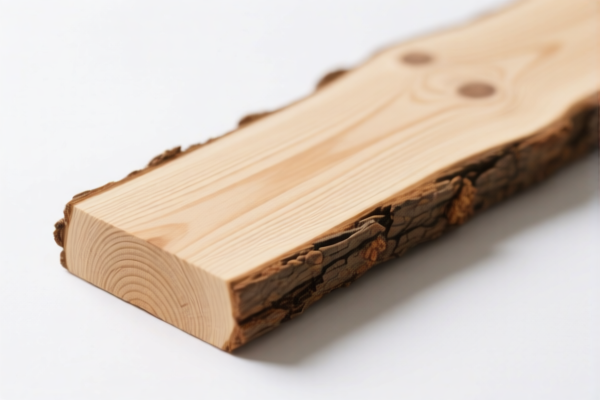
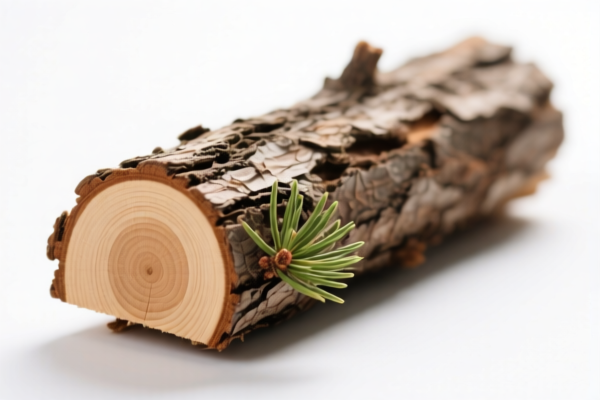
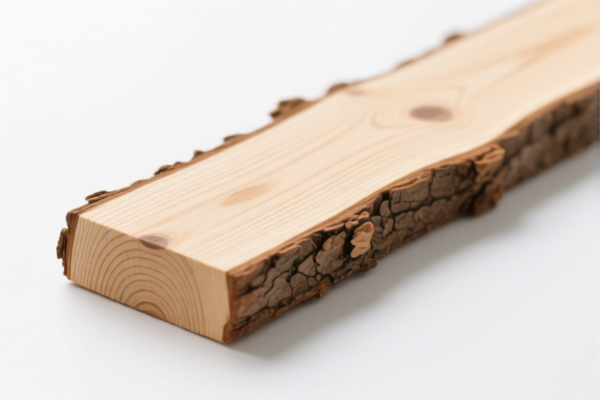
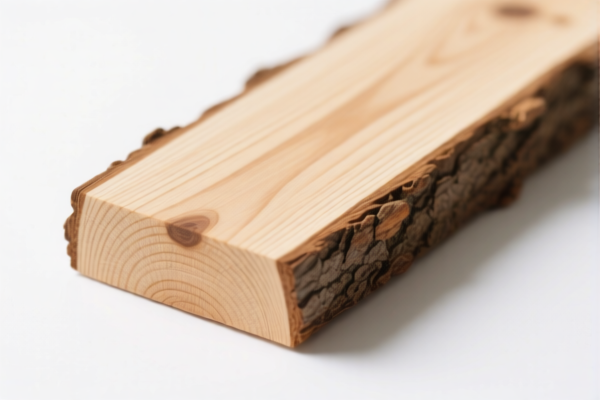
AI分析
🌲 Raw Coniferous Wood: The Heavy Hitter of US Import Tariffs
🌐 HS Code Reference & Customs Clearance Guide | 2026 Latest Tariff Breakdown | Professional Clearance Strategy
📌 I. Product Definition & Classification: What Exactly is "Raw Coniferous Wood"?
Raw Coniferous Wood (针叶木建筑原木) refers to untreated, unprocessed timber derived from coniferous trees (such as pine, spruce, fir, cedar, etc.), primarily used for construction, structural purposes, or further industrial processing. In international trade, precision in classification is critical because the form (round logs vs. rough sawn) and the specific species dictate the HS Code and, consequently, the 35% total tariff burden for Chinese-origin goods.
⚠️ Key Distinction:
- Round Logs (原木): Tree trunks with bark or without, not yet sawn or chipped. Usually classified under 4403 or 4407 depending on processing depth.
- Rough Sawn/Processed (粗制木材): Sawn but not planed or shaped. Often falls under 4407.
- Specific Species: Pine (松木) vs. General Coniferous (其他针叶木) may have different sub-classifications but often share similar tariff structures under current US trade policies.
📦 II. HS Code Classification Details (2026 Latest Tariff Authority)
Based on the provided data, all listed HS Codes for Raw Coniferous Wood attract a 35% total tax rate when imported into the USA from China. Here is the detailed breakdown:
| HS Code | Product Description (Summary) | Applicable Scenario | Processing State |
|---|---|---|---|
4407.19.00.92 |
Coniferous wood, construction logs, meeting material & log form requirements | General coniferous construction logs | 🌲 Raw Log / Rough Form |
4403.25.01.64 |
Coniferous construction logs, falling under "Other Coniferous" category | Other species of coniferous logs | 🌲 Raw Log |
4401.11.00.00 |
Coniferous wood, fully compliant with material & log form classification | Fuel wood or rough timber logs | 🪵 Log / Rough Timber |
4407.19.00.66 |
Coniferous construction logs, meeting rough timber form & treatment state | Rough sawn or treated logs | 🪚 Roughly Processed |
4403.21.01.30 |
Coniferous construction logs, meeting Pine species & log form requirements | Pine logs specifically | 🌲 Pine Log |
🔍 Critical Reminder:
- All five codes listed above share the SAME total tax rate of 35%.
- The distinction lies in the physical state (log vs. rough sawn) and species (Pine vs. Other).
- Misclassifying a Pine Log (4403.21.01.30) as a General Coniferous Log (4407.19.00.92) may trigger customs audits if species verification is required, even if the tariff rate is identical.
💰 III. 2026 Latest Tariff Rate Breakdown (Detailed Tax Clauses)
✅ Applicable Country: United States (US)
✅ Country of Origin: China (CN)
✅ Effective Time: Current enforcement (Section 301 & IEEPA provisions)
🎯 1. Universal Tax Structure for All Listed HS Codes
| Component | Rate | Legal Basis / Description |
|---|---|---|
| Base Tariff (MFN) | 0.0% | Most Favored Nation rate for wood products is often 0% or minimal. |
| Section 301 Additional Tariff | +25.0% | USITC Footnote 9903.88.01 / Section 301 of the Trade Act of 1974. Targets Chinese imports. |
| Section 122 / IEEPA Additional Tariff | +10.0% | Additional tariff under IEEPA (International Emergency Economic Powers Act) or specific Section 122 provisions targeting China. |
| TOTAL TAX RATE | 35.0% | Sum of Base + Section 301 + IEEPA/122 |
📌 Interpretation:
- "Base Tariff: 0.0%": The standard WTO/MFN duty is waived or zero for wood logs.
- "Additional Tariff: 25.0%": This is the Section 301 tariff, a longstanding punitive tariff on Chinese goods.
- "122 Clause Tariff: 10%": This refers to an additional 10% tariff, likely under IEEPA or specific Section 122 trade provisions, applied on top of the 301 tariff.
- Combined Impact: The effective duty is 35% of the CIF (Cost, Insurance, and Freight) value. This is a HIGH TARIFF environment for Chinese wood exports.
📊 Tax Calculation Example:
- CIF Value of Shipment: $100,000 USD
- Base Duty: $0
- Section 301 Duty (25%): $25,000
- Section 122/IEEPA Duty (10%): $10,000
- Total Duty Payable: $35,000 USD
🛠️ IV. Customs Clearance Practical Advice (Avoiding Pitfalls)
✅ 1. Documentation Checklist (Must-Have)
| Document | Required? | Notes |
|---|---|---|
| ✅ Commercial Invoice | ✔️ | Must clearly state "Coniferous Wood Logs" and specify species (e.g., Pine, Spruce). |
| ✅ Packing List | ✔️ | Detail volume (cubic meters or board feet) and weight. |
| ✅ Phytosanitary Certificate | ✔️ | Crucial! Issued by the exporting country’s plant protection agency to prove freedom from pests/diseases. |
| ✅ Fumigation Certificate | ✔️ | Proof of treatment against insects (ISPM 15 standard). |
| ✅ Bill of Lading (B/L) | ✔️ | Show accurate description matching invoice. |
| ✅ Species Declaration | ✔️ | Explicitly state if "Pine" (4403.21.01.30) or "Other Coniferous" (4407.19.00.92). |
✅ 2. Classification Strategy (Key Rules)
🔥 "Species First, Form Second, Tariff Third!"
| Situation | Correct HS Code Suggestion | Reason |
|---|---|---|
| Pine Logs | 4403.21.01.30 |
Specifically covers Pine (松木). |
| Other Coniferous Logs | 4403.25.01.64 |
Covers non-Pine conifers like Spruce, Fir, etc. |
| Rough Sawn/Processed Logs | 4407.19.00.66 / 4407.19.00.92 |
If the wood is sawn but not planed, it may fall under 4407. |
| Fuel Wood / Rough Timber | 4401.11.00.00 |
If intended for fuel or very rough state. |
📌 Warning:
- Do NOT misclassify Pine logs as "Other Coniferous" to avoid scrutiny; customs may require wood samples for DNA testing.
- If the wood is treated (e.g., with preservatives), ensure the invoice reflects this, as it may affect the "form" description.
✅ 3. Special Circumstances
| Scenario | Handling Advice |
|---|---|
| Mixed Species | Declare the primary species by volume. If mixed, consider splitting shipments or declaring as "Other Coniferous" (4403.25.01.64) to simplify, but ensure accuracy. |
| Wood Waste/Bark | May fall under 4401.11.00.00 or 4401.21.00.00 (wood chips). Ensure the description matches "Logs" vs. "Waste". |
| Treated Wood | If chemically treated, it may be subject to additional EPA regulations. Ensure compliance with US EPA standards. |
🌍 V. Global Market Comparison (2026)
| Country/Region | Recommended HS Code | Tariff (CN Origin) | Certification Required | Notes |
|---|---|---|---|---|
| 🇺🇸 USA | 4403.21.01.30 / 4407.19.00.92 |
35% (25% + 10%) | Phytosanitary + Fumigation | High Tariff Barrier |
| 🇨🇳 China | 4403.21.01.30 |
0% - 5% | N/A (Export) | Low export duty |
| 🇪🇺 EU | 4403.21.00 |
0% (If FSC Certified) | FSC/PEFC + IPPC | No Section 301 |
| 🇯🇵 Japan | 4403.21.00 |
0% - 2.5% | IPPC | Competitive market |
| 🇰🇷 South Korea | 4403.21.00 |
0% (If FTA applied) | FTA Certificate | KORUS FTA advantage |
📌 Conclusion:
- The US market is the most expensive for Chinese Raw Coniferous Wood due to the 35% combined tariff.
- EU, Japan, and Korea offer 0% or low tariffs, making them more attractive markets if supply chain flexibility allows.
- Cost-Saving Tip: If exporting to the US, consider sourcing from non-Chinese countries (e.g., Canada, Russia) to avoid the 301/122 tariffs, or factor the 35% into your pricing strategy.
📌 VI. Common Mistakes & Pitfalls (Lessons Learned)
❌ Mistake 1: Ignoring the Phytosanitary Certificate
👉 Consequence: Shipment detained or destroyed at US port by USDA APHIS.
✅ Fix: Always include a valid Phytosanitary Certificate issued by the country of origin.
❌ Mistake 2: Misclassifying Pine as Other Coniferous
👉 Consequence: Customs audit, potential fines for misdeclaration, even if tariff is same.
✅ Fix: Declare species accurately. Use "Pinus sylvestris" or "Picea abies" in the description.
❌ Mistake 3: Assuming Base Tariff = Total Tariff
👉 Consequence: Underpaying duty by 35%, leading to penalties and back-taxes.
✅ Fix: Always calculate Total Tax = 35% for Chinese-origin logs.
❌ Mistake 4: Confusing Logs with Sawn Timber
👉 Consequence: Incorrect HS Code selection (e.g., using 4407 for logs).
✅ Fix: Check the physical form. Logs = 4403/4401. Sawn = 4407.
🎯 VII. Conclusion: Precision is Profit
🎯 Remember the Formula:
🔹 "Pine or Other? Log or Sawn? Check the Form!"
🔹 "35% Tax on US Imports: Plan for 25% + 10%!"
🔹 "Phytosanitary Certificate is Your Passport to the US!"
📌 Pro Tip:
For large-volume shipments, consider applying for a Customs Ruling from CBP to confirm the specific HS Code for your exact product mix. This provides legal certainty and prevents post-import audits.
📣 Immediate Action:
📞 Consult a licensed customs broker.
📄 Prepare Phytosanitary and Fumigation Certificates.
📊 Calculate landed cost with 35% tariff.
🚀 Ensure smooth clearance and protect your margins!
✨ Professional Clearance Starts with Accurate Classification!
💼 Every percentage point matters in global trade!
用户评价
关于 HS 编码归类
协调制度(HS)是由世界海关组织(WCO)制定的国际贸易商品分类标准。全球 200 多个国家采用 HS 系统作为海关关税、贸易统计和进出口监管的基础。
每个 HS 编码遵循以下层级结构:
- 章(2 位)——商品大类(例如:第 84 章:机器和机械设备)
- 品目(4 位)——章内的更具体分类
- 子目(6 位)——国际通用细分,所有 WCO 成员国统一使用
- 本国细分(8-10 位)——各国自行扩展的细分编码,如美国 HTSUS 10 位编码
正确的 HS 编码归类对于顺利通关、准确缴纳关税和遵守贸易法规至关重要。错误归类可能导致海关延误、多缴关税或罚款。
从CN进口到US时,适用的关税税率可能包括:
- 最惠国(MFN)税率——适用于 WTO 成员国的标准关税税率
- 普通税率——适用于无贸易协定国家
- 贸易救济关税——附加关税,如 301 条款(反倾销)、232 条款(国家安全)或反补贴税
本页内容仅供参考。如需正式归类,请咨询当地海关或持牌报关代理。