Raw Sheepskin (Unprocessed, Uncurled)
CN → US| HS编码 | 关税税率 | 原产国 | 目的国 | 文档 |
|---|---|---|---|---|
| 4301300000 | 10.0% | CN | US | 官方文档 |
| 4102291090 | 17.5% | CN | US | 官方文档 |
| 4102101000 | 17.5% | CN | US | 官方文档 |
| 4301900000 | 10.0% | CN | US | 官方文档 |
| 4105300000 | 12.0% | CN | US | 官方文档 |
商品图片
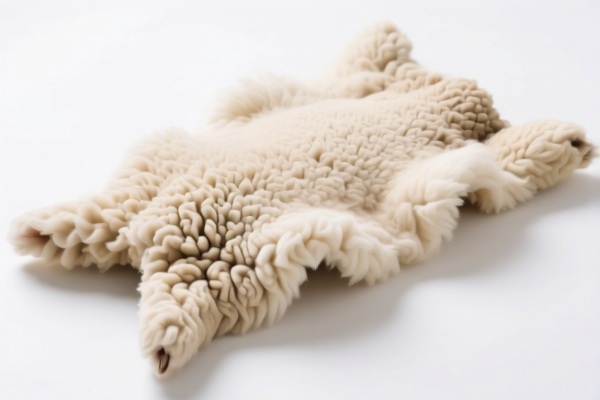
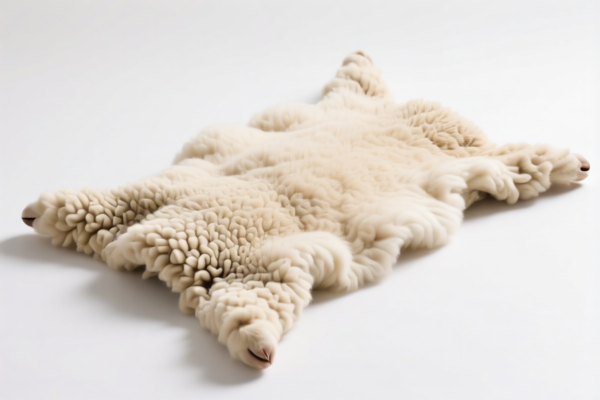
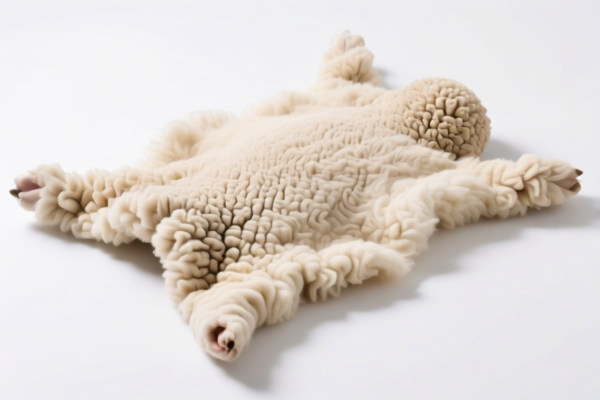
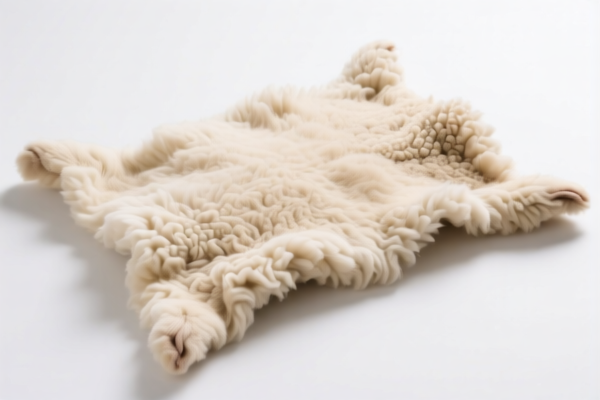
AI分析
🐑 Raw Sheepskin (Unprocessed, Uncurled) | 🌐 HS Code Classification & Clearance Strategy
📋 Executive Summary
Product: Raw Sheepskin (Unprocessed, Dry, Uncurled)
Origin: Likely China (Given the "122 Clause" and Section 301 context in data)
Target Market: United States (US)
Key Challenge: Distinguishing between "Raw Hides/Skins" (Chapter 41) and "Furskins" (Chapter 43). Misclassification can lead to significant duty discrepancies or customs delays.
⚠️ Critical Insight: The terms "Raw," "Unprocessed," and "Dry" strongly suggest Chapter 41 (Leather). However, if the wool is intact and of high quality suitable for fur products, US Customs may argue for Chapter 43 (Furs). This document analyzes all plausible classifications from the provided data.
📦 I. HS Code Classification Analysis (Based on Provided Data)
Below is the detailed breakdown of the five HS Codes provided in <DATA>, explaining the rationale for each and the corresponding tax implications.
1️⃣ HS Code: 4301.30.00.00
- Classification Logic:
The classification relies on the definition of "Raw Sheepskins" as Furskins.- Material: Sheepskin.
- State: Unprocessed (Raw).
- Justification: This code specifically targets "Lamb and other sheep and goat furskins, raw." The key assumption here is that the sheepskin is treated as a fur raw material rather than a leather raw material. This is often applied when the pelt is intended for furrier use (e.g., coats, rugs) rather than tanning for leather.
- Tax Details:
- Total Tax: 10.0%
- Breakdown:
- Base Duty: 0.0%
- Section 301 (Trade War) Duty: 0.0%
- Section 122 (IEEPA) Duty: 10% (Applied to Chinese goods)
2️⃣ HS Code: 4102.29.10.90
- Classification Logic:
This code falls under "Sheep and Lamb Skins, with Wool On, Raw".- Key Terms: 'Raw' and 'Unprocessed' = Not Pre-tanned; 'Sheepskin' = Sheep; 'Dry' = Preserved State.
- Justification: This is the standard classification for sheepskins with wool attached that are raw and dried/salted. It is distinct from skinned hides (without wool). The "Dry" state confirms it is a raw skin, not a leather hide.
- Tax Details:
- Total Tax: 17.5%
- Breakdown:
- Base Duty: 0.0%
- Section 301 (Trade War) Duty: 7.5%
- Section 122 (IEEPA) Duty: 10%
3️⃣ HS Code: 4102.10.10.00
- Classification Logic:
This code covers "Sheep and Lamb Skins, with Wool On, Raw".- Key Terms: 'Raw' and 'Unprocessed' = Raw State; 'Sheepskin' = Material.
- Justification: Similar to 4102.29.10.90, this is a primary code for raw sheepskins with wool. The slight difference in the 8-digit suffix may relate to specific sub-categories of wool presence or processing state within the raw skin definition. It emphasizes the raw nature of the material.
- Tax Details:
- Total Tax: 17.5%
- Breakdown:
- Base Duty: 0.0%
- Section 301 (Trade War) Duty: 7.5%
- Section 122 (IEEPA) Duty: 10%
4️⃣ HS Code: 4301.90.00.00
- Classification Logic:
This is a "Catch-all" for Furskins.- Material: Sheepskin.
- State: Raw (Raw Hide/Skin).
- Justification: Used for furskins that do not fit more specific subheadings in Chapter 43. It defines the product as a "raw fur" suitable for furrier use. It is broader than 4301.30.00.00 but shares the same duty rate structure.
- Tax Details:
- Total Tax: 10.0%
- Breakdown:
- Base Duty: 0.0%
- Section 301 (Trade War) Duty: 0.0%
- Section 122 (IEEPA) Duty: 10%
5️⃣ HS Code: 4105.30.00.00
- Classification Logic:
This code is for "Sheep and Lamb Skins, with Wool On, Tanned or Crusted".- Contradiction Alert: The product name specifies "Unprocessed" and "Raw".
- Justification: This code seems less appropriate based on the product name "Raw/Unprocessed." However, it is included in the data. It applies if the skin is considered Dry and potentially minimally processed (e.g., salted/dried) but not yet tanned into leather. The summary notes "Dry and Unprocessed," which might refer to the preservation method rather than tanning.
- Tax Details:
- Total Tax: 12.0%
- Breakdown:
- Base Duty: 2.0%
- Section 301 (Trade War) Duty: 0.0%
- Section 122 (IEEPA) Duty: 10%
📊 II. Tax Comparison & Strategy Table
| HS Code | Description | Base Duty | Section 301 | Section 122 | Total Duty | Risk Level |
|---|---|---|---|---|---|---|
| 4301.30.00.00 | Raw Sheepskins (Furskins) | 0.0% | 0.0% | 10.0% | 10.0% | ⭐⭐⭐⭐⭐ (Low Duty) |
| 4301.90.00.00 | Other Raw Furskins | 0.0% | 0.0% | 10.0% | 10.0% | ⭐⭐⭐⭐⭐ (Low Duty) |
| 4105.30.00.00 | Sheep Skins, with Wool, Dry | 2.0% | 0.0% | 10.0% | 12.0% | ⭐⭐⭐ (Medium) |
| 4102.29.10.90 | Sheep/Lamb Skins, with Wool, Raw | 0.0% | 7.5% | 10.0% | 17.5% | ⭐⭐⭐⭐ (High Duty) |
| 4102.10.10.00 | Sheep/Lamb Skins, with Wool, Raw | 0.0% | 7.5% | 10.0% | 17.5% | ⭐⭐⭐⭐ (High Duty) |
💡 Key Takeaway:
- Chapter 43 (Furskins) offers a lower total duty (10%) because it avoids the Section 301 tariff (7.5%).
- Chapter 41 (Leather Hides) incurs a higher total duty (12-17.5%) due to the addition of Section 301 tariffs.
- Strategy: If the goods are clearly raw sheepskins intended for fur, 4301.xx is the cost-effective choice. If they are for leather production, 4102.xx is the correct legal classification despite higher costs.
🛠️ III. Customs Clearance Recommendations
✅ 1. Documentation Requirements
To ensure smooth clearance and avoid reclassification disputes, provide the following:
| Document | Requirement | Purpose |
|---|---|---|
| Product Description | Clearly state: "Raw Sheepskin, Unprocessed, Dry, Uncurled" | Avoid ambiguity with "leather" or "fur coat" |
| Photos | High-res images of the pelt showing wool presence and raw state | Prove "with wool" and "unprocessed" |
| Processing Details | Explicitly state: "No tanning, no curing, no dyeing" | Confirm Chapter 41/43 vs. Chapter 41/43 distinction |
| Intended Use | Declare if for fur manufacturing or leather tanning | Supports classification under Ch. 43 or Ch. 41 |
| Packing List | Note if skins are "salted," "dried," or "fresh" | Affects preservation status but not HS code |
✅ 2. Classification Strategy
- Option A (Cost Savings): If the wool is intact and of commercial fur quality, classify under 4301.30.00.00.
- Advantage: Lower duty (10% vs 17.5%).
- Risk: US Customs may argue it's a leather raw material and reclassify to Ch. 41.
- Option B (Compliance Safety): If the skins are for leather tanning, classify under 4102.29.10.90.
- Advantage: Legally accurate for leather inputs.
- Disadvantage: Higher duty (17.5%).
✅ 3. Critical Warnings
- "Uncurled" State: Ensure the term "uncurled" does not imply any mechanical processing that might alter the "raw" definition. If curled, it might be considered processed.
- Section 122 (IEEPA): The 10% tariff applies to all Chinese-origin goods under these codes. There is no exemption.
- Section 301: Avoids if classified under Ch. 43. If Ch. 41, the 7.5% applies. Double-check the "Wool" status.
🌍 IV. Global Market Note
| Market | HS Code | Duty Rate | Notes |
|---|---|---|---|
| 🇺🇸 USA | 4301.30.00.00 | 10% | Best for Cost if Furskin |
| 🇺🇸 USA | 4102.29.10.90 | 17.5% | Standard for Leather Input |
| 🇨🇳 China | 4301.30.00.00 | 2-3% | Lower duty for export |
| 🇪🇺 EU | 4301.10.00 | 12% | Different structure; check EU Tariff |
📌 Conclusion: For US Imports from China, the HS Code 4301.30.00.00 offers the most favorable duty rate (10%) if the product is legally definable as a raw furskin. If it is strictly for leather production, expect 17.5%.
🎯 Final Checklist for Shippers
- [ ] Confirm Wool Presence: Is the wool intact? (Yes → Ch. 41/43; No → Ch. 41 Hides)
- [ ] Confirm State: Is it truly unprocessed? (Yes → Raw; No → Tanned/Processed)
- [ ] Choose Chapter: Furskin (Ch. 43) for lower duty vs. Leather Input (Ch. 41) for accuracy.
- [ ] Prepare Photos: Clear image of the raw, woolly side.
- [ ] Calculate Landed Cost: Include 10% (Ch. 43) or 17.5% (Ch. 41) + freight + insurance.
✨ Pro Tip:
"Raw Sheepskin" is a borderline case.
If in doubt, apply for a Binding Tariff Ruling from US Customs (CBP) before shipment to lock in the 10% duty rate under Chapter 43. This avoids future disputes and 17.5% back-taxes.
📞 Need Help? Consult a licensed customs broker to review your specific pelt samples.
🚀 Clearance Success = Accurate Classification + Complete Documentation.
用户评价
关于 HS 编码归类
协调制度(HS)是由世界海关组织(WCO)制定的国际贸易商品分类标准。全球 200 多个国家采用 HS 系统作为海关关税、贸易统计和进出口监管的基础。
每个 HS 编码遵循以下层级结构:
- 章(2 位)——商品大类(例如:第 84 章:机器和机械设备)
- 品目(4 位)——章内的更具体分类
- 子目(6 位)——国际通用细分,所有 WCO 成员国统一使用
- 本国细分(8-10 位)——各国自行扩展的细分编码,如美国 HTSUS 10 位编码
正确的 HS 编码归类对于顺利通关、准确缴纳关税和遵守贸易法规至关重要。错误归类可能导致海关延误、多缴关税或罚款。
从CN进口到US时,适用的关税税率可能包括:
- 最惠国(MFN)税率——适用于 WTO 成员国的标准关税税率
- 普通税率——适用于无贸易协定国家
- 贸易救济关税——附加关税,如 301 条款(反倾销)、232 条款(国家安全)或反补贴税
本页内容仅供参考。如需正式归类,请咨询当地海关或持牌报关代理。