Raw Sheepskin Preserved Untanned
CN → US| HS编码 | 关税税率 | 原产国 | 目的国 | 文档 |
|---|---|---|---|---|
| 4102291090 | 17.5% | CN | US | 官方文档 |
| 4103901190 | 17.5% | CN | US | 官方文档 |
| 4103901130 | 17.5% | CN | US | 官方文档 |
| 4102101000 | 17.5% | CN | US | 官方文档 |
| 4103901200 | 17.5% | CN | US | 官方文档 |
商品图片
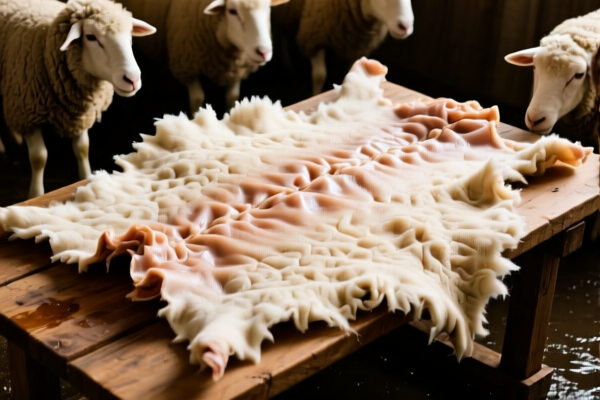
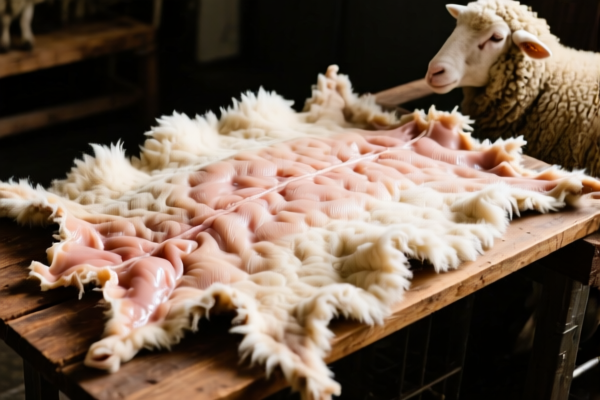
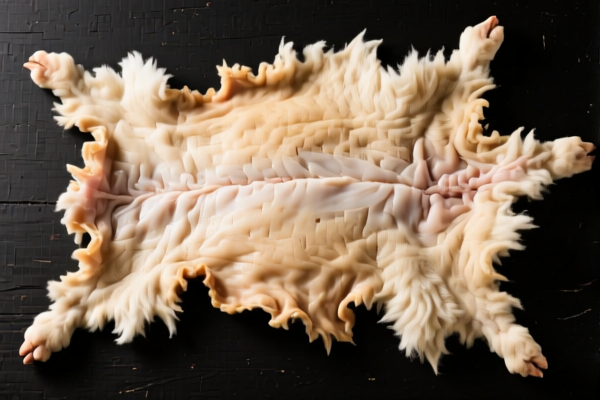
AI分析
🐑 Raw Sheepskin: Preserved & Untanned (未鞣制保存羊皮)
🌐 HS Code Reference & Customs Clearance Guide | 2026 Latest Tariff Analysis | Professional Clearance Strategy
📌 Part I: Product Definition & Classification: Do You Really Understand "Raw Sheepskin"?
Raw Sheepskin (Preserved, Untanned) refers to the hides or skins of sheep or lambs that have been removed from the animal but have not undergone the tanning process to convert them into leather. They have undergone specific "preservation" treatments (such as salting, freezing, or chemical preservation) to prevent decomposition during storage and transport, but they remain in their natural, raw state.
In international trade, the classification depends heavily on: 1. Animal Type: Sheep vs. Lamb. 2. State: Whether it is salted, frozen, or chemically preserved. 3. Morphology: With hair/wool vs. Hairless/Skinned.
⚠️ Critical Distinction Point:
- If the skin is with wool/hair and preserved (e.g., salted) → Usually falls under 4102 (Sheep/Lamb skins).
- If the skin is hairless (skinned/sheared) and untanned → Falls under 4103 (Other raw hides and skins).
- "Untanned" is key: If it were tanned, it would be Chapter 41 Part B (Leather), not Part A (Raw Hides).
📦 Part II: HS Code Classification Details (2026 Latest Tariff Authority Comparison)
Based on the provided data, here are the specific HS Codes for Raw Sheepskin, Preserved, Untanned:
| HS Code | Product Description (Summary) | Applicable Scenario | Tax Details (Total) |
|---|---|---|---|
4102.29.10.90 |
Lamb Skins (Preserved, Untanned): Matches lamb skins (untanned, preserved) or hairless sheep skins untanned,符合绵羊或羔羊原皮、未经鞣制及保存处理的定义。 | Lamb skins that are preserved but not tanned; or hairless sheep skins that are untanned. | 17.5% |
4103.90.11.90 |
Other Raw Hides & Skins (Untanned): Matches hairless sheep skins untanned,符合其他未经预鞣原皮的分类描述。 | Hairless sheep skins that do not fit specific animal categories or are general "other" raw skins. | 17.5% |
4103.90.11.30 |
Other Raw Hides & Skins (Goat/ kid): Matches hairless sheep skins untanned,符合未预鞣且属于特定动物皮(山羊/小山羊)分类的特征。 | Note: Description mentions "Sheep" but summary refers to "Goat/Kid" specific classification. Use with caution if product is strictly sheep. | 17.5% |
4102.10.10.00 |
Sheep/Lamb Skins (Untanned): Matches hairless sheep skins untanned,完全符合该编码关于未鞣制羊皮的定义。 | Standard classification for untanned sheep/lamb skins. | 17.5% |
4103.90.12.00 |
Lamb Skins (Preserved, Untanned): Matches lamb skins (untanned, preserved),符合原皮及具体皮种的分类定义。 | Specific classification for preserved lamb skins. | 17.5% |
🔍 Key Reminder:
- All listed codes carry a Total Tax Rate of 17.5%.
- The difference between4102(Sheep/Lamb) and4103(Other) is morphological: 4102 is typically for skins with wool/hair or specific sheep/lamb definitions, while 4103 is often for hairless or "other" categories.
- "Preserved" means it has been treated (salted, frozen, etc.) to prevent rot, but NOT tanned into leather.
💰 Part III: 2026 Latest Tariff Rate Details (Including Surcharges & Policy Add-ons)
✅ Applicable Country: USA (US)
✅ Country of Origin: China (CN)
✅ Effective Time: 2025年11月10日起 (Including subsequent imports)
🎯 1. General Tariff Structure for Raw Sheepskin
| Item | Content |
|---|---|
| Base Tariff Rate | 0.0% (ad valorem) |
| Section 301 Surtax | +7.5% |
| Section 122 Tariff | +10% |
| Total Tax Rate | 17.5% |
| Tax Calculation | CIF Value × 17.5% |
| De Minimis Exemption | ❌ NOT Available (deny_de_minimis) |
| Legal Basis Path | Section 301: 7.5% + Section 122: 10% |
📌 Explanation:
- "Base Tariff 0%": Raw hides and skins generally have a low base duty in many countries.
- "Section 301 Surtax 7.5%": This is the standard US retaliatory tariff on certain Chinese goods.
- "Section 122 Tariff 10%": This is a specific additional tariff under US Trade Act Section 122, often applied to imported goods to protect domestic industries or address trade deficits.
- Combined 17.5%: This is a fixed, high effective rate due to the combination of surcharges.
- No De Minimis: Unlike consumer goods under $800, raw materials like sheepskin do not qualify for the $800 de minimis exemption. You must pay the full 17.5% duty.
🛠️ Part IV: Customs Clearance Practical Advice (Real-World Pitfall Avoidance Guide)
✅ 1. Required Documentation Checklist (All Mandatory)
| Document | Must Provide | Explanation |
|---|---|---|
| ✅ Commercial Invoice | ✔️ | Must clearly state: "Raw Sheepskin, Preserved, Untanned," HS Code, Country of Origin. |
| ✅ Packing List | ✔️ | Detail weight (gross/net), number of skins, packaging type. |
| ✅ Product Specification | ✔️ | Describe preservation method (e.g., "Salted," "Frozen," "Chemical Preserved"). |
| ✅ Proof of Non-Tanning | ✔️ | Statement or lab report confirming the product is NOT tanned leather. |
| ✅ Phytosanitary Certificate | ✔️ | If applicable: Some jurisdictions require health certificates for animal products. |
| ✅ Certificate of Origin (CO) | ✔️ | Required for origin determination; affects tariff eligibility. |
✅ 2. Declaration Tips (Key Mnemonics)
🔥 “Preserved ≠ Tanned, Wool vs. Hairless Matters!”
| Scenario | Correct Declaration | Wrong Practice |
|---|---|---|
| Sheepskin with wool, salted | 4102.29.10.90 or 4102.10.10.00 |
Declare as "Leather" → Wrong HS, Penalty! |
| Hairless sheepskin, frozen | 4103.90.11.90 |
Declare as "Textile Material" → Wrong HS, Delay |
| Lamb skin, chemically preserved | 4103.90.12.00 |
Declare as "Goat Skin" → Misclassification |
| Tanned Sheepskin Leather | Different HS Code (Chapter 41 Part B) | Declare as "Raw Skin" → Under-declaration, Fraud Risk |
✅ 3. Special Handling Instructions
| Situation | Recommendation |
|---|---|
| OEM Custom Skins | Provide detailed specs to prove it’s raw and not leather. |
| Mixed Lots (Sheep + Goat) | Separate by animal type for accurate HS code assignment. |
| High Moisture Content | Ensure preservation is adequate to prevent mold (which can lead to rejection). |
| Labeling | Clearly label packages as "RAW HIDE - NOT FOR HUMAN CONSUMPTION" to avoid confusion with food items. |
🌍 Part V: Global Market Clearance Comparison (2026 Latest)
| Country/Region | Recommended HS Code | Tariff (China Origin) | Certification Requirements | Notes |
|---|---|---|---|---|
| 🇺🇸 USA | 4102.29.10.90 / 4103.90.11.90 |
17.5% | None specific (General FDA/USDA if applicable) | High tariff due to Section 301 & 122. No de minimis. |
| 🇨🇳 China | 4102.29.10.90 |
Varies (Check local) | None | Domestic trade may have different rules. |
| 🇪🇺 EU | 4102 / 4103 |
Varies (Usually 0-5%) | EU Animal Health Standards | Strict hygiene rules for animal products. |
| 🇦🇺 Australia | 4102 / 4103 |
Varies (Usually 0-5%) | Biosecurity Clearance | Strict biosecurity due to animal origin. |
| 🇯🇵 Japan | 4102 / 4103 |
Varies (Usually 0-5%) | Sanitary Certification | Requires health certificates for animal skins. |
📌 Conclusion:
- USA is the most complex market due to the 17.5% total tariff (0% base + 7.5% Section 301 + 10% Section 122).
- Biosecurity is a universal concern: All countries require proof that the skins are preserved and free from disease.
- No De Minimis in USA: Do not try to split shipments to avoid duties; it will be caught.
📌 Part VI: Common Mistakes & Pitfall Avoidance (Blood-Teaching Lessons)
❌ Mistake 1: Declaring "Raw Sheepskin" as "Leather"
👉 Consequence: Wrong HS code, potential fraud charges, fines, and seizure.
❌ Mistake 2: Ignoring "Preserved" status
👉 Consequence: If not properly preserved, goods may rot in transit, leading to rejection and disposal costs.
❌ Mistake 3: Mixing "With Wool" and "Hairless" in one declaration without clarification
👉 Consequence: Customs may inspect and reclassify, causing delays.
❌ Mistake 4: Assuming De Minimis applies
👉 Consequence: 17.5% duty will be charged in full. No $800 exemption for raw animal products.
✅ Correct Practice:
"Raw Sheepskins, Preserved (Salted), Untanned, Hair-On, HS Code 4102.29.10.90, Country of Origin: China"
🎯 Part VII: Conclusion: Professional Declaration, Cost Efficiency!
🎯 Remember the Mantra:
🔹 "Raw ≠ Leather, Preserved ≠ Tanned!"
🔹 "17.5% Total Tax in USA, No De Minimis Allowed!"
🔹 "Wool vs. Hairless Matters, Get HS Code Right!"
📌 Pro Tip:
- If your sheepskins are not from China (e.g., from Australia, New Zealand, South America), you may qualify for 0% base tariff and exemptions from Section 301/122 tariffs.
- Always apply for a Pre-Ruling from US Customs (CBP) if you are unsure about the classification of "Preserved" vs. "Tanned" status.
📣 Immediate Action:
📞 Contact a Licensed Customs Broker + Provide Product Photos + Confirm Preservation Method
🚀 Ensure your sheepskins clear customs smoothly, avoid penalties, and maximize profit!
✨ Professional Customs Clearance Starts with Accurate Classification!
💼 Every cent of tax matters—get it right from the start!
用户评价
关于 HS 编码归类
协调制度(HS)是由世界海关组织(WCO)制定的国际贸易商品分类标准。全球 200 多个国家采用 HS 系统作为海关关税、贸易统计和进出口监管的基础。
每个 HS 编码遵循以下层级结构:
- 章(2 位)——商品大类(例如:第 84 章:机器和机械设备)
- 品目(4 位)——章内的更具体分类
- 子目(6 位)——国际通用细分,所有 WCO 成员国统一使用
- 本国细分(8-10 位)——各国自行扩展的细分编码,如美国 HTSUS 10 位编码
正确的 HS 编码归类对于顺利通关、准确缴纳关税和遵守贸易法规至关重要。错误归类可能导致海关延误、多缴关税或罚款。
从CN进口到US时,适用的关税税率可能包括:
- 最惠国(MFN)税率——适用于 WTO 成员国的标准关税税率
- 普通税率——适用于无贸易协定国家
- 贸易救济关税——附加关税,如 301 条款(反倾销)、232 条款(国家安全)或反补贴税
本页内容仅供参考。如需正式归类,请咨询当地海关或持牌报关代理。