Raw Sheepskin or Lambskin
CN → US商品图片
AI分析
🐑 Raw Sheepskin or Lambskin (Unprocessed Fleece)
🌐 HS Code Reference & Customs Clearance Guide | 2026 Latest Tariff Analysis | Professional Clearance Strategy
📌 I. Product Definition & Classification: Do You Truly Understand "Raw Sheepskin"?
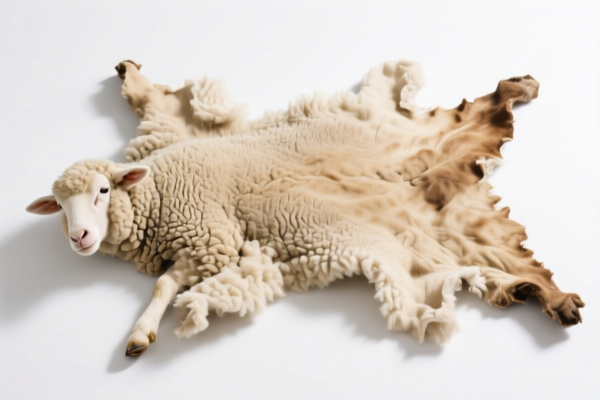
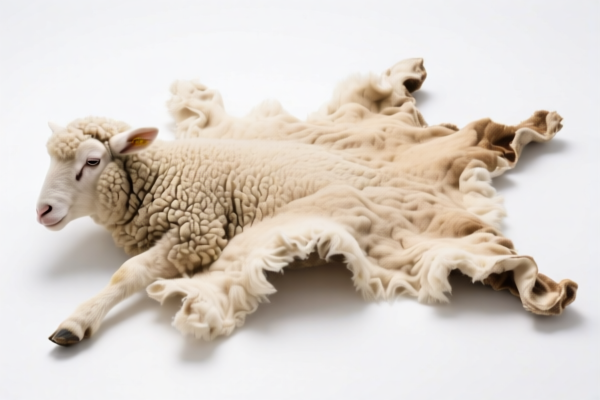
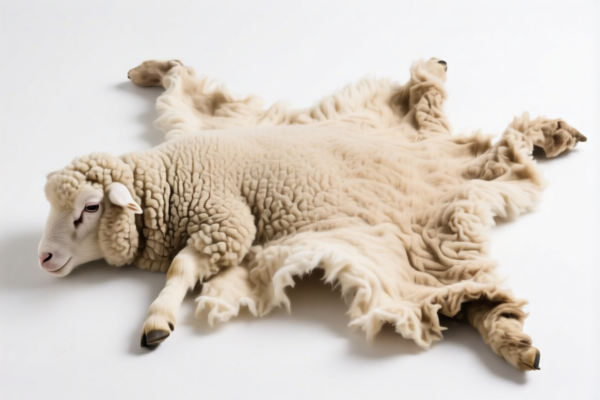
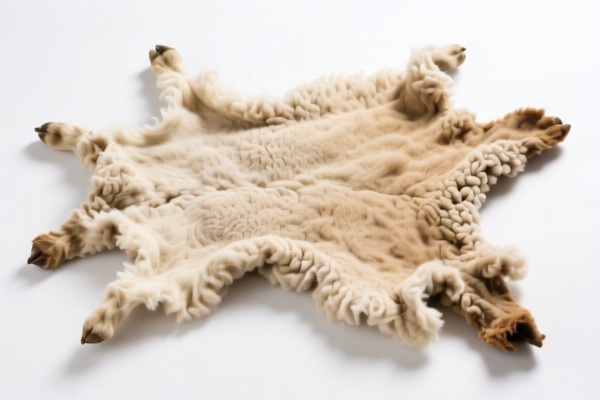
Raw Sheepskin (also referred to as Raw Lambskin when from younger animals) refers to animal hides or skins with the wool still attached, which have been freshly removed from the carcass and have undergone no further processing beyond cleaning, salting, drying, or preservation for transport. They are not tanned, bleached, or dressed.
In international trade, this category is strictly divided based on the type of animal and the state of the skin:
1. Sheepskins (from mature sheep): - Characterized by a dense, curly, or wavy wool coat. - Often used for rugs, pelts, and high-end fashion linings.
2. Lambskins (from young sheep): - Characterized by finer, softer, and often tighter-curl wool. - Highly valued for luxury garments (e.g., shearling jackets, gloves).
⚠️ Key Distinction Point:
- If the skin is tanned, pickled, or processed for leather goods → It falls under Chapter 41 (Leather).
- If the skin is raw, salted, dried, or merely cleaned with wool intact → It falls under Chapter 43 (Fur skins and furs).
- Crucial Rule: The presence of the wool/hair and the lack of tanning are the decisive factors for HS Code 4301.
📦 II. HS Code Classification Details (2026 Latest Tariff Authority Cross-Reference)
| HS Code | Product Description | Applicable Scenario | Tanned or Processed? |
|---|---|---|---|
| 4301.10.10.00 | Raw sheepskins and lambskins, with wool (including sheared skins) | Unprocessed fleece, salted/dried raw sheepskin | ❌ No (Raw) |
| 4301.10.90.00 | Other raw sheepskins and lambskins | Less common varieties; typically includes some minor variations not covered above | ❌ No (Raw) |
| 4103.20.00.00 | Sheep and lamb skins, tanned or crusted | Tanned raw hides ready for leather production | ✅ Yes (Tanned) |
| 4104.11.00.00 | Bovine leather, full grain, uncorrected | Cowhides (not sheep/lamb) | ✅ Yes (Tanned) |
| 4301.80.00.00 | Other furskins (e.g., mink, rabbit) | Not sheep/lamb | ❌ Irrelevant |
🔍 Key Reminder:
- Raw Sheepskin with wool attached must be classified under 4301.10.
- If the wool is removed or the skin is tanned, it moves to Chapter 41 (Leather), which has significantly different duty rates and regulatory requirements.
- Do not confuse "Raw Sheepskin" with "Shearling" (which may be tanned with wool inside). If it is tanned, it is generally classified under 4301.80 or 4104, depending on specific local interpretations, but Raw is strictly 4301.10.
💰 III. 2026 Latest Tariff Rate Details (Including Surcharges & Policy Add-ons)
✅ Applicable Country: United States (US)
✅ Country of Origin: China (CN)
✅ Effective Date: November 10, 2025 (including subsequent imports)
🎯 1. 4301.10.10.00 —— Raw Sheepskins and Lambskins, with Wool
| Item | Content |
|---|---|
| Base Tariff Rate | 0% (ad valorem) |
| USITC Additional Tariff | +25% (From USITC Footnote 9903.88.01) |
| IEEPA Additional Tariff | +10% (For China/HK products, effective from Nov 10, 2025) |
| Total Tariff Rate | 35% |
| Tax Calculation | CIF Value × 35% |
| De Minimis Eligibility | ❌ No (deny_de_minimis) |
| Legal Basis Path | IEEPA:9903.01.25 → IEEPA:9903.01.24 → USITC:4301.10.10.00 → FOOTNOTE:9903.88.01 |
📌 Explanation:
- The 25% USITC tariff is imposed under Section 301 of the Trade Act to protect domestic wool producers and raw material industries.
- The 10% IEEPA tariff is an additional national security-based levy on Chinese-origin goods.
- Combined Total: 35%. This is a high tariff category. Importers must budget accordingly.
- Unlike some electronics, raw agricultural/animal products like sheepskin do not qualify for the de minimis exemption (Section 321), meaning all shipments, regardless of value, are subject to formal entry and duties.
🎯 2. 4301.10.90.00 —— Other Raw Sheepskins and Lambskins
| Item | Content |
|---|---|
| Base Tariff Rate | 0% |
| USITC Additional Tariff | +25% |
| IEEPA Additional Tariff | +10% |
| Total Tariff Rate | 35% |
| Tax Calculation | CIF × 35% |
| De Minimis Eligibility | ❌ No |
| Legal Basis Path | IEEPA:9901.25 → IEEPA:9903.01.24 → USITC:4301.10.90.00 → FOOTNOTE:9903.88.01 |
📌 Note:
- Same tax treatment as4301.10.10.00.
- Applies to any raw sheep/lamb skin not explicitly listed in the "with wool" sub-category, though in practice, most raw sheepskins fall under 4301.10.10.
🛠️ IV. Customs Clearance Practical Advice (Battle-Tested Pitfall Avoidance)
✅ 1. Required Documentation Checklist (Mandatory)
| Document | Must Provide | Explanation |
|---|---|---|
| ✅ Commercial Invoice | ✔️ | Must clearly state "Raw Sheepskin" or "Raw Lambskin" and HS Code 4301.10.xx. Avoid vague terms like "Animal Skin." |
| ✅ Packing List | ✔️ | Detail weight (net and gross), number of skins, and packing method. |
| ✅ Salted/Dried Status Declaration | ✔️ | Confirm if skins are salted, wet-salted, or dried. This affects USDA inspection requirements. |
| ✅ USDA Import Permit | ✔️ | Critical: Raw animal products often require pre-approval from the USDA APHIS. Without this, goods will be detained or destroyed. |
| ✅ Certificate of Origin | ✔️ | To determine applicability of USITC/IEEPA tariffs. |
| ✅ Fumigation Certificate | ✔️ | If packed with wood pallets, ISPM 15 compliance is required. |
| ✅ Product Photos | ✔️ | Clear images showing the wool condition and any defects. |
✅ 2. Declaration Tips (Key Mnemonic)
🔥 "Raw is Raw, Wool is Key, 4301 Rule, No Tannery!"
| Scenario | Correct Declaration | Wrong Practice |
|---|---|---|
| Raw sheepskin with wool | 4301.10.10.00 |
Misclassified as leather (4104) → Penalty + Back Duties |
| Tanned sheepskin | 4103.20.00.00 |
Declared as raw → Incorrect Tariff |
| Sheared sheepskin (wool removed) | May fall under 4104 or 4301.80 depending on tanning |
Confusing "Raw" with "Processed" |
| Mixed shipment (Raw + Tanned) | Split Declaration | Bundling → Seizure Risk |
✅ 3. Special Circumstances Handling
| Situation | Handling Advice |
|---|---|
| Wool Attached vs. Removed | If wool is removed, it may no longer be "Raw Sheepskin" in the HS sense. Check if it’s considered "Raw Leather" (Chapter 41). |
| Salting Method | Wet-salted skins require stricter phytosanitary/zoosanitary checks than dry-salted. Declare accurately. |
| Country of Origin | If from Australia or New Zealand, tariffs may differ under specific FTAs. Check USMCA or AUSFTA if applicable. |
| USDA Compliance | Non-negotiable. Raw animal products are high-risk for disease (e.g., Foot-and-Mouth). Ensure all USDA forms are filed before shipment arrival. |
🌍 V. Global Customs Clearance Comparison (2026 Latest)
| Country/Region | Recommended HS Code | Tariff | Certification Requirements | Remarks |
|---|---|---|---|---|
| 🇺🇸 United States | 4301.10.10.00 |
35% (CN Origin) | USDA APHIS Permit + RoHS (if packaged with electronics) | High risk of inspection. |
| 🇨🇳 China | 4301.10.10.00 |
9.5% | No special import permit for raw hides (but export controls may apply) | Lower duty. |
| 🇪🇺 European Union | 4301.10.10 |
5.5% | EC Regulation 1069/2009 (Animal By-Products) | Strict hygiene standards. |
| 🇬🇧 United Kingdom | 4301.10.10 |
5.5% | Same as EU post-Brexit. | |
| 🇯🇵 Japan | 4301.10.00 |
0% | Phytosanitary Certificate | Free of duty if origin is not restricted. |
📌 Conclusion:
- The US imposes the highest tariffs (35%) on raw sheepskin from China due to trade wars.
- EU and Japan are more favorable, with tariffs around 5.5% or 0%.
- USDA requirements are the biggest hurdle in the US market, not just tariffs.
📌 VI. Common Errors & Pitfall Guide (Lessons Learned)
❌ Error 1: Declaring "Raw Sheepskin" as "Leather" (4104)
👉 Consequence: Incorrect classification. Even if the duty rate seems lower initially, it violates USDA regulations for raw animal products → Seizure and Deportation.
❌ Error 2: Failing to declare the "With Wool" status
👉 Consequence: If wool is present but not declared, Customs may reclassify the goods, leading to penalties and delays.
❌ Error 3: Ignoring USDA APHIS Permit Requirements
👉 Consequence: Shipment held at port for weeks or destroyed due to lack of import permit. This is the #1 cause of failure.
❌ Error 4: Misidentifying "Lambskin" vs. "Sheepskin"
👉 Consequence: While both fall under 4301.10, precise description helps avoid disputes. "Lambskin" implies younger animal, finer wool.
✅ Correct Practice:
"Raw Sheepskins, Salted, with Wool, Unprocessed, HS 4301.10.10.00, USDA Permit #XYZ123"
🎯 VII. Conclusion: Professional Declaration, Time-Saving, Cost-Efficiency!
🎯 Remember the Mnemonic:
🔹 "Raw & Wool, 4301 in the Hole; Tanned & Processed, 4104 in the Fold."
🔹 "35% US Tax, USDA Permit is Key; No Permit, No Entry, Say Goodbye."
📌 Tips:
- If your raw sheepskin is originating from Australia, consider the AUSFTA (Australia-United States Free Trade Agreement) for potential duty-free entry, provided you have a valid Certificate of Origin.
- Always consult with a US FDA/USDA licensed customs broker before shipping raw animal products.
📣 Immediate Action:
📞 Contact a Customs Broker specialized in animal products.
📄 Apply for USDA APHIS Import Permit before booking cargo.
🚀 Ensure your supplier provides accurate salting/drying status documentation.
✨ Professional Customs Clearance, Starting from Accurate Classification!
💼 Your every duty dollar is worth calculating precisely!
用户评价
关于 HS 编码归类
协调制度(HS)是由世界海关组织(WCO)制定的国际贸易商品分类标准。全球 200 多个国家采用 HS 系统作为海关关税、贸易统计和进出口监管的基础。
每个 HS 编码遵循以下层级结构:
- 章(2 位)——商品大类(例如:第 84 章:机器和机械设备)
- 品目(4 位)——章内的更具体分类
- 子目(6 位)——国际通用细分,所有 WCO 成员国统一使用
- 本国细分(8-10 位)——各国自行扩展的细分编码,如美国 HTSUS 10 位编码
正确的 HS 编码归类对于顺利通关、准确缴纳关税和遵守贸易法规至关重要。错误归类可能导致海关延误、多缴关税或罚款。
从CN进口到US时,适用的关税税率可能包括:
- 最惠国(MFN)税率——适用于 WTO 成员国的标准关税税率
- 普通税率——适用于无贸易协定国家
- 贸易救济关税——附加关税,如 301 条款(反倾销)、232 条款(国家安全)或反补贴税
本页内容仅供参考。如需正式归类,请咨询当地海关或持牌报关代理。