Raw Unprocessed Preserved Sheepskin
CN → US| HS编码 | 关税税率 | 原产国 | 目的国 | 文档 |
|---|---|---|---|---|
| 4102291090 | 17.5% | CN | US | 官方文档 |
| 4103901190 | 17.5% | CN | US | 官方文档 |
| 4103901130 | 17.5% | CN | US | 官方文档 |
| 4102101000 | 17.5% | CN | US | 官方文档 |
| 4103901190 | 17.5% | CN | US | 官方文档 |
商品图片
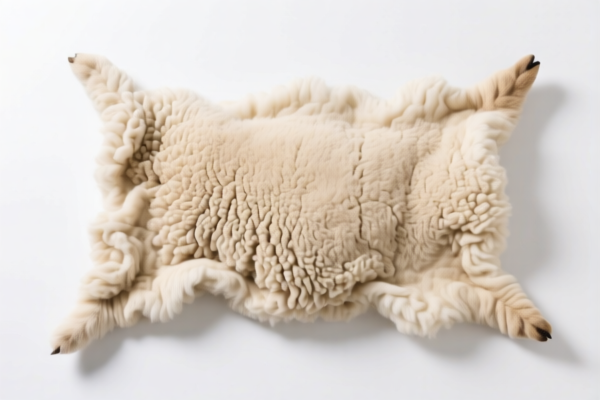
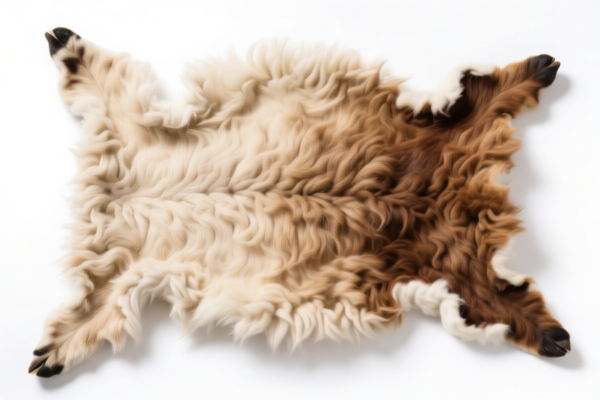
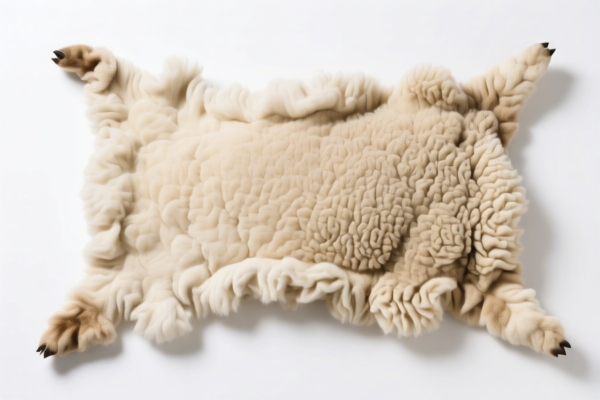
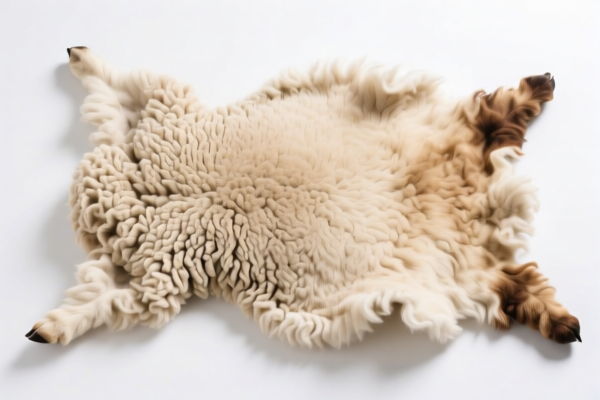
AI分析
🐑 Raw Unprocessed Preserved Sheepskin: The Ultimate Import & Classification Guide (2026)
🌐 HS Code Reference & Customs Clearance Guide | 2026 Latest Tariff Analysis | Professional Level Strategy
📌 I. Product Definition & Classification: Do You Really Understand "Preserved Sheepskin"?
Raw Unprocessed Preserved Sheepskin refers to sheep hides or skins that have undergone preservation (typically salting) to prevent rotting during transport and storage, but have not undergone tanning or further processing. In international trade, these are classified as "Raw Hides and Skins," specifically under Chapter 41.
Key Distinction:
- "Preserved" usually means salted, dried, or lime-preserved.
- "Unprocessed" means no tanning (chrome, vegetable, etc.) has occurred.
- If the skin is tanned, it falls under Chapter 41 (Tanned Furskin) or Chapter 43 (Furskin), NOT this category.
⚠️ Critical Classification Point:
- If the sheepskin is raw, salted, and not tanned → It is a Raw Hides/Skins product.
- HS Codes fall under 4102 (Sheepskin) or 4103 (Other raw hides/skins, including sheepskin if not specified in 4102).
- Note: In many tariff schedules, "Sheepskin" is explicitly listed under 4102. However, depending on the specific country’s HS code granularity (e.g., US HTS vs. International HS), some "sheepskin" variants might be grouped under "Other" if not specifically defined as "sheep/pigskin" in the first level. Based on the provided data, we have codes under both 4102 and 4103, so we must explain each.
📦 II. HS Code Classification Details (Based on Provided Data)
| HS Code | Product Description (From Data) | Applicable Scenario | Tax Rate (Total) |
|---|---|---|---|
4102.29.10.90 |
Matched sheepskin material, hairless and untanned, fits raw hide classification | Sheepskin without fur, raw state | 17.5% |
4103.90.11.90 |
Matched sheepskin material, untanned and dried, fits other unpre-tanned raw hides | Dried sheepskin, general raw hide | 17.5% |
4103.90.11.30 |
Matched sheepskin material, untanned, fits goat/kid goat unpre-tanned skin classification | Sheepskin classified under "Goat/Kid" sub-category | 17.5% |
4102.10.10.00 |
Matched sheepskin material, untanned, fits definition of un-tanned sheepskin | Standard raw sheepskin (with or without hair) | 17.5% |
4103.90.11.90 |
Matched sheepskin material, unprocessed dry state, fits other unpre-tanned raw hides | Generic dried sheepskin, no further processing | 17.5% |
🔍 Important Note:
- All listed HS Codes share the same total tax rate of 17.5%.
- The distinction between 4102 (Sheep/Pigskin) and 4103 (Other raw hides) depends on the specific national tariff line interpretation.
- 4102 is generally for sheep and pigskins.
- 4103 is for "Other" raw hides, which may include sheepskin in some sub-categories if not explicitly covered in 4102.10.
💰 III. 2026 Latest Tariff Rate Breakdown (Including Additional Taxes & Policy Add-ons)
✅ Applicable Country: United States (US)
✅ Origin: China (CN) (Assumed based on typical trade context; adjust if origin differs)
✅ Effective Date: 2025+ (Current regime)
🎯 1. Universal Tax Structure for All Listed HS Codes
| Component | Rate | Source |
|---|---|---|
| Basic Duty | 0.0% | MFN (Most Favored Nation) rate for raw hides |
| Section 301 / Additional Duty | 7.5% | USITC Trade Remedy / Section 301 |
| Section 122 Tariff (IEEPA 10%) | 10.0% | International Emergency Economic Powers Act |
| Total Tax Rate | 17.5% | Sum of above |
📌 Explanation:
- Basic Duty (0%): Raw hides and skins are often duty-free under MFN to encourage domestic leather processing.
- Additional Duty (7.5%): This is part of the broader Section 301 tariff list targeting Chinese imports.
- Section 122 Tariff (10%): This is a specific surcharge often applied to certain raw materials or strategic goods from China under recent executive orders.
- Total 17.5%: This is a flat rate across all five HS codes provided. No differentiation based on "hairless" vs. "with hair" in terms of tax rate, though classification might affect customs scrutiny.📌 Key Reminder:
- No De Minimis Exemption: These goods cannot utilize the $800 de minimis exemption if shipped as commercial cargo.
- Valuation: Duties are calculated on CIF (Cost, Insurance, Freight) value.
🛠️ IV. Customs Clearance Practical Advice (Pitfall Avoidance Guide)
✅ 1. Required Documentation Checklist
| Document | Mandatory? | Description |
|---|---|---|
| ✅ Commercial Invoice | ✔️ | Must clearly state: "Raw Sheepskin, Untanned, Preserved (Salted/Dried)" |
| ✅ Packing List | ✔️ | Detail weight, number of skins, and preservation method (salted/dried) |
| ✅ Certificate of Origin | ✔️ | To confirm country of origin (crucial for 301/122 tariffs) |
| ✅ Preservation Method Statement | ✔️ | Specify if salted, dried, or lime-preserved. This affects classification under 4102 vs 4103. |
| ✅ Phytosanitary/Sanitary Certificate | ✔️ | Required to prove no disease transmission risk (animal by-product regulation) |
| ✅ Import License (if applicable) | ✔️ | Check if specific raw material import licenses are needed |
✅ 2. Classification Strategy (Key口诀)
🔥 "Raw & Untanned is Key, Salted/Dried is Standard, 17.5% is Fixed, Check Origin!"
| Scenario | Correct HS Code Approach | Wrong Practice |
|---|---|---|
| Sheepskin with Hair, Salted | 4102.10.10.00 or 4102.29.10.90 (if hairless? No, if with hair, usually 4102.10) |
Misclassifying as tanned leather → Higher duty |
| Sheepskin Dried, No Hair | 4102.29.10.90 |
Classifying as "Other" (4103) without justification → Customs Query |
| Goat/Kid Sheepskin Mix | 4103.90.11.30 |
Misclassifying goat skin as sheep → Penalty |
| Tanned Sheepskin (Wet Blue) | NOT IN DATA | Do NOT use these codes. Tanned skins have different HS (e.g., 4104/4105). |
⚠️ Critical Warning:
- "Preserved" ≠ "Tanned".
- If the skin is tanned (chrome-tanned, vegetable-tanned), it is NOT raw hides. It falls under different HS codes (e.g., 4104, 4105) with potentially different tax rates.
- Ensure the supplier confirms: "100% Untanned, Raw State."
✅ 3. Special Cases Handling
| Case | Handling Advice |
|---|---|
| Wet Blue Sheepskin | This is partially tanned. Do NOT use 4102/4103. Use appropriate tanned skin HS codes. |
| Mixed Batches (Sheep + Goat) | Declare the majority component. If mixed, consider splitting shipments or using the "Other" category (4103) with full disclosure. |
| Smuggled/Illegal Origin | Ensure no CITES violations. Sheepskin is generally not CITES-listed, but verify species if exotic. |
| High Moisture Content | Must be fully dried or salted to qualify as "preserved." High moisture may lead to rejection for health reasons. |
🌍 V. Global Market Customs Comparison (2026)
| Country/Region | Recommended HS Code (Raw Sheepskin) | Duty Rate | Key Requirement |
|---|---|---|---|
| 🇺🇸 USA | 4102.10.10.00 or 4103.90.11.90 |
17.5% | Section 301 + 122 Tariff Applies |
| 🇨🇳 China | 4102.10.00.00 |
0-5% | Import License May Be Required |
| 🇪🇺 EU | 4102 21 or 4102 29 |
0-5% | No Additional Tariffs (if non-CITES) |
| 🇬🇧 UK | 4102 21 or 4102 29 |
0-5% | Post-Brexit Tariffs Apply |
| 🇯🇵 Japan | 4102 10 or 4102 29 |
0-5% | Phytosanitary Certificate Required |
📌 Conclusion:
- USA has the highest effective duty (17.5%) due to trade remedies.
- EU/UK/JP have low or zero basic duties for raw hides, making them more cost-effective for raw material imports.
- China may require import licenses for animal by-products.
📌 VI. Common Mistakes & Pitfalls (Lessons Learned)
❌ Mistake 1: Classifying Tanned Sheepskin as Raw Sheepskin
👉 Consequence: Customs reclassification → Back taxes + Penalties (Tanned skin duties differ).
❌ Mistake 2: Declaring "Leather" instead of "Raw Hides/Skins"
👉 Consequence: "Leather" implies tanning. Misdeclaration → Customs Audit + Delay.
❌ Mistake 3: Ignoring Section 122 Tariff
👉 Consequence: Underpayment by 10% → Seizure or Forced Payment.
❌ Mistake 4: Not Providing Preservation Method Details
👉 Consequence: Customs cannot verify "Raw" status → Inspection Delay + Demurrage Fees.
✅ Correct Approach:
"Raw Sheepskin, Untanned, Salted, for Leather Manufacturing Only. HS Code: 4102.10.10.00. Origin: China. Subject to 17.5% Total Duty."
🎯 VII. Conclusion: Precise Classification Saves Money!
🎯 Remember the Mantra:
🔹 "Raw is Raw, Untanned is Key, 17.5% is Fixed, Docs Must Be Clear!"
🔹 "Check Section 301 & 122, Avoid Tanned Mislabeling, Customs Will Reward Accuracy!"
📌 Pro Tip:
- If your sheepskin is not from China, the 10% Section 122 tariff may not apply. Verify origin!
- If the sheepskin is tanned, do NOT use these codes. Contact customs for Tanned Skin HS Codes.
- Pre-Arrangement: For large shipments, apply for a Binding Tariff Information (BTI) or Advance Ruling to lock in classification.
📣 Immediate Action:
📞 Consult a Licensed Customs Broker
📄 Prepare Invoice, Packing List, COO, Preservation Proof
🚀 Clear Customs Smoothly, Minimize Duty Burden, Maximize Profit!
✨ Professional Customs Clearance Starts with Accurate Classification!
💼 Every Penny Saved is Profit Earned!
用户评价
关于 HS 编码归类
协调制度(HS)是由世界海关组织(WCO)制定的国际贸易商品分类标准。全球 200 多个国家采用 HS 系统作为海关关税、贸易统计和进出口监管的基础。
每个 HS 编码遵循以下层级结构:
- 章(2 位)——商品大类(例如:第 84 章:机器和机械设备)
- 品目(4 位)——章内的更具体分类
- 子目(6 位)——国际通用细分,所有 WCO 成员国统一使用
- 本国细分(8-10 位)——各国自行扩展的细分编码,如美国 HTSUS 10 位编码
正确的 HS 编码归类对于顺利通关、准确缴纳关税和遵守贸易法规至关重要。错误归类可能导致海关延误、多缴关税或罚款。
从CN进口到US时,适用的关税税率可能包括:
- 最惠国(MFN)税率——适用于 WTO 成员国的标准关税税率
- 普通税率——适用于无贸易协定国家
- 贸易救济关税——附加关税,如 301 条款(反倾销)、232 条款(国家安全)或反补贴税
本页内容仅供参考。如需正式归类,请咨询当地海关或持牌报关代理。