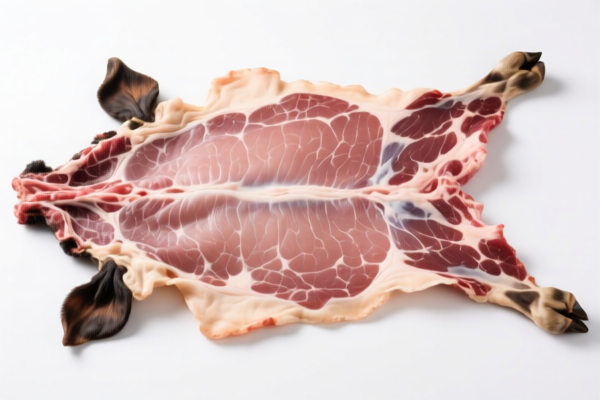
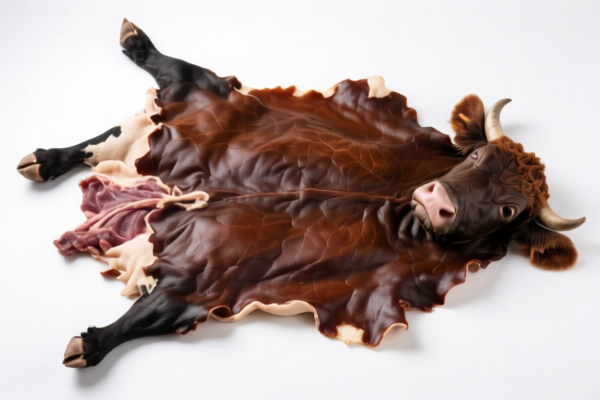
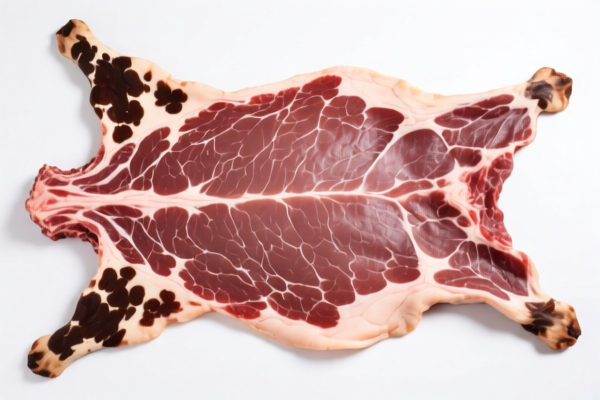
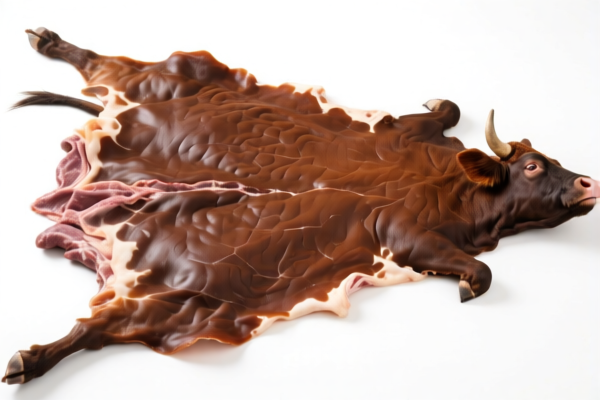
Raw Untanned Cowhide Belly Skin
CN → US| HS编码 | 关税税率 | 原产国 | 目的国 | 文档 |
|---|---|---|---|---|
| 4101901020 | 17.5% | CN | US | 官方文档 |
| 4101901030 | 17.5% | CN | US | 官方文档 |
商品图片
AI分析
🐄 Raw Untanned Cowhide Belly Skin (Bovine Hides)
🌐 HS Code Reference & Customs Clearance Guide | 2026 Latest Tariff Analysis | Professional Strategy for Bovine Skins
📌 I. Product Definition & Classification: Do You Understand "Bovine Belly Skins"?
Raw hides and skins of bovine animals (including buffalo) are categorized based on their state of preservation and specific body part. For "Raw Untanned Cowhide Belly Skin," the classification hinges on two critical factors: 1. Preservation Method: Fresh or wet-salted (as implied by "Raw" and standard trade practices for belly skins to prevent spoilage). 2. Body Part: "Belly" is explicitly listed as a distinct category from "Butts" or "Bends" in the HS code descriptions. 3. Processing Status: Not tanned, parchment-dressed, or further prepared.
⚠️ Key Distinction:
- If the hide is dry-salted or dried, it falls under different subheadings.
- If the hide is pretanned (lightly tanned for stability), it is excluded.
- "Belly" is a premium cut, often more valuable than standard splits, but chemically/physically it remains a "raw hide of bovine animal."
📦 II. HS Code Classification Details (2026 Latest Tariff Authority)
Based on the provided data, the relevant HS Codes for Raw, Untanned Bovine Belly Skins (Fresh or Wet-Salted) are:
| HS Code | Product Description | Applicability | Specific Features |
|---|---|---|---|
4101.90.10.20 |
Other, including butts, bends and bellies; Not pretanned; Of bovine animals; Fresh or wet-salted: Other | Primary Fit: Specifically covers belly skins that are fresh or wet-salted and do not fall under "Butts/Bends" specific exclusions (if any). | ✅ Raw, Untanned, Bovine, Belly, Fresh/Wet-Salted |
4101.90.10.30 |
Other, including butts, bends and bellies; Not pretanned; Of bovine animals; Other (implies other preservation methods not covered by 10.20) | Alternative Fit: If the preservation method is not fresh or wet-salted (e.g., dry-salted, lime-treated, pickled), this code applies. | ✅ Raw, Untanned, Bovine, Belly, Other Preservation |
🔍 Critical Clarification:
- Code4101.90.10.20is the most likely candidate if the belly skins are fresh or wet-salted (salted while retaining high moisture). This is the standard for high-quality raw hides shipped for tanning.
- Code4101.90.10.30is used if the hides are dry-salted, dried, limed, or pickled (preserved but not fresh/wet-salted).
- Both codes explicitly include "bellies" and are "Not pretanned."
💰 III. 2026 Latest Tariff Rate Breakdown (Detailed Tax Clauses)
✅ Applicable Country: China (CN) Import/Export Context (Based on "加征关税" terminology in source data, typically indicating US-China trade context or specific Chinese tariff schedules with additional levies).
✅ Product Origin: China (CN)
✅ Effective Time: 2026 Tariff Schedule
🎯 1. HS Code 4101.90.10.20 – Bovine Belly Skins (Fresh/Wet-Salted)
| Item | Content |
|---|---|
| Basic Tariff (MFN) | 0.0% |
| Additional Tariff (Retaliatory/Add-on) | 7.5% |
| Total Tax Rate | 7.5% |
| Tax Detail | 基础关税: 0.0%, 加征关税: 7.5% |
| Calculation Basis | CIF Value × 7.5% |
| Legal Basis | HS Chapter 41 (Raw Hides and Skins), Specific Subheading for Bovine Bellies |
📌 Explanation:
- The Basic Tariff is 0%, making these goods tariff-neutral under standard MFN rules.
- The 7.5% Additional Tariff is the critical cost driver. This is typically an "add-on" tariff (often referred to as "加征关税" in Chinese customs contexts), applied to specific US-origin goods imported into China, or vice versa, depending on the direction of trade and current trade agreements.
- Total Cost Impact: For every $10,000 CIF value, you pay $750 in additional tariffs.
🎯 2. HS Code 4101.90.10.30 – Bovine Belly Skins (Other Preservation)
| Item | Content |
|---|---|
| Basic Tariff (MFN) | 0.0% |
| Additional Tariff (Retaliatory/Add-on) | 7.5% |
| Total Tax Rate | 7.5% |
| Tax Detail | 基础关税: 0.0%, 加征关税: 7.5% |
| Calculation Basis | CIF Value × 7.5% |
| Legal Basis | HS Chapter 41 (Raw Hides and Skins), Specific Subheading for Bovine Bellies |
📌 Note:
- Identical tax treatment to4101.90.10.20.
- The distinction is purely technical (preservation method) for classification accuracy, not for tariff reduction.
- No tax advantage is gained by choosing one code over the other; both carry the 7.5% add-on.
🛠️ IV. Customs Clearance Practical Advice (Pitfall Avoidance Guide)
✅ 1. Required Documentation Checklist (Non-Negotiable)
| Document | Mandatory? | Description |
|---|---|---|
| ✅ Commercial Invoice | ✔️ | Must clearly state: "Raw Bovine Belly Skins," "Not Pretanned," "Preservation Method (e.g., Wet-Salted)." |
| ✅ Packing List | ✔️ | Detail weight (Net/Gross), number of hides, and dimensions. |
| ✅ Certificate of Origin (CO) | ✔️ | Essential for verifying origin and applying correct tax rates. |
| ✅ Health/Veterinary Certificate | ✔️ | Critical for animal products. Must confirm disease-free status and compliance with import regulations. |
| ✅ Preservation Declaration | ✔️ | Explicitly state if Fresh, Wet-Salted, Dry-Salted, Lime-Treated, or Pickled. This determines if you use .20 or .30. |
| ✅ Photos of Goods | ✔️ | Show labels, brand (if any), and condition to prove "Raw" and "Untanned" status. |
✅ 2. Declaration Tips (Key Mantras)
🔥 “Preservation Method Determines Code, Not Just 'Belly'!”
| Scenario | Correct Declaration | Wrong Practice |
|---|---|---|
| Wet-Salted Belly Hides | 4101.90.10.20 |
Mislabeling as "Dry-Salted" → .30 |
| Dry-Salted Belly Hides | 4101.90.10.30 |
Mislabeling as "Fresh" → .20 |
| Pretanned Belly Skins | NOT Covered | Attempting to use .20 or .30 → Rejected/Reclassified |
| Mixed Hides (Butts + Bellies) | Declare by Primary Part or Value | Vague description "Raw Hides" → Delays |
📌 Warning:
- If the hides are limed or pickled, they are still "Raw" but not "Fresh/Wet-Salted," so use.30.
- Do not describe as "Leather" or "Tanned" – this will lead to immediate rejection and fines.
✅ 3. Special Circumstances Handling
| Situation | Handling Advice |
|---|---|
| OEM Custom Orders | Provide end-user contract specifying "Raw Belly Skins" to avoid misclassification as "Finished Leather Goods." |
| Mixed Preservations in One Shipment | Split Declaration: Declare .20 for wet-salted and .30 for dry-salted parts separately. |
| High-Value Belly Skins | Ensure precise weight and grade description to justify CIF value and avoid customs valuation disputes. |
| Sanitary Requirements | Verify veterinary import permits before shipping. Raw animal products are highly regulated. |
🌍 V. Global Market Comparison (2026 Latest)
| Country/Region | Recommended HS Code | Tariff (China Origin) | Certification Requirements | Notes |
|---|---|---|---|---|
| 🇺🇸 USA | 4101.90.10 (General) |
Varies (Check HTSUS) | USDA Inspection | 7.5% add-on applies if subject to Section 301 |
| 🇨🇳 China | 4101.90.10.20 / .30 |
7.5% (Add-on) | Veterinary Certificate, CO | Base tariff 0%, but 7.5% add-on is standard |
| 🇪🇺 EU | 4101.21 / 4101.29 |
0% - 5% | EORI, Veterinary Health Certificate | No additional tariffs |
| 🇬🇧 UK | 4101.21 / 4101.29 |
0% - 5% | UK Veterinary Import Document | Post-Brexit rules apply |
| 🇯🇵 Japan | 4101.21 / 4101.29 |
5% - 10% | Quarantine Certificate | No additional tariffs |
📌 Conclusion:
- China has a 0% basic tariff but imposes a 7.5% add-on, making the total 7.5%.
- USA, EU, UK, Japan have different tariff structures, but the 7.5% add-on is specific to the provided data (likely US-China trade context).
- Always verify veterinary and sanitary requirements for raw animal products.
📌 VI. Common Mistakes & Pitfall Guide (Lessons from Tears)
❌ Mistake 1: Declaring "Leather" instead of "Raw Hide"
👉 Consequence: Rejection, Fines, Shipment Delay. Raw hides are not leather.
❌ Mistake 2: Ignoring Preservation Method
👉 Consequence: Misclassification between .20 and .30 → Customs Inspection, Delays.
❌ Mistake 3: Not Providing Veterinary Certificate
👉 Consequence: Quarantine Hold, Return of Goods, or Destruction.
❌ Mistake 4: Vague Description "Cowhide"
👉 Consequence: Customs cannot determine if it's Bovine, Equine, or other → Audit.
✅ Correct Action:
"Raw Bovine Belly Skins, Wet-Salted, Not Pretanned, Veterinary Certificate Attached, HS Code: 4101.90.10.20"
🎯 VII. Conclusion: Precision in Classification Saves Money
🎯 Remember the Mantra:
🔹 "Raw, Not Tanned, Belly Skins"
🔹 "Wet-Salted: .20, Other: .30"
🔹 "7.5% Add-On: Non-Negotiable for China Origin"
🔹 "Veterinary Cert: Mandatory"
📌 Pro Tip:
If you are importing from China to the US, check if the 7.5% add-on applies under Section 301. For other destinations, verify local veterinary import laws.
Apply for an Advance Ruling if you are unsure about the preservation method classification.
📣 Immediate Action:
📞 Contact a licensed customs broker + Provide Veterinary Certificate + Ensure HS Code 4101.90.10.20 or .30 is used correctly.
🚀 Smooth Clearance, Cost Control, and Compliance!
✨ Professional Customs Clearance Starts with Accurate Classification!
💼 Every Percent of Tariff Counts!
用户评价
关于 HS 编码归类
协调制度(HS)是由世界海关组织(WCO)制定的国际贸易商品分类标准。全球 200 多个国家采用 HS 系统作为海关关税、贸易统计和进出口监管的基础。
每个 HS 编码遵循以下层级结构:
- 章(2 位)——商品大类(例如:第 84 章:机器和机械设备)
- 品目(4 位)——章内的更具体分类
- 子目(6 位)——国际通用细分,所有 WCO 成员国统一使用
- 本国细分(8-10 位)——各国自行扩展的细分编码,如美国 HTSUS 10 位编码
正确的 HS 编码归类对于顺利通关、准确缴纳关税和遵守贸易法规至关重要。错误归类可能导致海关延误、多缴关税或罚款。
从CN进口到US时,适用的关税税率可能包括:
- 最惠国(MFN)税率——适用于 WTO 成员国的标准关税税率
- 普通税率——适用于无贸易协定国家
- 贸易救济关税——附加关税,如 301 条款(反倾销)、232 条款(国家安全)或反补贴税
本页内容仅供参考。如需正式归类,请咨询当地海关或持牌报关代理。