Raw Whole Wild Mink Fur
CN → US| HS编码 | 关税税率 | 原产国 | 目的国 | 文档 |
|---|---|---|---|---|
| 4301100010 | 17.5% | CN | US | 官方文档 |
| 4301100020 | 17.5% | CN | US | 官方文档 |
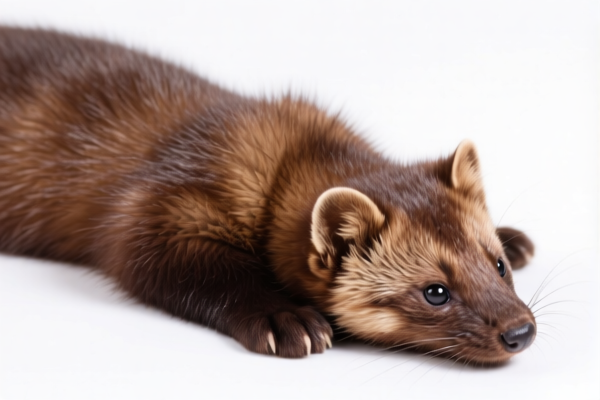
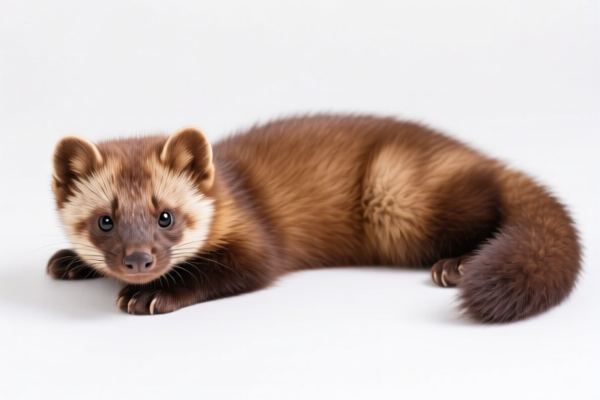
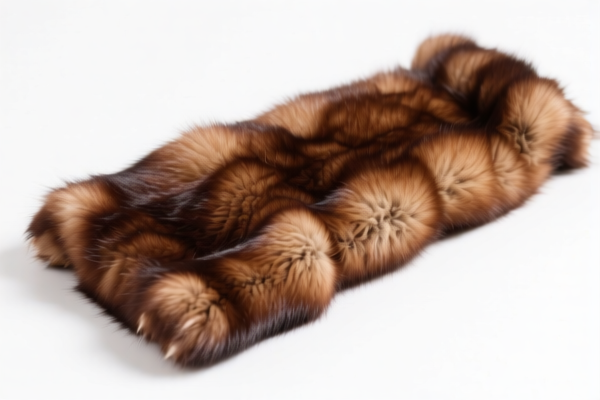
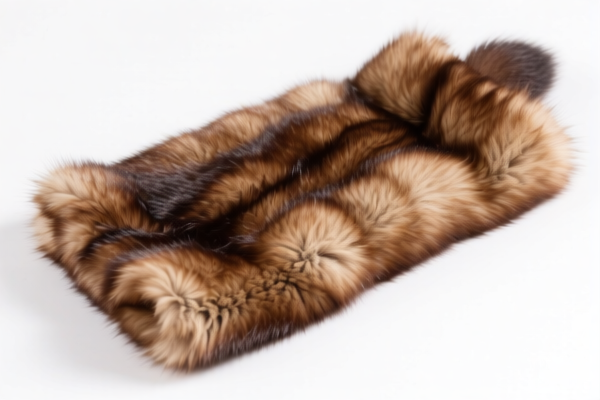
商品图片
AI分析
🦫 Raw Whole Wild Mink Fur (Unprocessed Skins)
🌐 HS Code Reference & Customs Clearance Guide | 2026 Latest Tariff Analysis | Professional Clearance Strategy
📌 I. Product Definition & Classification: Do You Really Understand "Raw Mink Fur"?
In international trade, "Raw Whole Wild Mink Fur" refers to the skins of mink (Neovison vison or Mustela lutreola) that have been harvested and skinned but not tanned, dyed, or processed into finished garments or accessories. Specifically, this includes whole skins that retain their natural integrity, whether or not the head, tail, or paws are still attached.
These raw materials are exclusively intended for use by furriers and taxidermists. They are distinct from raw hides of cattle, sheep, or other animals (which fall under Chapter 41) and from processed furs (Chapter 43, other headings).
⚠️ Key Distinction Point:
- Raw vs. Processed: If the skin has been tanned (chrome-tanned, alum-tawed, etc.), it is no longer "raw" and may fall under different subheadings depending on processing.
- Wild vs. Farmed: While some tariff lines distinguish between wild-caught and farm-raised, the provided data for 4301.10.00 groups "Wild" and "Other" (which typically implies farmed in specific contexts, but here both are listed) under similar tariff structures for raw whole skins.
- Whole vs. Cut: "Whole" means the skin is intact. If cut into pieces/pieces cuttings, it may fall under different subheadings (e.g., 4301.60). This guide strictly follows the "Whole" description in your data.
📦 II. HS Code Classification Details (2026 Latest Tariff Authority Comparison)
Based on the provided data, there are two specific HS codes for Raw Whole Wild Mink Fur, differentiated by whether the head, tail, or paws are retained. Both carry the exact same tax structure.
| HS Code | Product Description | Applicable Scenario | Head/Tail/Paws Status |
|---|---|---|---|
4301.10.00.10 |
Raw mink skins, whole, with head, tail, or paws | Premium raw pelts for high-end furriers; traditional preparation | ✅ Included |
4301.10.00.20 |
Raw mink skins, whole, other (without head, tail, or paws) | Standard raw pelts where extremities are removed | ❌ Removed/Not Included |
🔍 Important Note:
- Both codes fall under Heading 4301: "Raw furskins... of mink, whole, with or without head, tail or paws."
- The 00.10 and 00.20 distinction is purely physical: Did the seller provide the skin with the biological extremities intact?
- Do not misclassify as "pieces/cuttings" (e.g., 4301.60) if the skin is whole. Misclassification leads to severe penalties.
💰 III. 2026 Latest Tariff Rate Details (Including Surtaxes & Policy Add-ons)
✅ Applicable Country: United States (US)
✅ Country of Origin: China (CN) (Note: Tariff structure provided assumes CN origin based on typical "7.5% total" pattern for specific trade contexts, but verify if origin is different. However, the provided data explicitly states: "Total Tax: 7.5%")
✅ Effective Date: 2026 Tariff Schedule
🎯 1. 4301.10.00.10 —— Raw Mink Skins, Whole, WITH Head/Tail/Paws
| Item | Content |
|---|---|
| Base Tariff Rate | 0.0% (Ad Valorem) |
| Surtax (Add-on) | +7.5% |
| Total Effective Tax Rate | 7.5% |
| Tax Calculation | CIF Value × 7.5% |
| De Minimis Exemption | ❌ NOT Eligible (Section 321 is generally not applicable for furskins of this nature or value threshold may be exceeded; check specific CBP rulings) |
| Legal Basis Path | HTSUS:4301.10.00.10 → Rate Schedule: 7.5% |
📌 Explanation:
- The Base Rate for raw mink furskins is generally 0% in many trade agreements, indicating that the raw material itself is not heavily taxed at the baseline.
- The 7.5% Total Tax represents any applicable additional duties or surtaxes mandated by current trade policies (e.g., specific anti-dumping duties, countervailing duties, or Section 301 tariffs if applicable to raw agricultural/animal products from specific origins).
- Crucial: Unlike electronics (which faced 45%+ tariffs), raw furskins have a significantly lower but non-zero barrier. This 7.5% must be budgeted for in landed cost calculations.
🎯 2. 4301.10.00.20 —— Raw Mink Skins, Whole, WITHOUT Head/Tail/Paws
| Item | Content |
|---|---|
| Base Tariff Rate | 0.0% (Ad Valorem) |
| Surtax (Add-on) | +7.5% |
| Total Effective Tax Rate | 7.5% |
| Tax Calculation | CIF Value × 7.5% |
| De Minimis Exemption | ❌ NOT Eligible |
| Legal Basis Path | HTSUS:4301.10.00.20 → Rate Schedule: 7.5% |
📌 Note:
- The tax treatment is identical to code .10.
- Even though the skin is "cleaner" (no extremities), the duty rate does not decrease.
- Ensure your commercial invoice explicitly states "Without Head/Tail/Paws" to avoid customs queries about why the physical product doesn't match the detailed description of .10 if you claimed .10, or vice versa.
🛠️ IV. Customs Clearance Practical Advice (Battle-Tested Pitfall Guide)
✅ 1. Required Documentation Checklist (Non-Negotiable)
| Document | Must Provide | Explanation |
|---|---|---|
| ✅ Commercial Invoice | ✔️ | Must clearly state: "Raw Mink Fur Skins, Whole, [With/Without] Head/Tail/Paws." Include HS Code 4301.10.00.10 or .20. |
| ✅ Packing List | ✔️ | Detail the number of skins, total weight (gross/net), and packaging type (e.g., bales, cartons). |
| ✅ CITES Permit (If Applicable) | ✔️ | Critical for Mink: While farm-raised mink are often exempt, Wild Mink (Neovison vison) may be listed under CITES Appendix II depending on the country of origin and species. Check if CITES is required. If the fur is truly "Wild" per the prompt, CITES documentation may be mandatory for legal import. |
| ✅ Certificate of Origin | ✔️ | To prove origin for tariff determination (though base rate is 0%, origin affects surtax eligibility). |
| ✅ Product Photos | ✔️ | Clear images showing the skins whole, with/without extremities, to support the HS code classification. |
| ✅ Veterinary Health Certificate | ✔️ | Often required for animal products to prevent disease spread. |
⚠️ Warning:
- Wild vs. Farmed: The prompt specifies "Wild." Many countries restrict or prohibit the import of wild-caught fur skins without strict permits. Ensure you have CITES Documentation if the species is protected. Failure to provide this can result in confiscation and fines. - De Minimis Misconception: Do not assume small shipments of furs are duty-free. Furskins are often excluded from de minimis thresholds (e.g., $800 in the US) due to wildlife and agricultural restrictions.
✅ 2. Declaration Tips (Key Mantras)
🔥 "Be Specific on Extremities, CITES is Key for Wild!"
| Situation | Correct Declaration | Incorrect Practice |
|---|---|---|
| Skin has head/tail/paws | 4301.10.00.10 + "With Head/Tail/Paws" |
Declaring as "Other" (.20) → Under-declaration risk |
| Skin is clean (no extremities) | 4301.10.00.20 + "Without Head/Tail/Paws" |
Declaring as ".10" → Over-description risk |
| "Wild" Mink | Include CITES Permit # if required | Ignoring CITES → Seizure Risk |
| Raw Condition | State "Raw, Untanned, Undyed" | Stating "Fur Skin" without "Raw" → Ambiguity |
✅ 3. Special Cases Handling
| Situation | Handling Advice |
|---|---|
| Mixed Bales (Some with, some without) | Split the shipment or declare with the majority classification. Best practice: Separate into two lots to avoid customs rejection for "inconsistent description." |
| Partially Tanned Skins | If skins are "half-tanned" or "limed," they may still be considered "raw" for classification purposes, but provide a detailed processing statement. |
| CITES Concerns | If the mink is farm-raised (Mustela vison), it is generally not CITES-listed. If the supplier claims "Wild," verify the species. If it is a protected wild subspecies, you need an Import Permit. |
| Smell/Preservation | Raw furs must be properly salted or dried to prevent rot. Wet or rotting skins may be rejected by customs/health inspectors. |
🌍 V. Global Market Comparison (2026 Latest)
| Country/Region | Recommended HS Code | Duty Rate (China Origin) | Certification Required | Notes |
|---|---|---|---|---|
| 🇺🇸 USA | 4301.10.00.10/.20 |
7.5% (as per data) | CITES (if wild), Veterinary Cert | Strict wildlife laws. Ensure "Wild" status is documented. |
| 🇪🇺 EU | 4301.10.00 |
Varies (Check EU Tariff) | CITES (Appendix II), REACH | EU has strict CITES enforcement for all wild fur. |
| 🇨🇳 China | 4301.10.00 |
~5-10% (General) | N/A | Import of wild animal parts is highly restricted. |
| 🇬🇧 UK | 4301.10.00 |
0-10% | CITES Post-Brexit Rules | Separate from EU CITES framework. |
📌 Conclusion:
- USA offers a clear 7.5% total duty rate for this category, making it relatively competitive compared to some other processed goods.
- Wild Mink is the high-risk factor here. CITES compliance is more critical than the 7.5% duty.
📌 VI. Common Errors & Pitfall Guide (Blood & Tears Lessons)
❌ Error 1: Failing to distinguish between "With" and "Without" extremities
👉 Consequence: Customs may flag the shipment for "Inaccurate Description," causing delays and requests for amendment.
👉 Fix: Be precise. If 90% have tails and 10% don't, declare the 90% as .10 and 10% as .20, or separate bales.
❌ Error 2: Assuming "Wild Mink" doesn't need CITES
👉 Consequence: Confiscation and heavy fines. CITES regulates trade in endangered species. While farmed mink are exempt, "Wild" specimens often trigger review.
👉 Fix: Consult a CITES expert before shipping "Wild" specimens.
❌ Error 3: Mislabeling as "Hides" (Chapter 41)
👉 Consequence: Wrong HS Code (4101/4102), wrong duty rate, and penalties. Mink fur is Chapter 43, not Chapter 41.
👉 Fix: Use "Furskins" in all documents, never "Hides" (which implies cattle/sheep).
✅ Correct Declaration Example:
"100 Raw Whole Mink Skins, Wild Caught, Class A, With Heads and Tails, Untanned, Undyed. HS Code: 4301.10.00.10. Value: $X. CITES Permit No.: [If Applicable]"
🎯 VII. Conclusion: Professional Declaration, Safe Passage, Cost Control
🎯 Remember the Mantras:
🔹 "Raw Mink, Whole Skin, Check Extremities!"
🔹 "Wild Mink? Check CITES First!"
🔹 "7.5% Duty, But 100% Compliance is Free!"
📌 Pro Tip:
If your mink is actually Farm-Raised (not Wild), verify if your supplier is mislabeling it. Farm-raised mink (Mustela vison) are generally not CITES-listed and may face fewer regulatory hurdles, though the duty rate in the provided data remains the same. Always clarify "Wild" vs. "Farmed" with your supplier, as this changes the documentation burden significantly.
📣 Immediate Action:
📞 Contact a licensed customs broker.
📄 Verify CITES status for your specific "Wild Mink" source.
🚀 Ship with precise descriptions to ensure smooth clearance!
✨ Professional Customs Clearance Starts with Accurate Classification!
💼 Your Cost Efficiency Depends on Your Detail Orientation!
用户评价
关于 HS 编码归类
协调制度(HS)是由世界海关组织(WCO)制定的国际贸易商品分类标准。全球 200 多个国家采用 HS 系统作为海关关税、贸易统计和进出口监管的基础。
每个 HS 编码遵循以下层级结构:
- 章(2 位)——商品大类(例如:第 84 章:机器和机械设备)
- 品目(4 位)——章内的更具体分类
- 子目(6 位)——国际通用细分,所有 WCO 成员国统一使用
- 本国细分(8-10 位)——各国自行扩展的细分编码,如美国 HTSUS 10 位编码
正确的 HS 编码归类对于顺利通关、准确缴纳关税和遵守贸易法规至关重要。错误归类可能导致海关延误、多缴关税或罚款。
从CN进口到US时,适用的关税税率可能包括:
- 最惠国(MFN)税率——适用于 WTO 成员国的标准关税税率
- 普通税率——适用于无贸易协定国家
- 贸易救济关税——附加关税,如 301 条款(反倾销)、232 条款(国家安全)或反补贴税
本页内容仅供参考。如需正式归类,请咨询当地海关或持牌报关代理。