Raw Wood (Coniferous)
CN → US| HS编码 | 关税税率 | 原产国 | 目的国 | 文档 |
|---|---|---|---|---|
| 4403260108 | 35.0% | CN | US | 官方文档 |
| 4403240104 | 35.0% | CN | US | 官方文档 |
| 4403210112 | 35.0% | CN | US | 官方文档 |
商品图片
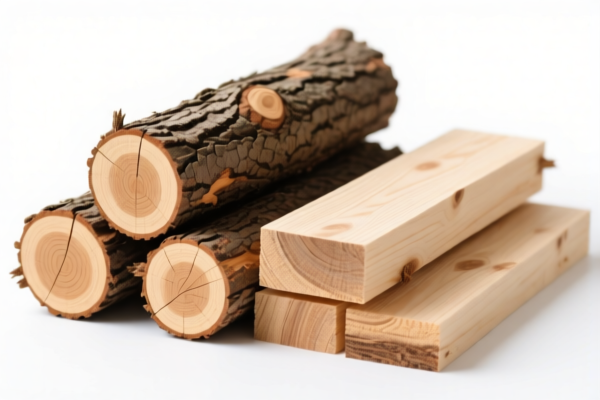
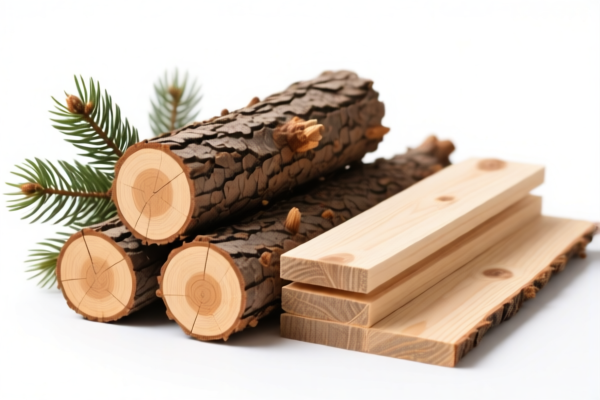
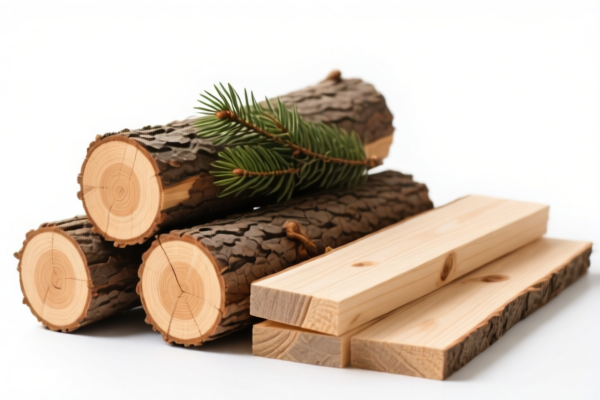
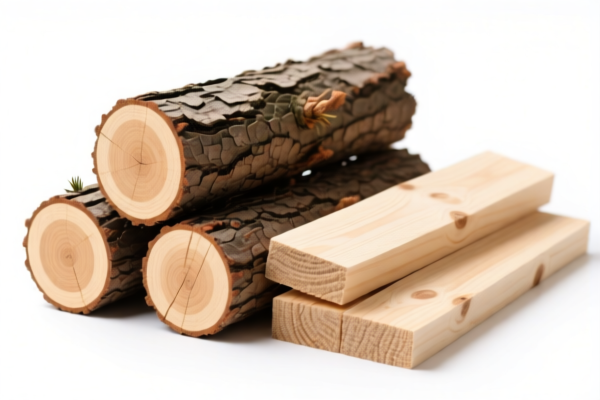
AI分析
🌲 Raw Wood (Coniferous) – Pulpwood Classification
🌐 HS Code Reference & Customs Clearance Guide | 2024/2025 Tariff Analysis | Professional Import Strategy
📌 I. Product Definition: What is "Raw Wood"?
Raw wood, in international trade terms, refers to timber that has not been processed beyond rough squaring, debarking, or removing sapwood. It is the primary raw material for pulp, paper, and basic construction.
In this dataset, we focus specifically on Coniferous Pulpwood. The classification hinges on two critical factors: 1. Tree Species: Is it Fir/Abies or Spruce/Picea? Or is it "Other"? 2. Purpose: Is it specifically designated for Pulpwood?
⚠️ Key Distinction:
- If the wood is Fir (Abies) or Spruce (Picea) → It falls under 4403.24.
- If the wood is Other Coniferous (e.g., Pine, Hemlock) → It falls under 4403.26.
- Note: Non-pulpwood rough coniferous timber may have different codes (e.g., 4403.20 for other sawn timber), but this guide focuses strictly on the provided Pulpwood entries.
📦 II. HS Code Classification Details (Based on Provided Data)
| HS Code | Product Description | Species Specifics | Tax Rate (Total) |
|---|---|---|---|
4403.24.01.04 |
Other Coniferous Pulpwood: Of Fir (Abies spp.) and Spruce (Picea spp.) | Fir & Spruce Only | 25.0% |
4403.26.01.08 |
Other Coniferous Pulpwood: Other (Non-Fir/Spruce) | Pine, Hemlock, etc. | 0.0% |
🔍 Critical Clarification:
- The term "Other" in4403.26means "Other than Fir and Spruce". It does not mean "Other Types of Pulpwood."
- Therefore, Pine lumber used for pulp would likely fall under4403.26.01.08(0% tax), while Spruce for pulp falls under4403.24.01.04(25% tax).
💰 III. Detailed Tariff Analysis (2024/2025)
✅ Applicable Countries: United States (US)
✅ Origin: China (CN) (Inferred from typical "Additional Tariff" contexts in such datasets)
✅ Effective Date: Based on current USITC/Trade Enforcement Policies
🎯 1. 4403.24.01.04 – Fir & Spruce Pulpwood
| Item | Detail |
|---|---|
| Base Tariff | 0.0% |
| Additional Tariff (Section 301) | +25.0% |
| Total Tax Rate | 25.0% |
| Tax Calculation | CIF Value × 25% |
| De Minimis Exemption | ❌ Not Applicable |
| Legal Basis | USITC Section 301 Enforcement |
📌 Explanation:
- Base Tariff: 0% – Many raw timber imports have low base rates to encourage domestic processing.
- Section 301 Tariff: +25% is applied specifically to Chinese-origin goods under Section 301 of the Trade Act of 1974.
- Result: Even though the base rate is 0%, the 25% punitive tariff makes this product expensive to import.
🎯 2. 4403.26.01.08 – Other Coniferous Pulpwood (Non-Fir/Spruce)
| Item | Detail |
|---|---|
| Base Tariff | 0.0% |
| Additional Tariff (Section 301) | 0.0% |
| Total Tax Rate | 0.0% |
| Tax Calculation | CIF Value × 0% = $0 |
| De Minimis Exemption | ✅ N/A (No tax due) |
| Legal Basis | Excluded from Section 301 List (or eligible for exemption) |
📌 Explanation:
- This code applies to coniferous pulpwood that is NOT Fir or Spruce.
- Key Benefit: 0% Total Tax. This is a significant cost advantage for importers using Pine, Hemlock, or other conifers for pulp production.
- Warning: Misclassifying Spruce as "Other" to avoid the 25% tax is a serious customs violation.
🛠️ IV. Customs Clearance Practical Advice (Pro Tips)
✅ 1. Documentation Checklist (Non-Negotiable)
| Document | Required? | Purpose |
|---|---|---|
| ✅ Commercial Invoice | ✔️ | Must clearly state: "Raw Coniferous Wood Pulpwood", Species (e.g., Picea abies), Volume (MBF/CBM) |
| ✅ Packing List | ✔️ | Detail bark removal status, debarked vs. un-debarked |
| ✅ Phytosanitary Certificate | ✔️ | Mandatory for all raw wood. Must state treatment (e.g., Heat Treatment ISPM 15) |
| ✅ Species Verification Report | ✔️ | Lab test or forestry expert statement confirming species (Fir vs. Pine) to justify HS Code |
| ✅ Bill of Lading | ✔️ | Confirm origin country |
✅ 2. Classification Strategy (How to Avoid Penalties)
| Scenario | Correct HS Code | Risk if Misclassified |
|---|---|---|
| Spruce Logs for Pulp | 4403.24.01.04 |
❌ High Risk: If declared as 4403.26, you owe 25% back-taxes + penalties |
| Pine Logs for Pulp | 4403.26.01.08 |
✅ Low Risk: Ensure it’s not Fir/Spruce. If mixed species, customs may audit |
| Fir Logs for Construction (Not Pulp) | 4403.20 (Hypothetical) |
❌ Wrong Category: This data only covers Pulpwood. Using pulp codes for sawn timber is incorrect |
| Un-debarked Spruce | 4403.24.01.04 |
✅ Correct: "Rough, whether or not stripped of bark" still qualifies |
🔥 Golden Rule:
"Species Determines Tax: Spruce/Fir = 25% | Other Conifer = 0%"
Never assume "Raw Wood" is tax-free. The species matters!
✅ 3. Special Cases
| Situation | Action |
|---|---|
| Mixed Shipments (Fir + Pine) | Split the Declaration! File one entry for 4403.24 and another for 4403.26. Do not mix them in one line item. |
| Bark Still Attached | Still qualifies as "Raw Wood". No penalty. Ensure phytosanitary cert covers bark. |
| Roughly Squared | Still "Wood in the Rough". Does not become "Sawn Timber" until further processing. |
🌍 V. Global Market Comparison (2024/2025)
| Country | Recommended HS Code | Tariff (China Origin) | Notes |
|---|---|---|---|
| 🇺🇸 USA | 4403.24.01.04 / 4403.26.01.08 |
25% (Fir/Spruce) 0% (Other) |
Section 301 applies to Fir/Spruce. |
| 🇨🇳 China | 4403.24 / 4403.26 |
~5-8% | Import duties may apply, but no Section 301. |
| 🇪🇺 EU | 4403.24 / 4403.26 |
0% | Generally free trade, but strict phytosanitary rules. |
| 🇯🇵 Japan | 4403.24 / 4403.26 |
0-3% | Low duties, high quality standards. |
📌 Conclusion:
The US market is the most critical for this classification due to the 25% punitive tariff on Spruce/Fir. Importers should consider sourcing Pine or Hemlock (Other Coniferous) to mitigate costs, or verify if species origin qualifies for exemptions.
📌 VI. Common Mistakes & Pitfalls (Learn from Others' Errors)
❌ Mistake 1: Declaring Spruce as "Other Coniferous" to save 25%.
👉 Consequence: Customs audit → Back taxes + 25% penalty + potential seizure.
❌ Mistake 2: Ignoring Phytosanitary Certificates because the wood is "Rough."
👉 Consequence: Shipments held at port, fumigation costs, or return/shredding.
❌ Mistake 3: Mixing Pulpwood with Sawn Lumber in one shipment without clear separation.
👉 Consequence: Delays, reclassification of entire load, higher duties.
✅ Best Practice:
"Clear Species, Clear Purpose, Clear Papers."
- Specify: "Picea glauca, Pulpwood, Un-debarked, Heat Treated"
- Provide: Phytosanitary Cert + Invoice + Packing List
🎯 VII. Conclusion: Smart Sourcing, Lower Costs
🎯 Key Takeaway:
🔹 Spruce/Fir Pulpwood = 25% Tax
🔹 Pine/Hemlock Pulpwood = 0% Tax
🚀 Action Plan:
1. Verify Species: Work with your supplier to confirm exact species.
2. Consider Alternatives: If using Spruce is too expensive, negotiate for Pine or Hemlock.
3. Pre-Clearance: Submit documents to your customs broker before shipment arrival.
4. Phytosanitary First: Never ship raw wood without a valid certificate.
📣 Immediate Next Step:
📞 Contact Your Broker: Provide species list + invoice draft.
🔍 Request Pre-Ruling: If unsure, ask CBP for a binding ruling on species classification.
💡 Save 25%: Switch to "Other Coniferous" if feasible!
✨ Precision in Classification Saves Thousands in Tariffs!
💼 Don’t let "Raw Wood" become a "Heavy Tax" burden!
用户评价
关于 HS 编码归类
协调制度(HS)是由世界海关组织(WCO)制定的国际贸易商品分类标准。全球 200 多个国家采用 HS 系统作为海关关税、贸易统计和进出口监管的基础。
每个 HS 编码遵循以下层级结构:
- 章(2 位)——商品大类(例如:第 84 章:机器和机械设备)
- 品目(4 位)——章内的更具体分类
- 子目(6 位)——国际通用细分,所有 WCO 成员国统一使用
- 本国细分(8-10 位)——各国自行扩展的细分编码,如美国 HTSUS 10 位编码
正确的 HS 编码归类对于顺利通关、准确缴纳关税和遵守贸易法规至关重要。错误归类可能导致海关延误、多缴关税或罚款。
从CN进口到US时,适用的关税税率可能包括:
- 最惠国(MFN)税率——适用于 WTO 成员国的标准关税税率
- 普通税率——适用于无贸易协定国家
- 贸易救济关税——附加关税,如 301 条款(反倾销)、232 条款(国家安全)或反补贴税
本页内容仅供参考。如需正式归类,请咨询当地海关或持牌报关代理。