Rear Light Lens
CN → US| HS编码 | 关税税率 | 原产国 | 目的国 | 文档 |
|---|---|---|---|---|
| 8512202080 | 35.0% | CN | US | 官方文档 |
| 8512202040 | 10.0% | CN | US | 官方文档 |
| 7020006000 | 40.0% | CN | US | 官方文档 |
| 9405920000 | 38.7% | CN | US | 官方文档 |
| 7020004000 | 41.6% | CN | US | 官方文档 |
商品图片
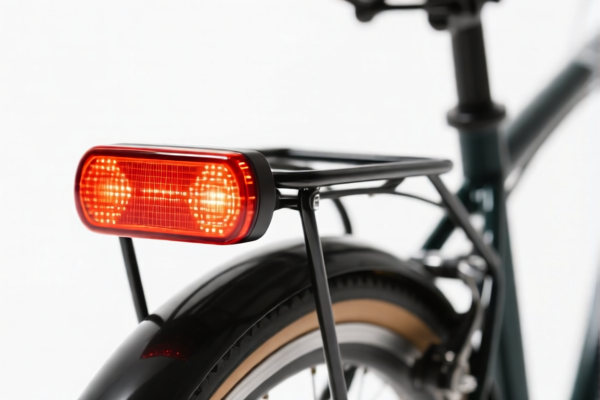
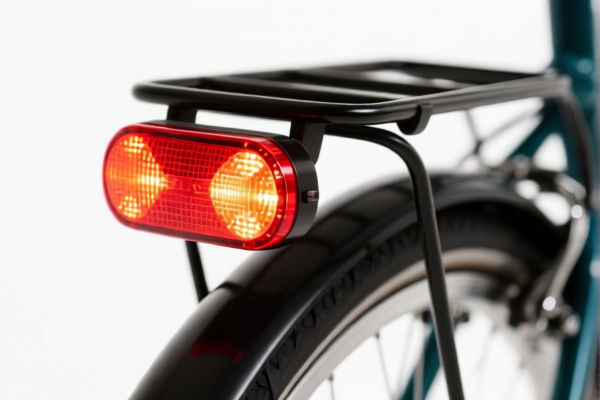
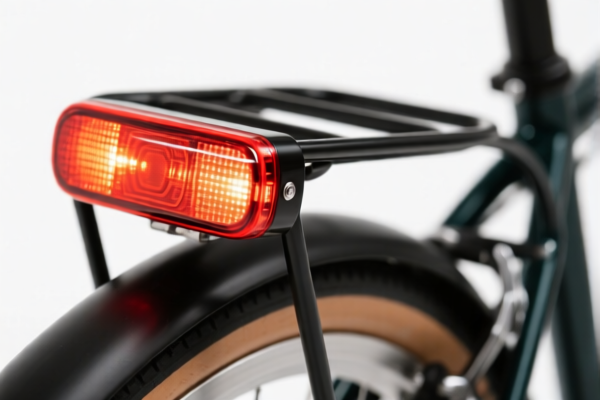

AI分析
🔦 Rear Light Lens (Auto Lighting Components)
🌐 HS Code Reference & Customs Clearance Guide | 2026 Latest Tariff Analysis | Professional Entry Strategy
📌 1. Product Definition & Classification: Do You Truly Understand "Rear Light Lenses"?
A Rear Light Lens is a critical component of automotive lighting systems. In international trade, its classification hinges on whether it is viewed as a standalone glass product or as an integral part of a vehicle lighting device. This distinction drastically affects duty rates under US trade policies (Section 301 and Section 232/IEEPA).
Two Primary Classification Paths: * Path A: As a Vehicle Lighting Component →归入 8512.20.20.xx (Lighting equipment for vehicles). * Path B: As a Glass Accessory → 归入 7020.00.xx or 9405.92.00 (Glass articles or Lamp parts).
⚠️ Key Distinction Point:
- If the lens is specifically designed and marketed as a replacement part for a vehicle's tail light assembly (functional unit), it aligns with 8512.20.
- If classified broadly as a glass article or general lamp part without specific vehicle integration proof, it may fall under 7020 or 9405, often resulting in higher combined tax burdens due to different base rates and surcharge applicability.
📦 2. HS Code Classification Details (2026 Latest Tariff Authority Comparison)
| HS Code | Product Description | Application Scenario | Total Tax Rate | Tax Breakdown (Base + Surcharge + 122 Clause) |
|---|---|---|---|---|
| 8512.20.20.80 | Tail Light (Vehicle Lighting Equipment) | Specific automotive tail lights; fits "lighting equipment for specific vehicles" | 35.0% | Base: 0.0% Surcharge: 25.0% 122 Clause: 10% |
| 8512.20.20.40 | Tail Light (Vehicle Lighting Equipment) | Specific automotive tail lights; fits "lighting equipment for specific vehicles" | 10.0% | Base: 0.0% Surcharge: 0.0% 122 Clause: 10% |
| 7020.00.60.00 | Other Glass Articles (Lens Body) | Glass lens treated as a standalone glass product based on finished form | 40.0% | Base: 5.0% Surcharge: 25.0% 122 Clause: 10% |
| 9405.92.00.00 | Parts of Lamps (Lens Body) | Lens treated as a component of lighting fixtures/devices | 38.7% | Base: 3.7% Surcharge: 25.0% 122 Clause: 10% |
| 7020.00.40.00 | Glass Accessories/Articles | Glass product inferred from material composition as an accessory | 41.6% | Base: 6.6% Surcharge: 25.0% 122 Clause: 10% |
🔍 Critical Reminder:
- 8512.20.20.40 offers the lowest total tax (10%), but requires strong evidence that the item is a vehicle-specific tail light component eligible for 0% surcharge.
- 8512.20.20.80 incurs a 35% total tax due to the 25% surcharge, despite being in the same broader category.
- Glass-based codes (7020, 9405) generally carry higher bases and the 25% surcharge, leading to rates between 38.7% and 41.6%.
- The 122 Clause (10%) applies to all listed HS codes in this dataset, significantly impacting cost.
💰 3. 2026 Latest Tariff Rate Detailed Explanation (Including Surcharges & Policy Add-ons)
✅ Applicable Country: United States (US)
✅ Country of Origin: China (CN)
✅ Effective Time: Current trade policies applicable (Section 301, Section 232, IEEPA)
🎯 1. 8512.20.20.40 — Tail Light (Vehicle Lighting Equipment) [OPTIMAL CHOICE]
| Item | Content |
|---|---|
| Base Rate | 0% (ad valorem) |
| USITC Surcharge (Sec 301) | 0% |
| 122 Clause Tariff | +10% |
| Total Rate | 10.0% |
| Tax Calculation | CIF Value × 10% |
| De Minimis Eligibility | ❌ No (High duty rate excludes de minimis exemption) |
| Legal Basis Path | USITC:8512.20.20.40 → 122 Clause: 10% |
📌 Explanation:
- This code benefits from a 0% surcharge, likely due to specific trade agreements or exclusions for certain automotive parts.
- However, you must prove the item is a tail light assembly/component and not just a "glass lens."
- Total Cost Impact: Lowest among all options. Best for cost optimization if documentation supports it.
🎯 2. 8512.20.20.80 — Tail Light (Vehicle Lighting Equipment) [Standard Auto Part]
| Item | Content |
|---|---|
| Base Rate | 0% |
| USITC Surcharge (Sec 301) | +25% |
| 122 Clause Tariff | +10% |
| Total Rate | 35.0% |
| Tax Calculation | CIF Value × 35% |
| De Minimis Eligibility | ❌ No |
| Legal Basis Path | USITC:8512.20.20.80 → Sec 301: 25% → 122 Clause: 10% |
📌 Explanation:
- Although classified under the same HS heading as the 10% code, this sub-code attracts the 25% Section 301 surcharge.
- This suggests a different product description or origin nuance within the "tail light" category.
- Total Cost Impact: High. Nearly 3.5x more expensive than8512.20.20.40.
🎯 3. Glass-Based Codes (7020.00.60.00, 9405.92.00.00, 7020.00.40.00) [Higher Base Rates]
| HS Code | Total Rate | Base | Surcharge | 122 Clause | Legal/Policy Note |
|---|---|---|---|---|---|
| 7020.00.60.00 | 40.0% | 5.0% | 25.0% | 10.0% | Standard glass articles; high base + surcharge |
| 9405.92.00.00 | 38.7% | 3.7% | 25.0% | 10.0% | Lamp parts; slightly lower base but same surcharge |
| 7020.00.40.00 | 41.6% | 6.6% | 25.0% | 10.0% | Highest base rate among glass options |
📌 Explanation:
- All glass-based codes incur the 25% Section 301 surcharge.
- The 122 Clause (10%) is mandatory.
- Total Cost Impact: Very High. These rates are significantly worse than the optimal 10% code.
- Risk: Misclassifying a vehicle part as "general glass" can lead to audits if the customs officer determines it is clearly a functional automotive component.
🛠️ 4. Customs Clearance Practical Advice (Battle-Tested Pitfall Avoidance)
✅ 1. Documentation Checklist (Non-Negotiable)
| Document | Required | Description |
|---|---|---|
| ✅ Product Specifications | ✔️ | Must clearly state "Rear Light Lens for [Vehicle Make/Model]" |
| ✅ Technical Drawings | ✔️ | Show mounting points, electrical connections (if any), and optical properties |
| ✅ Product Photos | ✔️ | Clear images of the lens, including any part numbers or branding |
| ✅ Commercial Invoice | ✔️ | Description must match HS code exactly (e.g., "Tail Light Assembly, Part No. XYZ") |
| ✅ Certificate of Origin | ✔️ | Confirm China origin to apply correct surcharges |
| ✅ Packing List | ✔️ | Itemize lenses vs. other components if shipped separately |
✅ 2. Declaration Strategy (Key Mantras)
🔥 "Define as Auto Part, Not Glass; Avoid 25% Surcharge if Possible!"
| Scenario | Correct Declaration | Wrong Declaration |
|---|---|---|
| Vehicle Replacement Lens | 8512.20.20.40 (if eligible for 0% surcharge) |
7020.00.60.00 (Glass Article) → 40% Tax |
| Generic Glass Cover | 7020.00.60.00 |
8512.20.20.80 → 35% Tax (if not truly automotive) |
| Complete Tail Light Unit | 8512.20.20.xx |
9405.92.00.00 (Part) → 38.7% Tax |
| OEM vs. Aftermarket | Specify "Aftermarket Replacement" | Generic "Light Cover" → Ambiguity Risk |
✅ 3. Special Case Handling
| Situation | Recommendation |
|---|---|
| OEM Custom Lenses | Provide OEM part numbers and engineering drawings to support 8512.20 classification. |
| Mixed Shipments | Do not mix "glass lenses" with "electronic light units." Declare separately to avoid classification conflict. |
| Dispute on Surcharge | If claiming 8512.20.20.40 (0% surcharge), be prepared to prove the item does not fall under the broader 8512.20.20.80 surcharge category. Request a Pre-Ruling if uncertain. |
| 122 Clause Awareness | Remember: 10% is added on top of all other rates. Factor this into your pricing model for all codes. |
🌍 5. Global Market Comparison (2026 Latest)
| Country/Region | Recommended HS Code | Approx. Total Tax | Certification Requirements | Notes |
|---|---|---|---|---|
| 🇺🇸 USA | 8512.20.20.40 |
10.0% | DOT, SAE | Best rate if classified as auto part. Avoid glass codes. |
| 🇨🇳 China | 8512.20.20.40 |
~0-5% (Import Duty) | CCC (if applicable) | No Section 301/122 surcharges for import into China. |
| 🇪🇺 EU | 8512.20.00 |
~0-2.5% | E-Mark | No 25% surcharge or 122 clause. |
| 🇬🇧 UK | 8512.20.00 |
~2.5% | UKCA | Post-Brexit rules apply; generally lower than US. |
| 🇦🇺 Australia | 8512.20.00 |
~5% | RCM | No major surcharges. |
📌 Conclusion:
- USA is the most challenging market due to Section 301 (25%) and 122 Clause (10%).
- China-origin goods face the highest barriers in the US.
- Optimize Classification: Strive for8512.20.20.40to minimize the 25% surcharge.
- Avoid Glass Codes: Unless the item is truly a non-functional decorative glass piece, do not use7020or9405as it offers no tax advantage and higher compliance risk.
📌 6. Common Mistakes & Pitfall Guide (Lessons Learned from Blood & Tears)
❌ Mistake 1: Classifying "Tail Light Lens" as "Glass Decorative Item" (7020.00.60.00)
👉 Consequence: 40% Total Tax. You miss the potential 10% rate for auto parts. Also, customs may audit you for misclassification.
❌ Mistake 2: Using 8512.20.20.80 without verifying surcharge eligibility
👉 Consequence: 35% Total Tax. You pay an extra 25% surcharge unnecessarily if your product qualifies for 8512.20.20.40.
❌ Mistake 3: Ignoring the 122 Clause (10%) in cost calculations
👉 Consequence: Profit margin erosion. The 10% is mandatory and adds to the base + surcharge total.
❌ Mistake 4: Vague Description: "Light Cover"
👉 Consequence: Customs assigns a random HS code with the highest applicable rate. Always use specific descriptions like "Rear Tail Light Lens, Model XYZ, for Toyota Camry."
✅ Correct Practice:
"Rear Tail Light Lens, Plastic/Glass, Replacement Part for Vehicle Model ABC, Part No. 12345, DOT Certified"
🎯 7. Conclusion: Precision Classification Saves Money!
🎯 Remember the Mantras:
🔹 "Auto Part First, Glass Second: Avoid the 25% Surcharge!"
🔹 "122 Clause is Always On: Add 10% to Everything!"
🔹 "HS Code Defines Your Duty: 10% vs. 40% is a Huge Difference!"
📌 Pro Tip:
If your product is sourced from Vietnam, Mexico, or Thailand, you may be exempt from Section 301 surcharges, reducing the total tax significantly.
Recommendation: Apply for a US Customs Pre-Ruling (Advance Ruling) to lock in the 8512.20.20.40 classification and confirm the 0% surcharge eligibility. This avoids surprises at the border.
📣 Take Action Now:
📞 Consult a Certified Customs Broker + Provide Product Specs + Apply for Pre-Ruling
🚀 Ensure Smooth Customs Clearance, Efficient Cross-Border Trade, and Maximized Profit Margins!
✨ Professional Clearance Starts with Accurate Classification!
💼 Every Cent of Cost Should Be Precisely Calculated!
用户评价
关于 HS 编码归类
协调制度(HS)是由世界海关组织(WCO)制定的国际贸易商品分类标准。全球 200 多个国家采用 HS 系统作为海关关税、贸易统计和进出口监管的基础。
每个 HS 编码遵循以下层级结构:
- 章(2 位)——商品大类(例如:第 84 章:机器和机械设备)
- 品目(4 位)——章内的更具体分类
- 子目(6 位)——国际通用细分,所有 WCO 成员国统一使用
- 本国细分(8-10 位)——各国自行扩展的细分编码,如美国 HTSUS 10 位编码
正确的 HS 编码归类对于顺利通关、准确缴纳关税和遵守贸易法规至关重要。错误归类可能导致海关延误、多缴关税或罚款。
从CN进口到US时,适用的关税税率可能包括:
- 最惠国(MFN)税率——适用于 WTO 成员国的标准关税税率
- 普通税率——适用于无贸易协定国家
- 贸易救济关税——附加关税,如 301 条款(反倾销)、232 条款(国家安全)或反补贴税
本页内容仅供参考。如需正式归类,请咨询当地海关或持牌报关代理。