Rearview Auxiliary Mirror
CN → US| HS编码 | 关税税率 | 原产国 | 目的国 | 文档 |
|---|---|---|---|---|
| 9004900090 | 20.0% | CN | US | 官方文档 |
| 9004900010 | 20.0% | CN | US | 官方文档 |
| 9002190000 | 35.0% | CN | US | 官方文档 |
| 9001904000 | 10.0% | CN | US | 官方文档 |
| 9002119000 | 37.3% | CN | US | 官方文档 |
商品图片
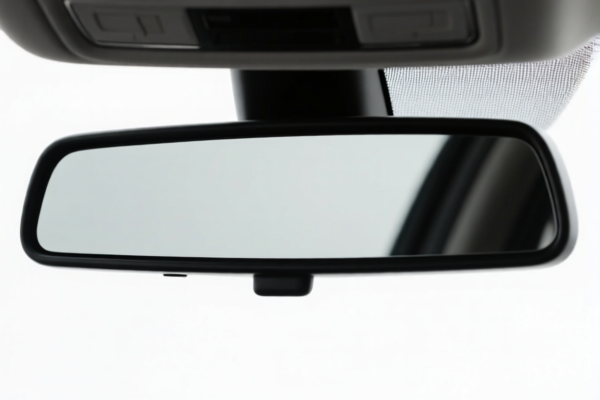
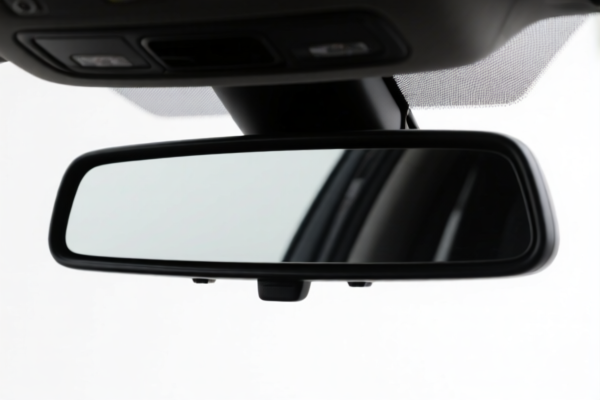
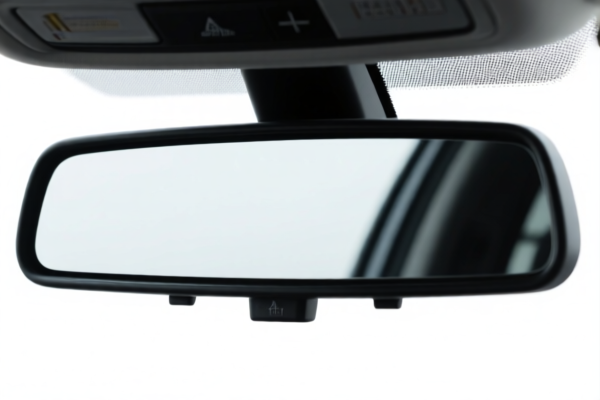

AI分析
🕶️ Rearview Auxiliary Mirror (Auxiliary Lens/Mirror)
🌐 HS Code Reference & Customs Clearance Guide | 2026 Latest Tariff Analysis | Professional Customs Strategy
📌 I. Product Definition & Classification: What Exactly is an "Auxiliary Mirror"?
A Rearview Auxiliary Mirror is a critical safety component in automotive and transportation industries, designed to expand the driver’s field of view and eliminate blind spots. In international trade, its classification depends heavily on whether it is considered a standalone optical device, a protective eyewear accessory, or a component of a larger optical system.
The core distinction lies in its end-use and structural integration:
- Eyewear/Goggle Category: If the auxiliary mirror is integrated into or designed specifically for personal protective eyewear (safety goggles, sports glasses) or corrective lenses.
- Optical Element Category: If it is a standalone lens, prism, or mirror component used in optical instruments (cameras, telescopes, scientific devices).
- Optical Accessory Category: If it is a basic optical material or accessory without complex instrument integration.
⚠️ Key Distinction Point:
- If it is part of a goggle or protective eyewear assembly →归类 to 9004
- If it is a standalone optical element (lens/prism) for instruments →归类 to 9002
- If it is a basic optical material/accessory →归类 to 9001
📦 II. HS Code Classification Details (2026 Latest Tariff Authority Comparison)
| HS Code | Product Description | Application Scenario | Classification Basis |
|---|---|---|---|
9004.90.00.90 |
Eyeglasses, goggles and the like, other | Auxiliary mirrors integrated into safety goggles, sports eyewear, or fashion frames | Eyewear/Goggle Category |
9004.90.00.10 |
Eyeglasses, goggles and the like, protective | Auxiliary mirrors designed for eye protection, safety standards compliance | Protective Eyewear Category |
9002.19.00.00 |
Optical elements (lenses, prisms, mirrors) | Standalone auxiliary mirrors used in optical devices, cameras, or scientific instruments | Optical Element Category |
9001.90.40.00 |
Optical elements and accessories, other | Basic optical lens material or simple auxiliary mirrors for general optical processing | Basic Optical Accessory Category |
9002.11.90.00 |
Objective lenses and parts/accessories | Auxiliary mirrors integrated into complex optical systems or as parts of objective lenses | Instrument Part Category |
🔍 Key Reminder:
- If the auxiliary mirror is sold as part of a complete goggle unit or for eye protection, it MUST be classified under 9004.
- If it is a loose optical component for manufacturing optical instruments, it falls under 9002 or 9001.
- Misclassification can lead to significant tariff differences (e.g., 20% vs 37.3%).
💰 III. 2026 Latest Tariff Rate Breakdown (Including Surtaxes & Policy Add-ons)
✅ Applicable Country: United States (US)
✅ Country of Origin: China (CN)
✅ Effective Date: 2025/2026 (Current Enforcement)
🎯 1. 9004.90.00.90 & 9004.90.00.10 —— Eyeglasses/Goggles (Including Auxiliary Mirrors)
| Item | Content |
|---|---|
| Base Tariff | 2.5% (Ad Valorem) |
| Section 301 Surtax | +7.5% |
| Section 122 Tariff | +10% |
| Total Tariff | 20.0% |
| Tax Calculation | CIF Value × 20% |
| De Minimis Exemption | ❌ Not Eligible (High risk of scrutiny) |
| Legal Basis | USITC Harmonized Tariff Schedule (HTS) + Section 122 Executive Order |
📌 Explanation:
- Base Tariff (2.5%): Standard duty for eyewear under HTS Chapter 90.
- Section 301 Surtax (7.5%): Additional tariff imposed on Chinese goods under Trade Act Section 301.
- Section 122 Tariff (10%): Specific surtax under U.S. Code Title 19, Section 122, targeting certain imports to protect domestic industries.
- Total 20%: This is the standard high-risk tier for eyewear accessories.🚨 Note:
- Both9004.90.00.90(Other) and9004.90.00.10(Protective) carry the same 20% total tariff.
- Classification as "Protective" does not reduce the tariff rate under current Section 122 rules.
🎯 2. 9002.19.00.00 —— Optical Elements (Lenses, Prisms, Mirrors)
| Item | Content |
|---|---|
| Base Tariff | 0.0% |
| Section 301 Surtax | +25.0% |
| Section 122 Tariff | +10% |
| Total Tariff | 35.0% |
| Tax Calculation | CIF Value × 35% |
| De Minimis Exemption | ❌ Not Eligible |
| Legal Basis | USITC HTS + Section 301 + Section 122 |
📌 Explanation:
- Base Tariff (0%): Optical elements often have zero base duty.
- Section 301 Surtax (+25%): This is the highest surtax tier for many optical components, significantly increasing costs.
- Section 122 Tariff (+10%): Additional protectionist tariff.
- Total 35%: Much higher than eyewear classification! Misclassifying an auxiliary mirror as an optical element can cost you an extra 15%.⚠️ Critical Insight:
- If the auxiliary mirror is considered a "part of an optical instrument," it may fall under 9002.11.90.00 (see below).
🎯 3. 9002.11.90.00 —— Parts & Accessories of Optical Instruments
| Item | Content |
|---|---|
| Base Tariff | 2.3% |
| Section 301 Surtax | +25.0% |
| Section 122 Tariff | +10% |
| Total Tariff | 37.3% |
| Tax Calculation | CIF Value × 37.3% |
| De Minimis Exemption | ❌ Not Eligible |
| Legal Basis | USITC HTS + Section 301 + Section 122 |
📌 Explanation:
- This is the most expensive classification for auxiliary mirrors.
- It applies if the mirror is deemed a specific part of a complex optical instrument (e.g., camera lens assembly, telescope).
- Total 37.3%: Avoid this unless the product is strictly a component of a larger device.
🎯 4. 9001.90.40.00 —— Optical Elements & Accessories (Other)
| Item | Content |
|---|---|
| Base Tariff | 0.0% |
| Section 301 Surtax | 0.0% |
| Section 122 Tariff | +10% |
| Total Tariff | 10.0% |
| Tax Calculation | CIF Value × 10% |
| De Minimis Exemption | ❌ Not Eligible (Check specific exclusions) |
| Legal Basis | USITC HTS + Section 122 Only |
📌 Explanation:
- This is the lowest tariff option (10%).
- It applies to auxiliary mirrors that are considered basic optical materials or generic accessories not tied to specific eyewear or complex instruments.
- Eligibility: Requires strong justification that the product is a "general optical accessory" without specific instrument integration or eyewear frame attachment.
- Risk: High risk of customs rejection if not properly documented as a non-specific accessory.
🛠️ IV. Customs Clearance Practical Advice (Real-World Pitfall Guide)
✅ 1. Required Documentation Checklist (Mandatory)
| Document | Required | Description |
|---|---|---|
| ✅ Product Specification Sheet | ✔️ | Include dimensions, material (glass/plastic), curvature, coating type, and intended use. |
| ✅ Product Photos | ✔️ | Clear images showing the mirror alone and if attached to any frame/goggle. |
| ✅ Usage Declaration Letter | ✔️ | Explicitly state: "Used for eye protection/eyewear" OR "Used as general optical accessory." |
| ✅ Commercial Invoice | ✔️ | Describe product accurately: "Auxiliary Mirror Lens, Non-Eyewear" or "Safety Goggle Lens Assembly." |
| ✅ Packing List | ✔️ | Detail quantity, weight, and packaging type. |
| ✅ Origin Certificate | ✔️ | Required for Section 122 determination. |
✅ 2. Declaration Tips (Key Strategy)
🔥 "Classify by End-Use, Not Just Material!"
| Scenario | Correct HS Code | Incorrect Approach | Consequence |
|---|---|---|---|
| Mirror sold with safety goggles | 9004.90.00.10 (20%) |
Declared as "Optical Lens" | Tariff jumps to 35%+ |
| Standalone mirror for general use | 9001.90.40.00 (10%) |
Declared as "Part of Telescope" | Tariff jumps to 37.3% |
| Mirror integrated into fashion glasses | 9004.90.00.90 (20%) |
Declared as "Raw Material" | Audit risk + Back Taxes |
📌 Strategy:
- If the mirror is small, generic, and not frame-specific, argue for 9001.90.40.00 (10%) with strong technical documentation proving it is a "general optical accessory."
- If it is clearly for eyewear/goggles, accept the 20% rate under 9004.
- Never declare as 9002 unless it is a high-precision optical component for scientific instruments, as the tax is prohibitive.
✅ 3. Special Cases & Risk Management
| Case | Handling Advice |
|---|---|
| OEM Custom Mirrors | Provide design drawings to prove non-instrument use. Avoid terms like "lens assembly" if it’s just a flat/curved mirror. |
| Mirrors for Automotive Use | If not part of a vehicle dashboard, still classify under 9004/9001. Do not use automotive codes unless part of a finished instrument. |
| Bundled Sales (Mirror + Frame) | Must declare as complete eyewear/goggle unit (9004). Cannot split declaration. |
| Material: Plastic vs. Glass | Material does not change HS code significantly, but "Plastic Optical Element" may strengthen argument for 9001 if generic. |
🌍 V. Global Market Clearance Comparison (2026 Latest)
| Country/Region | Recommended HS Code | Tariff Rate | Certification Requirements | Notes |
|---|---|---|---|---|
| 🇺🇸 USA | 9004.90.00.90/.10 |
20% | None specific, but proof of eyewear use needed | Avoid 9002 (35%+) |
| 🇨🇳 China | 9004.90.00.90 |
Low/Zero (Check FTA) | CCC (if protective) | Prefer 9004 for simplicity |
| 🇪🇺 EU | 9004.90.00.00 |
0-6% | CE (if protective) | Lower base duties, no Section 301 |
| 🇬🇧 UK | 9004.90.00.00 |
0-6% | UKCA (if protective) | Post-Brexit tariffs may vary |
📌 Conclusion:
- USA is the most expensive market due to Section 301 and Section 122.
- EU/UK offer lower base duties and no Section 301 surtax, making them more attractive for auxiliary mirrors.
- USA Strategy: Aggressively pursue 9001.90.40.00 (10%) if technically feasible, otherwise accept 20% under 9004.
📌 VI. Common Mistakes & Pitfall Guide (Blood & Tears Lessons)
❌ Mistake 1: Declaring an auxiliary mirror as a "Camera Lens Part" (9002.11.90.00)
👉 Result: 37.3% tariff instead of 20%.
Fix: Prove it is not a part of a specific optical instrument.
❌ Mistake 2: Declaring a goggle-mounted mirror as a "Raw Glass Material" (9001)
👉 Result: Customs rejects declaration, demands proof, delays shipment.
Fix: If mounted on a frame/goggle, it IS eyewear (9004).
❌ Mistake 3: Ignoring Section 122 Tariff
👉 Result: Underpayment of 10% on all categories.
Fix: Always include Section 122 in total tax calculation.
❌ Mistake 4: Using vague descriptions like "Glass Lens"
👉 Result: Customs assigns highest possible duty (9002 at 35%+).
Fix: Use precise terms: "Auxiliary Mirror for Safety Goggles" or "Plastic Auxiliary Lens Accessory."
✅ Correct Declaration Example:
"Auxiliary Convex Mirror Lens, Plastic, for Safety Goggles, Not Part of Instrument, Model XYZ, CN Origin"
→ Supports 9004.90.00.10 (20%) or potentially 9001.90.40.00 (10%) with extra proof.
🎯 VII. Conclusion: Professional Declaration, Cost Savings, Efficiency!
🎯 Remember the Golden Rules:
🔹 "Eyewear is 20%, Instrument Part is 37%, General Accessory is 10%!"
🔹 "Section 122 adds 10% everywhere, Section 301 adds 7.5% or 25%!"
🔹 "Prove your End-Use to save 15%+ in taxes!"
📌 Pro Tip:
- If your auxiliary mirror is simple, unmounted, and generic, submit a Pre-Ruling Request to U.S. Customs and Border Protection (CBP) for 9001.90.40.00.
- For mounted or goggle-integrated mirrors, stick to 9004 to avoid audits.
- Documentation is Key: Keep photos, specs, and use-case declarations ready for every shipment.
📣 Immediate Action:
📞 Consult your customs broker with product photos and intended use statement.
🚀 Optimize your HS Code declaration to save thousands in tariffs!
✨ Professional Clearance Starts with Precise Classification!
💼 Every Percent of Tariff is Money in Your Pocket!
用户评价
关于 HS 编码归类
协调制度(HS)是由世界海关组织(WCO)制定的国际贸易商品分类标准。全球 200 多个国家采用 HS 系统作为海关关税、贸易统计和进出口监管的基础。
每个 HS 编码遵循以下层级结构:
- 章(2 位)——商品大类(例如:第 84 章:机器和机械设备)
- 品目(4 位)——章内的更具体分类
- 子目(6 位)——国际通用细分,所有 WCO 成员国统一使用
- 本国细分(8-10 位)——各国自行扩展的细分编码,如美国 HTSUS 10 位编码
正确的 HS 编码归类对于顺利通关、准确缴纳关税和遵守贸易法规至关重要。错误归类可能导致海关延误、多缴关税或罚款。
从CN进口到US时,适用的关税税率可能包括:
- 最惠国(MFN)税率——适用于 WTO 成员国的标准关税税率
- 普通税率——适用于无贸易协定国家
- 贸易救济关税——附加关税,如 301 条款(反倾销)、232 条款(国家安全)或反补贴税
本页内容仅供参考。如需正式归类,请咨询当地海关或持牌报关代理。