Rechargeable Light Bulb
CN → US| HS编码 | 关税税率 | 原产国 | 目的国 | 文档 |
|---|---|---|---|---|
| 8539228040 | 12.6% | CN | US | 官方文档 |
| 8513104000 | 13.5% | CN | US | 官方文档 |
| 8539520091 | 12.0% | CN | US | 官方文档 |
| 8507808200 | 38.4% | CN | US | 官方文档 |
| 8504409520 | 35.0% | CN | US | 官方文档 |
商品图片
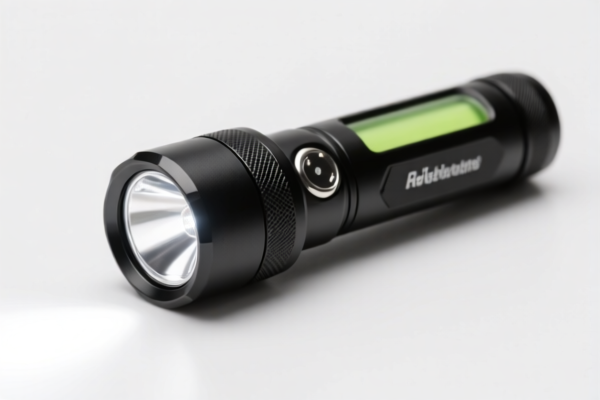
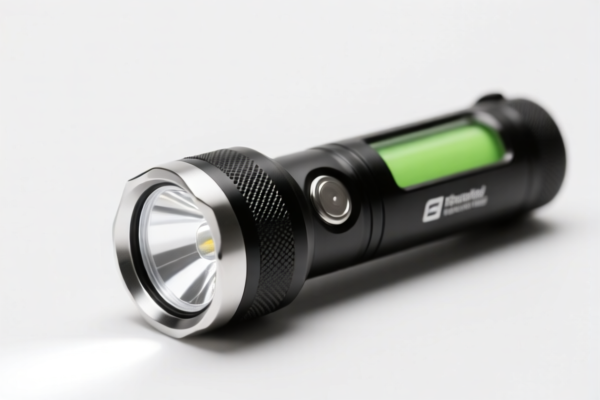
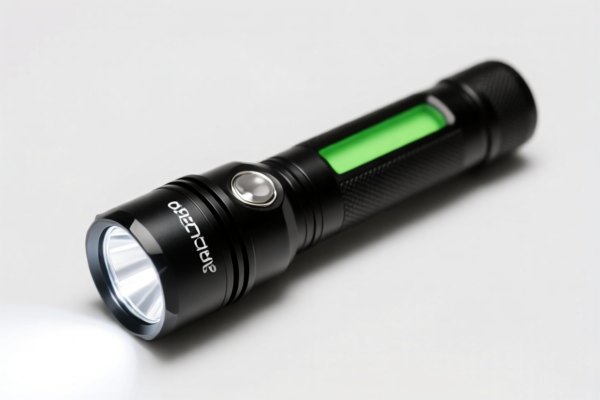

AI分析
💡 Rechargeable Light Bulb (Portable & LED Lighting Solutions)
🌐 HS Code Reference & Customs Clearance Guide | 2026 Latest Tariff Analysis | Professional Clearance Strategy
📌 I. Product Definition & Classification: Do You Really Understand "Rechargeable Bulbs"?
A Rechargeable Light Bulb is a dual-nature product in international trade. It can be classified based on its function (lighting device) or its power source (portable battery device). This ambiguity often leads to significant tax differences. In international trade, it is generally divided into two categories:
1. Lighting Device (Functional Classification):
- Defined as a portable electric lamp using internal power.
- Matches HS 8513 (Portable electric lamps designed to function by their own source of energy).
- Also potentially matches LED Lamp categories under HS 8539.
2. Power Source (Component Classification):
- Defined as a portable battery pack (if the focus is on energy storage).
- Matches HS 8507 (Storage batteries, including separators).
- Note: For a bulb, the "battery" is usually integrated, so classification as a "lamp" is more common unless the battery is sold separately.
⚠️ Key Distinction Point:
- If the product is primarily a light source with an integrated battery → Classify as Portable Lamp (8513) or LED Lamp (8539).
- If the product is primarily a battery that also lights up (e.g., a power bank with a light) → Classify as Battery (8507) or Power Supply (8504).
- Misclassification Risk: Declaring a rechargeable bulb as a simple "bulb" (8539) without mentioning the rechargeable aspect may trigger inspections for undeclared battery restrictions.
📦 II. HS Code Classification Details (2026 Latest Tariff Authority Comparison)
| HS Code | Product Description | Application Scenario | Key Feature |
|---|---|---|---|
8513.10.40.00 |
Portable electric lamps | Most Accurate for Rechargeable Bulbs | Uses built-in battery, portable, self-contained |
8539.52.00.91 |
Electric light sources (LED) | If classified purely as an LED component | Inferred as LED light source, generic lamp category |
8539.22.80.40 |
Other electric lamps (Fallback) | If not clearly LED or portable | "Other" category, no specific material/power conflict |
8507.80.82.00 |
Portable storage batteries | Risk of Misclassification | If deemed primarily a battery/power bank |
8504.40.95.20 |
Static converters/Rectifiers | Unlikely but Possible | If viewed as a power conversion device |
🔍 Key Reminder:
-8513.10.40.00is the strongest candidate for a "Rechargeable Light Bulb" because it explicitly covers "Portable electric lamps designed to function by their own source of energy."
-8539codes are for general lamps. If the bulb is clearly LED and rechargeable, customs may still prefer 8513 due to the "portable/self-powered" nature.
-8507codes apply if the item is marketed primarily as a "Power Bank with Light." Do not use this for a standard bulb, as it attracts much higher tariffs.
💰 III. 2026 Latest Tariff Rate Breakdown (Including Surtaxes, Policy Add-ons)
✅ Applicable Country: United States (US)
✅ Origin: China (CN)
✅ Effective Date: From November 10, 2025 onwards
🎯 1. 8513.10.40.00 —— Portable Electric Lamps (Best Fit for Rechargeable Bulbs)
| Item | Content |
|---|---|
| Base Tariff | 3.5% |
| Section 301 Surtax | +0.0% (Not currently in the highest bracket) |
| IEEPA Surtax (122 Clause) | +10% (Targeting Chinese Products) |
| Total Tariff Rate | 13.5% |
| Tax Calculation | CIF Value × 13.5% |
| De Minimis Eligibility | ❌ Not Eligible (Battery-containing items are generally excluded from Section 321 de minimis) |
| Legal Basis Path | IEEPA:9903.01.24 → USITC:8513.10.40.00 |
📌 Explanation:
- This code offers a moderate tariff.
- The "122 Clause" (IEEPA) adds 10%, which is standard for many electronics from China.
- Crucial: Since it contains a lithium battery, it cannot use the $800 de minimis exemption (Section 321) for individual packages. It must go through formal entry.
🎯 2. 8539.52.00.91 —— Electric Light Sources (LED)
| Item | Content |
|---|---|
| Base Tariff | 2.0% |
| Section 301 Surtax | +0.0% |
| IEEPA Surtax (122 Clause) | +10% |
| Total Tariff Rate | 12.0% |
| Tax Calculation | CIF Value × 12.0% |
| De Minimis Eligibility | ❌ Not Eligible |
📌 Note:
- Slightly lower total tax (12.0%) than 8513.
- However, customs may challenge this if the product is clearly a "portable lamp" rather than a "bulb component."
- Use this only if the product is sold as a replaceable bulb unit without emphasis on "portability" or "battery operation" as a primary function.
🎯 3. 8539.22.80.40 —— Other Electric Lamps (Fallback)
| Item | Content |
|---|---|
| Base Tariff | 2.6% |
| Section 301 Surtax | +0.0% |
| IEEPA Surtax (122 Clause) | +10% |
| Total Tariff Rate | 12.6% |
| Tax Calculation | CIF Value × 12.6% |
📌 Note:
- A generic "catch-all" category.
- Tax is higher than 8539.52 but lower than portable lamps.
- Less precise description may lead to customs queries.
🎯 4. 8507.80.82.00 —— Portable Storage Batteries (High Risk/Misclassification)
| Item | Content |
|---|---|
| Base Tariff | 3.4% |
| Section 301 Surtax | +25.0% (High Surtax) |
| IEEPA Surtax (122 Clause) | +10% |
| Total Tariff Rate | 38.4% |
| Tax Calculation | CIF Value × 38.4% |
📌 Warning:
- DO NOT classify a light bulb as a battery unless it is primarily a power bank.
- This tariff is 3x higher than the correct classification.
- Only applies if the item is marketed as a "Portable Battery with Light."
🎯 5. 8504.40.95.20 —— Static Converters/Power Supplies
| Item | Content |
|---|---|
| Base Tariff | 0.0% |
| Section 301 Surtax | +25.0% |
| IEEPA Surtax (122 Clause) | +10% |
| Total Tariff Rate | 35.0% |
📌 Warning:
- Incorrect classification for a bulb.
- High tariff due to Section 301.
- Only relevant if the item is a separate charging adapter/rectifier.
🛠️ IV. Customs Clearance Practical Advice (Avoid Pitfalls)
✅ 1. Preparation Checklist (Missing Items Will Delay Clearance)
| Document | Mandatory? | Description |
|---|---|---|
| ✅ Product Specification Sheet | ✔️ | Must state: "Rechargeable," "Built-in Battery," "LED," "Voltage/Capacity." |
| ✅ Battery Declaration Form | ✔️ | Must specify battery type (Li-ion/Li-polymer), watt-hours (Wh), and UN38.3 test report. |
| ✅ Product Photos (Including Labels) | ✔️ | Clear view of model number, input/output specs, and "Rechargeable" warning. |
| ✅ Commercial Invoice | ✔️ | Description: "Portable Rechargeable LED Light Bulb, Model XYZ, with Built-in Battery." |
| ✅ Packing List | ✔️ | Indicate if batteries are installed or loose. |
| ✅ FCC/CE Certification | ✔️ | Required for electronic devices in the US/EU. |
✅ 2. Declaration Strategy (Key Tips)
🔥 "Declare as Lamp, Not Battery, But Disclose Battery!"
| Scenario | Correct Declaration | Incorrect Practice |
|---|---|---|
| Standard Rechargeable Bulb | 8513.10.40.00 (Portable Lamp) |
Declaring as 8507 (Battery) → 38.4% Tax |
| Bulb + Charger Sold Separately | Bulb: 8513.10.40.00, Charger: 8504.40.95.20 |
Merging into one HS code → Ambiguity |
| "Power Bank with Light" | 8507.80.82.00 |
Declaring as 8513 → Potential fraud audit |
✅ 3. Special Considerations
| Situation | Handling Advice |
|---|---|
| Lithium Battery Content | Must provide UN38.3 Test Report and MSDS. Failure to do so results in seizure or return. |
| De Minimis (Section 321) | ❌ NOT ELIGIBLE for individual shipments over $800 if containing batteries. Must file formal entry. |
| FCC Compliance | Wireless rechargeable bulbs (if RF-enabled) need FCC ID. Standard bulbs need FCC Part 15 compliance. |
| Marking | Must mark "China" origin and "Rechargeable Battery" warning on packaging. |
🌍 V. Global Market Comparison (2026 Latest)
| Country/Region | Recommended HS Code | Tariff | Certification | Notes |
|---|---|---|---|---|
| 🇺🇸 USA | 8513.10.40.00 |
13.5% | FCC, UN38.3 | Highest priority: Battery declaration |
| 🇪🇺 EU | 8513.10.90 |
~0-2% | CE, RoHS, Battery Directive | Lower tariffs, stricter battery recycling rules |
| 🇬🇧 UK | 8513.10.90 |
~0-5% | UKCA, RoHS | Post-Brexit rules apply |
| 🇨🇳 China | 8513.10.40.00 |
~5-10% | CCC (if applicable) | Exporting to China? Different rules |
| 🇦🇺 Australia | 8513.10.90 |
~5% | RCM, CE | No major surtaxes |
📌 Conclusion:
- The USA has the most complex tariff structure due to IEEPA and Section 301.
- EU/UK/Australia have lower base tariffs but stricter battery safety/recycling regulations.
- Always use8513.10.40.00for rechargeable bulbs entering the US to balance cost and compliance.
📌 VI. Common Errors & Pitfalls (Lessons Learned)
❌ Error 1: Declaring a rechargeable bulb as a "Standard Light Bulb" (8539) without mentioning the battery.
👉 Consequence: Customs will request battery documents, causing delays. If found later, penalties apply.
❌ Error 2: Classifying as 8507.80.82.00 (Battery) to avoid lamp tariffs.
👉 Consequence: Tariff jumps from 13.5% to 38.4% → Massive cost increase!
❌ Error 3: Ignoring UN38.3 and MSDS requirements.
👉 Consequence: Shipment rejected at border, returned to sender, or destroyed.
❌ Error 4: Using "De Minimis" for shipments with batteries.
👉 Consequence: Package seized, fines imposed. Batteries are never de minimis eligible.
✅ Correct Practice:
"Portable Rechargeable LED Light Bulb, 5W, 2000mAh Li-ion Battery, FCC Certified, Model XYZ, Origin China"
🎯 VII. Conclusion: Smart Classification, Smooth Clearance!
🎯 Remember the Mantra:
🔹 "Bulb is Lamp, Not Battery!"
🔹 "13.5% is the Sweet Spot, 38% is the Trap!"
🔹 "Always Declare the Battery, Or Face the Penalty!"
📌 Pro Tip:
If your rechargeable bulb is originating from Vietnam, Mexico, or Thailand, you may qualify for IEEPA Exemptions or lower tariffs under FTAs.
建议 Pre-classification Ruling (Advance Ruling) from US Customs (CBP) to confirm 8513.10.40.00 applicability for your specific design.
📣 Immediate Action:
📞 Contact a licensed customs broker + Provide Product Photos + Submit UN38.3 Report
🚀 Ensure your Rechargeable Bulbs clear customs smoothly, avoiding 38% tariffs and delays!
✨ Professional Clearance Starts with Accurate Classification!
💼 Every dollar saved is a dollar earned!
用户评价
关于 HS 编码归类
协调制度(HS)是由世界海关组织(WCO)制定的国际贸易商品分类标准。全球 200 多个国家采用 HS 系统作为海关关税、贸易统计和进出口监管的基础。
每个 HS 编码遵循以下层级结构:
- 章(2 位)——商品大类(例如:第 84 章:机器和机械设备)
- 品目(4 位)——章内的更具体分类
- 子目(6 位)——国际通用细分,所有 WCO 成员国统一使用
- 本国细分(8-10 位)——各国自行扩展的细分编码,如美国 HTSUS 10 位编码
正确的 HS 编码归类对于顺利通关、准确缴纳关税和遵守贸易法规至关重要。错误归类可能导致海关延误、多缴关税或罚款。
从CN进口到US时,适用的关税税率可能包括:
- 最惠国(MFN)税率——适用于 WTO 成员国的标准关税税率
- 普通税率——适用于无贸易协定国家
- 贸易救济关税——附加关税,如 301 条款(反倾销)、232 条款(国家安全)或反补贴税
本页内容仅供参考。如需正式归类,请咨询当地海关或持牌报关代理。