Rechargeable Lithium Battery Kit
CN → US| HS编码 | 关税税率 | 原产国 | 目的国 | 文档 |
|---|---|---|---|---|
| 8543709860 | 37.6% | CN | US | 官方文档 |
| 8543908885 | 85.0% | CN | US | 官方文档 |
| 8504909642 | 35.0% | CN | US | 官方文档 |
| 8543709860 | 37.6% | CN | US | 官方文档 |
商品图片
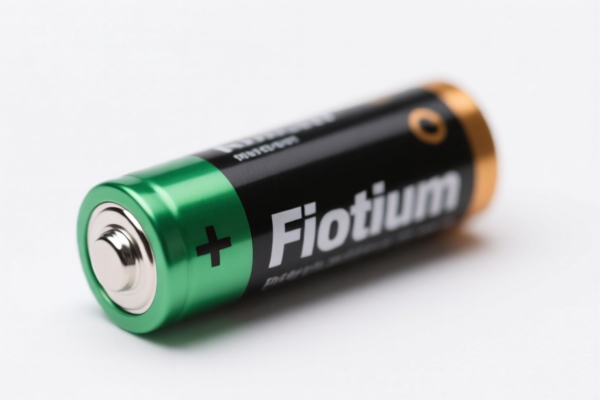
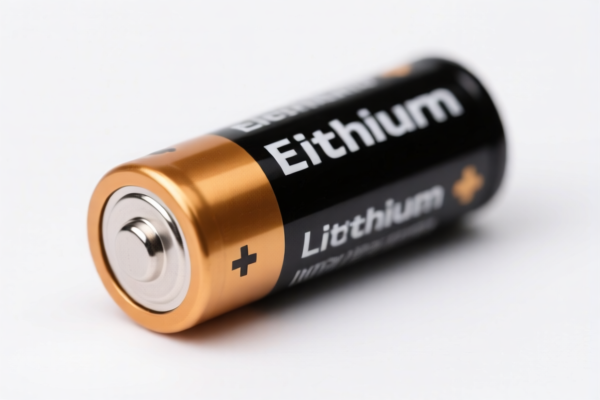
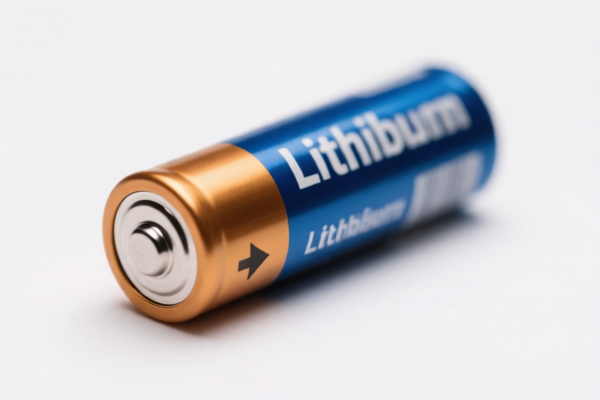
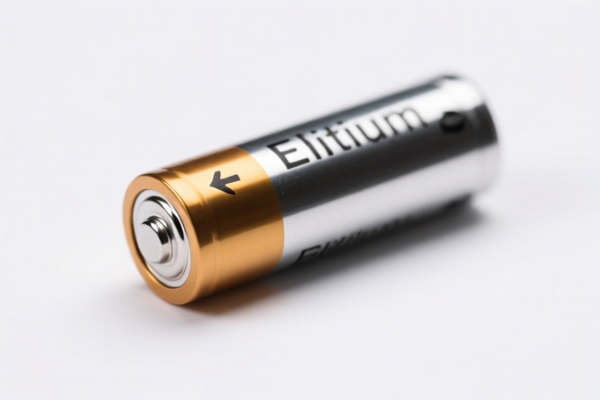
AI分析
🔋 Rechargeable Lithium Battery Kit (Portable Energy Solutions)
🌐 HS Code Reference & Customs Clearance Guide | 2026 Latest Tariff Analysis | Professional Clearance Strategy
📌 I. Product Definition & Classification: Do You Really Understand "Lithium Battery Kits"?
A "Rechargeable Lithium Battery Kit" typically refers to a collection of lithium-ion cells, Battery Management Systems (BMS), protective casings, connectors, and sometimes charging modules, packaged together for specific applications (e.g., DIY power banks, electric vehicle conversions, or solar storage).
In international trade, the classification is tricky because it depends on whether the kit is a complete functional device or merely components/parts.
⚠️ Key Distinction:
- If the kit includes a dedicated charging circuit/board that converts power and functions as a standalone device → It may fall under 8543.70.98.60.
- If the kit is just battery cells + casing + wiring without independent functional apparatus → It may be classified as Parts under 8504.90.96.42 or 8543.90.88.85.
- Crucial Note: If it is a complete, self-contained charging unit (like a dedicated charger box), it leans towards 8543.70.98.60. If it is just the battery assembly to be installed into another device, it leans towards 8504 or 8543.90.
📦 II. HS Code Classification Details (2026 Latest Tariff Authority Comparison)
| HS Code | Product Description | Application Scenario | Functional Independence |
|---|---|---|---|
8543.70.98.60 |
Other machines and apparatus with individual functions (Lithium-ion electrochemical basis) | Kits with integrated charging/control logic, acting as a standalone power device | ✅ Yes (Standalone Device) |
8543.90.88.85 |
Parts and accessories of electrical machines (Other) | Kits comprising battery cells and structural components, intended for installation | ❌ No (Component/Part) |
8504.90.96.42 |
Parts of transformers, static converters, and inductors | Kits inferred as structural parts (casings, brackets) for battery systems | ❌ No (Structural Part) |
🔍 Important Reminder:
- 8543.70.98.60 is used when the "Kit" has an independent electrical function (e.g., it can charge/discharge independently). The summary states: "Inferred from name as having independent electrical function."
- 8543.90.88.85 and 8504.90.96.42 are used when the "Kit" is considered a part or accessory to a larger system. The summaries indicate: "Inferred as containing battery groups and circuit components... belonging to electrical equipment parts."
- Conflict Check: The data confirms no material or morphological conflict with these "Other" (兜底) categories, making them safe "catch-all" classifications if the specific function isn't explicitly listed elsewhere.
💰 III. 2026 Latest Tariff Rate Details (Including Surcharges & Policy Add-ons)
✅ Applicable Country: United States (US)
✅ Country of Origin: China (CN)
✅ Effective Time: Current rates apply (based on 2025/2026 trade policies)
🎯 1. 8543.70.98.60 —— Other Machines and Apparatus (Standalone Function)
| Item | Content |
|---|---|
| Base Tariff | 2.6% |
| Section 301 Additional Tariff | +25.0% |
| Section 122 Tariff (IEEPA) | +10.0% |
| Total Effective Rate | 37.6% |
| Tax Calculation | CIF Value × 37.6% |
| De Minimis Exemption | ❌ Not Applicable (High value item) |
| Legal Basis Path | Base: 2.6% → Sec 301: 25% → Sec 122: 10% |
📌 Explanation:
- This code is favored for complete functional kits.
- The total tax burden is 37.6%, which is high but potentially lower than parts classifications depending on specific origin rules.
- Why this code? The data summary states: "Inferred from product name 'Lithium Battery Charging Equipment' as having independent function... no conflict with material or form."
🎯 2. 8543.90.88.85 —— Parts of Electrical Machines (Other)
| Item | Content |
|---|---|
| Base Tariff | 0.0% |
| Section 301 Additional Tariff | +25.0% |
| Section 122 Tariff (IEEPA) | +10.0% |
| Steel/Aluminum/Copper Surcharge | +50.0% (If applicable components are metallic) |
| Total Effective Rate | Up to 85.0% |
| Tax Calculation | CIF Value × 85.0% (Max) |
| De Minimis Exemption | ❌ Not Applicable |
| Legal Basis Path | Base: 0% → Sec 301: 25% → Sec 122: 10% → Metal Surcharge: 50% |
📌 Warning:
- This code carries the highest risk of high taxation due to the potential +50% steel/aluminum surcharge.
- The data summary states: "Inferred as containing battery group and circuit components... belonging to electrical equipment parts."
- Use with caution: Only use if the kit is purely a part and does not contain significant steel/aluminum components that trigger the 50% surcharge, or if you are prepared for the 85% rate.
🎯 3. 8504.90.96.42 —— Parts of Transformers/Inductors (Other)
| Item | Content |
|---|---|
| Base Tariff | 0.0% |
| Section 301 Additional Tariff | +25.0% |
| Section 122 Tariff (IEEPA) | +10.0% |
| Total Effective Rate | 35.0% |
| Tax Calculation | CIF Value × 35.0% |
| De Minimis Exemption | ❌ Not Applicable |
| Legal Basis Path | Base: 0% → Sec 301: 25% → Sec 122: 10% |
📌 Explanation:
- This code is used when the kit is interpreted as structural parts (casings, brackets) for battery systems.
- The data summary states: "Inferred as containing battery group and related structural parts...符合'其他零件'的类别定义."
- Advantage: No steel/aluminum surcharge mentioned, resulting in a lower 35% rate compared to8543.90.88.85.
🛠️ IV. Customs Clearance Practical Advice (Actionable Pitfall Avoidance)
✅ 1. Preparation Checklist (Non-negotiable)
| Document | Required | Description |
|---|---|---|
| ✅ Product Specification Sheet | ✔️ | Must detail: Cell type (Li-ion), BMS specs, input/output voltage, capacity (Ah/Wh). |
| ✅ Circuit Diagram/Structure Drawing | ✔️ | Critical to prove if it's a "Standalone Device" (8543.70) or a "Part" (8504/8543.90). |
| ✅ Product Photos (with Nameplate) | ✔️ | Show clear labeling of model, brand, and electrical parameters. |
| ✅ MSDS & UN38.3 Certification | ✔️ | Mandatory for Lithium Batteries. Without this, shipment will be rejected. |
| ✅ Commercial Invoice | ✔️ | Clearly state "Rechargeable Lithium Battery Kit" and intended use. |
| ✅ Packing List | ✔️ | Separate batteries from electronics if possible to clarify classification. |
✅ 2. Declaration Strategy (Key Mnemonic)
🔥 “Function Defines Code, Structure Defines Rate, Avoid Metal Surcharge!”
| Scenario | Recommended HS Code | Reason |
|---|---|---|
| Kit with integrated charger/control board | 8543.70.98.60 |
Independent function. Rate: 37.6%. |
| Kit with only batteries + casing (No charger) | 8504.90.96.42 |
Considered structural parts. Rate: 35.0%. (Lowest risk) |
| Kit with batteries + generic circuit parts | 8543.90.88.85 |
General parts. Rate: Up to 85.0% (High risk if metal-heavy). |
✅ 3. Special Situations
| Situation | Handling Advice |
|---|---|
| Kit contains significant Steel/Aluminum | Avoid 8543.90.88.85 to prevent 50% surcharge. Use 8504.90.96.42 or 8543.70.98.60. |
| OEM Custom Kits | Provide design drawings to prove "Independent Function" for 8543.70 to avoid being classified as generic parts. |
| Mixed Packaging (Batteries + Charger) | Declare as a complete set if they are used together for one function. Otherwise, split declaration to optimize rates. |
| Origin Verification | Ensure all components are made in China to avoid different origin rules affecting Section 122 rates. |
🌍 V. Global Market Comparison (2026 Latest)
| Country/Region | Recommended HS Code | Tariff Rate | Certification Required | Notes |
|---|---|---|---|---|
| 🇺🇸 USA | 8543.70.98.60 or 8504.90.96.42 |
35% - 37.6% | UL/CE + UN38.3 + MSDS | Avoid 8543.90.88.85 due to metal surcharge. |
| 🇨🇳 China | 8507.60.00.00 (Local) |
Varies | CCC (if applicable) | No Section 122/301 tariffs. |
| 🇪🇺 EU | 8507.60.00.90 |
0% (Free) | CE + RoHS + UN38.3 | Lower risk, but strict on battery safety. |
| 🇯🇵 Japan | 8507.60.00.00 |
3-6% | PSE + UN38.3 | Stable tariffs, focus on safety. |
📌 Conclusion:
- The USA is the highest-tariff market due to Section 301 and Section 122 duties.
- Strategic Choice: Between the three codes,8504.90.96.42(35%) and8543.70.98.60(37.6%) are the most viable options.8543.90.88.85should be avoided unless necessary, due to the potential 85% rate.
📌 VI. Common Mistakes & Pitfall Guide (Lessons Learned)
❌ Mistake 1: Classifying a complete charging kit as a generic "Part" (8543.90)
👉 Consequence: Risk of 85% tariff due to metal surcharge.
👉 Fix: Prove independent function for 8543.70 (37.6%).
❌ Mistake 2: Failing to provide UN38.3 and MSDS
👉 Consequence: Seizure or Return of shipment by customs.
👉 Fix: Always include these documents for lithium products.
❌ Mistake 3: Misdeclaring "Battery Kit" as "Electronic Component" without detail
👉 Consequence: Customs audit, delay, and potential back-tariffs.
👉 Fix: Be specific: "Rechargeable Lithium Battery Kit with BMS."
✅ Correct Approach:
"Rechargeable Lithium-Ion Battery Kit, Model XYZ, 48V 20Ah, with Integrated BMS, for Solar Storage, UN38.3 Certified."
🎯 VII. Conclusion: Professional Classification Saves Money!
🎯 Remember the Mnemonic:
🔹 "Function is King: Standalone = 8543.70 (37.6%).
🔹 Structure is Queen: Parts = 8504.90 (35%).
🔹 Avoid the Metal Trap: 8543.90 can be 85%!"
📌 Pro Tip:
If your kit is intended for non-commercial/personal use and is below the de minimis threshold (if applicable), ensure it is truly exempt from Section 122/301. However, for lithium batteries, exemptions are rare.
Recommendation: Apply for an Advance Ruling from CBP to lock in the 35% or 37.6% rate and avoid surprise 85% bills.
📣 Immediate Action:
📞 Contact your freight forwarder + Provide UN38.3 + Apply for HS Code Pre-Ruling
🚀 Let your battery kits clear smoothly, avoid high taxes, and maximize profit!
✨ Professional Clearance Starts with Accurate Classification!
💼 Every cent of tax saved is pure profit!
用户评价
关于 HS 编码归类
协调制度(HS)是由世界海关组织(WCO)制定的国际贸易商品分类标准。全球 200 多个国家采用 HS 系统作为海关关税、贸易统计和进出口监管的基础。
每个 HS 编码遵循以下层级结构:
- 章(2 位)——商品大类(例如:第 84 章:机器和机械设备)
- 品目(4 位)——章内的更具体分类
- 子目(6 位)——国际通用细分,所有 WCO 成员国统一使用
- 本国细分(8-10 位)——各国自行扩展的细分编码,如美国 HTSUS 10 位编码
正确的 HS 编码归类对于顺利通关、准确缴纳关税和遵守贸易法规至关重要。错误归类可能导致海关延误、多缴关税或罚款。
从CN进口到US时,适用的关税税率可能包括:
- 最惠国(MFN)税率——适用于 WTO 成员国的标准关税税率
- 普通税率——适用于无贸易协定国家
- 贸易救济关税——附加关税,如 301 条款(反倾销)、232 条款(国家安全)或反补贴税
本页内容仅供参考。如需正式归类,请咨询当地海关或持牌报关代理。