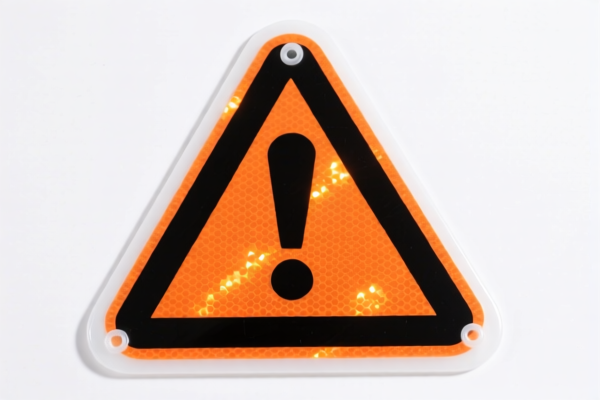
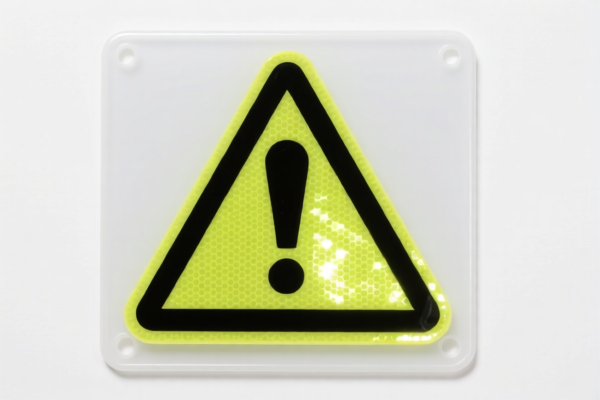
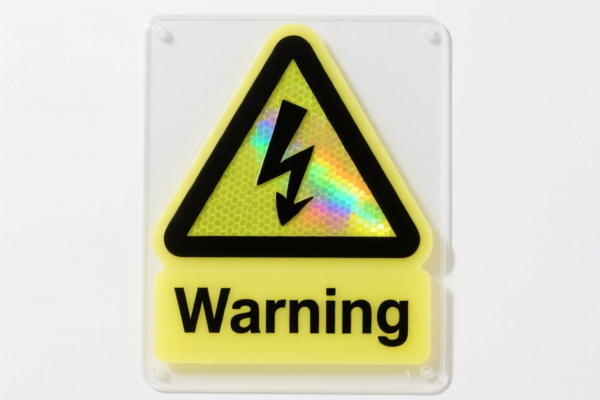
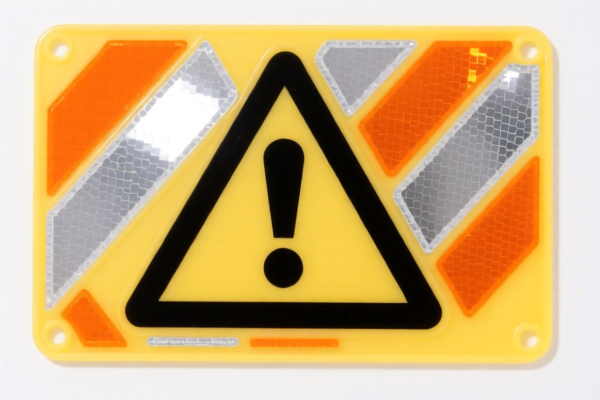
Reflective Plastic Warning Sign
CN → US| HS编码 | 关税税率 | 原产国 | 目的国 | 文档 |
|---|---|---|---|---|
| 3926909925 | 22.8% | CN | US | 官方文档 |
| 3926909989 | 22.8% | CN | US | 官方文档 |
| 3920991000 | 41.0% | CN | US | 官方文档 |
| 3920591000 | 41.0% | CN | US | 官方文档 |
| 3919101050 | 41.5% | CN | US | 官方文档 |
商品图片
AI分析
🖨️ Reflective Plastic Warning Signs: The Ultimate HS Code & Tariff Guide (2026 Update)
🌐 HS Code Reference & Clearance Guide | 2026 Latest Tariff Analysis | Professional Clearance Strategy
📌 1. Product Definition & Classification: What Exactly Are You Shipping?
Reflective Plastic Warning Signs are safety-critical items used in traffic control, construction zones, industrial facilities, and warehouse management. They consist of a plastic substrate (base material) coated or laminated with retro-reflective material to ensure visibility under low-light conditions or headlight illumination.
In international trade, the HS Code classification depends heavily on the specific nature of the plastic and the form of the product:
- General Plastic Articles: If the sign is a simple plastic piece with reflective adhesive or coating, it may fall under "Other articles of plastics."
- Plastic Plates/Sheets: If the sign is essentially a sheet of plastic with reflective properties (like reflective tape or film), it may be classified as plastic plates or sheets.
- Acrylic Products: If the base is specifically acrylic polymer, it has its own sub-heading.
- Self-Adhesive Rolls/Films: If the "sign" is actually a roll of reflective tape or sheeting, it may be classified as self-adhesive plastic plates/films.
⚠️ Critical Distinction:
- Is it a rigid sign (board/signage)? → Likely3926.90(Other articles).
- Is it a flexible sheet/film or tape? → Likely3919(Self-adhesive) or3920(Non-cellular plastic plates/sheets).
- Is it Acrylic? → Likely3920.59.
📦 2. HS Code Classification Details (2026 Latest Tariff Alignment)
Based on the provided data, here are the four primary HS Codes applicable to "Reflective Plastic Warning Signs," along with their descriptions and tax implications.
| HS Code | Product Description & Justification | Key Characteristics |
|---|---|---|
| 3926.90.99.25 | Plastic Reflective Signboard Material: Plastic Use: Reflective Marking |
- Rigid or semi-rigid signboard - Plastic base - Standard reflective marking use |
| 3926.90.99.89 | Plastic Reflective Signboard Material: Plastic Classification: Unlisted other plastic articles |
- Plastic sign not covered elsewhere - "Other" category for plastic goods - General plastic signage |
| 3920.99.10.00 | Plastic Reflective Signboard Material: Plastic Form: Plate/Sheet/Film Composite |
- Composite structure - Plastic plate, sheet, or film - Reflective layer applied to plastic sheet |
| 3920.59.10.00 | Plastic Reflective Signboard Material: Acrylic Polymer Form: Plate/Sheet/Film |
- Base material is Acrylic (PMMA) - Rigid plastic sheet - Reflective coating/lamination |
| 3919.10.10.50 | Reflective Plastic Safety Label Material: Plastic Features: Reflective Surface Form: Strip or Sheet |
- Self-adhesive or tape-like - Strip or sheet form - Safety label application |
🔍 Important Note:
-3926.90.99.xxxxcovers "Other articles of plastics" (e.g., finished signs, placards).
-3920.99.xxxxcovers "Other plates, sheets, film, foil and strip, of plastics" (e.g., reflective plastic sheets used as signs).
-3919.10.xxxxcovers "Self-adhesive plates, sheets, film, foil, tape, strip and other flat shapes" (e.g., reflective tape or adhesive safety labels).
💰 3. 2026 Latest Tariff Rate Breakdown (Including Surcharges)
✅ Applicable Country: United States (US)
✅ Origin: China (CN)
✅ Effective Date: Current tariffs apply (including Section 301 & IEEPA measures)
🎯 1. 3926.90.99.25 & 3926.90.99.89 – Plastic Reflective Signboards (General)
These codes cover finished plastic signs that do not fall under specific plate/film categories.
| Item | Details |
|---|---|
| Base Tariff | 5.3% (Most Favored Nation) |
| Section 301 Surcharge | 7.5% |
| Section 122 Tariff | 10% |
| Total Effective Tax Rate | 22.8% |
| Tax Calculation | CIF Value × 22.8% |
| De Minimis Eligibility | ❌ No (Typically excluded due to total rate > 8% or specific product exclusions) |
📌 Explanation:
- 5.3% is the standard MFN tariff for other plastic articles.
- 7.5% is the Section 301 tariff (Note: Some updates may vary, but based on provided data, it is 7.5%).
- 10% is the Section 122 tariff (often applied to specific categories, check latest list).
- Total: 22.8% is significantly lower than high-risk categories, making this a favorable classification if applicable.
🎯 2. 3920.99.10.00 – Plastic Reflective Signboard (Plate/Sheet Composite)
This code applies when the sign is primarily a plastic plate, sheet, or film, even if composite.
| Item | Details |
|---|---|
| Base Tariff | 6.0% |
| Section 301 Surcharge | 25.0% |
| Section 122 Tariff | 10% |
| Total Effective Tax Rate | 41.0% |
| Tax Calculation | CIF Value × 41.0% |
| De Minimis Eligibility | ❌ No |
📌 Explanation:
- Plastic plates/sheets (3920) generally face higher Section 301 tariffs (25%).
- The 10% Section 122 tariff is still applied.
- Total: 41.0% is a high-cost category. Ensure the product is not a "finished sign" (3926) to avoid this rate if possible.
🎯 3. 3920.59.10.00 – Acrylic Polymer Reflective Signboard
If the sign is made of Acrylic (PMMA), it falls under a specific sub-heading with similar high tariffs.
| Item | Details |
|---|---|
| Base Tariff | 6.0% |
| Section 301 Surcharge | 25.0% |
| Section 122 Tariff | 10% |
| Total Effective Tax Rate | 41.0% |
| Tax Calculation | CIF Value × 41.0% |
| De Minimis Eligibility | ❌ No |
📌 Explanation:
- Acrylic plates/sheets (3920.59) are treated similarly to other plastic sheets.
- Total: 41.0%. Same as general plastic sheets.
- Key Check: Confirm material is not just "plastic" but specifically acrylic to avoid misclassification.
🎯 4. 3919.10.10.50 – Reflective Plastic Safety Label (Self-Adhesive)
This code applies if the product is a self-adhesive label or tape (strip/sheet form), often used for temporary safety markings.
| Item | Details |
|---|---|
| Base Tariff | 6.5% |
| Section 301 Surcharge | 25.0% |
| Section 122 Tariff | 10% |
| Total Effective Tax Rate | 41.5% |
| Tax Calculation | CIF Value × 41.5% |
| De Minimis Eligibility | ❌ No |
📌 Explanation:
- Self-adhesive plastic products (3919) have the highest base rate among these options (6.5%).
- Section 301 (25%) and Section 122 (10%) apply.
- Total: 41.5%. This is the most expensive classification.
- Risk: Do not classify rigid signs as self-adhesive labels to avoid this rate.
🛠️ 4. Clearance Practical Advice (Pro Tips for Smooth Customs)
✅ 1. Documentation Checklist (Mandatory)
| Document | Required | Notes |
|---|---|---|
| Product Specifications | ✔️ | Detail material (Acrylic? PE? PVC?), form (Rigid? Roll?), and reflective type. |
| Commercial Invoice | ✔️ | Clearly state "Reflective Plastic Warning Sign" and exact HS Code. |
| Packing List | ✔️ | List dimensions, weight, and quantity. |
| Material Safety Data Sheet (MSDS) | ❓ | If applicable, especially for chemical coatings. |
| Proof of Origin | ✔️ | Crucial for verifying US vs. China origin and applying correct surcharges. |
| Product Photos | ✔️ | Show the sign, reflective surface, and any backing/adhesive. |
✅ 2. Classification Strategy (How to Optimize Tariffs)
🔥 "Know Your Form: Rigid = Cheaper, Sheet/Tape = Expensive!"
| Product Type | Recommended HS Code | Total Tax Rate | Strategy |
|---|---|---|---|
| Rigid Signboard (e.g., 12x18" plastic sign) | 3926.90.99.25 |
22.8% | BEST OPTION. Classify as "Other plastic articles" if it’s a finished sign. |
| Acrylic Sign (Rigid acrylic with reflection) | 3920.59.10.00 |
41.0% | Accept if material is acrylic. Cannot be easily reclassified to 3926. |
| Reflective Sheet/Film (Unrolled) | 3920.99.10.00 |
41.0% | High tax. Only use if product is indeed a sheet/film, not a sign. |
| Self-Adhesive Label/Tape | 3919.10.10.50 |
41.5% | AVOID IF POSSIBLE. Highest tax. Only use for actual tapes/labels. |
📌 Key Tip:
- If your product is a finished sign (e.g., a plastic board with reflective decals or embedded reflectors), argue for3926.90.99.25to benefit from the 22.8% rate.
- Do not classify a rigid sign as a "plastic sheet" (3920) or "self-adhesive tape" (3919) just to simplify description; this will trigger 41%+ taxes and potential misdeclaration penalties.
✅ 3. Special Handling & Common Pitfalls
| Scenario | Advice |
|---|---|
| Mix of Materials | If the sign has plastic + metal frame, the plastic part still dominates classification if it’s the main material. Consult a customs broker for composite goods. |
| "Reflective" Definition | Ensure the reflective material is integral. If it’s just a printed sticker on plastic, it’s likely 3926. If it’s a reflective sheet laminated to plastic, it might be 3920. |
| Section 122 Eligibility | Verify if the product is exempt from Section 122. Some plastic articles may have exclusions. Check the latest USITC exclusion list. |
| De Minimis (Section 321) | Not Eligible. With total rates of 22.8% to 41.5%, shipments cannot use the $800 de minimis exemption. Formal entry is required. |
🌍 5. Global Market Comparison (2026 Snapshot)
| Market | HS Code Example | Base Tariff | Surcharges | Total Estimate |
|---|---|---|---|---|
| 🇺🇸 USA | 3926.90.99.25 |
5.3% | 7.5% (301) + 10% (122) | 22.8% |
| 🇨🇳 China | 3926.90.99.25 |
6.5% | None | 6.5% |
| 🇪🇺 EU | 3926.90.99 |
6.5% | None | 6.5% |
| 🇬🇧 UK | 3926.90.99 |
6.5% | None | 6.5% |
📌 Conclusion:
- The US market is significantly more expensive due to Section 301 and Section 122 tariffs.
- For US exports, optimizing the HS Code to3926.90.99.25(22.8%) rather than3920or3919(41%+) can save ~18% in duties.
- Consider supply chain diversification (e.g., Vietnam, Mexico) if tariffs impact profitability, as these countries may have different tariff treatments under USMCA or other agreements.
📌 6. Common Mistakes & Pitfalls (Learn from Others!)
❌ Mistake 1: Classifying a rigid plastic sign as "Plastic Sheet" (3920).
👉 Result: Tax jumps from 22.8% to 41.0%.
👉 Fix: Ensure product is described as a "sign" or "article," not just a "sheet."
❌ Mistake 2: Claiming "De Minimis" for shipments over $800.
👉 Result: Customs holds shipment, demands formal entry, applies full taxes + penalties.
👉 Fix: Since total rate > 8%, De Minimis is not allowed. Prepare for formal entry.
❌ Mistake 3: Ignoring Section 122 Tariff.
👉 Result: Underpayment of 10%.
👉 Fix: Always check if Section 122 applies to plastic articles. Based on data, it does apply.
❌ Mistake 4: Using "Reflective Tape" for rigid signs.
👉 Result: Classified under 3919 (41.5%).
👉 Fix: Rigid signs are not tape. Use 3926.
🎯 7. Conclusion: Smart Classification Saves Money!
🎯 Key Takeaway:
🔹 "Rigid Sign =
3926(22.8%) vs. Sheet/Tape =3920/3919(41%+)"
🔹 A 18.7% difference in duty can be the difference between profit and loss!
📌 Action Plan:
1. Verify Product Form: Is it rigid (sign) or flexible (sheet/tape)?
2. Choose 3926.90.99.25 if possible to minimize taxes.
3. Prepare Full Documentation: Invoice, Packing List, Proof of Origin.
4. File Formal Entry: Do not rely on De Minimis.
5. Consult a Broker: For composite goods or unclear classifications, get a Binding Tariff Ruling from US Customs.
📣 Need Help?
📞 Engage a licensed customs broker to review your product’s physical characteristics.
📝 Ensure your commercial invoice accurately reflects the product’s nature to avoid audits.
✨ Precision in Classification, Power in Savings!
💼 Every dollar saved in duties is pure profit.
用户评价
关于 HS 编码归类
协调制度(HS)是由世界海关组织(WCO)制定的国际贸易商品分类标准。全球 200 多个国家采用 HS 系统作为海关关税、贸易统计和进出口监管的基础。
每个 HS 编码遵循以下层级结构:
- 章(2 位)——商品大类(例如:第 84 章:机器和机械设备)
- 品目(4 位)——章内的更具体分类
- 子目(6 位)——国际通用细分,所有 WCO 成员国统一使用
- 本国细分(8-10 位)——各国自行扩展的细分编码,如美国 HTSUS 10 位编码
正确的 HS 编码归类对于顺利通关、准确缴纳关税和遵守贸易法规至关重要。错误归类可能导致海关延误、多缴关税或罚款。
从CN进口到US时,适用的关税税率可能包括:
- 最惠国(MFN)税率——适用于 WTO 成员国的标准关税税率
- 普通税率——适用于无贸易协定国家
- 贸易救济关税——附加关税,如 301 条款(反倾销)、232 条款(国家安全)或反补贴税
本页内容仅供参考。如需正式归类,请咨询当地海关或持牌报关代理。