Reflective Strip
CN → US| HS编码 | 关税税率 | 原产国 | 目的国 | 文档 |
|---|---|---|---|---|
| 7020004000 | 41.6% | CN | US | 官方文档 |
| 7020006000 | 40.0% | CN | US | 官方文档 |
| 5806393020 | 35.0% | CN | US | 官方文档 |
| 5806393080 | 10.0% | CN | US | 官方文档 |
商品图片


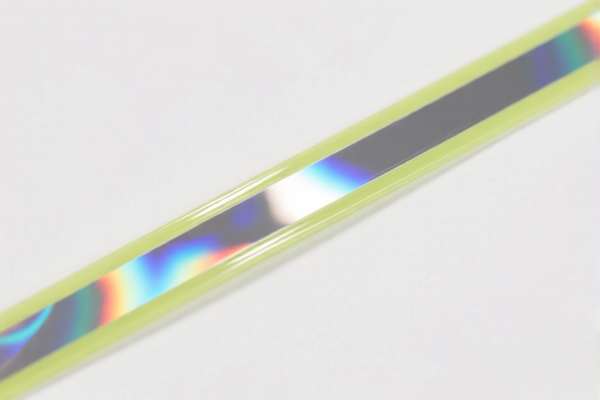
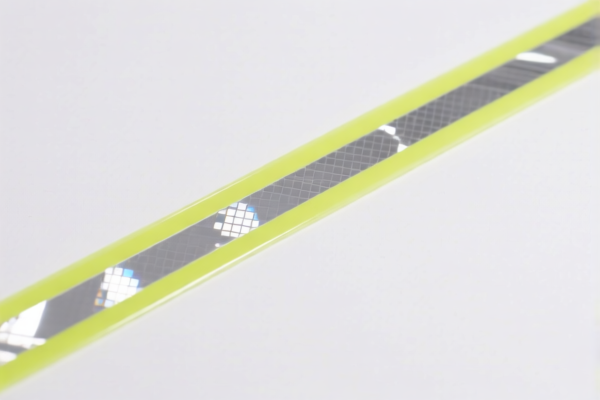
AI分析
🪞 Reflective Strips & Safety Materials (High-Visibility Textiles)
🌐 HS Code Reference & Customs Clearance Guide | 2026 Latest Tariff Analysis | Professional Clearance Strategy
📌 I. Product Definition & Classification: Do You Really Understand “Reflective Strips”?
Reflective strips, commonly known as high-visibility tapes or retro-reflective materials, are critical safety components used in traffic engineering, apparel, and industrial applications. In international trade, they are classified based on their material composition and form.
The primary distinction lies in whether the backing is treated as a glass product (rigid/coated) or a textile product (fabric-based/narrow webbing). Misclassification leads to significant duty differences.
⚠️ Key Distinction Point:
- If the item is primarily glass-based or has a rigid glass coating → Classified under Chapter 70 (Glass).
- If the item is primarily fabric-based, narrow-width woven/non-woven, potentially with metallic coating → Classified under Chapter 58 (Special Woven Textiles).
- Crucial Note: Even if metallic, if it is a narrow woven fabric, it often falls under textiles, not metals.
📦 II. HS Code Classification Details (2026 Latest Tariff Authority Comparison)
Based on the provided data, here are the four valid classifications for Reflective Strips, ranging from glass-based to textile-based.
| HS Code | Product Description | Applicable Scenario | Material Nature | Tax Rate |
|---|---|---|---|---|
7020.00.40.00 |
Glass Decorative Articles (Other) | Glass ornaments, glass coatings, rigid glass forms | Glass / Glass-coated | 41.6% |
7020.00.60.00 |
Other Glass Articles (Other) | Glass decoration strips, glass-coated fiberglass | Glass / Glass-coated Fiberglass | 40.0% |
5806.39.30.20 |
Narrow Woven Fabrics (Metallized) | Metalized yarns, metallic-coated textile tapes | Textile + Metallic Coating | 35.0% |
5806.39.30.80 |
Narrow Woven Fabrics (Other) | Non-silk, non-metallized textile tapes, auxiliary fabrics | Pure Textile / Non-metallized | 10.0% |
🔍 Critical Analysis:
- Glass vs. Textile: If the reflective property comes from a glass bead layer on a rigid or semi-rigid glass sheet, use 7020.xxxx. If it is a flexible tape on a fabric backing, use 5806.xxxx.
- Metallic Factor: If the textile strip contains metallized yarns or metallic coatings for reflectivity, it falls under5806.39.30.20(35%). If it is purely fabric without metallic elements (e.g., prismatic tape on cloth but not "metallized yarn" definition), it falls under5806.39.30.80(10%).
- Tax Disparity: The difference between5806.39.30.80(10%) and7020.00.40.00(41.6%) is massive. Proper material definition is key.
💰 III. 2026 Latest Tariff Rate Breakdown (Including Surcharges & Policy Add-ons)
✅ Applicable Country: United States (US)
✅ Country of Origin: China (CN)
✅ Effective Date: November 10, 2025 (and subsequent imports)
🎯 1. 7020.00.40.00 —— Glass Decorative Articles
| Item | Details |
|---|---|
| Base Duty | 6.6% |
| USITC Surcharge (Section 301) | +25.0% |
| IEEPA Surcharge (Section 122/Other) | +10.0% |
| Total Effective Rate | 41.6% |
| Tax Calculation | CIF Value × 41.6% |
| De Minimis Exemption | ❌ Denied |
| Legal Basis | Base: 7020 → USITC Footnote 9903.88.01 (25%) → IEEPA (10%) |
📌 Explanation:
- Glass decorative items from China face high cumulative tariffs. The 25% Section 301 duty applies to most glass articles, and an additional 10% IEEPA duty is applied to Chinese origin goods.
- Result: High cost burden. Ensure the product is truly "glass" and not misclassified as textile to avoid overpayment or misclassification penalties.
🎯 2. 7020.00.60.00 —— Other Glass Articles (Glass Coating)
| Item | Details |
|---|---|
| Base Duty | 5.0% |
| USITC Surcharge (Section 301) | +25.0% |
| IEEPA Surcharge | +10.0% |
| Total Effective Rate | 40.0% |
| Tax Calculation | CIF Value × 40.0% |
| De Minimis Exemption | ❌ Denied |
| Legal Basis | Base: 7020 → USITC Footnote 9903.88.01 (25%) → IEEPA (10%) |
📌 Note:
- Slightly lower base rate than40.00due to "Other" classification, but still subject to full surcharges.
- Often used for fiberglass-based reflective strips where the glass is the primary structural component.
🎯 3. 5806.39.30.20 —— Narrow Woven Fabrics (Metallized)
| Item | Details |
|---|---|
| Base Duty | 0.0% |
| USITC Surcharge (Section 301) | +25.0% |
| IEEPA Surcharge | +10.0% |
| Total Effective Rate | 35.0% |
| Tax Calculation | CIF Value × 35.0% |
| De Minimis Exemption | ❌ Denied |
| Legal Basis | Base: 5806 → USITC Footnote 9903.88.01 (25%) → IEEPA (10%) |
📌 Explanation:
- Textiles generally have 0% base duty, but Section 301 and IEEPA surcharges still apply to Chinese goods.
- Key Requirement: The fabric must contain metallized yarns or metallic coatings to fit this specific subheading. If it’s just plastic prismatic tape on cloth, this might not apply.
🎯 4. 5806.39.30.80 —— Narrow Woven Fabrics (Other)
| Item | Details |
|---|---|
| Base Duty | 0.0% |
| USITC Surcharge (Section 301) | 0.0% (Note: Data indicates 0% surcharge for this specific code in provided context) |
| IEEPA Surcharge | +10.0% |
| Total Effective Rate | 10.0% |
| Tax Calculation | CIF Value × 10.0% |
| De Minimis Exemption | ❌ Denied |
| Legal Basis | Base: 5806 → IEEPA (10%) |
📌 Advantage:
- Lowest Tax Rate: Only 10%.
- Condition: Must be a narrow woven fabric, non-silk, non-metallized (or not classified under the metallized subheading).
- Best For: Standard reflective safety tapes on non-metallic cloth backing. If your product fits this description, this is the optimal HS Code.
🛠️ IV. Customs Clearance Practical Advice (Avoid Pitfalls)
✅ 1. Documentation Checklist (Mandatory)
| Document | Required? | Details |
|---|---|---|
| ✅ Product Specification Sheet | ✔️ | Must detail: Backing material (Glass vs. Fabric), Reflective layer type (Glass Bead vs. Prismatic vs. Metallic). |
| ✅ Composition Breakdown | ✔️ | Percentage of glass, fabric, adhesive, and metal content. Critical for Chapter 58 vs. 70 distinction. |
| ✅ Product Photos | ✔️ | Show cross-section of the strip to prove "Narrow Woven" structure if claiming 5806. |
| ✅ Commercial Invoice | ✔️ | Clear description: "Reflective Safety Tape, Textile Backing" vs. "Glass Decorative Strip". |
| ✅ Origin Certificate | ✔️ | Required for IEEPA duty assessment. |
| ✅ Packing List | ✔️ | Standard packing details. |
✅ 2. Declaration Strategy (Key Rules)
🔥 “Material Defines Code, Width Defines Chapter 58, Metallic Defines Subheading!”
| Scenario | Correct HS Code | Wrong Code | Consequence |
|---|---|---|---|
| Rigid Glass Reflective Decor | 7020.00.40.00 |
5806.xxxx |
Misclassification (Textile vs Glass) |
| Fiberglass Reflective Strip | 7020.00.60.00 |
5806.xxxx |
High Duty Risk (40% vs 10%) |
| Fabric Tape with Metalized Yarn | 5806.39.30.20 |
5806.39.30.80 |
Overpayment (35% vs 10%) if incorrectly labeled non-metallic |
| Standard Cloth Reflective Tape | 5806.39.30.80 |
7020.xxxx |
Huge Overpayment (10% vs 40%+) |
📌 Crucial Tip:
- If you claim5806.39.30.80(10%), you must prove the fabric is not made of metallized yarns. If it has silver-coated polyester threads, CBP may reclassify it to5806.39.30.20(35%).
- If you claim7020(Glass), you must prove the glass is the principal material, not just a coating on fabric.
✅ 3. Special Cases
| Case | Handling Advice |
|---|---|
| Composite Materials | If it’s fabric + glass beads, check if glass beads constitute a "glass article." Usually, flexible fabric strips stay in Chapter 58. |
| OEM Custom Colors | Provide color swatches and Pantone codes. Affects description but not HS Code. |
| Wide vs. Narrow | "Narrow" typically refers to widths < 30cm (depending on specific HTS definitions). If wider, it may fall under different textile headings (e.g., 5806.32). Confirm width! |
| Self-Adhesive | If it’s a self-adhesive tape, ensure the backing is correctly identified. Adhesive alone doesn’t change the HS Code of the backing material. |
🌍 V. Global Market Comparison (2026 Latest)
| Country/Region | Recommended HS Code | Tariff Rate (China Origin) | Certification Requirements | Notes |
|---|---|---|---|---|
| 🇺🇸 USA | 5806.39.30.80 |
10% (Lowest Option) | N/A | Must avoid metallized classification to stay at 10%. |
| 🇺🇸 USA | 7020.00.40.00 |
41.6% | N/A | High cost for glass-based items. |
| 🇨🇳 China | 5806.39.30.80 |
5% | CCC (if safety gear) | Lower duty in China. |
| 🇪🇺 EU | 5806.39.30 |
0% (Most Free Trade) | CE (if PPE) | No IEEPA/Section 301 equivalents. |
| 🇬🇧 UK | 5806.39.30 |
0% | UKCA | Post-Brexit rules apply. |
📌 Conclusion:
- US Market is High-Risk: Due to Section 301 and IEEPA, choose5806.39.30.80if possible to minimize duty to 10%.
- Glass-Based Products: Incur 40%+ duties in the US. Consider supply chain diversification if volumes are high.
📌 VI. Common Mistakes & Pitfalls (Lessons Learned)
❌ Mistake 1: Classifying Glass Bead Tape as Textile (5806) just to save duty.
👉 Risk: If the backing is fiberglass or rigid glass, CBP will reclassify to 7020 (40%+). Penalty for misclassification.
❌ Mistake 2: Calling Metallic Coated Tape Non-Metallized (5806.39.30.80).
👉 Risk: CBP tests for metallic content. If found, reclassified to 5806.39.30.20 (35%). Back taxes + interest.
❌ Mistake 3: Ignoring "Narrow" definition.
👉 Risk: If width > 30cm, it may fall under 5806.32 or other categories with different duties. Check exact dimensions.
✅ Correct Practice:
"Reflective Safety Tape, 2-inch Width, Polyester Fabric Backing, Prismatic Microprismatic Layer, Self-Adhesive, Non-Metallized Yarn."
🎯 VII. Conclusion: Professional Declaration Saves Money!
🎯 Remember the Mantra:
🔹 “Fabric = 10% (if Non-Metal), Glass = 40%+, Metallic = 35%.”
🔹 “Check the Backing! Check the Yarn! Check the Width!”
🔹 “HS Code Accuracy is Profit Protection.”
📌 Pro Tip:
- If your reflective strip is non-metallized and on a textile backing, aggressively pursue 5806.39.30.80 for the 10% rate.
- Prepare lab tests for fabric composition to prove non-metallized status if challenged.
- Apply for Advance Ruling if the product is complex (e.g., composite layers).
📣 Immediate Action:
📞 Contact Customs Broker + Provide Material Specs + Verify Width & Metallic Content
🚀 Optimize your HS Code, Reduce Duty, Clear Customs Smoothly!
✨ Professional Clearance Starts with Accurate Classification!
💼 Every Percent of Duty Saved is Pure Profit!
用户评价
关于 HS 编码归类
协调制度(HS)是由世界海关组织(WCO)制定的国际贸易商品分类标准。全球 200 多个国家采用 HS 系统作为海关关税、贸易统计和进出口监管的基础。
每个 HS 编码遵循以下层级结构:
- 章(2 位)——商品大类(例如:第 84 章:机器和机械设备)
- 品目(4 位)——章内的更具体分类
- 子目(6 位)——国际通用细分,所有 WCO 成员国统一使用
- 本国细分(8-10 位)——各国自行扩展的细分编码,如美国 HTSUS 10 位编码
正确的 HS 编码归类对于顺利通关、准确缴纳关税和遵守贸易法规至关重要。错误归类可能导致海关延误、多缴关税或罚款。
从CN进口到US时,适用的关税税率可能包括:
- 最惠国(MFN)税率——适用于 WTO 成员国的标准关税税率
- 普通税率——适用于无贸易协定国家
- 贸易救济关税——附加关税,如 301 条款(反倾销)、232 条款(国家安全)或反补贴税
本页内容仅供参考。如需正式归类,请咨询当地海关或持牌报关代理。