Refractory Castable Self Leveling
CN → US| HS编码 | 关税税率 | 原产国 | 目的国 | 文档 |
|---|---|---|---|---|
| 2530908015 | 10.0% | CN | US | 官方文档 |
| 6810110010 | 38.2% | CN | US | 官方文档 |
| 3824500010 | 35.0% | CN | US | 官方文档 |
| 2530908050 | 10.0% | CN | US | 官方文档 |
| 6810195000 | 38.9% | CN | US | 官方文档 |
商品图片
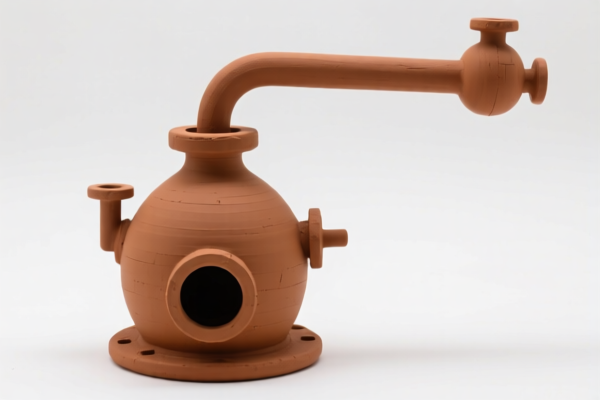
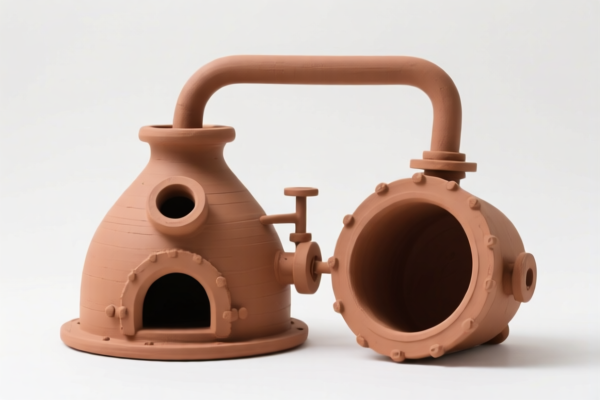
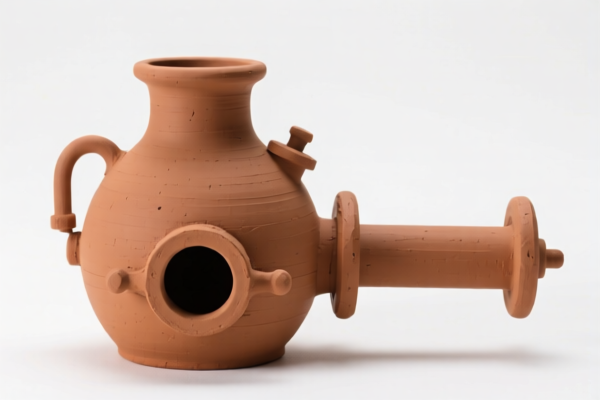
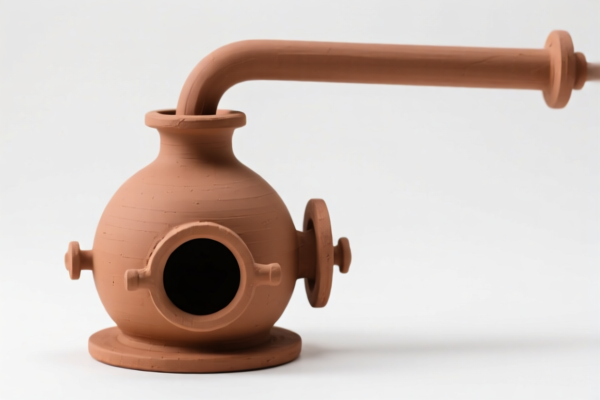
AI分析
🔥 Refractory Castable Self-Leveling (High-Performance Industrial Materials)
🌐 HS Code Reference & Customs Clearance Guide | 2026 Latest Tariff Analysis | Professional Compliance Strategy
📌 I. Product Definition & Classification: What is "Refractory Castable Self-Leveling"?
Refractory castable self-leveling is a specialized monolithic refractory material used in high-temperature industrial applications (such as kilns, furnaces, and boilers). Its defining characteristic is its ability to flow and settle evenly under its own weight without mechanical vibration, ensuring a smooth, dense, and void-free lining.
In international trade, the classification depends heavily on the primary material composition (mineral vs. concrete-based) and chemical formulation. Based on the provided data, three distinct classification paths emerge:
⚠️ Key Distinction Points:
- If viewed as a raw mineral substance (unprocessed or minimally processed aggregates) → Chapter 25
- If viewed as a cementitious/concrete product (mixed binders, ready-to-use construction material) → Chapter 68
- If viewed as a chemical preparation/mortar (specific industrial chemical additives) → Chapter 38
📦 II. HS Code Classification Details (2026 Latest Tariff Authority对照)
Based on the provided dataset, here are the three possible HS Code classifications for "Refractory Castable Self-Leveling":
| HS Code | Product Description | Rationale from Data | Tax Rate |
|---|---|---|---|
2530.90.80.15 |
Other Mineral Substances | The "castable" form fits the "other mineral substances" category. It is treated as a raw mineral material. | 10.0% |
2530.90.80.50 |
Other Unlisted Mineral Substances | Inorganic mineral derivatives in primary castable form. Treated as a basic mineral derivative. | 10.0% |
6810.11.00.10 |
Cement/Concrete/Artificial Stone Articles | "Castable" falls under cement/concrete/artificial stone. "Refractory" property aligns with magnesia-based fireproof materials. | 38.2% |
6810.19.50.00 |
Other Cement/Concrete/Artificial Stone Articles | Refractory castable with self-leveling characteristics fits "other" artificial stone or similar制品. | 38.9% |
3824.50.00.10 |
Chemical Preparations (Non-fireproof Mortar) | Treated as a chemical agent within "non-fireproof mortar/concrete." "Self-leveling" matches "wet" form characteristics. | 35.0% |
🔍 Critical Note:
- Chapter 25 (Minerals): Lowest tax burden (10%). Applies if the product is declared as raw mineral aggregates or simple mixtures without complex chemical binding agents.
- Chapter 68 (Stone/Cement): Highest tax burden (38.2%-38.9%). Applies if the product is fully processed into cementitious/concrete-like articles.
- Chapter 38 (Chemicals): Medium-High tax burden (35.0%). Applies if classified as a specific chemical preparation/mortar additive.
💰 III. 2026 Latest Tariff Rate Breakdown (Including Surtaxes & Policy Additions)
✅ Applicable Country: USA (US)
✅ Origin: China (CN)
✅ Effective Date: November 10, 2025 (and subsequent imports)
🎯 1. 2530.90.80.15 & 2530.90.80.50 —— Mineral Substances (Lowest Tax Path)
| Item | Details |
|---|---|
| Basic Tariff | 0% |
| Section 301 Surtax | 0% |
| IEEPA Surtax (122 Clause) | +10% |
| Total Tax Rate | 10.0% |
| Calculation Base | CIF Value × 10% |
| De Minimis Exemption | ❌ Not Applicable (High-value industrial goods) |
| Legal Basis | IEEPA:9903.01.25 → USITC:2530.90.80.15 |
📌 Explanation:
- These codes are classified under Chapter 25 (Other Mineral Products).
- The 10% IEEPA surtax is the only additional duty.
- Total effective duty: 10%. This is the most cost-effective classification if the product can be legally justified as a raw mineral substance.
🎯 2. 3824.50.00.10 —— Chemical Preparations (Mortar/Cement Additives)
| Item | Details |
|---|---|
| Basic Tariff | 0% |
| Section 301 Surtax | +25% |
| IEEPA Surtax (122 Clause) | +10% |
| Total Tax Rate | 35.0% |
| Calculation Base | CIF Value × 35% |
| De Minimis Exemption | ❌ Not Applicable |
| Legal Basis | IEEPA:9903.01.24 → USITC:3824.50.00.10 → FOOTNOTE:9903.88.01 |
📌 Explanation:
- Classified under Chapter 38 (Chemical Products).
- Attracts the 25% Section 301 surtax + 10% IEEPA surtax.
- Total effective duty: 35%. Higher than mineral codes due to chemical preparation status.
🎯 3. 6810.11.00.10 & 6810.19.50.00 —— Cement/Concrete/Artificial Stone (Highest Tax Path)
| Item | Details |
|---|---|
| Basic Tariff | 3.2% (for .11) / 3.9% (for .19) |
| Section 301 Surtax | +25% |
| IEEPA Surtax (122 Clause) | +10% |
| Total Tax Rate | 38.2% (for .11) / 38.9% (for .19) |
| Calculation Base | CIF Value × 38.2%/38.9% |
| De Minimis Exemption | ❌ Not Applicable |
| Legal Basis | IEEPA:9903.01.24 → USITC:6810.11.00.10 → FOOTNOTE:9903.88.01 |
📌 Explanation:
- Classified under Chapter 68 (Articles of Stone, Plaster, Cement).
- Attracts Base Tariff (3.2%-3.9%) + 25% Section 301 + 10% IEEPA.
- Total effective duty: 38.2%-38.9%. This is the most expensive path, typical for finished cementitious construction materials.
🛠️ IV. Customs Clearance Practical Advice (Pitfall Avoidance Guide)
✅ 1. Required Documentation Checklist (Non-Negotiable)
| Document | Mandatory? | Purpose |
|---|---|---|
| ✅ Product Specification Sheet | ✔️ | Must detail composition (mineral vs. chemical vs. cementitious), temperature resistance, and self-leveling properties. |
| ✅ Material Safety Data Sheet (MSDS) | ✔️ | Critical for determining if it's a "chemical preparation" (Ch 38) or "mineral" (Ch 25). |
| ✅ Composition Breakdown | ✔️ | Percentages of binders, aggregates, and additives. Helps argue for Ch 25 classification. |
| ✅ Commercial Invoice | ✔️ | Must clearly state "Refractory Castable, Self-Leveling, for Industrial Furnace Lining." |
| ✅ Certificate of Origin (CO) | ✔️ | To verify CN origin and apply IEEPA/Section 301 rates. |
| ✅ Packing List | ✔️ | Show unit weight and packaging type (bulk vs. bagged). |
✅ 2. Declaration Strategy (Key Mnemonics)
🔥 “Mineral Low, Chemical Mid, Cement High!”
| Scenario | Recommended HS Code | Expected Tax | Why? |
|---|---|---|---|
| Raw Mineral Mix (Low binder, high aggregate) | 2530.90.80.15 / 2530.90.80.50 |
10% | Justified as "other mineral substances." Lowest risk, lowest cost. |
| Chemical-Heavy Mix (High additives, wet-form) | 3824.50.00.10 |
35% | Classified as "chemical preparation." Moderate cost. |
| Cement-Based Ready-Mix (High binder, construction-grade) | 6810.11.00.10 / 6810.19.50.00 |
38.2-38.9% | Classified as "cement/concrete articles." Highest cost. |
📌 Declaration Tip:
- Avoid vague terms like "Construction Material."
- Use precise terms: "Refractory Castable, Self-Leveling, Magnesia-Based, for Industrial Kiln Lining."
- If possible, provide lab tests proving high mineral content and low chemical binder content to support Ch 25 classification.
✅ 3. Special Cases & Handling
| Case | Handling Advice |
|---|---|
| OEM Custom Formulas | Provide client-specific formulation sheets. Prove consistency with Ch 25 mineral descriptions if claiming 10% tax. |
| Pre-Mixed vs. Dry Powder | Pre-mixed with liquid binders may push toward Ch 38 (Chemical). Dry powder with mineral aggregates favors Ch 25. |
| High-Temperature Specificity | Emphasize "Refractory" and "Industrial Application" to distinguish from general construction cement (Ch 38/68). |
| Multiple Binders | If complex chemical binders dominate, Ch 38 or Ch 68 may be unavoidable. Consult a customs broker for pre-ruling. |
🌍 V. Global Market Clearance Comparison (2026 Latest)
| Country/Region | Recommended HS Code | Tax Rate (CN Origin) | Certification Requirements | Notes |
|---|---|---|---|---|
| 🇺🇸 USA | 2530.90.80.15 |
10% | No special certs | 35-39% for Ch 38/68. |
| 🇨🇳 China | 2530.90.80.15 |
0% | No special certs | Domestic trade benefits from lower base rates. |
| 🇪🇺 EU | 2530.90.80.15 |
0% | REACH | No Section 301/IEEPA surcharges. |
| 🇦🇺 Australia | 2530.90.80.15 |
5% | N/A | Lower than US rates. |
| 🇯🇵 Japan | 2530.90.80.15 |
0% | JIS | No additional surcharges. |
📌 Conclusion:
- USA is the only market with significant additional tariffs (IEEPA + Section 301).
- Ch 25 (10%) is significantly cheaper than Ch 38/68 (35-39%) in the US.
- Chinese-made refractory castables face high US duties, so classification strategy is critical for cost control.
📌 VI. Common Mistakes & Pitfall Guide (Lessons Learned)
❌ Mistake 1: Declaring as "General Cement" (6810...)
👉 Consequence: Tax jumps from 10% to 38.2% → +$28,200 on $100k shipment!
❌ Mistake 2: Using vague description "Industrial Powder"
👉 Consequence: Customs may reclassify to Ch 38 (35%) or Ch 68 (38.9%) due to lack of clarity → Delays + Potential Penalties
❌ Mistake 3: Ignoring "Self-Leveling" Chemical Additives
👉 Consequence: If additives are significant, Ch 25 classification may be rejected. Must justify mineral dominance.
❌ Mistake 4: Failing to Provide MSDS
👉 Consequence: Customs cannot determine chemical vs. mineral status → Held at Port
✅ Correct Approach:
"Refractory Castable, Self-Leveling, Magnesia-Based, Mineral Aggregate Composition, for Industrial Furnace Lining, Model XYZ, MSDS Provided"
🎯 VII. Conclusion: Precision in Classification, Savings in Duty!
🎯 Remember the Golden Rule:
🔹 "Mineral is Low (10%), Chemical is Mid (35%), Cement is High (38%+)."
🔹 "HS Code defines duty, classification saves tens of thousands."
📌 Pro Tip:
- If your refractory castable has high mineral content and low chemical binder, argue for Ch 25.
- If it has complex chemical additives or high cement content, prepare for Ch 38/68 rates.
- Apply for a Binding Tariff Information (BTI) or Advance Ruling in the US to secure the 10% rate if eligible.
📣 Immediate Action:
📞 Contact a licensed customs broker + Provide MSDS + Request Pre-Classification Ruling
🚀 Ensure your refractory castables clear US customs smoothly, minimize duties, and maximize profit margins!
✨ Professional Customs Clearance Starts with Accurate Classification!
💼 Every Percent of Duty Saved is Pure Profit!
用户评价
关于 HS 编码归类
协调制度(HS)是由世界海关组织(WCO)制定的国际贸易商品分类标准。全球 200 多个国家采用 HS 系统作为海关关税、贸易统计和进出口监管的基础。
每个 HS 编码遵循以下层级结构:
- 章(2 位)——商品大类(例如:第 84 章:机器和机械设备)
- 品目(4 位)——章内的更具体分类
- 子目(6 位)——国际通用细分,所有 WCO 成员国统一使用
- 本国细分(8-10 位)——各国自行扩展的细分编码,如美国 HTSUS 10 位编码
正确的 HS 编码归类对于顺利通关、准确缴纳关税和遵守贸易法规至关重要。错误归类可能导致海关延误、多缴关税或罚款。
从CN进口到US时,适用的关税税率可能包括:
- 最惠国(MFN)税率——适用于 WTO 成员国的标准关税税率
- 普通税率——适用于无贸易协定国家
- 贸易救济关税——附加关税,如 301 条款(反倾销)、232 条款(国家安全)或反补贴税
本页内容仅供参考。如需正式归类,请咨询当地海关或持牌报关代理。