Refractory Concrete (Steel Shell)
CN → US| HS编码 | 关税税率 | 原产国 | 目的国 | 文档 |
|---|---|---|---|---|
| 3816002010 | 38.0% | CN | US | 官方文档 |
| 6903900010 | 35.0% | CN | US | 官方文档 |
| 3816002050 | 38.0% | CN | US | 官方文档 |
| 6903900050 | 35.0% | CN | US | 官方文档 |
| 6810110010 | 38.2% | CN | US | 官方文档 |
商品图片
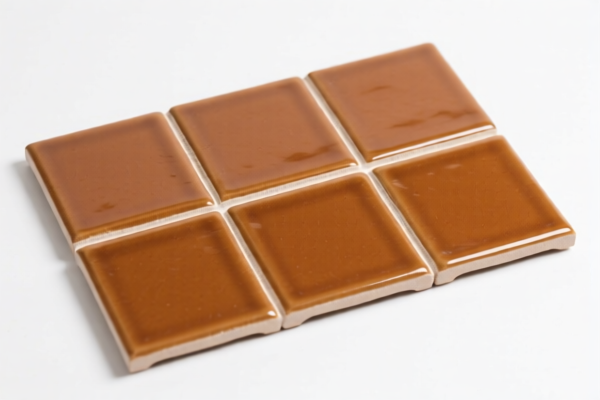
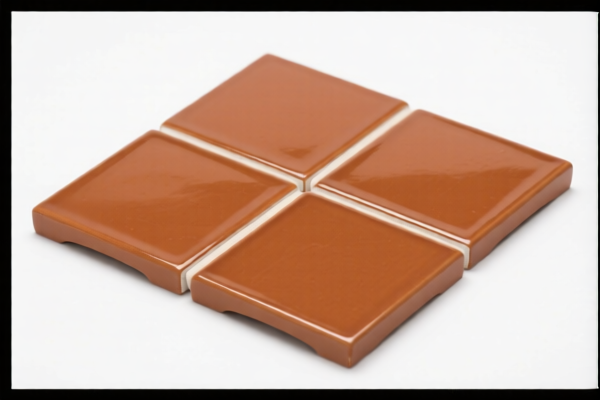

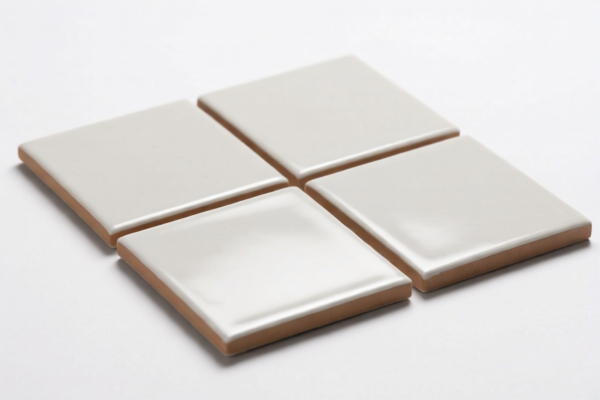
AI分析
🔥 Refractory Concrete (Steel Shell) | HS Code Classification & Duty Breakdown 2026
🌐 HS Code Reference & Customs Clearance Guide | 2026 Latest Tariff Analysis | Professional Strategy
📌 I. Product Definition & Classification: What is "Refractory Concrete"?
Refractory Concrete is a special type of concrete designed to withstand extreme temperatures (typically above 500°C/900°F) without deforming or losing structural integrity. Unlike standard concrete, it does not use Portland cement but rather chemical binders like alumina, magnesia, or phosphate.
Key Characteristics: * Material: High-alumina cement, silica, mullite, or other ceramic aggregates. * Form: Often castable, gunnable, or pre-cast blocks. * Application: Lining for furnaces, kilns, incinerators, and industrial ovens. * Steel Shell Context: When mentioned with a "Steel Shell," it often refers to a composite structure where the refractory concrete is cast inside a steel container or forms part of a pre-fabricated insulated panel. However, for customs classification, the primary material function (heat resistance) usually dictates the HS code, not the temporary steel mold.
⚠️ Critical Distinction:
- If the product is purely Refractory Concrete (castable/mix) → Goes to Chapter 38 (Chemical Products) or Chapter 68 (Mineral Products).
- If the product is a Refractory Ceramic Brick/Block → Goes to Chapter 69 (Ceramics).
The data provided suggests classification conflicts between Chemical Binders (Ch 38) and Ceramic Materials (Ch 68/69).
📦 II. HS Code Classification Details (2026 Latest Tariff Mapping)
Based on the provided data, there are four potential HS Code pathways. The choice depends on the specific chemical composition and physical form.
| HS Code | Product Description | Key Matching Logic | Primary Tax Rate |
|---|---|---|---|
3816.00.20.10 |
Refractory Compounds, Preparations and Products (Matching "Refractory Concrete") | Direct match with "Refractory Concrete." Classified under refractory compounds/preparations. | 38.0% |
6903.90.00.10 |
Other Refractory Ceramic Goods (Clay-based inference) | Infers "Refractory Concrete" contains clay/bauxite. Classified as clay-based ceramic. | 35.0% |
3816.00.20.50 |
Refractory Compounds, Preparations and Products (Similar to 20.10) | Broad category for refractory cement/mortar/concrete-like preparations. | 38.0% |
6903.90.00.50 |
Other Refractory Ceramic Goods (Non-clay inference) | Infers non-clay refractory material. Classified as other ceramic refractory goods. | 35.0% |
6810.11.00.10 |
Refractory Concrete Constructions/Blocks | Focuses on the "Concrete" aspect. Classified as mineral construction materials (MgO content may apply). | 38.2% |
🔍 Analysis of Conflict:
- Ch 38 vs. Ch 69: The core debate is whether the product is a chemical preparation (Ch 38) or a ceramic article (Ch 69).
- Ch 68: Often used for castable refractories that are not yet fired (pre-fired).
- Note: The presence of a "Steel Shell" in the product name is a packaging/assembly detail. Customs typically classifies the inner core material unless the steel shell defines the essential character (which is rare for refractory concrete).
💰 III. 2026 Latest Tariff Rate Breakdown (Detailed)
✅ Applicable Region: United States (US)
✅ Origin: China (CN)
✅ Effective Date: Post-November 2025 (Current 2026 Landscape)
🎯 1. Group A: Chapter 38 – Refractory Compounds & Preparations
HS Codes: 3816.00.20.10 & 3816.00.20.50
Logical Basis: These codes classify "Refractory Concrete" as a chemical preparation or compound designed for heat resistance.
| Component | Rate | Legal Basis |
|---|---|---|
| Base Duty (MFN) | 3.0% | USITC Schedule |
| Section 301 Tariff | 25.0% | Trade Act of 1974, Section 301 |
| IEEPA Tariff | 10.0% | International Emergency Economic Powers Act (China-specific) |
| Total Effective Rate | 38.0% | Sum of all duties |
📌 Explanation:
- This is the most direct textual match for "Refractory Concrete" as a preparation.
- The 25% Section 301 duty applies broadly to many chemical/mineral products from China.
- The 10% IEEPA duty is a specific surcharge on Chinese goods under current emergency powers.
🎯 2. Group B: Chapter 69 – Other Refractory Ceramic Goods
HS Codes: 6903.90.00.10 & 6903.90.00.50
Logical Basis: These codes infer the product is a "Ceramic Article" based on its material properties (clay/bauxite content).
| Component | Rate | Legal Basis |
|---|---|---|
| Base Duty (MFN) | 0.0% | USITC Schedule (Often 0% for ceramics) |
| Section 301 Tariff | 25.0% | Trade Act of 1974, Section 301 |
| IEEPA Tariff | 10.0% | International Emergency Economic Powers Act (China-specific) |
| Total Effective Rate | 35.0% | Sum of all duties |
📌 Explanation:
- Lower Total Duty (35%) compared to Ch 38 (38%).
- However, this requires proof that the product is "Clay-based" (.10) or "Other Ceramic" (.50).
- If your concrete is non-clay (e.g., Alumina-based, Magnesia-based), you must use.50. If it contains clay,.10is more appropriate.
- Risk: If customs disagrees that it is a "ceramic article" and classifies it as Ch 38, you may face back-duties.
🎯 3. Group C: Chapter 68 – Mineral Products (Refractory Concrete)
HS Code: 6810.11.00.10
Logical Basis: Classifies the product as a "Refractory Concrete" construction material (similar to cement blocks but heat-resistant).
| Component | Rate | Legal Basis |
|---|---|---|
| Base Duty (MFN) | 3.2% | USITC Schedule |
| Section 301 Tariff | 25.0% | Trade Act of 1974, Section 301 |
| IEEPA Tariff | 10.0% | International Emergency Economic Powers Act (China-specific) |
| Total Effective Rate | 38.2% | Sum of all duties |
📌 Explanation:
- Highest Base Duty (3.2%) leads to the highest total rate (38.2%).
- Typically used for castable refractories that are not yet fired but are considered "construction/mineral" goods.
- Less common for high-performance refractory concretes compared to Ch 38/69.
🛠️ IV. Customs Clearance Practical Advice
✅ 1. Documentation Checklist (Essential for Clearance)
| Document | Requirement | Why It Matters |
|---|---|---|
| Technical Data Sheet (TDS) | Mandatory | Must explicitly state: "Refractory Concrete," chemical composition (Clay vs. Non-Clay), and max service temperature. |
| Material Safety Data Sheet (MSDS) | Mandatory | Confirms hazardous/non-hazardous status. |
| Composition Statement | Critical | Must declare % of Clay, Alumina, Silica, etc. This determines Ch 38 vs. Ch 69. |
| Product Photos | Required | Show the concrete form (powder, block, castable). If in steel shell, show interior. |
| Commercial Invoice | Required | Description: "Refractory Concrete, High-Alumina, Castable, for Furnace Lining." Avoid vague terms like "Industrial Mix." |
| Packing List | Required | Separate line items for Concrete vs. Steel Shell if shipped separately. |
⚠️ Critical Warning:
Do NOT simply write "Concrete" or "Building Material." You must specify "REFRACTORY" (Heat-resistant). Standard concrete has different duties and regulations.
✅ 2. Strategic Classification Recommendation
| Scenario | Recommended HS Code | Estimated Duty | Reason |
|---|---|---|---|
| Clay-Based Refractory (e.g., Fire Clay Concrete) | 6903.90.00.10 |
35.0% | Lowest duty. Proven if clay content > threshold. |
| Non-Clay Refractory (e.g., Alumina, Magnesia) | 3816.00.20.10 or .50 |
38.0% | Safest for "Chemical Preparation" classification. |
| Pre-cast Refractory Blocks (Fired) | 6903.90.00.50 |
35.0% | If the product is pre-fired ceramic, not just castable. |
| Pre-cast Refractory Blocks (Unfired/Mineral) | 6810.11.00.10 |
38.2% | Higher base duty, but valid for mineral-based casts. |
💡 Pro Tip:
- If your product is castable (mixed with water on-site), Ch 38 (3816.00) is often the most accurate description of a "chemical preparation."
- If your product is pre-formed bricks/blocks that are fired, Ch 69 (6903.90) is more appropriate.
- Cost Saving: Ch 69 codes generally offer a 3% lower total duty (35% vs 38%). Ensure your product's composition justifies this classification (e.g., sufficient clay content for.10or non-clay ceramic for.50).
✅ 3. Special Case: "Steel Shell"
- If the Steel Shell is part of the product (e.g., insulated panel):
The essential character is still the refractory lining. The steel is a supporting structure. Classify the whole unit under the refractory code. - If the Steel Shell is just packaging:
Ignore the shell for classification. Classify only the concrete. - Declaration:
Use: "Refractory Concrete Lining for Furnace, with Optional Steel Containment Shell."
🌍 V. Global Market Comparison (2026)
| Market | Recommended HS Code | Approx. Duty (China Origin) | Notes |
|---|---|---|---|
| 🇺🇸 USA | 3816.00.20.10 or 6903.90.00.10 |
35.0% - 38.2% | High due to 301 + IEEPA. |
| 🇨🇳 China | 3824.60.10.00 (Import) |
~7-9% | Lower base, no trade war tariffs. |
| 🇪🇺 EU | 3824.60.10 (Refractory Cements) |
0% (Mostly) | No Section 301 equivalent. Check VAT. |
| 🇬🇧 UK | 3824.60.10 |
0% | Post-Brexit, aligned with EU largely. |
| 🇮🇳 India | 3824.60.00 |
~7.5% - 10% | Basic Customs Duty + SWS. |
📌 Conclusion:
- The US market is the most expensive due to layered tariffs.
- EU/UK/India are significantly cheaper for imports from China.
- If exporting to the US, optimize HS Code to Ch 69 if possible to save 3%.
📌 VI. Common Errors & Pitfalls (Lessons Learned)
❌ Error 1: Classifying as "Ordinary Concrete" (3001 or 6810)
👉 Consequence: Misclassification. Refractory has specific duties. If caught, back taxes + penalties.
👉 Fix: Always label as "REFRACTORY."
❌ Error 2: Ignoring "Clay vs. Non-Clay" in Ch 69
👉 Consequence: Customs may downgrade from .10 (0% base) to .50 (0% base) or reclassify to Ch 38.
👉 Fix: Provide lab test reports showing chemical composition.
❌ Error 3: Combining Steel Shell and Concrete into one vague description
👉 Consequence: Confusion about essential character.
👉 Fix: Declare the refractory material as the primary good.
✅ Best Practice:
"High-Alumina Refractory Castable Concrete, for Industrial Furnace Lining, Clay-Based, UN1389 (if hazardous)."
🎯 VII. Final Recommendation
- Verify Composition: Check if your refractory concrete contains significant clay. If yes, aim for
6903.90.00.10(35% duty). - If Non-Clay (Alumina/Magnesia): Use
3816.00.20.10or.50(38% duty). - Document Thoroughly: Provide TDS and Composition Statements to avoid customs audits.
- Pre-Ruling: For large shipments, consider applying for a US CBP Binding Ruling to lock in the HS code and duty rate.
📣 Action Item:
📞 Consult with your customs broker to confirm Clay Content.
📄 Prepare Technical Datasheets highlighting "Refractory" and "Heat Resistance."
🚀 Save 3% Duty by correctly identifying Ch 69 eligibility!
✨ Precision in Classification, Precision in Profit!
💼 Don't let "Concrete" cost you 38% when it could be 35%.
用户评价
关于 HS 编码归类
协调制度(HS)是由世界海关组织(WCO)制定的国际贸易商品分类标准。全球 200 多个国家采用 HS 系统作为海关关税、贸易统计和进出口监管的基础。
每个 HS 编码遵循以下层级结构:
- 章(2 位)——商品大类(例如:第 84 章:机器和机械设备)
- 品目(4 位)——章内的更具体分类
- 子目(6 位)——国际通用细分,所有 WCO 成员国统一使用
- 本国细分(8-10 位)——各国自行扩展的细分编码,如美国 HTSUS 10 位编码
正确的 HS 编码归类对于顺利通关、准确缴纳关税和遵守贸易法规至关重要。错误归类可能导致海关延误、多缴关税或罚款。
从CN进口到US时,适用的关税税率可能包括:
- 最惠国(MFN)税率——适用于 WTO 成员国的标准关税税率
- 普通税率——适用于无贸易协定国家
- 贸易救济关税——附加关税,如 301 条款(反倾销)、232 条款(国家安全)或反补贴税
本页内容仅供参考。如需正式归类,请咨询当地海关或持牌报关代理。